


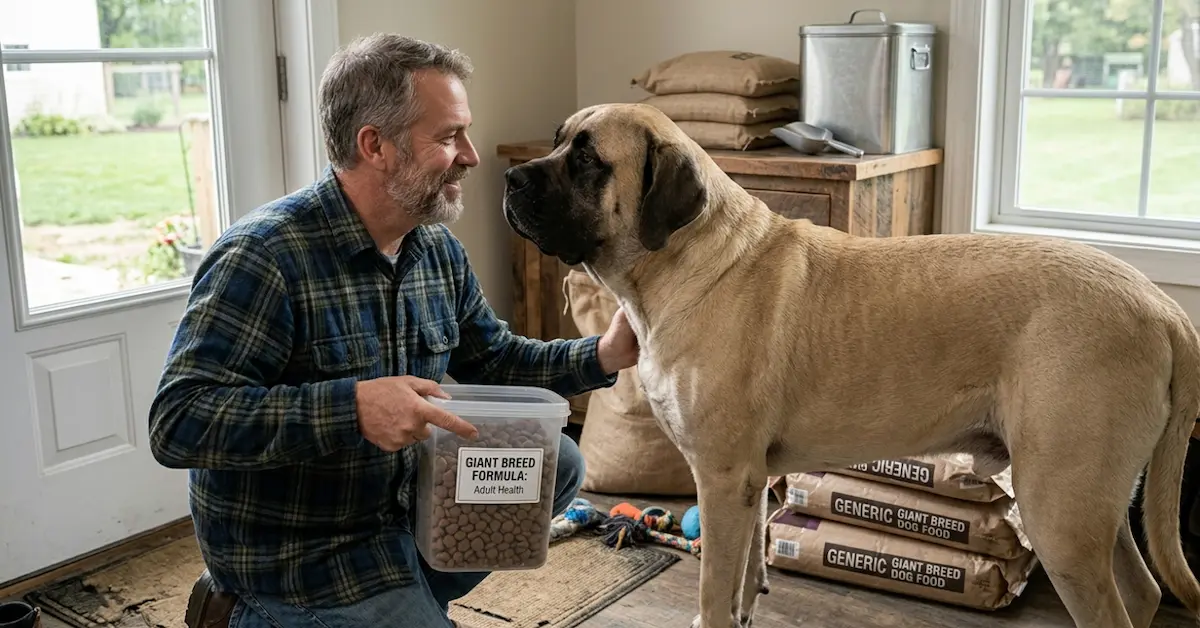
Giant dogs like Great Danes, Mastiffs, and Leonbergers have a unique charm that wins hearts instantly. However, feeding a 150-pound canine needs a different approach than feeding a standard or small dog. Their fast growth and heavy bone structure need targeted, high-quality large breed dog nutrition.
This helps reduce the risk of lifelong health problems. Many owners think regular puppy kibble in a bigger bag is enough for giant puppies. Sadly, standard formulas can push skeletal growth too fast and create serious issues later. To protect your giant companion, you need to understand what goes into their bowl first. See our giant dog breeds guide for size and care basics.
Core Dietary Parameters for Giant Canines
Nutrient | Recommended Range | Main Purpose |
|---|---|---|
Crude Protein | 23% to 26% | Lean muscle development |
Crude Fat | 12% to 15% | Controlled growth rate |
Calcium-Phosphorus Ratio | 1.1:1 to 1.3:1 | Skeletal soundness |
Glucosamine | Min 800 mg/kg | Joint cartilage support |
Giant Dog Care and Core Management
Managing a massive canine means far more than giving them a spacious yard and heavy chew toys. Their body size affects daily life, from metabolism to joint pressure and heart function. Proper care needs a proactive routine. This helps reduce stress on their body from the inside and outside.
One of the most dangerous risks in giant breeds is Gastric Dilation-Volvulus, also called bloat. This happens when the stomach fills with gas and twists, cutting off blood flow. To lower this risk, never use elevated food bowls unless your vet recommends them.
Also, give your giant dog at least one hour of rest before and after every meal. Running, jumping, or playing right after eating can increase the risk of bloat. Splitting daily food into three smaller meals also supports smoother digestion.
Regular weight checks are another key part of giant dog care. Even a few extra pounds can damage growing or aging joints. Use a body condition score chart every month. Your dog should have a clear waistline and a lean shape.
Food for Giant Breeds: Nutritional Foundation

The body of a giant working dog needs a careful balance of nutrients. Smaller breeds often do well on calorie-rich food, but giant breeds need controlled calories with strong nutrition. This balance helps muscles develop without putting too much stress on soft, growing bones.
High-quality animal protein should always be the base of any premium food for giant breeds. Good sources include whole chicken, deboned lamb, wild salmon, and beef. These proteins provide amino acids for heart health, muscle repair, immune support, and healthy growth. Owners of large breed dogs need slow-growth nutrition.
Macronutrient Comparison: Standard vs Giant Formula
Nutrition Factor | Standard Kibble | Giant Breed Formula |
|---|---|---|
Caloric Density | 3,800 to 4,100 kcal/kg | 3,300 to 3,500 kcal/kg |
Maximum Fat Limit | Around 18% | 15% maximum |
Fiber Content | 3% to 4% | 5% to 6% |
Healthy fats support brain development and skin health. But you must control them carefully. Look for clean fat sources like chicken fat or flaxseed oil. Keep total fat content below 15%. Too much fat increases calorie density and causes fast weight gain. That extra weight can harm bone structure.
Carbs should come from low-glycemic and easy-to-digest sources. Sweet potatoes, brown rice, oatmeal, and whole peas are good options. Avoid foods that rely heavily on refined starches. They add calories without giving real value to heavy working dogs.
The Hidden Science of Large Breed Dog Nutrition
A giant breed dog goes through a sensitive growth stage during the first two years. A Great Dane puppy can gain up to 30 pounds in one month during peak growth. This fast growth needs careful mineral control. Without it, permanent bone and joint problems can develop.
If a puppy diet has too many calories, the skeleton grows faster than the bones can mineralize. This creates weak bones that struggle under the dog’s rising body weight. Proper large breed dog nutrition keeps growth slow, steady, and balanced.
Energy needs also change as a giant dog moves from puppyhood into adulthood. During the first 18 months, their body uses nutrients for bone, tissue, and muscle growth. Once mature, their metabolism slows down. That makes them more likely to gain weight if you do not adjust their food.
Fiber also helps during this stage. Giant formulas often have fewer calories, so fiber helps dogs feel full. Clean prebiotic fibers also support gut bacteria and improve nutrient absorption.
The Critical Calcium Phosphorus Ratio

When checking any dog food label, the calcium phosphorus ratio for big dogs matters most. Giant puppies cannot protect themselves from absorbing too much calcium. If a diet contains too much calcium, extra minerals can settle into developing bones and cause deformities.
The safe window for this mineral balance is usually between 1.1:1 and 1.3:1. In this range, bone growth and muscle growth stay better aligned. Going too high can trigger serious developmental orthopedic disease.
Calcium to Phosphorus Ratio Risk Assessment
Ratio | Result | Veterinary Risk |
|---|---|---|
1.0:1 or lower | Poor mineralization | High rickets risk |
1.1:1 to 1.3:1 | Healthy bone density growth | Optimal window |
1.5:1 or higher | Accelerated bone hardening | Severe deformity risk |
Hypertrophic Osteodystrophy and Osteochondritis Dissecans are two painful conditions linked to poor calcium control. HOD causes swelling in the growth plates of a puppy’s legs. OCD causes cartilage to split away from the bone inside major joints.
Never add calcium supplements, bone meal, or dairy products to a balanced giant breed food. Good manufacturers already set the formula carefully. Adding extra minerals can ruin that balance and create lifelong skeletal problems.
Protecting Joint Health in Big Dogs
The joints of a 180-pound dog face huge pressure every day. Each step affects the hips, elbows, knees, and wrists. Over time, this pressure can wear down cartilage and lead to arthritis.
Good giant breed food often includes joint-supporting compounds. Glucosamine helps support cartilage repair and joint flexibility. Chondroitin works with it by helping protect healthy joint tissue. Even gentle giant dogs need controlled calories.
Anti-Inflammatory Joint Matrix Guide

Ingredient | Source | Main Benefit |
|---|---|---|
Glucosamine HCl | Shellfish exoskeletons | Cartilage tissue repair |
Chondroitin Sulfate | Porcine trachea | Synovial fluid support |
EPA and DHA Omega-3s | Salmon oil | Inflammation support |
Green-lipped Mussel | New Zealand aquaculture | Joint friction reduction |
Green-lipped mussel extract is another strong ingredient for joint support. It contains rare omega-3 fatty acids that help calm inflammation. These marine lipids support movement without harsh side effects.
Type II hydrolyzed collagen is also becoming common in premium joint health in big dogs. It supports connective tissue, tendons, and joint stability. Stable joints help giant dogs move more comfortably as they age.
What to Avoid in Giant Dog Foods
The pet food aisle can be confusing because marketing often hides poor ingredients. One common issue is cheap filler ingredients. Ground yellow corn, wheat gluten, and soy hulls often bulk up kibble without adding enough value.
These low-quality carbs can spike blood sugar and increase fat storage. Sudden weight gain puts extra stress on growing bones and joints.
Always check pet food labels carefully before buying any giant breed formula.
Ingredient Quality Audit
Premium Components | Dangerous Red Flags |
|---|---|
Deboned salmon | Generic meat and bone meal |
Chicken | BHA |
Lamb | BHT |
Whole oatmeal | Ethoxyquin |
Brown rice | Artificial colors |
Quinoa | High-fructose corn syrup |
Natural tocopherols | Unnamed by-products |
Prebiotics | Chemical preservatives |
Another red flag is vague meat by-products. Labels like “meat meal” or “poultry by-product blend” do not clearly show source quality. These ingredients may vary a lot and can trigger digestive issues in sensitive dogs.
Avoid chemical preservatives like BHA, BHT, and ethoxyquin. Choose brands that use natural tocopherols, also known as Vitamin E, or rosemary extract.
Overcoming Hip Dysplasia in a Giant Mastiff

To understand the value of targeted large breed dog nutrition, look at the case of Zeus, an English Mastiff puppy. At only eight months old, Zeus weighed 145 pounds and struggled to stand up from a resting position.
Digital x-rays showed early joint looseness and signs of canine hip dysplasia. His previous owner had fed him a high-calorie puppy formula made for all breed sizes. This pushed his weight up before his hip sockets could form properly.
Zeus’s 6-Month Diet Intervention Progress
Timeline | Weight | Progress |
|---|---|---|
Month 0 | 145 lbs | Severe hind-leg limp and high inflammation |
Month 2 | 140 lbs | Weight loss started and rising became easier |
Month 4 | 152 lbs | Lean growth improved and stride became smoother |
Month 6 | 165 lbs | Mobility improved with no visible limp |
The veterinary team switched Zeus to a calibrated giant breed food. The formula used a calcium phosphorus ratio of 1.2:1 and kept fat content at 12%. They also reduced his daily calories by 15% to stop rapid fat gain.
His diet included a joint supplement with glucosamine and green-lipped mussel. Within 60 days, his body condition score improved from overweight to lean. By month six, Zeus reached a lean 165 pounds with no visible limp. Stronger muscles helped stabilize his hips naturally.
Keep your giant dog at a healthy weight to reduce pressure on weak hips and joints.
Best Dog Food for Giant Breeds: Our Top Picks
Finding the best dog food for giant breeds means checking the ingredient list, not only the front label. The best formulas use real named meat as the first ingredient. They also avoid chemical additives and meet large breed growth standards.
Top Pick Evaluation Checklist

Feature | Why It Matters |
|---|---|
Named real meat first | Supports bioavailable protein |
Ash below 7% | Helps prevent mineral overload |
Live probiotics | Supports digestion |
AAFCO large breed statement | Confirms safety standards |
Good formulas often use slow-baking or careful extrusion methods. These help protect delicate nutrients. Look for fiber sources like pumpkin, beet pulp, or chicory root extract. These support digestion and reduce waste and gas.
Always check for the AAFCO large-size dog growth statement on the package. This matters for dogs expected to grow over 70 pounds. Without that statement, the mineral balance may not be safe for giant puppies.
Essential Accessories: Coats for Giant Breed Dogs
Nutrition builds internal strength, but external protection also matters. Short-coated giant breeds like Great Danes and Mastiffs often struggle in cold weather. Their thin coats do not hold warmth well. Cold muscles can tighten and increase joint stress. This can make arthritis or developing joint pain worse.
Heavy-duty coats for giant breed dogs can help protect winter mobility. A good coat keeps body heat close to the core muscles. Choose coats with wide, adjustable chest straps. They should fit deep-chested dogs without limiting breathing or movement.
Comprehensive Buying Guide for Smart Owners
Choosing the right food means looking past front-label claims. Flip the bag over and check the guaranteed analysis panel. Review crude protein, crude fat, crude fiber, and moisture. Moisture should usually stay around 10%, so you pay for nutrients, not water.
Watch for ingredient splitting. This happens when brands break one poor ingredient into several names. For example, “corn gluten, ground corn, and corn flour” may hide a corn-heavy formula. Together, these ingredients may outweigh the real meat listed first.
Ideal Giant Breed Body Condition Score
Score | Condition | Signs |
|---|---|---|
1 to 3 | Wasted | Spine and ribs highly visible |
4 to 5 | Ideal | Visible waist and ribs easy to feel |
6 to 9 | Obese | No waist and ribs hard to locate |
Switch your large dog to a new food slowly over 10 days. Start with 90% old food and 10% new food. Increase the new food gradually each day. This gives the digestive system time to adjust and helps avoid diarrhea or vomiting.
Check your dog’s body condition during weekly grooming. Run your hands over the ribcage. You should feel each rib under a thin layer of lean muscle. Keeping your giant dog lean is one of the best ways to protect long-term health.
Frequently Asked Questions
When should a giant puppy switch to adult food?
Transition them around 15 to 18 months. Their bones take longer to mature, so switching too early can cause structural problems.
Can I feed my giant breed a grain-free diet?
Avoid boutique grain-free diets unless your vet says it is necessary. Wholesome grains like oatmeal and brown rice are safer choices for many giant breeds.
How many times a day should I feed a giant dog?
Feed 2 to 3 small, measured meals daily. One large meal can expand the stomach and increase the risk of bloat.
Why is my giant puppy growing unevenly?
Uneven growth can happen during puppy development. But if your dog limps or has swollen joints, speak to a vet right away.
Do giant breed dogs need extra calcium vitamins?
No. Never add extra calcium to balanced giant breed kibble. It can ruin the mineral ratio and cause severe joint defects.
