


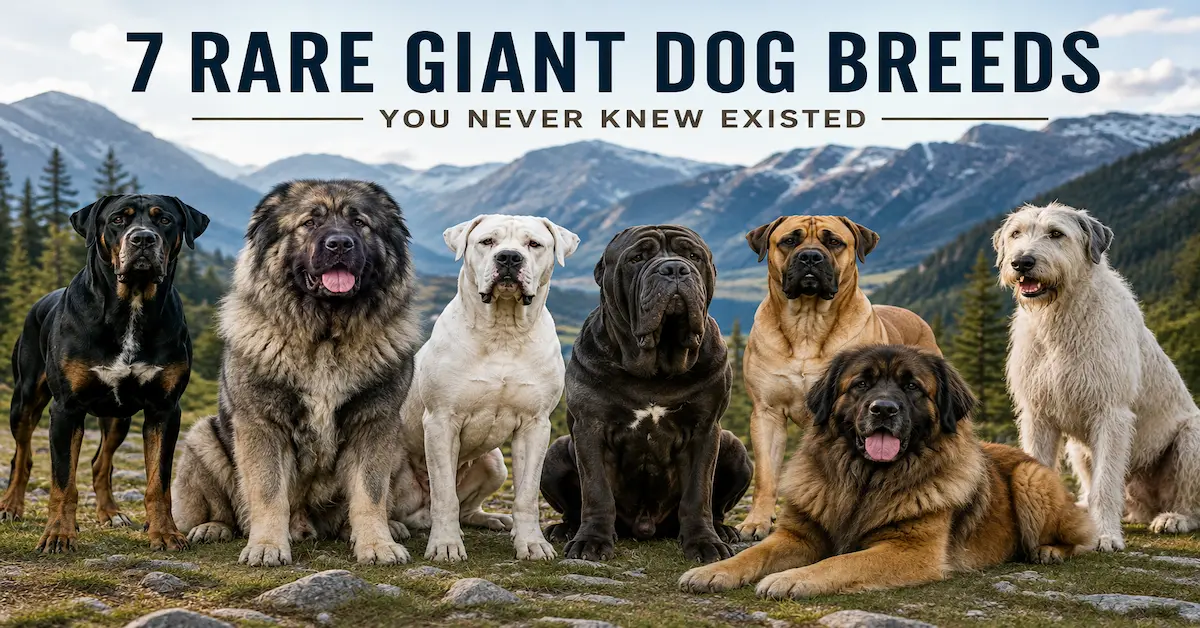
Most people can name a Great Dane or a Saint Bernard without thinking twice. But the canine world runs much deeper than the popular breeds you see on local streets. Some of the most impressive massive dogs live in remote corners of the world.
These historic animals have spent centuries protecting livestock, guarding property, and working beside people in tough regions. This guide covers rare giant dog breeds that deserve more attention. You will learn where they come from, what makes them unique, and what owning one looks like in daily life.
What Makes a Massive Canine Breed Rare?
A dog breed gets the rare label when its population stays low worldwide. Often, these dogs remain unknown outside their native countries or origin regions. Some major kennel clubs may not recognize them because their entry numbers are too small. Rarity does not mean these dogs lack quality or history.
Many rare giant breeds have strong working backgrounds and deep cultural value. Many massive dogs stay rare because they need very specific living conditions. Their size, protective drive, and independent nature make them harder for standard homes.
They do not fit well into small houses, apartments, or busy suburban areas. In some cases, local governments or breed groups also limit exports to protect pure bloodlines.
Comprehensive Profiles of the World’s Rarest Giant Dogs
Let us look closely at some rare heavy breeds with strong historical value. Each dog has unique traits shaped by its region, purpose, and breeding history.
1. Bully Kutta

The Bully Kutta comes from the historic Punjab and Sindh regions of Pakistan and India. Local people historically used this giant South Asian mastiff for hunting and guarding. The name is often linked with the dog’s thick, loose skin folds. Mughal Emperor Akbar is said to have kept these dogs for protection and hunting large animals.
They have massive bone structure, long legs, and a powerful alert stance. Their protective instinct makes them naturally suspicious of unfamiliar people and animals. Because of this, they need highly experienced handlers. A Bully Kutta needs firm guidance, early socialization, and clear boundaries from puppyhood.
Without structure, their physical power can become hard to manage in public places. These dogs also need a protein-rich diet to support their dense muscular build. Their short coat is easy to groom, but their mental and training needs require daily attention.
| Trait Category | Detailed Value / Measurement |
| Average Adult Weight | 150 to 170+ pounds |
| Average Adult Height | 32 to 44 inches |
| Primary Historical Use | Big game hunting and guarding |
| Native Territory | Punjab and Sindh, Pakistan / India |
| Lifespan Expectancy | 8 to 10 years |
While the Bully Kutta requires strict socialization due to its intense guarding instincts, many owners look for massive dogs that are naturally more relaxed around families. If you want a massive protector that is also incredibly calm indoors, you should explore the traits of other gentle giant dog breeds before making a final decision.
2. Caucasian Ovcharka
The Caucasian Ovcharka is one of the strongest giant Russian dog breeds. Shepherds developed this dog in the rugged mountain regions of Georgia, Armenia, Azerbaijan, and the wider Caucasus area. They needed a fearless animal that could protect flocks from wolves, bears, and thieves.
This breed still carries that serious guardian instinct today. The Caucasian Ovcharka has a thick double coat that protects it from freezing mountain weather. Its huge frame hides a brave and loyal personality. These dogs often show deep devotion to their immediate family.
However, their guardian nature means they may stay suspicious of outsiders. You cannot fully remove an instinct built through centuries of livestock protection. They do best in rural homes with space, boundaries, and clear duties. They are not ideal for apartment life or beginner owners.
Grooming takes time because of their heavy undercoat. They shed a lot during seasonal coat changes, so regular brushing is important.
| Trait Category | Detailed Value / Measurement |
| Average Adult Weight | 110 to 200+ pounds |
| Average Adult Height | 28 to 30+ inches |
| Primary Historical Use | Flock defense and border security |
| Native Territory | Caucasus Mountain Range / Russia |
| Lifespan Expectancy | 10 to 12 years |
For more information on the history and classification of these massive working animals, you can read the official guide on dog breeds
3. Leonberger
The Leonberger started in Leonberg, Germany. Breeders wanted a dog that looked like the lion on the town crest. They crossed Newfoundland dogs with Saint Bernards to create this large, regal breed. Leonbergers have a black mask and a beautiful water-resistant double coat.
They are strong, calm, and often enjoy swimming. They also worked in cart-pulling, farm support, and rescue roles. Their temperament is softer than many mountain guardian breeds. They usually bond well with children and show patience in family settings.
Still, their size requires training. A gentle giant can still knock people over if it has poor manners. The biggest challenges are grooming, food cost, and a shorter lifespan. Their thick coat needs regular brushing to avoid painful mats. Their diet should support joint health and steady muscle development.
| Trait Category | Detailed Value / Measurement |
| Average Adult Weight | 120 to 170 pounds |
| Average Adult Height | 27 to 31 inches |
| Primary Historical Use | Farm work, cart pulling, rescue |
| Native Territory | Baden-Württemberg, Germany |
| Lifespan Expectancy | 7 to 9 years |
4. Kangal Shepherd Dog

The Kangal Shepherd Dog comes from Sivas province in central Turkey. Turkish shepherds have used these dogs for generations to defend sheep from predators. Turkey treats the Kangal as an important national working breed. It is known for power, speed, calmness, and strong livestock protection.
Kangals have one of the strongest recorded bite forces among dog breeds. Even with that strength, they are usually calm and controlled when properly raised. They often use their size and confidence to deter threats before physical action becomes necessary.
These dogs need large open spaces and a real purpose. A cramped city apartment can create stress and behavior problems. They are best for owners who understand working guardian dogs. Their coat sheds heavily in spring, and their food needs are high because of their active working build.
| Trait Category | Detailed Value / Measurement |
| Average Adult Weight | 110 to 145 pounds |
| Average Adult Height | 28 to 32 inches |
| Primary Historical Use | Livestock protection and guarding |
| Native Territory | Sivas Province, Turkey |
| Lifespan Expectancy | 11 to 13 years |
To understand the physical demands and nutritional upkeep of massive protection dogs, check out this guide on large dog care.
5. Moscow Watchdog
Russian military kennels developed the Moscow Watchdog during the mid-twentieth century. Experts crossed the patient Saint Bernard with the protective Caucasian Shepherd. The goal was to create a large, trainable guard dog that could work in harsh winter conditions.
This breed has Saint Bernard-style markings, but its build is more athletic and muscular. It is also more resistant to fatigue than many heavy companion breeds. The Moscow Watchdog responds better to obedience training than some older mountain guardian breeds. Still, it needs a confident owner and daily structure.
Finding this breed outside Eastern Europe can be very difficult. It is not officially recognized by the American Kennel Club. Owners need to check bloodlines carefully and ask for clear health records. This breed also needs regular coat care, strong food quality, and enough activity to stay mentally balanced.
| Trait Category | Detailed Value / Measurement |
| Average Adult Weight | 100 to 150 pounds |
| Average Adult Height | 26 to 29 inches |
| Primary Historical Use | Military guarding and protection |
| Native Territory | Soviet Union / Russia |
| Lifespan Expectancy | 9 to 11 years |
6. Estrela Mountain Dog
The Estrela Mountain Dog comes from the ancient hills of Portugal. It is one of the oldest working breeds on the Iberian Peninsula. Portuguese shepherds used these dogs to protect herds and move animals across rocky land. Their strength, loyalty, and steady personality made them valuable working partners.
The breed can have either a long or short coat. Both coat types are dense and weather-resistant. strela Mountain Dogs are calm and loyal with their families. They often stay close to their people and watch property lines carefully. They are usually more adaptable than some extreme guardian breeds.
Many families find them easier to manage than more intense mountain dogs. Still, they need daily mental stimulation, steady training, and clear rules. Without enough activity, they may become bored and destructive.
| Trait Category | Detailed Value / Measurement |
| Average Adult Weight | 88 to 110 pounds |
| Average Adult Height | 25 to 29 inches |
| Primary Historical Use | Livestock guardian and herding |
| Native Territory | Estrela Mountains, Portugal |
| Lifespan Expectancy | 10 to 12 years |
7. Dogue de Bordeaux

The Dogue de Bordeaux is an ancient French mastiff with deep historical roots. These dogs guarded estates and helped move heavy cattle for European farmers. Many people recognize them from films that featured massive, wrinkled, drooling dogs. This breed has a huge head, short powerful jaws, and strong muscles.
Despite its serious appearance, it can be deeply affectionate with its family. The Dogue de Bordeaux usually prefers soft resting places over long-distance running. It has lower exercise needs than many mountain guardian breeds.
Health is the main concern. This French mastiff often has a short lifespan and can face serious genetic issues. Owners must manage weight carefully, keep up with veterinary care, and clean facial wrinkles daily to avoid skin infections.
| Trait Category | Detailed Value / Measurement |
| Average Adult Weight | 110 to 150 pounds |
| Average Adult Height | 23 to 27 inches |
| Primary Historical Use | Estate guarding and cattle driving |
| Native Territory | Bordeaux Region, France |
| Lifespan Expectancy | 5 to 8 years |
To see more expert insights on managing massive guardian breeds, you can read the latest updates on Dogster.
Direct Size and Trait Comparison Matrix
Here is a simple comparison of these rare massive dog breeds. Use this table to compare region, coat type, family suitability, and guardian instinct.
| Dog Breed Name | Core Region | Primary Coat Type | Relative Family Suitability | Guardian Instinct |
| Bully Kutta | South Asia | Short and smooth | Experienced owners only | Extremely high |
| Caucasian Ovcharka | Russia / Caucasus | Heavy double coat | Experienced owners only | Extremely high |
| Leonberger | Germany | Long and silky | Good with socialization | Medium |
| Kangal Dog | Turkey | Short and dense | Farm environments only | High |
| Moscow Watchdog | Eastern Europe | Medium and thick | Active handlers only | High |
| Estrela Mountain Dog | Portugal | Thick long or short coat | Adaptable family dog | Medium-high |
| Dogue de Bordeaux | France | Short and fine | Affectionate family dog | Medium |
Owning a 150-pound rare mastiff is a massive responsibility that doesn’t suit every household or living space. If you realize that a giant guardian is too overwhelming for your current apartment setup, looking into smaller, highly intelligent toy companions like the Papillon dog might be a much better fit for your lifestyle.
Detailed Behavioral and Maintenance Comparison Matrix
This table breaks down the management needs of each breed. It can help you understand grooming, exercise, food cost, and training difficulty before choosing one.
| Dog Breed Name | Weekly Grooming Hours | Daily Exercise Needs | Average Food Cost | Training Difficulty Level |
| Bully Kutta | 1 hour | High activity | Very high | Advanced / hard |
| Caucasian Ovcharka | 4 hours | Moderate activity | High | Advanced / hard |
| Leonberger | 3 hours | Moderate activity | High | Intermediate / medium |
| Kangal Dog | 2 hours | High activity | High | Intermediate / medium |
| Moscow Watchdog | 2 hours | Moderate activity | High | Intermediate / medium |
| Estrela Mountain Dog | 3 hours | Moderate activity | Medium | Intermediate / medium |
| Dogue de Bordeaux | 1 hour | Low activity | High | Easy to medium |
Can These Unique Giants Live Safely with Modern Families?

The answer depends on your household space and dog handling experience. Some rare giant dog breeds can adapt to family life. Others need expert owners, working space, and careful management. Breeds like the Leonberger and Estrela Mountain Dog usually adapt better to family homes.
They offer a mix of loyalty, calm behavior, and protective awareness. Working guardians like the Bully Kutta and Caucasian Ovcharka need expert handling. These dogs make independent decisions because their ancestors protected livestock without constant human direction.
A small training mistake during puppyhood can create serious behavior problems later. That is why early structure matters so much. Large dogs also cost more to feed, insure, transport, and treat.
Their joints need careful nutrition during growth to reduce the risk of hip issues and early arthritis. Before bringing home a giant puppy, check your budget, local laws, insurance rules, and long-term living setup.
Practical Living Requirements for Rare Giant Dogs
Space is one of the most important needs for rare giant dogs. Most of these breeds need a secure yard, strong fencing, and room to move. A weak fence will not hold a motivated 150-pound guardian dog. High wooden or metal fencing is often necessary.
These dogs also need heavy-duty equipment. Standard collars, beds, bowls, crates, and leashes may not fit or last long. Transport is another major factor. You need a large vehicle with enough safe space for a giant breed.
| Essential Giant Breed Home Checklist |
| Minimum six-foot secure boundary fencing around the property |
| Extra-large orthopedic bedding to protect heavy joints |
| Dedicated vehicle space for safe transportation |
| Access to a local vet experienced with giant breeds |
Smart Tips for Finding Health-Tested Rare Puppies
Never buy a rare giant puppy from random online classified ads. Irresponsible breeders often use rare breed names to charge high prices without proper health testing. True preservation breeders usually work through breed clubs and trusted networks. They care about health, temperament, and responsible placement.
Always ask for hip certifications, heart screening records, and genetic testing documents. Small gene pools can increase the risk of inherited health problems. You should also meet the mother dog when possible. Her behavior can tell you a lot about the puppy’s likely temperament.
Adult rescue giants can also be a good option. Many large dogs end up in rescue when owners underestimate their size, cost, or training needs. An adult dog gives you a clearer picture of final height, temperament, and energy level.
Before paying, make sure the breeder shows current living conditions and health documents. Walk away if they refuse. For a deeper look into standard large options, read our complete giant dog breeds guide. If you prefer calmer companions, explore our guide on gentle giant dog breeds today.
Frequently Asked Questions
Which rare giant dog breed has the strongest bite?
The Kangal Shepherd Dog is widely known for having one of the strongest bite forces among dog breeds. This strength helps it protect livestock from predators in mountain regions.
Can a Bully Kutta live comfortably in a standard city apartment?
No. A Bully Kutta needs space, structure, and secure fencing. Its high territorial drive makes apartment living unsuitable for most owners.
Why do rare giant dogs have shorter lifespans on average?
Massive bodies place more stress on joints, organs, and the heart. Rapid growth also increases the risk of skeletal and health problems.
Are giant Russian dog breeds easy for beginners to train?
No. Breeds like the Caucasian Ovcharka are independent and strong-willed. They need experienced handlers who understand livestock guardian behavior.
How can I verify if a rare breed puppy is healthy?
Ask for health testing documents for both parent dogs. Good breeders should share vet records, genetic history, and orthopedic certifications clearly.
