


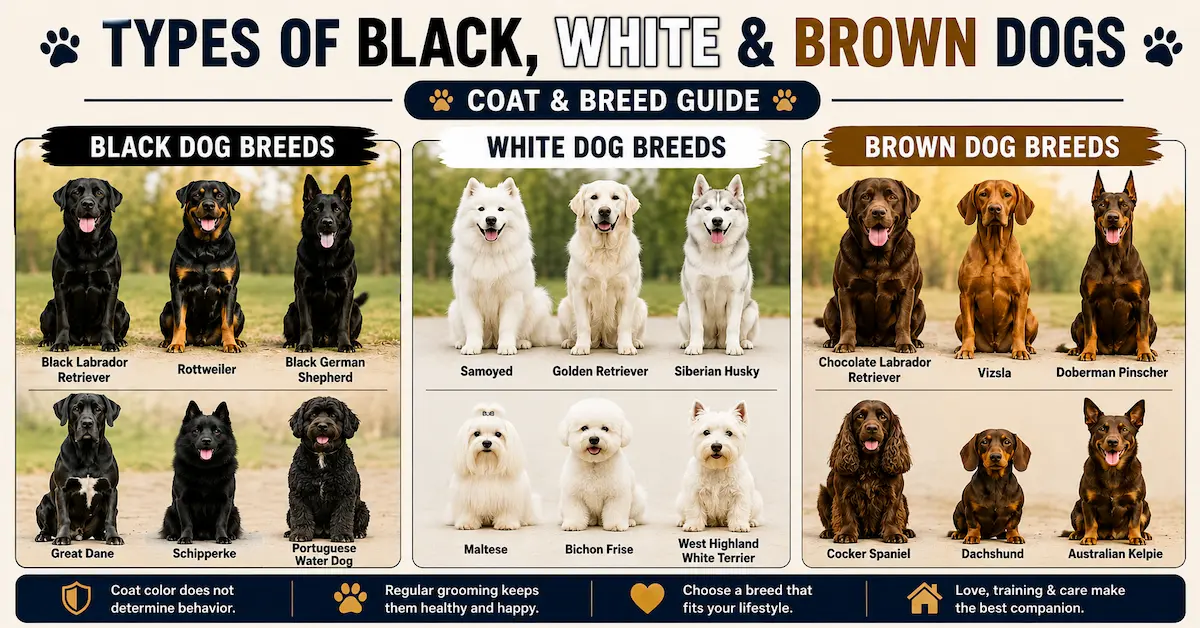
Many people search for types of black dogs because dark-coated breeds look bold, loyal, and beautiful. But coat color is not only about looks. Black, white, and brown dogs come in many sizes, coat types, and breed groups, so each dog can have very different care needs.
Some black dog breeds are strong working dogs, while some white dog breeds are small family pets. Brown dogs can be playful sporting dogs, calm house dogs, or active outdoor companions. So, the right dog depends on your home, time, grooming routine, and daily activity level.
This guide explains black, white, and brown dog types in simple words. It also covers types of small white dogs, black coat dogs, white-coated breeds, and basic coat color genetics. By the end, you will understand how coat color connects with grooming, comfort, and breed choice.
Readers who want the full breed overview can also read our main guide on types of dogs before choosing by coat color.
Types of Black Dogs
Black dogs can look strong, calm, and elegant. They appear in almost every size group, from small lap dogs to large working breeds. Some have solid black coats, while others have black mixed with tan, white, brown, or grey markings.
The most common types of black dogs include working dogs, herding dogs, toy dogs, and sporting dogs. Their color may look similar, but their behavior can be very different. A black Labrador is usually friendly and active, while a Cane Corso needs firmer training.
Black coat dogs often hide mud better than white dogs, which can help owners who walk in parks or wet areas. However, loose hair, dust, and dandruff may show clearly on dark fur. Regular brushing keeps the coat cleaner and helps owners notice skin issues early.
Black dogs can also feel warmer in strong sunlight because dark coats absorb more heat. This does not mean they cannot enjoy outdoor life. It only means owners should plan walks during cooler hours and always provide shade, water, and rest breaks.
Popular Black Dog Breeds
The black Labrador Retriever is one of the most loved black dog breeds. It is friendly, smart, and easy to train for many families. Labs usually enjoy fetch, swimming, walking, and spending time with people, so they need daily exercise and attention.
The Rottweiler is another well-known black dog with tan markings. It is loyal, strong, and protective when raised well. This breed needs early socialization, steady training, and a responsible owner who understands large working dogs and their strength.
The Schipperke is a small black dog with a big personality. It is alert, curious, and full of energy. This breed can suit people who want a smaller dog but still enjoy training, play, and daily mental activity.
The Portuguese Water Dog can also have a black curly or wavy coat. It often suits active families because it enjoys movement and water-based play. Its coat needs regular grooming, but many owners like it because it sheds less than some other breeds.
The Great Dane can also come in black. It is huge, gentle, and often calm indoors when trained well. Because of its size, it needs space, good food, careful joint support, and an owner who can manage a giant breed with confidence.
If you like Rottweilers, Great Danes, or other bigger black breeds, compare large dog breeds before choosing one.
Types of White Dogs
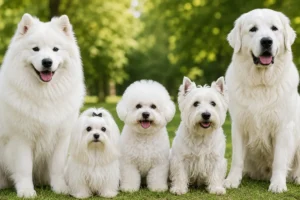
White dogs often look soft, bright, and clean. They can be small, medium, large, or giant, depending on the breed. Some have smooth coats, while others have thick, fluffy coats that need regular brushing and grooming.
Types of white dogs include toy breeds, spitz breeds, livestock guardian dogs, and companion breeds. A Maltese and a Great Pyrenees can both be white, but they do not need the same kind of home. One is a small indoor companion, while the other is a large guardian breed.
White-coated breeds often show dirt faster than black or brown dogs. Muddy paws, tear stains, food marks, and dust can be easy to see. This means owners may need to clean the face, paws, and coat more often to keep the dog looking neat.
Some white dogs may also need extra skin care, especially if they have thin coats or pale skin. Too much sun can irritate sensitive areas in some dogs. If a white dog has redness, itching, or coat patches, a vet check is the safest step.
Types of Small White Dogs
Types of small white dogs are popular with apartment owners and families who want a lighter companion. These dogs often need less space than large breeds, but they still need walks, grooming, training, and daily attention. The Maltese is one of the best-known small white dogs.
It has a silky white coat and a gentle nature. This breed can suit indoor living, but its long coat needs regular brushing, cleaning, and trimming to prevent tangles. The Bichon Frise is another popular white dog breed. It has a soft curly coat and a cheerful personality.
Many families like this breed because it is playful, friendly, and social, but grooming should stay part of its routine. The West Highland White Terrier, often called the Westie, is small but confident. It has a white coat and a bold terrier attitude. This breed can suit active owners who enjoy.
Short walks, playtime, and simple training. A white Pomeranian is tiny, fluffy, and lively. It can fit small homes, but it may bark if not trained early. Owners should focus on gentle training, brushing, and socialization so the dog feels calm around people and sounds.
Owners who want a smaller white-coated companion can also check the AKC guide to smallest dog breeds before choosing a pet.
Popular White Dog Breeds
The Samoyed is one of the most beautiful white dog breeds. It has a thick white coat, a friendly face, and a strong working background. This breed needs brushing often because its coat sheds heavily and can trap loose fur. The Great Pyrenees is a large white-coated breed known for guarding.
It is calm, protective, and independent. This dog can be loving with family, but it needs space, training, and an owner who understands large guardian dogs. The American Eskimo Dog can come in different sizes and has a bright white coat. It is smart, alert, and active.
This breed often enjoys learning tricks, walking, and staying close to its family during daily life. The Maltese and Bichon Frise are better for people who want smaller white dogs. They can live well in homes with less space, but they need grooming and attention.
Their friendly nature makes them popular choices for many families. White dogs can be beautiful, but owners should not choose them only for appearance. Grooming time, shedding, skin care, energy level, and training needs matter more than coat color. A white dog should fit your real lifestyle.
Types of Brown Dogs
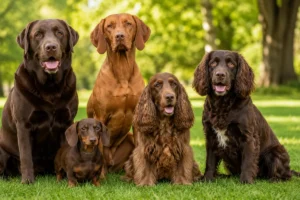
Brown dogs can range from light tan to deep chocolate. Some have solid brown coats, while others have brown mixed with white, black, cream, or red markings. This warm coat color appears in many breed groups and sizes. Types of brown dogs include sporting dogs, hounds, working dogs, and companion breeds.
Many brown dog breeds are friendly, active, and people-focused. Still, coat color does not decide personality, so owners should always study the breed first. Brown coats often hide outdoor dirt better than white coats. They may also look easier to maintain in homes with dust, soil, or garden play.
However, brown dogs still need brushing, bathing when needed, nail care, ear checks, and dental care. Some brown dogs have short coats that feel easy to manage. Others have long or curly coats that need regular grooming. This is why coat type matters as much as coat color when choosing a brown dog for your home.
Owners who like chocolate-coated family dogs can also read Purina’s Labrador Retriever guide before choosing a brown dog.
Popular Brown Dog Breeds
The Chocolate Labrador Retriever is one of the most popular brown dog breeds. It is friendly, active, and usually good with families. This dog needs daily exercise, training, and play because it has strong energy and loves being involved. The Chesapeake Bay Retriever is a strong brown sporting dog.
It is loyal, active, and built for outdoor work. This breed suits people who enjoy exercise, training, water activity, and a dog with a steady working nature. The Dachshund can come in brown or chocolate shades. It is small, brave, and full of character.
This breed can live in smaller homes, but owners must protect its long back from rough jumping and unsafe handling. The Cocker Spaniel can also have a brown coat. It is sweet, gentle, and people-loving. Its long ears and soft coat need regular care.
Care is especially important around the ears because moisture and dirt can build up easily. The Boykin Spaniel is another brown dog with a friendly nature. It often suits active homes and outdoor families. This breed enjoys movement, training, and close contact with people, so it should not be ignored for long hours.
Black Coat Dogs and Coat Color Genetics
Coat color genetics can sound difficult, but the basic idea is simple. Dog coat color comes from pigments in the body. The dark pigment, called eumelanin, helps create black and brown shades in the coat, nose, and skin. Genes control where pigment appears and how strong it looks.
This is why one dog may be solid black, while another may have black patches, brown points, or white markings. Breed history also affects coat patterns and color combinations. Black coat dogs often get their color from genes that allow strong dark pigment.
Brown dogs have pigment changes that create chocolate or liver shades. White-coated breeds may have genes that reduce visible pigment in the coat. But coat color does not decide temperament. Behavior comes from breed traits, training, socialization, health, and daily care.
Readers who want the science behind black coats can also read UC Davis’ guide to the Dominant Black gene in dogs.
What Coat Color Says About Dogs

Coat color can tell you a little about grooming, heat comfort, and visibility. However, it does not tell the full story. Breed size, energy level, health, and temperament matter much more than color alone. Black dogs may look bold and clean after muddy walks, but they can feel warmer in direct sunlight.
They may also show loose hair clearly on light clothes, floors, and furniture. Regular brushing helps manage this problem. White dogs may look bright and soft, but dirt can show quickly. Tear stains, muddy paws, and coat discoloration may need extra cleaning.
Many white-coated breeds also need careful grooming to keep the coat neat. Brown dogs often give a middle-ground look. Their coats can hide outdoor dirt better and may feel easier to maintain visually. Still, long-haired brown dogs need the same brushing and coat care as other long-haired dogs.
The simple rule is this: choose lifestyle first and color second. A beautiful coat will not matter if the breed does not fit your home, time, activity level, budget, or family routine. Your daily bond with your pet depends entirely on compatibility, not appearance.
How to Choose a Dog by Coat Color
Start with your daily routine before choosing by coat color. If you are active, a black Labrador, brown spaniel, or Portuguese Water Dog may fit well. These dogs need movement, play, training, and time with people. If you live in a smaller home, types of small white dogs may suit you better.
A Maltese, Bichon Frise, Westie, or white Pomeranian can fit apartment life if they still get walks, grooming, and attention. Long white coats and thick fluffy coats can take more work if you have limited grooming time. Short-coated black or brown dogs may feel easier, but they still shed and need care.
If you live in a hot area, think carefully about dark-coated breeds. Black dogs can get warm faster outside. Plan walks in cooler hours, avoid strong midday sun, and keep clean water available. Also, think about family needs. Some dogs are better with children, while others need experienced owners.
Before choosing any dog, check size, training needs, energy level, grooming cost, and common health concerns. A good dog choice should feel practical, not just pretty; the right breed must match your home, budget, time, and real daily life.
Coat color matters less than routine, so check dog personality types before choosing your final breed.
FAQs
What are the most common types of black dogs?
Common types of black dogs include Labradors, Rottweilers, Schipperkes, Portuguese Water Dogs, Great Danes, and many black mixed breeds. They can be small, medium, large, or giant.
Are black dogs more aggressive than other dogs?
No, black dogs are not more aggressive because of coat color. A dog’s behavior depends on breed traits, socialization, training, health, and the way owners raise it.
What are popular types of white dogs?
Popular types of white dogs include Maltese, Bichon Frise, Samoyed, Great Pyrenees, American Eskimo Dog, and West Highland White Terrier. Their size and grooming needs can be very different.
What are the best types of small white dogs?
The best types of small white dogs include Maltese, Bichon Frise, Westie, white Pomeranian, and small American Eskimo Dog. These breeds often suit smaller homes.
What are popular types of brown dogs?
Popular types of brown dogs include Chocolate Labrador, Chesapeake Bay Retriever, Cocker Spaniel, Dachshund, and Boykin Spaniel. Many brown breeds are friendly, active, and family-focused.
Does coat color affect dog health?
Coat color can affect heat comfort, sun sensitivity, and grooming needs in some dogs. However, breed genetics, diet, exercise, and vet care matter much more for health.
Are white dog breeds harder to keep clean?
Yes, many white dog breeds show dirt, tear stains, and mud faster than black or brown dogs. Regular brushing, face cleaning, and grooming help keep the coat neat.
Should I choose a dog based on coat color?
You can use coat color as a preference, but it should not be the main reason. Choose based on size, energy level, temperament, grooming needs, and lifestyle.
