


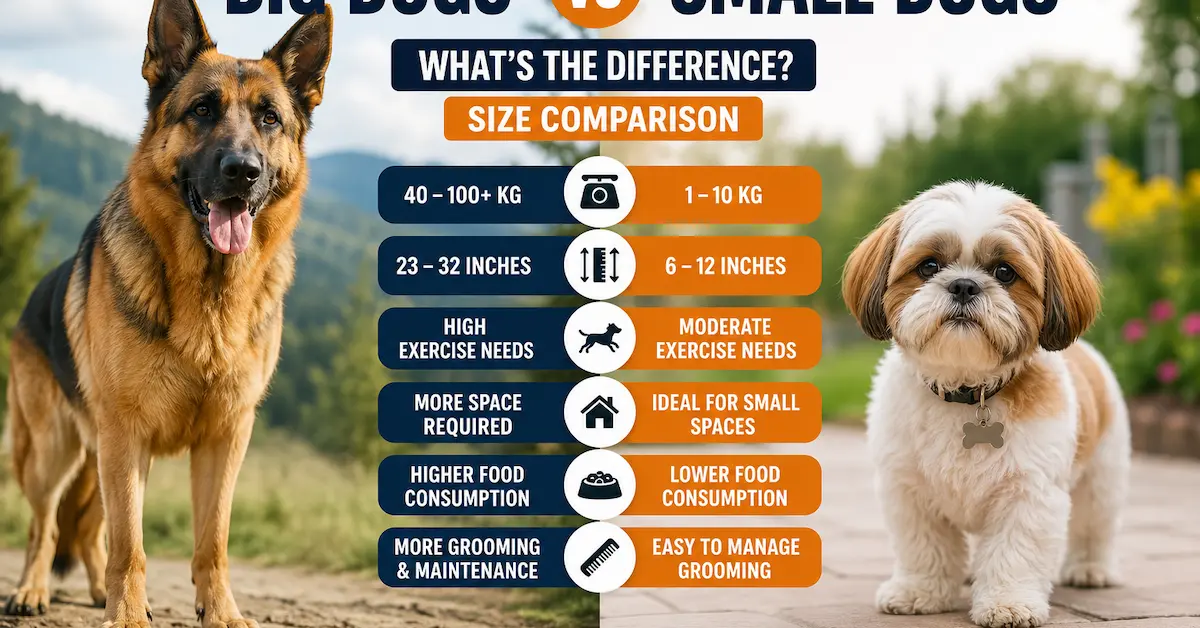
Many families dream of adding a powerful, loyal guardian or a small companion to their home environment today. However, selecting a brand new pet requires analyzing clear size data before committing to a specific breed line. This comprehensive guide evaluates how distinct skeletal frames.
Impact daily domestic management and training routines for families. Understanding the core difference between massive protection animals and energetic small companions changes how you manage your home setup.
Sizing variations bring completely different loyalty patterns and presence, but they also demand specific environmental setups to thrive. Getting a clear breakdown of these weight classes ensures a smooth transition for both the owner and the pet.
Analyzing the Strategic Sizing Matrix
Most owners divide domestic canines into simple size categories to match their specific household square footage perfectly. When analyzing big dogs vs small dogs – what’s the difference? (size comparison), the classification rules change completely based on body mass.
This massive variance includes animals with completely different energy levels, coat types, and historical working behaviors. The first major group focuses entirely on traditional herding animals and massive livestock protection guardians under the big vs small dog types matrix.
The second major group looks exclusively at energetic sporting animals and highly agile companion options. Mapping these groups helps you choose an animal that fits your active daily routine rather than just your aesthetic preference.
Readers can compare all types of dogs before choosing between big, small, and medium breeds.
Understanding True Growth Patterns in Sizing Categories
Physical development timelines differ dramatically when evaluating heavy working breeds against standard miniature animals inside a home. Large puppies require carefully regulated nutritional plans to protect developing skeletal structures during intense growth spikes.
Managing their rapid physical development requires consistent monitoring from experienced family handlers from day one. Dynamic bone development determines how easily a substantial pet handles high-impact agility training hurdles later in life.
Heavy skeletal frameworks remain highly vulnerable to premature joint degradation if exercised too aggressively early on. Providing balanced, low-impact conditioning movements keeps their expanding frames safe during critical development phases.
The Core Breakdown of Types of Big Dogs

The heavy guardian category contains animals traditionally bred for protective tracking, heavy pulling, and rescue operations. Modern types of big dogs retain these intense instinctual working drives within their primary genetic frameworks.
Breeds like Mastiffs and Rottweilers require confident household leadership and early defensive socialization steps. Managing big types of dogs demands adequate physical space for natural turning and stretching movements indoors.
Their substantial tails and heavy frames can accidentally damage fragile indoor home decorations inside narrow spaces. Owners must provide large structural bedding zones to support heavy skeletal pressure points comfortably.
Owners who prefer bigger companions can also compare large dog breeds before choosing a powerful family dog.
Evaluating Specialized Types of Large Dogs
The athletic giant class includes highly active sporting animals like German Shorthaired Pointers and traditional Setters. These specific types of large dogs possess exceptional stamina limits and high structural outdoor exercise requirements.
They require at least ninety minutes of intense outdoor physical activity every single day to stay settled. A detailed sizing assessment reveals distinct mental stimulation needs across different canine categories in the yard.
Large athletic animals excel at complex tracking tasks and long-distance retrieval games in open country fields. Failing to drain this physical energy often results in structural yard digging behaviors and excessive pacing indoors.
Core Large Dog Characteristics and Operational Needs
Substantial canines offer distinct operational advantages regarding family protection systems and active outdoor lifestyle companionship. Key large dog characteristics include a naturally calm indoor demeanor when handlers satisfy their exercise needs daily.
Many giant breeds possess a remarkably relaxed, low-frequency vocalization pattern compared to smaller companion animals. However, their substantial body mass directly translates to significantly higher monthly operational maintenance costs across the board.
Food consumption metrics show that a large working animal requires premium, specialized large-breed nutritional formulations. Additionally, professional grooming services and veterinary medication dosages scale up directly based on total physical weight.
Investigating the Diverse Types of Small Dogs

Balancing a topical cluster requires comparing substantial protection breeds against compact urban companion choices directly. Modern types of small dogs adapt beautifully to compact urban apartments and highly restricted city living spaces.
Their minimal physical footprint allows for easy transportation inside busy metropolitan subway networks and public parks. Smaller animals possess a highly efficient, rapid baseline metabolic rate compared to giant breeds.
They require nutrient-dense kibble designed specifically for fast, high-energy processing cycles to maintain structural health. Handlers must monitor caloric intake closely to prevent structural joint stress from sudden weight gains.
Apartment owners can also compare small dog breeds before choosing a compact companion for daily home life.
Tracking the Appeal of Distinct Types of Tiny Dogs
The miniature classification contains the absolute smallest direct descendants of historic toy lapdog bloodlines. These delicate types of tiny dogs require specialized indoor environments to guarantee absolute physical safety from accidents.
Breeds like Chihuahuas and Maltese fit comfortably inside small carrying bags for convenient urban travel options.A closer look at types of little dogs reveals high daily human dependence metrics across households.
They struggle to regulate their baseline body temperature during sudden winter weather drops and monsoon seasons. Owners must invest in protective clothing layers to safeguard them during standard outdoor bathroom breaks.
Sizing Balance: Evaluating Types of Medium-Sized Dogs
The middle-weight tier offers a practical compromise for families avoiding extreme physical canine sizing choices. Typical types of medium sized dogs include highly versatile herding lines like Border Collies and Australian Shepherds.
They combine the durable physical stamina of large animals with highly manageable indoor spatial footprints. medium-sized Medium companions adapt fastest to diverse family lifestyle adjustments over time.
They possess enough physical durability for intense outdoor hiking trips while fitting comfortably onto standard living room furniture. This flexibility makes them an exceptional baseline option for dynamic suburban households everywhere.
Readers can also compare medium dog breeds to understand balanced size, energy level, and family fit.
Core Companion Characteristics and Small Dog Traits

Smaller breeds possess distinct psychological profiles that influence daily household management strategies for owners. Key small dog traits include an incredibly alert nature and high environmental sensitivity scores indoors.
They notice minor structural changes inside the home and signal alerts immediately through sharp vocalizations. Unfortunately, many novice owners accidentally encourage negative habits through overprotective handling methods around guests.
Allowing a small animal to bypass basic obedience training creates problematic territorial guarding behaviors. Treating a small companion with consistent, firm boundaries ensures a balanced, confident pet over time.
The Training and Command Retention Realities
Basic command retention depends heavily on understanding specific breed drives and utilizing correct motivational reward systems. Size does not dictate absolute cognitive processing capabilities during intensive training sessions at home. Instead, your consistency and timing determine how quickly an animal adapts to household boundaries.
Large working animals require consistent leash control training from early puppyhood stages onward without exception. Their sheer physical power makes loose-leash walking an absolute safety requirement for crowded urban sidewalks. Focus on building strong focus cues before their physical mass matches adult human weight profiles.
Conversely, smaller breeds require patient housebreaking approaches due to smaller physical bladder capacities and faster metabolisms. Trainers must establish frequent, highly structured outdoor bathroom schedules during the first six months of development. Using high-value food rewards consistently accelerates their indoor housebreaking success scores significantly over time.
Comprehensive Sizing Matrix Analysis
Evaluating recurring expenses shows a massive gap between the structural size groups. We looked at premium dog food prices, standard veterinary care, and routine professional grooming service fees to map costs.
Sizing Category | Baseline Weight Range | Primary Dietary Need | Space Requirement |
Types of Tiny Dogs | 2 to 10 Pounds | Extra High Metabolism | Minimal Apartment Footprint |
Types of Small Dogs | 11 to 25 Pounds | High Protein Formulation | Low Indoor Spatial Demand |
Types of Medium Dogs | 26 to 55 Pounds | Balanced All-Breed Mix | Moderate Yard Access |
Types of Big Dogs | Over 55 Pounds | Joint Support Framework | Maximum Open Spatial Layout |
Large animals require heavy-duty accessories designed to withstand substantial physical jaw pressure and pull strength. Toy options and standard bedding materials wear out rapidly when utilized by giant protection breeds. Factor these recurring scaling costs into your long-term household financial planning structures before buying.
Long-Term Health Risks Associated with Mass

Skeletal scale directly influences the specific medical challenges an animal faces during its senior years. Large structures experience rapid cellular aging, which shortens their overall lifespan relative to smaller animals.
Managing senior giant dogs requires proactive veterinary checks and specialized preventative joint supplementation schedules. Gastric torsion and hip dysplasia represent severe structural threats for deep-chested massive breeds.
Owners must implement specific feeding protocols, like elevated bowls, to reduce these dangerous operational health hazards. Recognizing early signs of physical discomfort allows handlers to alter daily exercise routines before inflammation spikes.
Owners of large, deep-chested breeds should understand GDV in dogs because it can become a serious emergency.
Environmental Suitability and Household Mapping
Living arrangements play a critical role in determining the ideal canine size classification for families. Large animals can survive in apartments if owners commit to extensive outdoor behavioral exercise schedules daily. However, narrow stairwells and strict building weight limits often create structural obstacles for giant protection breeds.
Small companions navigate compact living spaces effortlessly without feeling physically confined or stressed by walls. They utilize indoor space efficiently, turning small rooms into functional play zones using interactive puzzle toys. This adaptability makes them the premier choice for modern high-rise city living arrangements today.
Behavioral Dynamics in Social Environments
Substantial breeds process social interactions differently than miniature companion animals during outdoor park excursions. Their large physical presence can trigger defensive reactions from smaller animals sharing the same communal space. Handlers must maintain complete physical control during early introductions to guarantee absolute environmental safety.
Proper socialization teaches massive dogs to monitor their own physical weight around smaller creatures. Well-socialized mastiffs display incredible patience when interacting with frantic miniature pups during play. Building this reliable behavioral maturity requires consistent, positive outdoor exposure throughout their youth.
Dietary Scaling and Nutritional Logistics

Managing the nutritional intake of a giant breed requires precise daily caloric calculations. Simple fillers or low-grade proteins can negatively impact their long-term digestive health and coat quality. Quality formulations focus heavily on adding glucosamine and chondroitin to sustain heavy cartilage structures over time.
Adult giant working lines consume multiple pounds of dry kibble daily during peak activity seasons. Handlers should split these massive portions into two or three smaller controlled meals to prevent bloating. Storing bulk food supplies properly keeps nutrients fresh and prevents accidental household pest infestations.
Owners can read this large breed nutrition guide before choosing food for bigger dogs.
Grooming Challenges Across Different Classes
Maintaining a pristine coat requires entirely different tools depending on the overall surface area of the animal. Massive double-coated breeds experience intense seasonal shedding periods that fill household living areas with loose fur. Handlers must invest in professional-grade undercoat rakes to manage this heavy volume effectively.
Conversely, short-haired large varieties require regular wipe-downs to eliminate trapped dirt and natural skin oils. Neglecting basic skin care can lead to hot spots and fungal infections underneath heavy skin folds. Establishing a weekly grooming pattern ensures early detection of hidden lumps or parasitic threats.
Historical Working Evolution of Sizing Bloodlines
Most massive contemporary canine options originated from highly specialized ancient utility and defense stock. Roman legions utilized massive ancestral mastiffs to guard camp perimeters and protect critical supply lines. These deep historical roots explain their modern tendency to monitor household entry points independently today.
Centuries of selective pressure refined their natural ability to make independent threat assessments without human guidance. Modern handlers must respect this genetic legacy by providing clear behavioral boundaries from early puppyhood. Channeling their protective instincts into structured tracking tasks prevents territorial issues in suburban neighborhoods.
Financial Projections for Senior Canine Care
The financial commitment required to sustain a large dog escalates dramatically during their senior years. Geriatric giant breeds often need specialized orthopedic beds to relieve chronic pressure point pain overnight. Additionally, therapeutic laser treatments and prescription anti-inflammatory drugs carry premium prices based on weight.
Smart owners build dedicated emergency medical funds early in the animal’s life cycle to handle these costs. Emergency surgeries or specialized joint replacements can strain household finances if unexpected issues arise. Planning for these specific senior weight metrics ensures your large companion receives quality care always.
Final Synthesis: Choosing Your Sizing Tier
Selecting between substantial working companions and compact lapdogs requires an honest, objective lifestyle evaluation. Consider your available daily time, physical arm strength, and long-term financial flexibility before picking an animal. Every structural size tier brings distinct advantages and unique management challenges to modern household units.
Utilize our recorded data metrics to align your choice with your realistic domestic environment constraints. Ensuring a perfect match between structural space and canine size guarantees a rewarding long-term relationship. Your chosen companion will thrive when their physical needs match your daily household operational routine.
Frequently Asked Questions (FAQs)
Which types of big dogs are best for first-time owners?
Golden Retrievers and Labradors are ideal for beginners due to their eager-to-please nature. They learn basic household rules quickly and are highly forgiving of training mistakes.
Are large dog breeds more expensive to maintain annually?
Yes, big dogs cost significantly more for high-volume dietary needs and medical care. Their specialized gear and heavy-duty toys also carry premium price tags.
Can large working dogs live comfortably inside compact apartments?
They can adapt if you provide extensive outdoor exercise every single day. However, their physical mass still requires dedicated indoor floor space to move safely.
Why do small dog types bark more frequently than giant breeds?
Small dogs have higher environmental sensitivity and instinctively sound alarms at minor changes. This habit worsens if owners skip setting firm boundaries during puppyhood.
Which dog size tier is safest for families with young children?
Medium-sized breeds offer the safest balance for active households with kids. They are sturdy enough to handle rough play without getting hurt or knocking over toddlers.
