


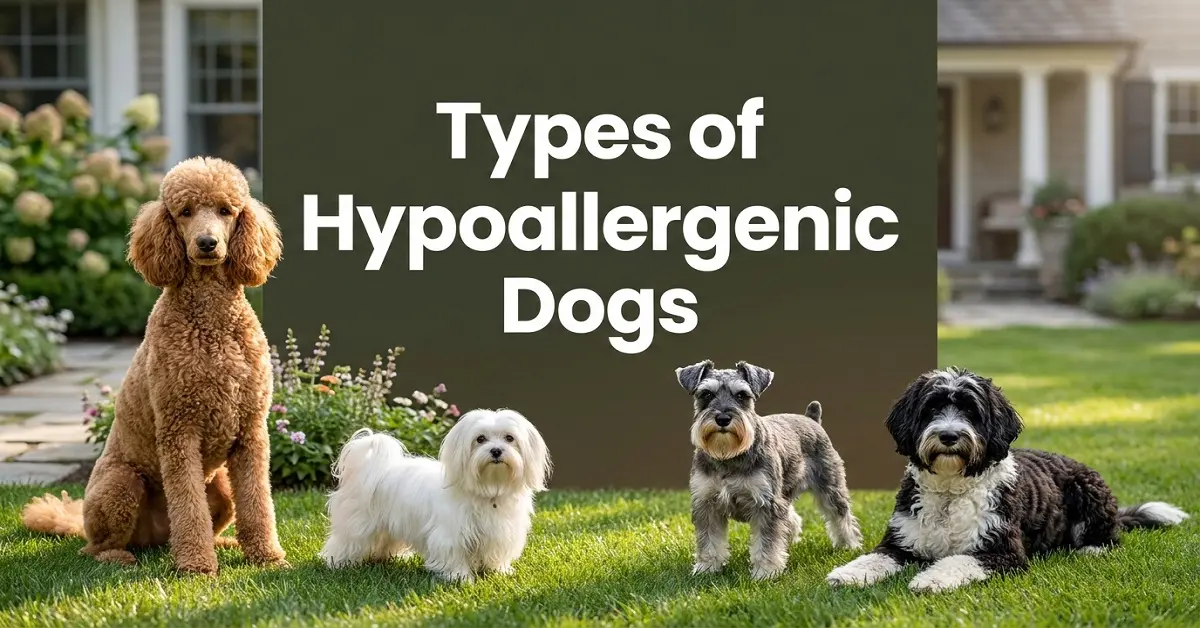
Looking for the types of hypoallergenic dogs that may suit your home? No dog is completely allergy-free. Some breeds shed less hair and may spread fewer allergens around the home, but every dog can produce allergy-causing proteins. About 10% to 20% of people in the U.S. are allergic to dogs, according to the American Kennel Club, citing the National Institutes of Health.
What Causes Dog Allergies?
Dog allergies are caused by proteins found in substances such as dander and saliva. Some dog allergens are also found in urine. Can f 1 is one of the main dog allergens, although several other dog allergens have been identified.
So, the hair itself is not the main problem. Hair can carry and spread allergen proteins around your home. Dander can settle on carpets, furniture, clothing, and bedding.
Breed is only one part of the picture. Scientific studies have found large differences between individual dogs, and research has not shown that a specific breed is truly hypoallergenic. One study found no meaningful difference in household Can f 1 levels between homes with dogs labeled hypoallergenic and other dogs.
That is why two people can react very differently to the same dog. Your own sensitivity matters.
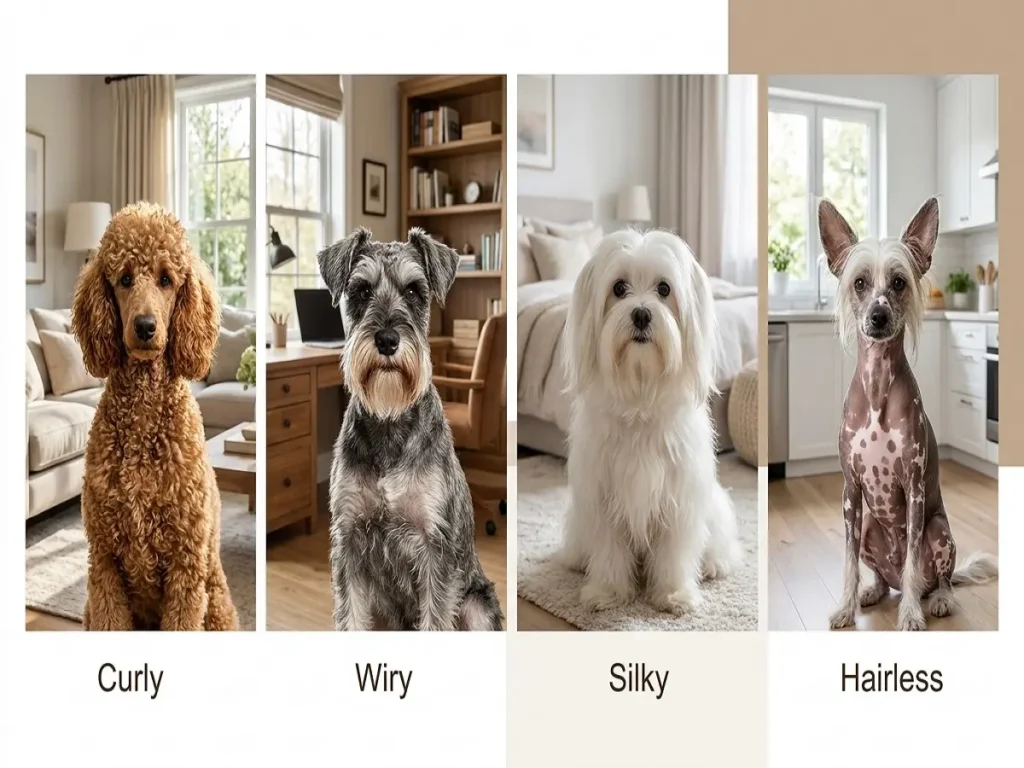
Hypoallergenic Dog Coats and Allergies
Many dogs called hypoallergenic have coats that shed less. This can mean fewer loose hairs carrying allergens around the house. However, low shedding does not mean zero allergens.
| Coat type | Example breeds | Shedding | Main care |
| Curly | Poodle, Portuguese Water Dog | Low | Regular brushing and trimming |
| Wiry | Schnauzer | Low | Brushing and coat maintenance |
| Silky | Maltese, Shih Tzu, Yorkie | Low | Frequent brushing |
| Hairless | Chinese Crested, Xoloitzcuintli | Very little hair | Skin cleaning and sun protection |
Curly coats can hold loose hair and skin flakes in the coat. Silky coats usually need frequent brushing to prevent mats. Hairless dogs have little fur, but they still produce skin and saliva allergens.
Regular grooming matters because it helps remove loose hair, dirt, and skin debris before they spread through the home.
Popular Hypoallergenic Dog Breeds
Small Hypoallergenic Dog Breeds
Maltese: This small companion dog has a long, silky coat that sheds very little. Daily brushing helps prevent tangles.
Bichon Frise: The Bichon has a curly coat and is known for being playful and trainable. Regular grooming is needed to keep the coat clean and free of mats.
Shih Tzu: Shih Tzus have a long, flowing coat with low shedding. Their coat needs frequent brushing, especially if kept long.
Yorkshire Terrier: Yorkies have a fine, silky coat that sheds little. Their small size also makes them a popular choice for apartment living.

Medium and Large Breeds
Poodle: Toy, Miniature, and Standard Poodles all have curly coats with low shedding. Their coats need regular brushing and professional trimming.
Portuguese Water Dog: This athletic breed has a curly or wavy coat and was developed in Portugal to work around water. It needs plenty of exercise and regular coat care.
Soft-Coated Wheaten Terrier: Wheatens have a soft, single coat that sheds lightly. They are active dogs and need regular exercise plus coat care.
Irish Water Spaniel: This large sporting breed has a curly coat and high exercise needs. Regular brushing helps keep its coat in good condition.
Standard Schnauzer: Its wiry coat sheds little compared with many other breeds. Standard Schnauzers are active and need regular exercise and grooming.
Hairless and Unique Breeds
Chinese Crested: This breed comes in hairless and Powderpuff varieties. The hairless type has exposed skin, so sun protection and regular skin care are important.
American Hairless Terrier: This small, active breed has little to no hair. However, less hair does not mean no allergens.
Xoloitzcuintli: Also called the Mexican Hairless Dog, the Xolo can be hairless or coated and comes in several sizes. Skin care is especially important for hairless dogs.
What About Labradoodles and Goldendoodles?
Labradoodles and Goldendoodles are popular Poodle mixes. Some have curly, low-shedding coats, but coat traits can vary from one dog to another. So, a doodle should not be treated as guaranteed allergy-friendly.
A 2012 study found no evidence that breeds commonly labeled hypoallergenic consistently produce lower environmental Can f 1 exposure.
How to Manage Dog Allergies at Home

Choosing a low-shedding dog is only one step. Home care matters too.
- Brush your dog regularly.
- As advised by your veterinarian, give your dog a bath.
- Wash dog bedding often.
- Vacuum carpets and furniture regularly.
- Use a HEPA air filter where practical.
- Keep the dog out of the bedroom if that room triggers symptoms.
- Wash your hands after handling the dog.
- Clean areas where the dog sleeps and rests.
Dog allergens can collect in bedding, carpets, and furniture. Research on allergy control supports regular cleaning, vacuuming, HEPA filtration, and keeping dogs out of selected rooms to reduce exposure.
If symptoms are strong or affect breathing, speak with an allergist or doctor.
How to Choose the Right Dog
A breed should not be selected only on the basis of shedding. Consider size, activity level, grooming needs, temperament, and your living space.
A simple approach works:
Have severe dog allergies?
→ Talk with an allergist
→ Spend time with the specific dog before adoption
→ Consider breeds with low shedding
→ Keep strict cleaning routines
Before bringing a dog home, spend time with that breed or, better yet, the actual dog you may adopt. Personal reactions can vary greatly between dogs.
Myth vs. Reality
Myth: Hypoallergenic dogs cannot cause allergies.
Reality: All dogs can produce allergens.
Myth: Hairless dogs are allergy-free.
Reality: They still produce allergens through skin and saliva.
Myth: A low-shedding coat proves a dog is hypoallergenic.
Reality: Low shedding may reduce loose hair, but research does not support any breed as completely hypoallergenic.
FAQs About Types of Hypoallergenic Dogs
Are hypoallergenic dogs real?
The term is widely used for breeds that shed little, but no dog is completely allergen-free.
Which dogs are best for people with allergies?
Poodles, Maltese, Bichon Frise, Shih Tzu, Yorkshire Terriers, Schnauzers, and Portuguese Water Dogs are commonly included among low-shedding breeds. However, personal reactions differ.
Can hairless dogs cause allergies?
Yes. Hairless dogs still produce allergy-causing proteins, even though they shed very little hair.
Do hypoallergenic dogs shed?
Many shed very little, but no breed is completely free of shedding or allergens.
How can I test a dog before adoption?
Spend time with the specific dog in an indoor setting and watch for symptoms. If you have significant allergies, an allergist can also help identify your triggers.
The best types of hypoallergenic dogs are therefore the ones that fit both your allergy needs and your daily life. Low shedding can be beneficial, but cleaning, grooming, and your specific response to each dog are equally important.
