


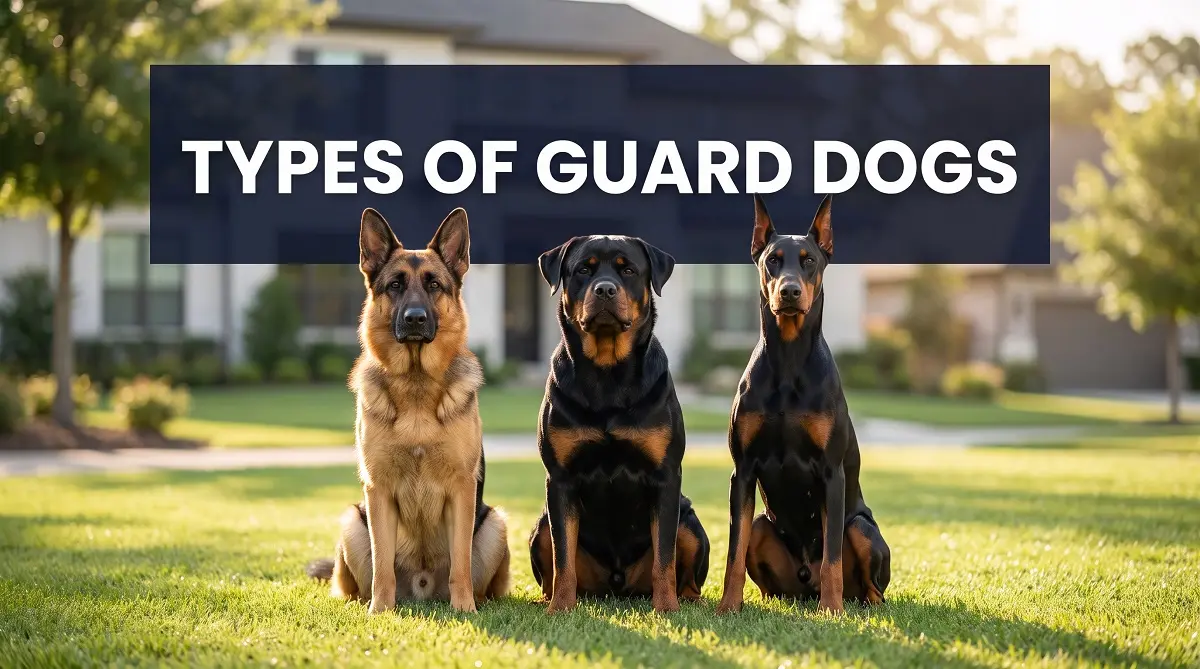
The main types of guard dogs are watchdogs, property guardians, family guardians, personal protection dogs, and livestock guardian dogs. Each type performs a different job. However, breed alone cannot show whether a dog suits your home. Temperament, responsible breeding, health, training, socialization, and daily management matter just as much. Therefore, choose a stable dog whose needs match your purpose, experience, family, and living space.
Quick Answer: What Are the Main Types of Guard Dogs?
Guard dogs fall into five broad roles. Some breeds can fill more than one role, but the work and training still differ.
| Type | Main job | Common setting | Key point |
|---|---|---|---|
| Watchdog | Alerts people by watching and barking | Apartment, home, small business | Warns but does not provide physical protection |
| Property guard dog | Deters and guards a fixed area | House, yard, warehouse, estate | Needs secure boundaries and visitor control |
| Family guardian | Lives with and watches over a household | Family home | Must remain calm around normal family activity |
| Personal protection dog | Works under a trained handler | Professionally supported home | Requires advanced selection, training, and control |
| Livestock guardian dog | Protects farm animals from predators | Farm, ranch, pasture | Works independently and may patrol or bark at night |
These categories describe jobs, not fixed breed groups. A German Shepherd may guard a family. In contrast, a Great Pyrenees usually guards livestock.
Watchdog vs Guard Dog vs Protection Dog
People often mix these terms. Yet each one carries different expectations and risks. Our guide to watchdogs and guard dogs explains the difference in more detail.
What Is a Watchdog?
A watchdog acts like an alarm. It notices unusual movement, sounds, visitors, or animals and then barks. Therefore, it does not need a large body or physical power. Miniature Schnauzers, Chihuahuas, Dachshunds, and many terriers can become effective alert dogs.
However, constant barking is not useful for guarding. Owners should teach the dog to settle after they check the situation.
What Is a Guard Dog?
A guard dog protects a person, place, family, or group of animals. It combines alertness with confidence, size, territorial awareness, or protective instinct. Often, its bark and presence deter trouble.
Still, a sound guard dog should not threaten every stranger. It must accept normal guests, neighbors, and workers under its owner’s control. The American Kennel Club says guardian breeds need proper training and socialization because of their strength and size (AKC).

What Is a Personal Protection Dog?
A personal protection dog works closely with a handler. First, professionals assess its health, nerves, temperament, and obedience. Then, they may teach controlled protection tasks. Most importantly, the dog must stop and return to its handler when directed.
Owning a German Shepherd, Doberman, or Belgian Malinois does not make it a protection dog. Professional selection, training, and continued handling create that role.
Is an Attack Dog the Same as a Guard Dog?
No. “Attack dog” describes trained or encouraged behavior, not a suitable household breed category. Responsible guarding depends on stability, deterrence, obedience, and control—not uncontrolled aggression. Therefore, families should never attempt DIY bite work.
Where Do Police and Military Dogs Fit?
Police and military dogs are specialist workers. They may track people, detect substances, search buildings, or protect handlers. However, professional work does not equal home guarding. Agencies select and train individual dogs for exact duties, so their breed choices should not guide an average household by themselves.
Types of Guard Dogs and Breeds at a Glance
The following breeds represent the main household, protection, and livestock roles. Weight ranges are approximate and may vary by sex and bloodline. Likewise, individual temperament can differ within any breed.
| Breed | Best-known role | Adult weight | Energy | Trainability | Owner fit | Main concern |
|---|---|---|---|---|---|---|
| German Shepherd | Family, home, trained work | 50–90 lb | High | High | Committed or experienced | Shedding, anxiety in poor lines, joint health |
| Doberman Pinscher | Family and personal protection | 60–100 lb | High | High | Committed or experienced | Cold sensitivity and inherited heart disease |
| Rottweiler | Family and property | 80–135 lb | Medium–high | High | Experienced preferred | Strength, joint health, housing restrictions |
| Bullmastiff | Home and property deterrence | 100–130 lb | Medium | Moderate | Experienced preferred | Heat, drool, mobility, giant size |
| Boxer | Family watchdog and guardian | 50–80 lb | High | High | Committed beginner or experienced | Jumping, heat, heart health |
| Giant Schnauzer | Family and property | 55–85 lb | High | High | Experienced | Grooming, territorial behavior, exercise |
| Belgian Malinois | Professional protection work | 40–80 lb | Very high | Very high | Experienced working owner | Extreme drive and daily work needs |
| Cane Corso | Home and property | About 85–110+ lb | Medium–high | High | Experienced | Power, territorial behavior, containment |
| Great Pyrenees | Livestock and rural property | 85–100+ lb | Medium | Moderate | Rural or experienced | Barking, roaming, shedding |
| Anatolian Shepherd | Livestock and large property | 80–150 lb | Medium | Moderate | Experienced livestock owner | Independence, power, stranger reserve |
Use this table as a starting point. Then, review the individual dog’s health, history, and behavior. Breed standards describe general traits, not guaranteed outcomes. The AKC breed directory can support further breed research.
Best All-Around Home and Family Guard Dogs
The best household guardian combines alertness with control. It should also fit the family’s activity level, space, and experience. For more options, compare our guide to family guard dogs.

German Shepherd
German Shepherds are intelligent, loyal, observant, and handler-focused. As a result, they can serve as companions, home guardians, or trained workers. They often live well with respectful children when adults train and supervise them.
However, they need daily physical and mental work. They also shed heavily. In addition, some lines face hip, elbow, digestive, or behavior problems. Therefore, ask about health tests, temperament, close relatives, and any available behavior history.
Doberman Pinscher
Dobermans bond closely with their families and often stay near their owners. They also learn quickly and enjoy athletic activity. However, long isolation may cause stress, while limited exercise can create restless behavior.
Their short coat needs little grooming but offers weak cold protection. Moreover, inherited heart disease is a serious breed concern. Ask a veterinarian and responsible breeder about suitable health screening.
Rottweiler
Rottweilers combine confidence, strength, and trainability. Their presence alone may deter an intruder. Even so, owners must teach leash manners, calm greetings, door control, and reliable settling.
Early socialization helps a Rottweiler handle normal life without overreacting. Meanwhile, adults must supervise children because of the dog’s size. Before choosing one, also check landlord, HOA, and insurance rules.
Bullmastiff
Bullmastiffs offer calm physical deterrence and often bark less than high-alert breeds. At home, many act devoted and relaxed. However, their size can knock someone over, so owners should teach controlled greetings early.
The short coat needs little care, although drool is common. Heat, excess weight, joint disease, and reduced mobility can also cause problems. Therefore, provide climate control and protect the dog from overexertion.
Boxer
Boxers are alert, playful, and strongly family-oriented. Therefore, they may suit an active home that wants a companion and watchdog. A stable Boxer may also suit a committed first-time owner with professional help.
However, young Boxers jump and play roughly, which can overwhelm toddlers. Training should start early. The breed also needs daily activity and protection from extreme heat or cold.
Giant Schnauzer
Giant Schnauzers are intelligent, powerful, and watchful. They need daily exercise plus mental work, such as obedience, scent games, or dog sports. Clear rules around doors, fences, guests, and animals also matter.
However, their territorial behavior and high activity can challenge inexperienced owners. Their wiry coat also needs regular brushing and professional trimming.
Guard Dogs for Experienced Owners
Some types of guard dogs bring more drive, power, or territorial behavior than most homes can manage. Intelligence helps them learn, but it does not make ownership easy.

Belgian Malinois
The Belgian Malinois is fast, sensitive, alert, and intensely driven. Selected dogs often perform police or military work. However, an average Malinois still needs structured exercise, problem-solving, impulse control, and close handler contact every day.
Without suitable work, it may chase movement, destroy objects, pace, or overreact. A yard cannot replace training. Therefore, most first-time owners should choose a calmer dog.
Cane Corso
The Cane Corso is a large mastiff with strong property-guarding instincts. It tends to watch strangers and bond closely with its household. Because of its power, owners need secure fencing, leash control, planned visitor routines, and early socialization.
The goal is calm neutrality, not friendliness with everyone. Even so, exercise, mental work, health screening, and insurance checks remain essential.
Livestock Guardian Dogs
Livestock guardians protect animals, while herding dogs move them. For example, a Great Pyrenees watches sheep and deters coyotes. A Border Collie, by contrast, controls the flock’s movement.
These independent guardians may patrol, roam, and bark at night. Such behavior can help on a ranch but cause problems in a suburb. The USDA includes guard dogs among the tools used to reduce livestock-predator conflict (USDA APHIS). Read our guide to livestock guardian dog breeds before choosing one.

Great Pyrenees
The Great Pyrenees is calm, patient, and imposing. It may rest for hours and then react quickly to a threat. However, barking, roaming, and heavy shedding require secure fencing and regular coat care.
Anatolian Shepherd
The Anatolian Shepherd is powerful, fast, independent, and reserved with strangers. Therefore, it suits experienced livestock owners with land and strong fencing. Early bonding with stock matters, while careful management protects visitors and neighboring animals.
What About Small Guard Dogs?
Small dogs can make strong watchdogs, but alerting differs from physical guarding. Miniature Schnauzers, Chihuahuas, Dachshunds, and terriers may detect unusual activity and bark. However, they cannot perform the same role as a large property guardian or trained protection dog.
Therefore, choose a small watchdog for companionship and warning. Also use secure doors, lighting, cameras, alarms, and other suitable security measures.
How to Choose Between Types of Guard Dogs
First, decide what needs protection: a person, family, home, business, or livestock. Next, match the dog to your experience, space, household, and schedule.
| Situation | Breeds to research | Main caution |
|---|---|---|
| Active family | German Shepherd, Boxer, Doberman | Daily physical and mental activity |
| Calm large-home guardian | Bullmastiff | Giant size, heat, drool, health costs |
| Experienced working home | Belgian Malinois | Extreme work drive |
| Large rural property | Cane Corso | Secure handling and containment |
| Livestock protection | Great Pyrenees, Anatolian Shepherd | Barking, roaming, fencing, stock bonding |
| Committed first-time owner | Boxer or selected German Shepherd | Professional support still advised |
Then, consider children and pets. No breed is automatically safe with either. Review the individual dog’s temperament, prey drive, health, and history. In addition, supervise children and use gradual animal introductions.
Space also matters. A large yard cannot help if the fencing fails. Likewise, apartment owners must consider shared halls, visitors, noise, landlords, and insurers. Finally, compare exercise, grooming, climate tolerance, health risks, and lifetime costs.
Training, Socialization, and Professional Support
Good training starts with daily life. Teach recall, leash manners, waiting at doors, leaving items, and settling. Moreover, introduce people, places, sounds, handling, and calm animals through safe, positive experiences.
Reward neutral behavior around visitors. Use secure gates and clear routines. In addition, supervise children and give the dog a quiet space. Seek help early for fear, guarding, lunging, or uncontrolled reactions.
The AVMA advises focusing on responsible ownership and individual behavior rather than assuming risk from breed alone (AVMA). Meanwhile, the AKC notes that dog training remains unregulated. Therefore, check a trainer’s methods, education, experience, and references (AKC). Advanced protection work should remain with qualified professionals.
US Legal, Housing, and Insurance Checks
Rules vary among states, cities, counties, landlords, and HOAs. Therefore, check licensing, leash laws, fencing, dangerous-dog rules, warning-sign duties, breed restrictions, and commercial-property requirements before choosing a dog.
Next, review homeowners or renters insurance. Policies often include dog-related liability, but limits and exclusions differ. Some insurers restrict breeds or exclude a dog after a bite. Common liability limits may range from $100,000 to $300,000, so ask an insurance professional to confirm your coverage in writing (Insurance Information Institute).
When a Guard Dog Is the Wrong Choice
A powerful guardian is a poor choice if you want aggression instead of stability. It also will not suit a household that lacks secure fencing, supervision, daily training, exercise, social contact, veterinary care, or visitor routines.
Better locks, lighting, cameras, alarms, or a small alert dog may offer a safer answer. Choosing a less intense dog can prevent a dangerous mismatch.
Frequently Asked Questions
What Is the Best Guard Dog for a Family?
No breed suits every family. German Shepherds, Boxers, Dobermans, Rottweilers, and Bullmastiffs suit different homes. Choose by temperament, children, experience, space, and training time.
Which Guard Dog Suits a First-Time Owner?
A stable Boxer or carefully selected German Shepherd may suit a committed beginner with professional help. An adult dog with a known history may also be easier to assess than a puppy.
Are Guard Dogs Naturally Aggressive?
Good guard dogs are confident, stable, alert, and responsive, not uncontrollably aggressive. Fear, pain, poor breeding, isolation, and harmful training can increase risk in any breed.
Can Guard Dogs Live With Children or Pets?
Some can, but temperament, history, training, introductions, and supervision matter. Never assume safety or animal compatibility from breed alone.
Can a Guard Dog Live in an Apartment?
Some individuals can adapt. However, shared halls, noise, visitors, and limited space make management harder. A small watchdog often makes more sense.
Do I Need Special Insurance?
Not always. However, policies may restrict breeds, exclude bite histories, or require extra coverage. Ask your insurer for a written answer before getting the dog.
Choosing the Right Type of Guard Dog
The right choice depends on the job, the individual dog, your experience, your home, and your ability to manage it every day. Although breed traits guide research, they never guarantee behavior. Therefore, compare the types of guard dogs carefully and value stability over power or reputation.
Finally, speak with a veterinarian, responsible breeder or rescue, qualified trainer, insurer, and local authority. Their input can help you avoid a poor match and choose a healthy, controlled companion.
