


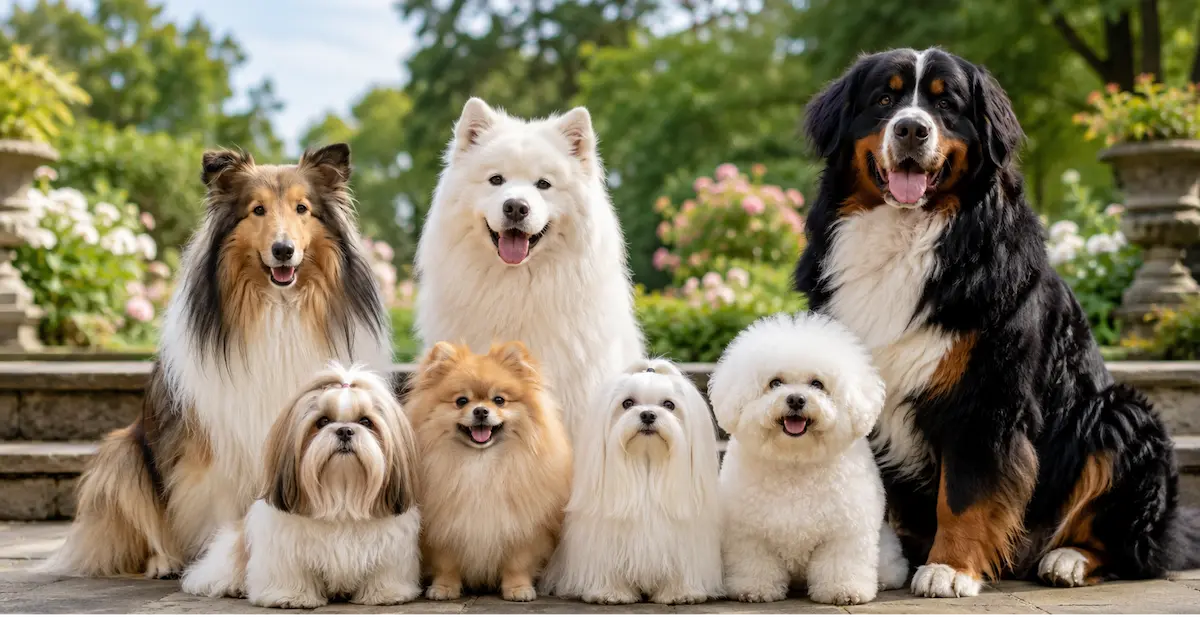
Types of fluffy dogs are loved for their soft coats, warm looks, and friendly companion nature. Some look like little teddy bears, while others look like large snow dogs with thick coats. But fluffy dogs are not all the same. Some have long silky hair, some have curly coats, and some have heavy double coats.
So, before choosing one, you should understand the coat type, grooming needs, shedding level, and home fit. A fluffy dog can be a lovely pet, but its coat needs care. If you choose only by looks, daily grooming can feel hard later.
Many people choose fluffy dog breeds because they look cute and feel comforting to live with. However, a fluffy coat also brings extra care. These dogs need brushing, bathing, trimming, and coat checks to stay clean and healthy.
If you ignore their coat, mats can form close to the skin. That can cause pain, dirt buildup, and skin problems. Therefore, choosing a fluffy dog should match your time, budget, and daily routine.
What Are Fluffy Dogs?
Fluffy dogs are breeds with soft, thick, long, curly, or dense coats. Their fur may feel cloud-like, woolly, silky, or heavy, depending on the breed. Some fluffy dogs have a single coat that grows like hair. Others have a double coat with a soft undercoat and a longer outer coat.
This coat gives them a fuller look and helps protect them from cold weather. That is why many fluffy breeds look bigger than their real body size. The term fluffy does not always mean the dog sheds a lot. Some fluffy dogs shed heavily during seasonal changes.
Others shed very little but still need regular grooming to keep their coat clean and healthy. For example, a Samoyed has a thick double coat and sheds more. A Poodle has a curly coat that traps loose hair. Both look fluffy, but their grooming needs feel very different for owners.
To understand where fluffy breeds fit, readers can compare all types of dogs by coat, size, and breed group.
Types of Fluffy Dogs by Coat Type
The main types of fluffy dogs can be grouped by coat texture. Long-haired dogs have flowing coats that need brushing to prevent tangles. Double-coated dogs have a soft undercoat that sheds during certain seasons. Curly-haired dogs have tight or wavy coats that trap hair close to the body.
Each coat type affects cleaning, shedding, grooming cost, and daily care. That is why coat type matters before choosing any fluffy breed. Long-coated dogs often need gentle brushing several times a week. Double-coated dogs need deeper brushing, especially when they blow their coat.
Curly-haired dogs usually need trimming every few weeks because their hair keeps growing. So, coat type matters more than cuteness alone. A beautiful, fluffy dog can become hard to manage if the owner does not understand its grooming routine. The right match keeps both the dog and owner comfortable.
Best Long-Haired Fluffy Dog Breeds

Long-haired fluffy dogs often look elegant and soft. Breeds like the Afghan Hound, Shih Tzu, Maltese, Lhasa Apso, Yorkshire Terrier, and Collie are strong examples. Their coats grow longer and need regular brushing to stay neat. Some long-haired dogs have silky coats, while others have thicker coats.
These dogs suit owners who enjoy grooming or can visit a groomer often. They may look easy to care for, but their coat needs a steady routine. The Maltese is a good example of a small long-haired dog with a white silky coat. It looks clean and graceful but needs brushing to avoid knots.
Without brushing, its soft hair can tangle quickly. The Shih Tzu also has a long coat and a sweet companion personality. Many owners keep these breeds in shorter puppy cuts to make daily care easier. This keeps the dog comfortable while still keeping its fluffy charm.
Readers can check this Afghan Hound profile to understand its long coat, grooming needs, and breed personality.
Types of Big Fluffy Dogs
Types of big fluffy dogs include breeds with large bodies, thick coats, and strong family presence. Popular choices include Samoyed, Great Pyrenees, Bernese Mountain Dog, Newfoundland, Chow Chow, and Alaskan Malamute. These dogs often look calm, powerful, and gentle.
Their coats usually protect them from cold climates, so they may struggle in hot weather if owners do not manage them carefully. Fresh water, shade, and cool indoor space matter a lot. Big fluffy dogs need more space, more food, and more grooming time. Their coats collect dirt, leaves, and loose hair easily after outdoor walks.
Owners should brush them regularly to keep the coat clean and comfortable. A Great Pyrenees may look peaceful indoors, but its double coat needs serious brushing. A Newfoundland also needs coat care because its thick fur can hold moisture. These breeds suit families who have enough room, time, and patience.
Small Fluffy Dog Breeds
Small fluffy dog breeds are popular with apartment owners and families who want a compact companion. Breeds like Pomeranian, Bichon Frise, Maltese, Toy Poodle, Shih Tzu, and Havanese fit this group well. They look cute, travel easily, and often bond closely with their owners.
However, their small size does not mean their coat care is always simple. Many small fluffy dogs need brushing, trimming, and regular coat checks. A Pomeranian has a thick double coat that makes it look much bigger than it really is. This coat needs regular brushing because a loose undercoat can build up quickly.
Regular care helps reduce tangles and loose hair. A Bichon Frise has a soft, curly coat that gives it a round powder-puff look. It sheds less than many breeds but needs trimming and brushing. Small fluffy dogs work best when owners treat grooming as part of weekly care.
Owners can read this Bichon Frise care guide to understand grooming, exercise, and daily care needs.
Curly and Wavy Fluffy Dog Breeds

Curly and wavy fluffy dog breeds have coats that trap loose hair instead of dropping it everywhere. Poodles, Bichon Frises, Portuguese Water Dogs, Lagotto Romagnolos, and some Doodle mixes have this type of coat. These dogs can suit owners who dislike heavy shedding.
Still, their coats need brushing and trimming because trapped hair can turn into mats. Curly coats can look neat only when owners maintain them properly. The Poodle is one of the most known curly-haired dogs. Its coat grows continuously and needs professional grooming.
The Bichon Frise also has a curly coat that needs regular shaping to keep its soft round look. Wavy coats may look easier, but they can still knot behind the ears, under the legs, and around the collar. Owners should check these areas often. Small coat checks can prevent bigger grooming problems later.
Fluffy Dogs vs Short-Haired Dogs
Many new owners compare fluffy breeds with types of short haired dogs before making a choice. Short-haired dogs usually need less brushing, but they can still shed. Their loose hair may fall on sofas, clothes, and carpets. Fluffy dogs may need more grooming, but some breeds drop less loose hair around the home.
So, the easier choice depends on the breed, not only coat length. A short coat does not always mean a cleaner home. Fluffy dogs often need more time after baths because their coats take longer to dry. Short-haired dogs dry faster and may need less coat styling. However, fluffy dogs can offer better warmth in cold weather and a softer cuddle feel.
If you want low maintenance, a short coat may suit you better. If you enjoy brushing and grooming, a fluffy dog can be a lovely match. Your daily routine should decide which coat type works best.
| Coat Type | Common Breeds | Grooming Need | Shedding Level |
|---|---|---|---|
| Long coat | Maltese, Shih Tzu, Collie | High | Low to medium |
| Double coat | Samoyed, Pomeranian, Great Pyrenees | High | Medium to high |
| Curly coat | Poodle, Bichon Frise, Lagotto Romagnolo | High | Low to medium |
| Short coat | Beagle, Boxer, Dalmatian | Low | Medium |
Grooming Needs of Fluffy Dog Breeds
Grooming needs are one of the biggest factors when choosing fluffy dog breeds. Most fluffy dogs need brushing at least three times a week. Some need daily brushing, especially if their coat is long or thick. Regular brushing removes loose hair, spreads natural skin oils, and prevents painful mats.
It also helps you spot fleas, ticks, bumps, or skin irritation early. Bathing should happen only when needed because too much washing can dry the skin and dull the coat. Always dry thick-coated dogs properly after bathing, as damp fur can cause smell and skin problems.
Many fluffy dogs also need professional grooming every four to eight weeks. This keeps the coat shaped, clean, and easier to manage at home. A good grooming routine keeps the dog healthy and looking fresh.
Owners who want easier coat care can compare hypoallergenic toy dog breeds before choosing a fluffy companion.
Double Coat Dogs and Shedding

Double-coated dogs have two layers of fur. The soft undercoat keeps them warm, while the outer coat protects them from dirt and weather. Breeds like Samoyed, Chow Chow, Great Pyrenees, Pomeranian, and Alaskan Malamute have this coat type. These dogs often shed more during seasonal changes.
During this time, loose undercoat comes out in large amounts, which many owners call coat blowing. Regular brushing helps control shedding and keeps the coat from building up. It also removes dead hair before it spreads around the home. This makes the dog cleaner and more comfortable.
You should never shave a double coat dog without a vet or groomer’s advice. Their coat helps protect them from both cold and heat. Shaving can damage coat growth and reduce natural protection. Instead, use proper brushing tools to remove loose undercoat safely.
Best Fluffy Dogs for Families
Double-coated dogs have two layers of fur. The soft undercoat keeps them warm, while the outer coat protects them from dirt and weather. Breeds like Samoyed, Chow Chow, Great Pyrenees, Pomeranian, and Alaskan Malamute have this coat type. These dogs often shed more during seasonal changes.
During this time, loose undercoat comes out in large amounts, which many owners call coat blowing. Regular brushing helps control shedding and keeps the coat from building up. It also removes dead hair before it spreads around the home. This keeps the coat cleaner and easier to manage.
You should never shave a double coat dog without a vet or groomer’s advice. Their coat helps protect them from both cold and heat. Shaving can damage coat growth and reduce natural protection. Instead, use proper tools to remove loose undercoat safely.
Families can check this Havanese profile to understand its coat, energy level, and companion nature before choosing a fluffy family dog.
Best Fluffy Dogs for Apartments
Apartment owners often prefer small fluffy dogs because they take up less space. Maltese, Toy Poodle, Shih Tzu, Bichon Frise, Havanese, and Pomeranian can work well in small homes. These breeds still need walks, playtime, and mental activity. A small size does not remove the need for exercise or training.
Even tiny fluffy dogs can become noisy or bored without a proper routine. Noise level also matters in apartments. Some fluffy dogs bark when they hear hallway sounds, visitors, or traffic. Early training helps reduce this habit and teaches the dog to stay calmer indoors.
Regular brushing also matters in small rooms because loose coat buildup becomes more noticeable. If you live in an apartment, choose a fluffy dog with a calm nature, manageable grooming needs, and suitable energy level.
Best Fluffy Dogs for First-Time Owners

First-time owners should choose fluffy dogs that are friendly, trainable, and not too hard to manage. Bichon Frise, Havanese, Shih Tzu, and Toy Poodle can suit many new owners. They are small, affectionate, and usually eager to bond. However, they still need grooming appointments, house training, and daily attention.
A beginner-friendly dog still needs consistent care and patience. Large fluffy dogs can be harder for beginners because they need more strength, space, and money. A Samoyed or Newfoundland may look beautiful, but their coat care and size can overwhelm new owners.
If this is your first dog, start with a breed that fits your schedule. A good match makes training easier and keeps both owner and dog happier. The best choice is the one you can handle daily. Proper breed selection prevents overwhelming responsibilities for busy new owners.
Common Problems with Fluffy Dog Coats
Fluffy coats can hide problems if owners do not check them often. Mats can form behind the ears, under the armpits, around the tail, and near the belly. These tight knots pull on the skin and can become painful. Thick coats can also trap moisture, dirt, and outdoor debris.
This may lead to smell or skin irritation. Regular brushing, proper drying, and coat checks help prevent these issues before they become serious. Owners should also watch for overheating in hot weather. Some fluffy breeds come from cold climates and may struggle during warm days.
Provide shade, fresh water, and indoor cooling when needed. Avoid long walks during peak heat. A fluffy coat looks lovely, but it needs smart care to keep the dog safe and comfortable. Weather, grooming, and exercise all matter for coat-heavy breeds.
How to Choose the Right Fluffy Dog
Choosing the right fluffy dog starts with your lifestyle. Think about your home size, work schedule, grooming budget, and energy level today. If you want a small indoor companion, a Maltese, Havanese, or Bichon Frise may work well.
If you want a large outdoor-loving dog, a Bernese Mountain Dog, Samoyed, or Newfoundland may suit you better. These heavy breeds need more room and more coat care, so they need owners who can handle their massive size daily.
Also think about coat care honestly before buying. Some owners enjoy brushing and grooming, while others want easier maintenance routines. If you do not have time for regular brushing, you should avoid these high-maintenance coats completely.
The best fluffy dog is not always the cutest one available. It is the one you can care for properly every day, through every season. A realistic choice creates a much better and happier life for you and your dog.
If you want a compact indoor companion, compare small dog breeds before choosing the right fluffy dog for your home.
Final Thoughts on Types of Fluffy Dogs
Types of fluffy dogs include long-haired breeds, curly coat dogs, double coat dogs, big fluffy breeds, and small companion dogs. Each type has a different look, care level, and home fit. Some need daily brushing, while others need regular trimming. Some shed heavily, while others hold loose hair in the coat.
Knowing these differences helps you choose a dog that matches your lifestyle. Before choosing a fluffy dog, look beyond the soft coat and cute face. Study the breed’s grooming needs, shedding level, exercise routine, and family fit. A fluffy dog can bring warmth, joy, and comfort to your home.
With the right care, the right breed becomes more than a beautiful pet. It becomes a loyal companion for years. Choose with patience, and your fluffy dog will fit your home much better. Taking your time to research ensures a deep, lifelong bond between you and your pet.
Frequently Asked Questions
What are the most common types of fluffy dogs?
The most common types of fluffy dogs include long-haired dogs, curly-haired dogs, double coat dogs, and small fluffy companion breeds. Popular examples include Pomeranian, Samoyed, Bichon Frise, Shih Tzu, Maltese, and Poodle.
Are fluffy dogs hard to groom?
Yes, many fluffy dogs need regular brushing because their coats can tangle easily. Long-haired and double coat dogs usually need more grooming than short-haired dogs.
Which fluffy dogs are best for families?
Good family-friendly fluffy dogs include Bernese Mountain Dog, Collie, Havanese, Bichon Frise, and Shih Tzu. The best choice depends on your home size, grooming time, and children’s age.
Do fluffy dogs shed a lot?
Some fluffy dogs shed heavily, especially double coat breeds like Samoyed, Pomeranian, and Great Pyrenees. Curly-coated dogs like Poodles and Bichon Frises often shed less but need regular trimming.
What is the best fluffy dog for apartments?
Maltese, Toy Poodle, Bichon Frise, Shih Tzu, Havanese, and Pomeranian can suit apartment living well. They still need daily walks, training, and regular coat care.
