


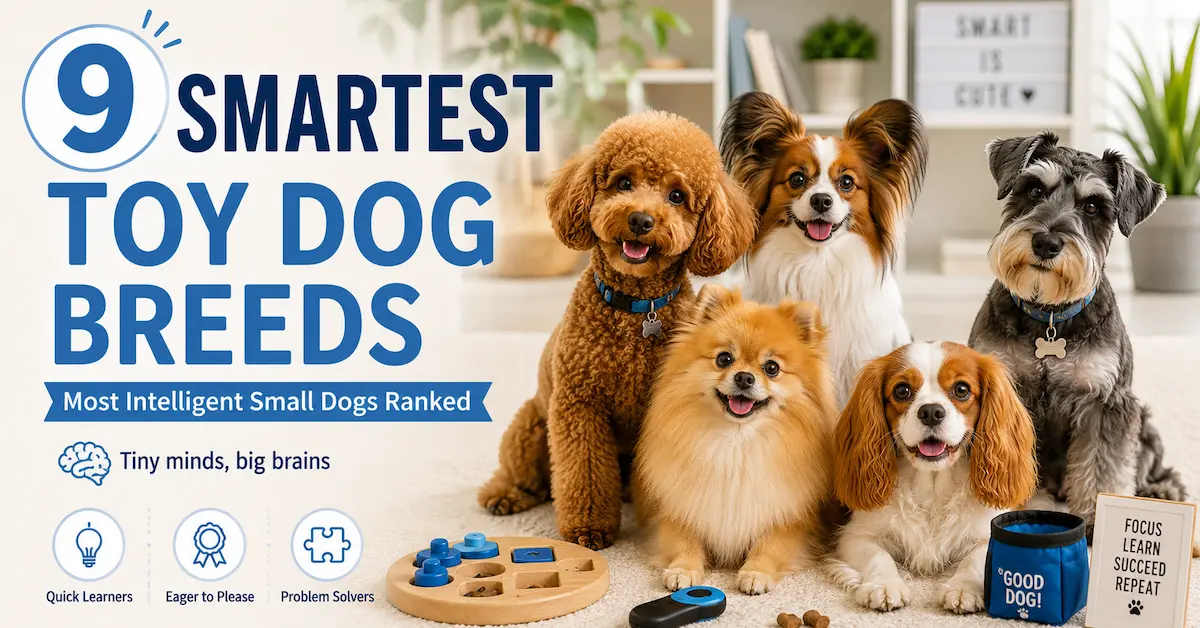
Many families dream of adding a small, affectionate pet to their household environment. However, generic dog training advice often fails when applied to smaller companion animals. Selecting a highly intelligent canine helps owners skip common housebreaking and behavioral hurdles easily.
Modern canine behavioral science shows that compact size does not limit a dog’s learning capability. In fact, specific small canines process complex instructions faster than many larger working animals. We evaluated the top-performing small pups based on adaptive problem-solving skills.
Understanding True Cognitive Ability in Dogs
True canine intellect involves distinct metrics like working intelligence, adaptive learning, and emotional processing. Most generic ranking guides only look at basic obedience repetition counts during artificial training sessions. This structured approach often ignores how small companions manage complex daily indoor challenges.
Evaluating high-level cognitive ability in dogs requires looking closely at real-world problem-solving skills. Smart small animals quickly learn to read human emotional facial cues and environmental changes. They adjust their indoor behavior based on established household schedules without constant guidance.
Furthermore, dynamic cognitive traits determine how easily a smaller pet handles advanced clicker training. High intellect pups require consistent mental stimulation to prevent stress-induced indoor chewing habits. Providing interactive puzzle toys keeps their active minds busy during standard working hours.
Evaluating the Strategic Matrix of Toy Dog Breeds
The global canine community separates small companion pups into highly distinct structural groups. While many owners select pets based purely on visual appeal, experienced trainers look at genetics. The genetic history of toy dog breeds heavily dictates their baseline trainability.
Historically, specific small breeds worked as highly capable hunting partners or watchful alert animals. These working roots left an enduring legacy of intense focus and quick decision-making. Recognizing this lineage changes how modern owners approach daily house training schedules.
Our behavioral evaluation tracks how quickly distinct bloodlines master complex foundational household manners. We focus on tracking the absolute best options for modern small apartment living. This structured guide simplifies the selection process for highly analytical pet owners everywhere.
1. The Supreme Benchmark of Toy Poodle Intelligence

The iconic Poodle group consistently dominates international canine obedience rankings across all major categories. Their incredible reputation stems from highly specialized water-retrieval ancestry developed centuries ago in Europe. This background created the exceptional foundation for modern toy poodle intelligence traits.
These agile animals process new structural verbal commands in fewer than five quick repetitions. They excel at recognizing distinct human vocabulary words and anticipating multi-step household activities. This deep situational awareness makes the toy poodle an exceptional choice for novice handlers.
Furthermore, advanced breeders appreciate how naturally toy poodle dog breeds master complex agility courses. Their physical coordination perfectly matches their rapid processing speed during high-stress competitive events. They remain the ultimate standard for families seeking a highly responsive companion.
2. The Analytical Drive of Toy Fox Terrier Dog Breeds
The energetic Terrier family brings a completely different style of critical thinking to standard obedience. Originally bred to clear agricultural spaces of fast pests, they possess incredible physical reflexes. Modern toy fox terrier dog breeds retain this sharp spatial awareness and high hunting drive.
An individual toy fox terrier solves complex mechanical puzzles significantly faster than relaxed lapdog types. Their stubborn determination drives them to manipulate toy locking mechanisms until they unlock food. This tireless work ethic makes them highly rewarding for active families.
However, handlers must channel this raw intelligence through consistent positive reinforcement training methods. Without a clear daily job, a terrier will independently invent their own destructive entertainment. Managing their bright minds requires structured playtime and clear behavioral boundaries.
3. The Attentive Charm of the Papillon
The Papillon stands out as a true master of complex agility and trick learning. Their distinct butterfly-shaped ears match an equally bright, alert, and deeply observant indoor behavioral personality. They track human movements continuously to identify opportunities for rewarding operational engagement.
Trainers rank them exceptionally high because they maintain focus despite loud external environmental distractions. A Papillon actively enjoys learning intricate multi-step performance routines for positive human validation. Their upbeat attitude makes complex training sessions feel like fun, competitive games.
Readers can also check this Papillon profile for more breed details.
4. The Fearless Alert Mind of the Miniature Schnauzer

Miniature Schnauzers possess a highly structured working mindset wrapped in a small, compact frame. Their historic farm protection background makes them excellent watchdogs with sharp analytical processing skills. They distinguish between routine neighborhood noises and actual unusual household security situations quickly.
This deep analytical capability means they respond beautifully to firm, structured boundary training systems. They memorize spatial house rules rapidly and respect established territorial lines inside modern apartments. Their natural focus ensures they retain complex commands over long periods.
5. The Bold Problem-Solving of the Pomeranian
Pomeranians frequently surprise new owners with their deep, highly capable vocal communication skills. This independent Arctic sled-dog descendant possesses an incredibly bold and highly curious natural mindset. They explore their immediate surroundings analytically to find clever ways to access hidden rewards.
Because they possess a proud history, they require clear leadership during early housebreaking. A Pomeranian learns quickly when trainers use highly motivating, high-value food reward systems consistently. Their sharp minds adapt beautifully to advanced socialization schedules in busy urban centers.
Owners can read this Pomeranian care guide to understand grooming, training, and daily needs.
6. The Historic Instincts of the Cavalier King Charles Spaniel
The gentle Cavalier combines classic hunting spaniel instincts with a deeply affectionate lapdog personality. They possess an exceptional capacity for emotional intelligence, tracking human feelings with incredible precision. This unique trait makes them phenomenal candidates for specialized emotional support dog roles.
Their learning style relies heavily on gentle guidance and positive vocal encouragement from owners. They master basic household manners effortlessly because they genuinely desire consistent domestic harmony. This cooperative spirit ranks them among the most reliable, comforting indoor companions.
7. The Resourceful Cleverness of the Brussels Griffon

The Brussels Griffon brings an incredibly quirky, highly expressive human-like personality to the table. These unusual dogs possess a deep history as highly efficient, stable guardians in old Europe. They look at daily household challenges with a funny, fiercely independent, analytical lens.
While they occasionally display a stubborn streak, their conceptual problem-solving skills remain remarkably high. They figure out clever ways to communicate their specific physical needs to human owners. This interactive communication loop creates a deeply rewarding bond for experienced handlers.
Readers can check this Brussels Griffon profile to understand its temperament, energy, and companion needs.
8. The Alert Watchfulness of the Schipperke
Schipperkes earned the historic title of “little captain” on traditional European canal boats. This intense maritime background created a breed with exceptional balance and lightning-fast environmental reflexes. They monitor their chosen home territory with absolute dedication and sharp intellectual focus.
Their high independent intellect means they enjoy complex agility tasks that challenge their bodies. They require a confident handler who understands how to direct intense working drives productively. When managed correctly, their loyalty and sharp learning capacity remain completely unmatched.
9. The Quick Adaptability of the Havanese
The cheerful Havanese possesses a remarkably flexible mind that handles lifestyle changes with ease. These popular Cuban companions excel at reading social dynamics within large, busy human families. They adjust their energy levels perfectly to match old adults or active young children.
Their high trainability shines brightest when learning complex interactive parlor tricks and tracking games. They process vocal correction gently without shutting down emotionally during tough learning phases. This resilient attitude makes them a top choice for dynamic urban environments.
Core Pillars of Training Trainable Small Dogs

Sustaining high-level performance across the best toy dog breeds requires understanding small-dog biology. Many traditional handlers make the mistake of using heavy physical corrections on small frames. This outdated approach creates intense fear responses instead of reliable behavioral obedience outcomes.
Developing truly trainable small dogs requires short, high-energy training sessions spaced throughout the day. Smaller brains lose focus quickly if repetitive drills become boring or physically exhausting. Keep learning sessions under five minutes to maximize structural information retention scores.
Additionally, always use premium, tiny food treats that motivate without causing rapid weight gains. High-intelligence dogs calculate the exact value of rewards before executing a known verbal command. Offering variable reward schedules keeps their analytical minds sharp and intensely focused.
Creating the Ideal Environment for High-Intelligence Pups
Smart small dogs require an enriched indoor environment to maintain balanced mental health. Leaving an analytical animal alone in a bare room causes severe separation anxiety. Install structural climbing ramps and accessible window perches to stimulate their visual tracking senses.
Rotate interactive puzzle toys weekly to keep the problem-solving challenge fresh and exciting. Smart breeds memorize puzzle mechanics quickly, rendering static toys useless after a few days. Introducing new scent-tracking games inside the living room exercises their deep ancestral instincts.
Finally, ensure every family member enforces identical household behavioral rules across the board. Inconsistency allows an intelligent dog to manipulate situations and develop pushy behavioral habits. Total structural consistency across handlers guarantees a well-mannered, highly reliable companion animal.
Frequently Asked Questions (FAQs)
Which toy dog breed is the easiest to train?
The Toy Poodle is the easiest small breed to train due to its heritage. They process new commands in fewer than five repetitions, making them highly responsive for novice owners.
Do smart toy dog breeds suffer from separation anxiety?
Highly intelligent small dogs develop separation anxiety quickly if they lack daily mental stimulation. A boring environment triggers destructive chewing habits while owners are away at work.
How do you keep an intelligent small dog mentally stimulated?
Stimulating an analytical pup requires a rotating schedule of puzzle toys and scent games. Spending five minutes on trick training every evening burns excess mental energy effectively.
Are smart toy dogs good for apartment living?
Yes, intelligent toy breeds excel in apartments because they memorize indoor boundaries quickly. However, they need regular indoor games to prevent boredom in compact spaces.
Do intelligent small dogs bark more than other breeds?
They only bark more if they are bored or lack proper behavioral training. Channeling their bright minds through active commands keeps them quiet and well-mannered.
