


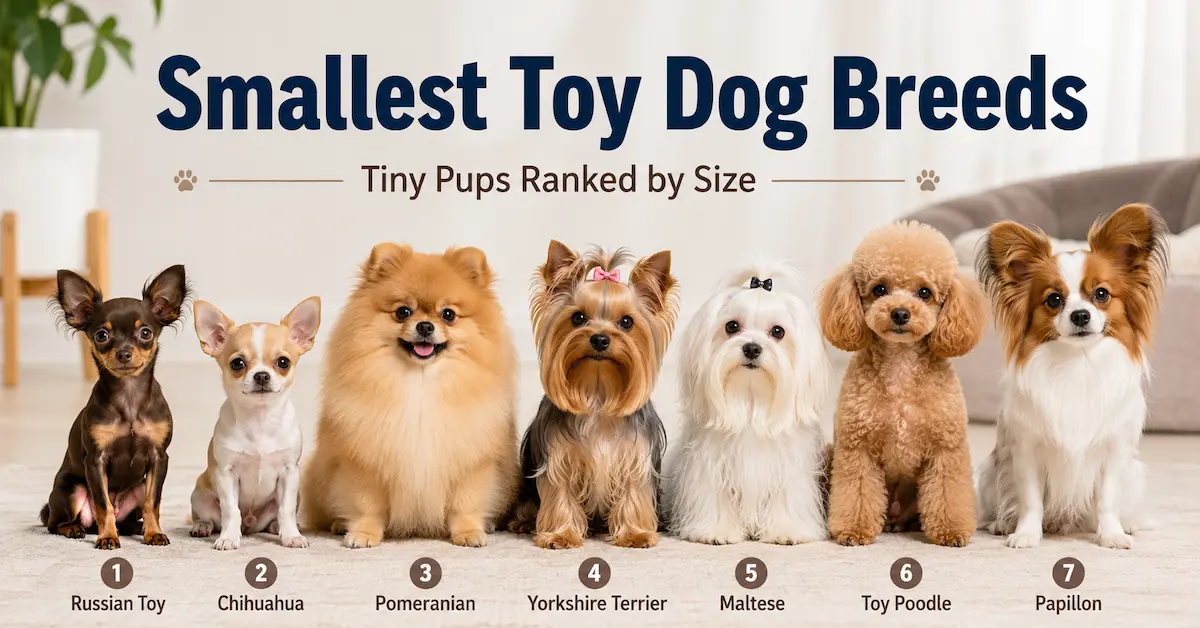
The smallest toy dog breeds look cute, but size is only one part of the story. These tiny dogs need the right food, safe handling, regular grooming, and careful training. Many people choose them for apartments, small homes, or lap dog companionship, but every breed has its own personality and care needs.
Toy dogs can fit well into busy homes when owners understand their limits. A tiny body does not always mean a calm dog. Some small dogs act bold, alert, playful, and full of energy. Others prefer quiet rooms, gentle handling, and close bonding with one or two trusted people.
This guide ranks the smallest toy dog breeds by size and explains what makes each one different. You will learn about the Chihuahua, Pomeranian, Yorkshire Terrier, Maltese, Toy Poodle, Papillon, Russian Toy, and other tiny toy dog breeds before choosing the right small companion.
What Are the Smallest Toy Dog Breeds?
The smallest toy dog breeds usually weigh under 10 pounds, though some may grow a little heavier depending on health, breeding, and body shape. These dogs often have compact frames, short legs, fine bones, and small stomachs. Because of that, owners need to watch meals, exercise, stairs, and rough play carefully.
Toy breeds became popular because people wanted small companion dogs that could live indoors and stay close to the family. Many of these dogs still love attention, comfort, and human contact. They can enjoy apartment life, but they still need walks, playtime, training, grooming, and mental activity.
The word toy describes size, not weakness. Tiny dogs still need structure, rules, and daily care. Without training, they may bark too much, guard people, or become nervous around strangers. With patient care, most toy breeds can become loving, confident, and easy to manage at home.
If you want a full size and care overview, read our guide on toy dog breeds before choosing a tiny companion.
Smallest Toy Dog Breeds Ranked by Size
This ranking uses common adult size ranges, but every dog can vary. Genetics, diet, exercise, and health all affect final weight. Some breeders may advertise teacup toy breed dogs, but extra tiny puppies can face more health risks. Choose health and temperament before choosing the smallest possible size.
Rank | Breed | Usual Weight | Best For |
|---|---|---|---|
1 | Chihuahua | 2 to 6 lb | Adults, apartments, alert homes |
2 | Yorkshire Terrier | 4 to 7 lb | Active owners, small homes |
3 | Pomeranian | 3 to 7 lb | Playful homes, confident owners |
4 | Maltese | 4 to 7 lb | Gentle homes, lap dog lovers |
5 | Russian Toy | 3 to 6 lb | Quiet homes, careful owners |
6 | Papillon | 5 to 10 lb | Active owners, training lovers |
7 | Toy Poodle | 4 to 6 lb | Smart homes, allergy aware owners |
8 | Japanese Chin | 7 to 11 lb | Calm homes, gentle families |
1. Chihuahua

The Chihuahua often comes first when people talk about the smallest toy dog breeds. This tiny dog usually weighs around 2 to 6 pounds and has a bold personality. Many Chihuahuas act brave, alert, and loyal, even though their bodies are very small and delicate.
Chihuahuas can live well in apartments because they do not need large spaces. Still, they need daily walks, playtime, and training. Without structure, they may bark at visitors, guard their owner, or become nervous. Calm handling helps them feel safer around new people and busy places.
This breed suits owners who understand small dog safety. Chihuahuas can get hurt from jumping off furniture or rough play with large pets. Families with children should teach gentle handling. With patience, this tiny toy dog can become affectionate, funny, loyal, and deeply attached to its owner.
Readers can check the Chihuahua profile to compare size, temperament, grooming, and care needs before choosing this tiny breed.
2. Yorkshire Terrier
The Yorkshire Terrier, often called a Yorkie, stays small but carries a lively terrier spirit. Most Yorkies weigh around 4 to 7 pounds. Their silky coat, bright eyes, and confident walk make them one of the most popular mini toy dog breeds for small homes.
Yorkies often act curious, brave, and energetic. They like attention and may enjoy short walks, indoor games, and training sessions. Their small size suits apartments, but their alert nature can lead to barking. Early training helps them learn when to stay calm and when to respond.
This breed needs regular grooming because the coat can tangle easily. Some owners keep the coat short for easier care. Yorkies can suit singles, couples, and families with older children. They work best with owners who want a small dog with personality, energy, and confidence.
3. Pomeranian
The Pomeranian looks fluffy, bright, and full of charm. Most Pomeranians weigh around 3 to 7 pounds, but their thick coat makes them look larger. This breed has a lively nature and often enjoys attention, playtime, short walks, and family activity.
Pomeranians can make good apartment dogs when owners manage barking and energy. They often notice sounds quickly and may alert the home. Training, social time, and gentle correction help them stay balanced. Without guidance, they can become noisy, bossy, or too excited around visitors.
Their coat needs regular brushing because the thick fur can shed and mat. Pomeranians also need careful handling because their small legs and frame can get injured. This breed suits owners who want a tiny dog with a big attitude, playful spirit, and bright expression.
4. Maltese

The Maltese is a gentle toy breed with a soft white coat and sweet personality. Most Maltese dogs weigh around 4 to 7 pounds. Many people choose this breed because it feels affectionate, elegant, and easy to love in a small home or apartment.
Maltese dogs often enjoy sitting close to their owner, but they still need walks and playtime. They can do well with seniors, singles, couples, and calm families. Because they bond strongly, some may dislike long hours alone. A steady routine helps reduce stress and clingy behaviour.
This breed needs regular grooming to keep the coat clean and smooth. Tear stains, tangles, and matting can appear without care. Many owners choose a short puppy cut for easier upkeep. The Maltese suits people who want a small companion with a gentle and loving nature.
Readers can also review the Maltese profile to understand this breed’s size, coat care, and companion nature.
5. Russian Toy
The Russian Toy is one of the tiniest toy dog breeds and usually weighs around 3 to 6 pounds. This breed has a fine body, alert face, and elegant look. It can come in smooth coat and long coat types, which gives owners two style options.
Russian Toys often bond closely with their people and may act shy around strangers. They need calm socialisation, gentle training, and safe handling from a young age. Their tiny frame needs protection from rough play, high jumps, and large dogs that may not understand their size.
This breed can suit quiet homes, apartment living, and owners who enjoy close companionship. It may not suit busy households with very young children. A Russian Toy can become confident and affectionate when owners treat it with patience, structure, and careful daily care.
6. Papillon
The Papillon is small, smart, and more active than many people expect. Most Papillons weigh around 5 to 10 pounds. Their large butterfly-shaped ears give them a unique look, while their quick mind makes them one of the most trainable toy dog breeds.
Papillons enjoy learning tricks, playing games, and joining family activities. They can live in apartments, but they need more mental activity than some quieter toy breeds. A bored Papillon may bark, jump, or search for its own entertainment, so training and playtime matter every day.
This breed can suit owners who want a tiny dog with energy and intelligence. Papillons often do well with respectful children and active adults. Their coat needs brushing, but it usually does not need heavy trimming. They bring a fun mix of beauty, speed, and brains.
7. Toy Poodle

The Toy Poodle is small, smart, and easy to train when owners stay consistent. Most Toy Poodles weigh around 4 to 6 pounds, though some may grow slightly bigger. Their curly coat and sharp mind make them popular with people who want a small but clever dog.
Toy Poodles often learn commands quickly and enjoy games that challenge the brain. They can suit apartments, but they still need walks, play, and attention. Because they bond closely with people, they may struggle if owners leave them alone for long hours every day.
Their coat needs regular grooming because curls can mat without brushing and trimming. Many owners visit a groomer every few weeks. Toy Poodles suit people who want a small dog with intelligence, charm, and a more active mind than many other tiny breeds.
Readers who like smart, tiny dogs can also read the full Toy Poodle guide before choosing this breed.
8. Japanese Chin
The Japanese Chin is small, calm, and graceful. Most Japanese Chins weigh around 7 to 11 pounds, so they sit slightly above some tiny toy breeds. Still, their compact size and gentle nature make them a good choice for people who want a quiet indoor companion.
This breed often enjoys soft beds, calm homes, and close human contact. Japanese Chins can act playful, but they usually do not need intense exercise. Short walks, light games, and indoor movement often suit them well. They may dislike rough handling or loud environments.
Their coat needs brushing, especially around the ears, chest, and tail. Owners should also watch breathing comfort in warm weather because of their shorter faces. The Japanese Chin suits gentle owners who want a small, elegant dog with a peaceful personality.
Are Teacup Toy Breed Dogs Safe?
Many people search for teacup toy breed dogs because they want the smallest possible puppy. The word teacup sounds cute, but it does not always mean a safe or healthy dog. Extra tiny puppies can face higher risks with low blood sugar, injury, dental problems, and fragile bones.
A responsible owner should focus on health, not only size. Ask about the puppy’s parents, vet checks, diet, weight, and breeder practices. Avoid sellers who promise unrealistically tiny dogs or push buyers to pay quickly. A healthy small dog gives more joy than a weak puppy with serious problems.
Tiny dogs need careful feeding, warm sleeping areas, gentle handling, and regular vet care. Owners should avoid rough play, high furniture jumps, and unsafe stairs. If you want a very small dog, choose an ethical breeder or rescue group that cares about health and temperament.
Before choosing extra tiny puppies, owners should read teacup dog risks and understand possible health concerns.
Best Smallest Toy Dogs for Apartments

Most small toy dog breeds can live in apartments, but some fit better than others. Maltese, Toy Poodle, Japanese Chin, and Chihuahua can do well when owners give them walks, playtime, and a steady routine. Size helps, but training makes apartment life easier.
Barking matters in apartments. Pomeranians, Chihuahuas, and Yorkies may alert more often than quieter breeds. This does not make them bad apartment dogs, but owners need early training. Teaching calm behaviour around doors, lifts, hallways, and neighbours can prevent daily stress.
Apartment owners should also think about grooming, energy, and alone time. A Toy Poodle may need more mental games. A Maltese may need more coat care. A Japanese Chin may prefer a calm room. The best choice depends on your lifestyle, not only the breed’s size.
Apartment owners can also compare small dog breeds before choosing the right tiny dog for their home.
Care Tips for Tiny Toy Dog Breeds
Tiny toy dog breeds need safe homes because they can get hurt more easily than larger dogs. Use ramps or steps near sofas and beds. Block risky stairs if needed. Teach children to sit down before holding a tiny dog, and never allow rough lifting or chasing.
Food also needs care. Small dogs have small stomachs, so they may need measured meals and steady feeding times. Avoid giving too many treats because even a little extra food can lead to weight gain. Ask your vet for feeding advice based on age, weight, and health.
Training should start early, even with the smallest breeds. Many owners excuse bad habits because the dog looks cute, but barking, biting, guarding, and fear can grow worse. Reward calm behaviour, teach basic commands, and give your dog safe social experiences with people and pets.
Which Small Toy Dog Should You Choose?
Choose a toy dog based on your daily life, not only its appearance. A Chihuahua may suit a loyal owner who wants a tiny alert companion. A Maltese may suit someone who wants a gentle lap dog. A Papillon or Toy Poodle may suit owners who enjoy training and games.
Grooming also matters. Yorkies, Maltese, and Toy Poodles need regular coat care. Pomeranians need brushing for their thick fur. Shorter coated breeds may need less grooming, but they still need nail trims, dental care, ear checks, and clean bedding.
Think about children, other pets, work hours, travel, and your home layout before choosing. Tiny dogs can bring years of joy, but they need patience and protection. The right breed should match your energy level, budget, grooming time, and comfort with small dog care.
Final Thoughts
The smallest toy dog breeds can make loving companions for apartments, small homes, seniors, singles, and families with gentle children. Chihuahua, Pomeranian, Yorkshire Terrier, Maltese, Toy Poodle, Papillon, Russian Toy, and Japanese Chin all offer something different in size, coat, personality, and care needs.
Do not choose a tiny dog only because it looks cute or fits in your arms. Look at health, temperament, grooming, barking, training, and safety needs first. A small dog still needs time, money, patience, and daily care to live a happy and confident life.
FAQs
What is the smallest toy dog breed?
The Chihuahua usually ranks as the smallest toy dog breed. Many adults weigh around 2 to 6 pounds. Size can vary, so buyers should focus on health, structure, and temperament instead of chasing the tiniest puppy.
Are toy dog breeds good for apartments?
Yes, many toy dog breeds can do well in apartments. They still need walks, playtime, training, and mental activity. Barking control also matters, especially in buildings with close neighbours.
What are the best tiny toy dog breeds?
Popular tiny toy dog breeds include Chihuahua, Yorkshire Terrier, Pomeranian, Maltese, Toy Poodle, Russian Toy, and Papillon. The best choice depends on grooming needs, energy level, health, and home lifestyle.
Are teacup toy breed dogs healthy?
Some teacup toy breed dogs face higher health risks because of very small size. Buyers should choose responsible breeders, ask for vet records, and avoid sellers who focus only on extreme tiny size.
Which toy dog needs less grooming?
Chihuahuas and some smooth coated Russian Toys may need less coat care than Maltese, Yorkies, or Toy Poodles. However, every small dog still needs nail trims, dental care, bathing, and ear checks.
Which tiny toy dog is best for families?
Maltese, Papillon, and Toy Poodle can suit gentle families when children learn careful handling. Very small dogs may not suit rough play, so families should teach children how to hold and respect them.
Do smallest toy dogs need daily walks?
Yes, small dogs still need daily movement. Short walks, indoor play, and training games help keep them healthy and calm. Lack of activity can lead to barking, weight gain, and nervous behaviour.
Are Pomeranians one of the smallest toy dogs?
Yes, Pomeranians count among the smallest toy dog breeds. Their thick coat makes them look larger, but many adults weigh around 3 to 7 pounds. They need brushing, training, and regular activity.
Is a Toy Poodle a good small dog?
Yes, Toy Poodles can make excellent small dogs for owners who want intelligence and trainability. They need grooming, attention, and mental games. They may not suit owners who want a low effort dog.
What should I check before choosing a tiny dog?
Check adult size, health history, temperament, grooming needs, barking level, exercise needs, breeder ethics, and vet care. A healthy, well matched toy dog matters more than the smallest possible size.
