


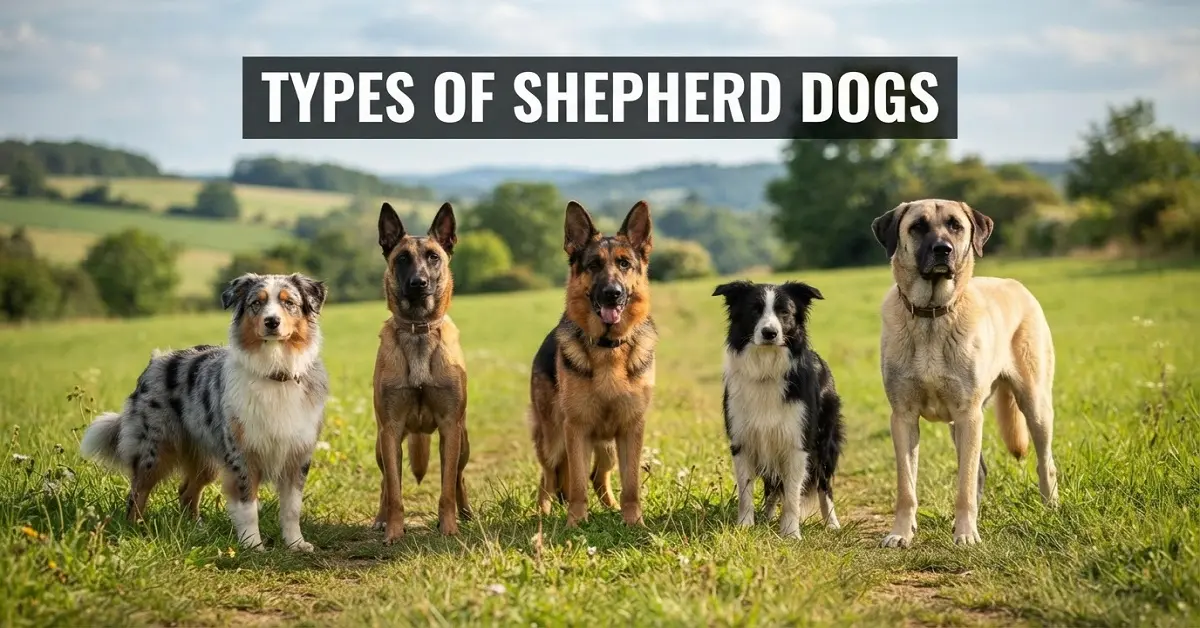
The many types of shepherd dogs include livestock herders, farm dogs, service dogs, and flock guardians. Although these breeds share a working background, their jobs and care needs differ. A Border Collie moves sheep, while an Anatolian Shepherd protects them. Likewise, a Belgian Malinois needs far more training than many family dogs. This guide compares 17 breeds by role, size, energy, grooming, temperament, and home fit. As a result, you can judge each breed by its daily needs rather than appearance alone.
Popular Types of Shepherd Dogs
Popular shepherd breeds include the German Shepherd, Australian Shepherd, Belgian Malinois, Dutch Shepherd, Border Collie, Shetland Sheepdog, Anatolian Shepherd, and Caucasian Shepherd. However, they do not perform the same work. Some move livestock, while others protect it. The full list below includes both herding breeds and livestock guardians.
Shepherd Dog Breed Comparison
| Breed | Main role | Size | Energy | Grooming | Owner level | Suitable setting |
| German Shepherd | Herding, service | Large | High | Medium | Experienced | Active home |
| Australian Shepherd | Ranch herding | Medium | Very high | Medium | Active | Home or farm |
| Belgian Malinois | Herding, service | Medium-large | Very high | Low | Highly experienced | Working home |
| Dutch Shepherd | Farm work | Medium-large | Very high | Low-medium | Experienced | Active home |
| Border Collie | Sheep herding | Medium | Very high | Medium | Active | Farm or sports home |
| Shetland Sheepdog | Herding | Small | High | High | Informed beginner | Active family |
| Old English Sheepdog | Droving | Large | High | Very high | Committed | Family home |
| Beauceron | Herding, guarding | Large | High | Low | Experienced | Home or farm |
| Pyrenean Shepherd | Mountain herding | Small-medium | Very high | Medium | Experienced | Active home |
| Miniature American Shepherd | Herding | Small | High | Medium | Active | Family or sports home |
| Bohemian Shepherd | Herding, guarding | Medium | High | Medium | Active | Family home |
| White Swiss Shepherd | Herding, companion | Large | High | High | Committed | Active family |
| Bergamasco Sheepdog | Alpine herding | Medium-large | Medium | Special care | Patient | Home or farm |
| Anatolian Shepherd | Livestock protection | Large | Medium | Low-medium | Experienced | Rural property |
| Caucasian Shepherd | Livestock protection | Very large | Medium | High | Highly experienced | Secure rural property |
| Central Asian Shepherd | Livestock protection | Very large | Medium | Medium | Highly experienced | Farm |
| Belgian Tervuren | Herding, service | Medium-large | Very high | High | Experienced | Working home |
What Is a Shepherd Dog?
A shepherd dog was developed to manage livestock or protect it from threats. Common traits include alertness, stamina, trainability, close attention to movement, and a strong desire to work.
Today, these dogs herd farm animals, serve with police and search teams, compete in dog sports, and live as companions. Still, intelligence does not make them easy pets. Without enough exercise and mental work, some may bark, chase, chew, dig, or herd family members. The AKC Herding Group includes dogs developed to control livestock movement.
Herding Dogs vs. Livestock Guardians

Herding dogs move animals through eye contact, motion, barking, or controlled pressure. Border Collies, Australian Shepherds, and Pyrenean Shepherds belong in this group.
In contrast, livestock guardians stay near a flock and watch for threats. Anatolian, Caucasian, and Central Asian Shepherds perform this job. Therefore, shepherd in a breed name does not always mean the dog moves sheep.
17 Types of Shepherd Dogs
1. German Shepherd Dog
Developed in Germany for tending sheep, this large breed now works in police, search, service, and sports roles. German Shepherds bond closely with family but need training, exercise, and frequent brushing.
2. Australian Shepherd
The Australian Shepherd was created for ranch work in the western United States. It is athletic, responsive, and highly active. However, its herding instinct can cause chasing or heel nipping. AKC history confirms its American development.
3. Belgian Malinois
The Malinois is a Belgian herder now used in police, military, detection, and protection work. Its intense work drive requires skilled handling, planned training, and daily activity. Therefore, it rarely suits casual owners.
4. Dutch Shepherd
This brindle-coated Dutch farm dog once herded sheep, guarded property, and performed other farm tasks. It is athletic and trainable, yet independent. It also remains uncommon in the United States.
5. Border Collie
Although shepherd is absent from its name, the Border Collie is a leading sheep-herding breed. It needs demanding exercise, training, and mental tasks. Otherwise, chasing and repeated behaviors may develop.

6. Shetland Sheepdog
The Sheltie is a small Scottish herder that often fits active families. It is sensitive, trainable, and often vocal. Meanwhile, its long double coat needs regular brushing.
7. Old English Sheepdog
This large English drover helped move livestock to market. It is often social and playful. However, its thick coat needs extensive care, while its size calls for early training.
8. Beauceron
The Beauceron is a large French herder and farm guardian. Confident and athletic, it can succeed in tracking, obedience, and herding. Still, its size and firm nature suit experienced owners.
9. Pyrenean Shepherd
This small French mountain herder is quick, agile, and highly active. It bonds closely with its handler but may distrust strangers. Therefore, early social contact and daily activity matter.
10. Miniature American Shepherd
Developed in California from small Australian Shepherds, this compact breed retains strong herding and sports ability. It can fit smaller homes, provided it receives exercise, training, and regular brushing.
11. Bohemian Shepherd
The Bohemian Shepherd, or Chodský Pes, is a medium Czech herder with a black-and-tan coat. It is social and active but rare in the United States. The FCI lists it in Group 1.
12. White Swiss Shepherd
This large white herder developed from white German Shepherd lines and later became a separate breed. It is often sensitive and family-focused. However, it needs activity, gentle training, and coat care.
13. Bergamasco Sheepdog
This Italian Alpine herder has a felted coat that forms flat flocks. It needs special coat care rather than standard brushing. Although observant and independent, it is often less intense than many herders.
14. Anatolian Shepherd Dog
The Anatolian Shepherd is a large livestock guardian from Asia Minor. It is independent, territorial, and watchful. As a result, secure fencing, skilled handling, and rural space are usually needed.
15. Caucasian Shepherd Dog
This very large guardian protects livestock and property. It is cautious with strangers and may react firmly to threats. Therefore, it is a poor beginner choice and needs secure space and skilled control.
16. Central Asian Shepherd Dog
The Central Asian Shepherd, also called Alabai, guards livestock and property. Its size, independence, and territorial nature demand experienced handling. The AKC does not currently recognize it as a full registered breed.
17. Belgian Tervuren
The Belgian Tervuren is an active herder with a long fawn or gray coat. It forms a close handler bond and does well in sports and service work. However, it needs daily training and brushing.
Four Belgian Shepherd Varieties
Most kennel organizations treat the Belgian Shepherd as one breed with four varieties. However, the AKC recognizes four separate breeds in the United States. Their main differences involve coat color and texture. AKC Belgian breed guidance confirms this US classification.
| Variety | Coat | US classification |
| Malinois | Short, fawn with black mask | Separate AKC breed |
| Tervuren | Long, fawn or gray | Separate AKC breed |
| Belgian Sheepdog | Long, black | Separate AKC breed |
| Laekenois | Rough, fawn | Separate AKC breed |

Are Shepherd Breeds the Same as German Shepherd Types?
No. Shepherd breeds are separate breeds, such as the Dutch Shepherd and Australian Shepherd. German Shepherd types usually describe working lines, show lines, coat lengths, or colors within one breed.
For related details, read our guide to different types of German Shepherds.
How to Choose Between Types of Shepherd Dogs
Start with energy. Border Collies, Malinois, and Dutch Shepherds need heavy physical and mental activity. In contrast, some adult Bergamascos may settle more easily.
Next, check size and space. A yard helps, but it never replaces walks, training, and family contact. If their owners control their exercise and barking, smaller breeds can live in apartments.Large guardians usually need secure rural space.
Also, consider children and pets. Herding dogs may chase, circle, or nip. Guardians may distrust unfamiliar animals. Therefore, use supervision and begin safe social contact early.
Finally, consider grooming and experience. Malinois have short coats, while Shelties and White Swiss Shepherds shed heavily. Meanwhile, Bergamascos need special coat care. New owners should avoid intense working lines and large guardian breeds.
Best Shepherd Dogs by Lifestyle
| Owner need | Breeds to research | Why |
| Active family | Australian Shepherd, Sheltie, Miniature American Shepherd | Social and trainable |
| Experienced handler | Malinois, Dutch Shepherd, Beauceron | High work drive |
| Farm herding | Border Collie, Australian Shepherd, Pyrenean Shepherd | Strong herding instinct |
| Livestock protection | Anatolian, Caucasian, Central Asian Shepherd | Guardian behavior |
| Smaller home | Sheltie, Miniature American Shepherd | Smaller size |
| Less coat care | Malinois, short-coated Dutch Shepherd | Shorter coats |

Breed traits offer a starting point, yet they cannot predict every dog. Genetics, training, health, age, and early experiences also shape behavior.
Common Ownership Challenges
Shepherd dogs often need more activity than owners expect. Without useful work, they may bark, chew, dig, pace, escape, or chase movement. Some also herd children and pets.
Meanwhile, guardians may distrust visitors or unfamiliar dogs. Double-coated breeds shed, while long and felted coats need added care. Early training and safe social contact can reduce problems, but they cannot erase inherited working behavior.
Before adopting, check landlord rules, local breed limits, and home insurance terms. Also, read our guide to choosing a responsible dog breeder.
Frequently Asked Questions
How many types of shepherd dogs are there?
There is no fixed number. Lists differ because some include all herders, sheepdogs, Belgian varieties, and livestock guardians.
Which shepherd dog is suitable for a family?
Shelties, Australian Shepherds, Miniature American Shepherds, and trained German Shepherds may fit active families. Still, routine and training matter more than rankings.
What is the smallest shepherd dog?
Shelties and Miniature American Shepherds are small options. Corgis are shorter herders, though shepherd is absent from their names.
What is the largest shepherd dog?
Caucasian and Central Asian Shepherds are among the largest. Both are guardian breeds that need skilled handling.
Are shepherd dogs easy to train?
Many learn quickly. However, high activity, sensitivity, independence, or guarding behavior can make daily ownership harder.
Can shepherd dogs live in apartments?
Some can if owners manage exercise, barking, and training. However, large livestock guardians rarely fit apartment life.
German Shepherd or Belgian Malinois: what is the difference?
German Shepherds are usually heavier. Malinois are often lighter and more intense. Compare them in our German Shepherd vs. Belgian Malinois guide.
Conclusion: Choosing Among the Types of Shepherd Dogs
The types of shepherd dogs range from active livestock herders to independent flock guardians. Each breed brings different exercise, grooming, training, and space needs. Therefore, choose your decision based on factors other than appearance, such as temperament, job history, adult size, and house fit.A realistic match can give both owner and dog a safer and more settled life
