


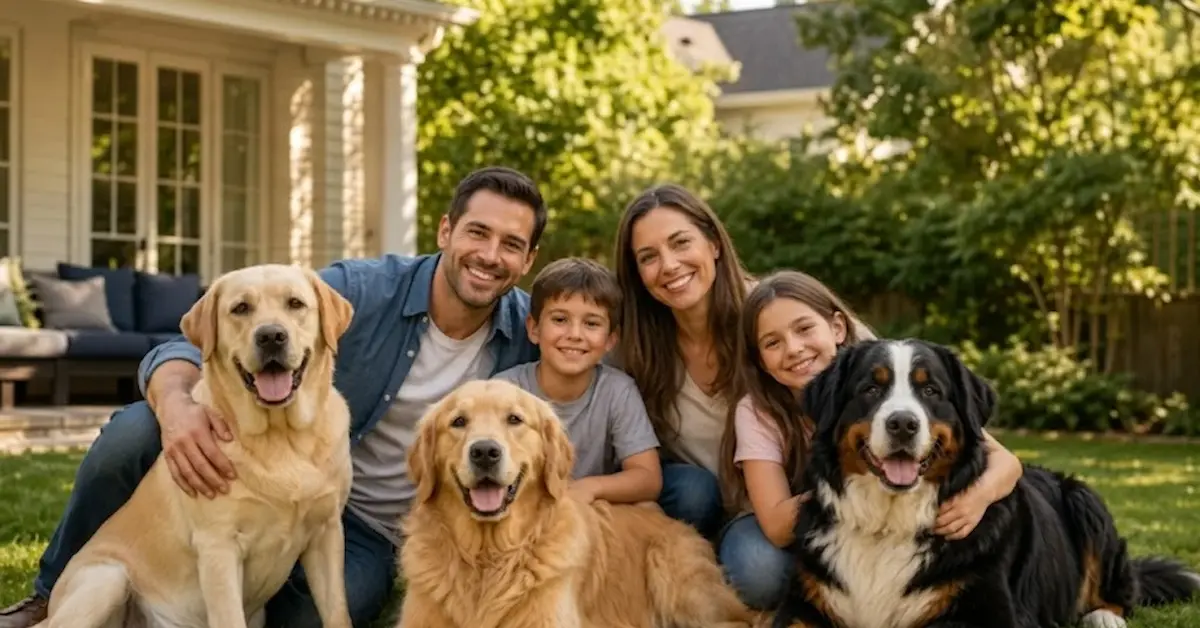
Choosing the best large dog breeds for families is not only about picking the biggest or cutest dog. A good family dog needs the right temperament, training, patience, and daily care. Many large dogs are loving, gentle, and loyal. However, their size also matters. A playful 80-pound dog can knock over a small child without meaning to.
This guide explains the best large family dogs, what makes them good with kids, and what families should check before bringing one home. This guide explains the best large family dogs, what makes them good with kids, and what families should check before bringing one home.
Best Large Dog Breeds for Families: Quick List
Some large dogs fit family life better than others. The best choice depends on your home, children’s ages, budget, and daily routine. For trusted breed information, you can also check the AKC breed profiles before choosing a family dog.
Breed | Best For | Energy Level | Grooming Need |
|---|---|---|---|
Labrador Retriever | Active families | High | Medium |
Golden Retriever | Families with kids | High | Medium-high |
Bernese Mountain Dog | Calm homes | Medium | High |
Newfoundland | Patient families | Medium | High |
Boxer | Playful families | High | Low |
Standard Poodle | Low-shedding homes | Medium-high | High |
German Shepherd | Experienced families | High | Medium |
Great Dane | Calm indoor homes | Low-medium | Low |
Collie | Gentle family homes | Medium | Medium-high |
Irish Setter | Active homes | High | Medium |
Great Pyrenees | Homes with space | Medium | High |
Rhodesian Ridgeback | Active experienced owners | Medium-high | Low |
Before choosing from different large dog breeds, families should compare size, temperament, exercise needs, and training level.
What Makes a Large Dog Good for Families?
A large dog should be gentle, trainable, and stable around daily family noise. Kids run, laugh, drop food, and move fast. Because of that, a family dog needs patience and steady behavior. Training also matters. Even a friendly dog can become hard to manage if no one teaches basic manners.
A good family large dog usually has these traits:
Trait | Why It Matters |
|---|---|
Gentle nature | Safer around children |
Trainability | Easier to teach house rules |
Patience | Helps with busy family life |
Stable energy | Less jumping and rough behavior |
Good social skills | Better around guests and pets |
Manageable grooming | Easier for busy families |
Healthy structure | Better long-term care |
Size awareness | Less accidental knocking over |
Still, no breed is perfect for every home. A Labrador may suit an active family, while a Great Dane may suit a calmer home. The right match comes from lifestyle, not popularity.
1. Labrador Retriever

The Labrador Retriever is one of the most popular family dogs for a reason. Labs are friendly, active, and usually eager to please. They often enjoy children, outdoor play, training games, and family time.
However, Labradors need daily exercise. Without enough activity, they may jump, chew, or become too excited indoors. A Lab can be a great family dog if your home can handle energy, training, and regular play.
Why Labradors Fit Families
Labs usually learn quickly. They enjoy food rewards, games, and praise. Because of their social nature, they often do well in busy homes. They can join walks, park trips, and backyard games. Still, young Labs can be bouncy. Families with small kids should train calm greetings early.
Best For
Labrador Retrievers suit:
- Active families
- Homes with older kids
- First-time owners ready to train
- Families who enjoy outdoor time
- People who want a loyal companion
2. Golden Retriever
The Golden Retriever is another top choice for families. Goldens are affectionate, friendly, and often gentle with children. They usually love being part of family life.
At the same time, they need exercise, brushing, and attention. A bored Golden can become restless. So, this breed works best for families that can offer playtime, walks, training, and regular grooming.
Why Goldens Fit Families

Golden Retrievers often have a soft, people-loving nature. They usually enjoy children and respond well to kind training. Their friendly personality makes them good for homes that want an affectionate dog. However, Goldens shed. Families should expect brushing, vacuuming, and coat care.
Best For
Golden Retrievers suit:
- Families with kids
- Active homes
- First-time owners
- Families who want a gentle dog
- Homes ready for grooming
3. Bernese Mountain Dog
The Bernese Mountain Dog is large, calm, and loving. This breed often has a sweet nature. Many families like Berners because they feel steady and affectionate. However, they are big, heavy dogs with thick coats.
They need space, grooming, and careful care in hot weather. A Bernese Mountain Dog can be a wonderful family dog, but the family must be ready for size and coat care.
Why Bernese Mountain Dogs Fit Families
Berners are often calm indoors compared with many active breeds. They tend to bond closely with their people. Because of that, they often enjoy gentle family time. Still, their size can be hard for very small homes. A big dog also means bigger food costs and bigger vet bills.
Best For
Bernese Mountain Dogs suit:
- Calm families
- Homes with space
- Families who enjoy grooming
- Owners who want a gentle giant
- Cooler climates or careful heat management
4. Newfoundland

The Newfoundland is often called a gentle giant. This breed is massive, strong, and usually patient. Many families like Newfoundlands because of their calm nature around children. However, Newfies need serious care. They drool, shed, and need regular grooming. Also, their size can be hard to manage in small homes or tight spaces.
Why Newfoundlands Fit Families
Newfoundlands are known for patience and gentleness. They often stay calm around family activity. Because of that, they can fit homes that want a steady, loving dog. Still, families must prepare for grooming, drool, food cost, and space needs.
Best For
Newfoundlands suit:
- Families with space
- Calm homes
- Owners ready for grooming
- Families who want a patient dog
- Homes prepared for a very large breed
Families who like very big dogs can also compare giant dog breeds before choosing a Newfoundland, Great Dane, or Great Pyrenees.
5. Boxer
The Boxer is playful, fun, and full of personality. Boxers often love their families and enjoy active play. They can be great with children when trained and socialized early.
However, they are energetic. A young Boxer may jump, wiggle, and play hard. So, this breed suits families who can provide exercise and clear rules.
Why Boxers Fit Families

Boxers are often affectionate and silly. They enjoy being close to people and can become loyal family companions. Their short coat is easy to manage, which helps busy families. On the other hand, their excitement can be too much for toddlers or elderly family members. Training should start early.
Best For
Boxers suit:
- Active families
- Homes with older kids
- Owners who enjoy training
- Families wanting a playful dog
- People who prefer short coats
6. Standard Poodle
The Standard Poodle is smart, elegant, and highly trainable. Many families like Standard Poodles because they shed less than many other large dogs. This can help homes that want less loose hair.
However, low-shedding does not mean low-maintenance. Poodles need regular grooming. A Standard Poodle can be a strong family choice if you can manage coat care and mental activity.
Why Standard Poodles Fit Families
Standard Poodles learn quickly. They often enjoy training, games, and family activities. Because they are smart, they need mental exercise. Puzzle toys, obedience training, and active walks can help. Their coat needs professional grooming or consistent home care. Without that, mats can form.
Best For
Standard Poodles suit:
- Families wanting a smart dog
- Homes that prefer less shedding
- Active owners
- Families ready for grooming costs
- First-time owners who can train
7. German Shepherd

The German Shepherd is loyal, smart, and protective. This breed can be a great family dog in the right home. However, it needs training, structure, and early socialization.
German Shepherds are not the easiest choice for every beginner. They need daily exercise and mental work. Still, experienced families often love their loyalty and trainability.
Why German Shepherds Fit Some Families
German Shepherds can learn very well. They often bond strongly with their family. Because they are alert and active, they need clear rules. Without guidance, they may become too protective or anxious. This breed works best when owners have time for training and socialization.
Best For
German Shepherds suit:
- Experienced families
- Active homes
- Owners who enjoy training
- Families wanting a loyal dog
- Homes with clear routines
8. Great Dane
The Great Dane is huge, but many Danes are calm indoors. People often call them gentle giants. They can be loving family dogs when trained well.
However, their size is serious. A Great Dane needs space, strong handling, and safe home setup. Also, giant breeds may have shorter lifespans than many smaller dogs.
Why Great Danes Fit Families

Great Danes often enjoy relaxing with their people. They may need less intense exercise than some working breeds. However, they still need daily walks and training. Because of their height and weight, families must teach leash manners early.
Best For
Great Danes suit:
- Calm families
- Homes with enough space
- Owners ready for giant-dog costs
- Families who want a gentle companion
- People who can manage size safely
9. Collie
The Collie is gentle, smart, and family-focused. Many people know Collies for their sensitive and loyal nature. They often do well with children when trained and socialized. Collies need regular brushing, especially rough-coated Collies. They also need mental activity, because smart dogs can get bored.
Why Collies Fit Families
Collies often respond well to gentle training. They usually enjoy being part of family routines. Their alert nature can make them good watchdogs without being too intense in many homes. However, they may bark if bored or under-stimulated.
Best For
Collies suit:
- Gentle family homes
- Kids who respect dogs
- Owners who enjoy brushing
- Families wanting a smart dog
- Homes with regular routines
10. Irish Setter

The Irish Setter is cheerful, active, and social. This breed can be a fun family dog for homes that enjoy outdoor activity. Irish Setters often love running, playing, and being around people. However, they need exercise and patience. A bored Irish Setter may become too energetic indoors.
Why Irish Setters Fit Families
Irish Setters bring energy and joy to a home. They can match families who like walks, games, and outdoor time. Because they are social, they usually do not enjoy being left alone for long. Training should stay positive and consistent.
Best For
Irish Setters suit:
- Active families
- Homes with older kids
- Families who love outdoor play
- Owners with time for exercise
- People who want a cheerful dog
11. Great Pyrenees
The Great Pyrenees is calm, protective, and large. This breed was developed as a livestock guardian. Because of that, it can be independent and watchful. A Great Pyrenees may be gentle with family, but it needs patient training and secure space. This is not a small-apartment dog for most families.
Why Great Pyrenees Fit Some Families

Great Pyrenees dogs often have a calm, steady nature. They may suit homes that want a large guardian-style companion. However, they can be stubborn and may bark to alert. Families should understand the breed before choosing one.
Best For
Great Pyrenees suit:
- Homes with space
- Calm families
- Owners who understand guardian breeds
- Families ready for grooming
- People who can manage barking
12. Rhodesian Ridgeback
The Rhodesian Ridgeback is strong, loyal, and athletic. This breed can be loving with family, but it needs confident handling. Ridgebacks are not usually the best choice for owners who want an easy first dog. They need training, exercise, and socialization. Still, active families with dog experience may enjoy this breed.
Why Ridgebacks Fit Some Families
Rhodesian Ridgebacks are often calm indoors after exercise. They can be loyal and protective. However, their independent nature means training must be consistent. This breed works better with older children who understand dog boundaries.
Best For
Rhodesian Ridgebacks suit:
- Active families
- Experienced owners
- Homes with older kids
- People who enjoy training
- Families wanting a strong companion
Which Large Dog Breed Is Best With Kids?

Golden Retrievers, Labrador Retrievers, Newfoundlands, Bernese Mountain Dogs, and Collies are often strong choices for families with children. However, breed alone does not make a dog safe. Training, socialization, health, supervision, and the child’s behavior all matter.
Even gentle large dogs need boundaries around kids. Children should learn not to pull ears, climb on dogs, disturb food bowls, or bother sleeping dogs. Parents should also supervise dog and child time. This matters with every breed, even a trusted family pet.
Best Large Dogs for First-Time Family Owners
Some large dogs are easier for first-time owners than others. Good choices may include:
- Labrador Retriever
- Golden Retriever
- Standard Poodle
- Bernese Mountain Dog
- Great Dane, if size is manageable
These breeds can still need training and care. However, many families find them easier than intense guardian breeds. If a large breed feels too hard for your first dog, medium sized dogs may be easier to manage.
Large Dog Breeds Families Should Think Twice About
Some large breeds can be excellent family dogs, but they need more experience. This does not mean they are bad dogs. It means they may need stronger training, better handling, and more time. Families should think carefully before choosing:
- Cane Corso
- Rottweiler
- Akita
- Doberman
- Belgian Malinois
- German Shepherd, for total beginners
These breeds can be loyal and loving. However, they may not suit busy homes with no training plan. A family should choose a dog they can manage as an adult, not just as a puppy.
Cost of Keeping a Large Family Dog

Large dogs often cost more than small dogs. hey eat more food. They need bigger beds, crates, collars, harnesses, and toys. Vet care can also cost more because medicine, surgery, and prevention products may depend on size and weight.
Before bringing home a large dog, plan for: Before choosing a big dog, review basic pet care costs so your family can plan for food, vet care, grooming, and supplies.
Cost Area | What to Expect |
|---|---|
Food | Large dogs eat more each month |
Vet care | Routine and emergency care can be costly |
Grooming | Long coats cost more to maintain |
Training | Classes help with size and manners |
Supplies | Bigger beds, crates, and harnesses cost more |
Insurance | Costs may vary by breed and health risk |
Travel | Boarding and transport can cost more |
Budget matters because a family dog is a long-term commitment. Families with limited space can also compare small dog breeds before choosing a large family dog.
Large Dog Family Checklist Before Adoption
A large dog can bring love, fun, and loyalty into a home. Still, families should prepare before adoption or purchase.
Use this checklist:
- Do we have enough space?
- Can we afford food and vet care?
- Can we walk the dog daily?
- Do we have time for training?
- Are our children ready to respect dog boundaries?
- Can we manage grooming?
- Can we handle the dog’s adult size?
- Is the breed safe for our lifestyle?
- Can we provide mental activity?
- Do we have a plan for vacations or travel?
This checklist helps families avoid emotional choices that later become hard. A cute puppy grows fast. In a few months, that puppy may become a strong dog that needs clear rules and daily care.
Best Large Dog Breeds by Family Need
Different families need different dogs.
Family Need | Good Breed Options |
|---|---|
Best with young kids | Golden Retriever, Labrador, Newfoundland |
Calm home companion | Bernese Mountain Dog, Great Dane |
Active outdoor family | Labrador, Boxer, Irish Setter |
Low-shedding choice | Standard Poodle |
Experienced active home | German Shepherd, Ridgeback |
Very large gentle dog | Newfoundland, Great Dane |
Watchful family dog | Great Pyrenees, German Shepherd |
First-time large dog | Labrador, Golden Retriever, Standard Poodle |
The best match comes from lifestyle. For example, a very active family may enjoy a Labrador or Boxer. A calmer family may prefer a Bernese Mountain Dog or Great Dane.
Common Mistakes Families Make
Many families choose a large dog because of looks. That can lead to problems later.
Avoid these mistakes:
- Choosing by size only
- Ignoring grooming needs
- Forgetting food costs
- Skipping training
- Leaving kids unsupervised with the dog
- Choosing a high-energy dog for a low-energy home
- Underestimating adult size
- Ignoring breed health risks
- Buying from careless breeders
- Waiting too long to teach leash manners
A large dog needs structure from the start. Training should begin early, but it should stay kind and consistent.
Adoption or Breeder: Which Is Better?
Both options can work when done responsibly. Adoption may help a dog that needs a home. It can also cost less than buying from a breeder. However, families should ask about temperament, health, history, and behavior around children.
A responsible breeder can also be a good option. Good breeders’ health test, answer questions, and care for where puppies go. Avoid sellers who rush you, hide health records, refuse questions, or offer many breeds at once. Whether you adopt or buy, the goal is the same: choose a healthy, stable dog that fits your family.
Final Thoughts
The best large dog breeds for families are gentle, trainable, patient, and matched to the family’s real lifestyle. Labrador Retrievers and Golden Retrievers are great choices for many active homes. Bernese Mountain Dogs and Newfoundlands suit families that want calm, loving giants. Standard Poodles work well for people who want a smart, lower-shedding dog.
Still, every dog needs training, socialization, exercise, and supervision around children. Before choosing a large family dog, think about space, budget, grooming, exercise, and adult size. A large dog can become a wonderful family companion. However, the best results come when the family chooses with care, not impulse.
FAQs About the Best Large Dog Breeds for Families
What is the best large dog breed for families?
Golden Retrievers and Labrador Retrievers are among the best large dog breeds for families because they are friendly, trainable, and usually good with children. Still, every dog needs training and supervision.
What large dog is best with kids?
Newfoundlands, Golden Retrievers, Labrador Retrievers, Bernese Mountain Dogs, and Collies are often good with kids. However, parents should always supervise young children around any dog.
Are large dogs good for first-time owners?
Some large dogs can work for first-time owners. Labradors, Golden Retrievers, and Standard Poodles are often easier choices than strong guardian breeds. Training still matters from day one.
What is the calmest large family dog?
Great Danes, Bernese Mountain Dogs, Newfoundlands, and Great Pyrenees are often calm indoors. Even so, they still need walks, training, grooming, and daily care.
Do large family dogs need a big house?
Not always. Some large dogs can live in smaller homes if they get enough exercise. However, families should think about space, stairs, yard access, and the dog’s adult size.
