


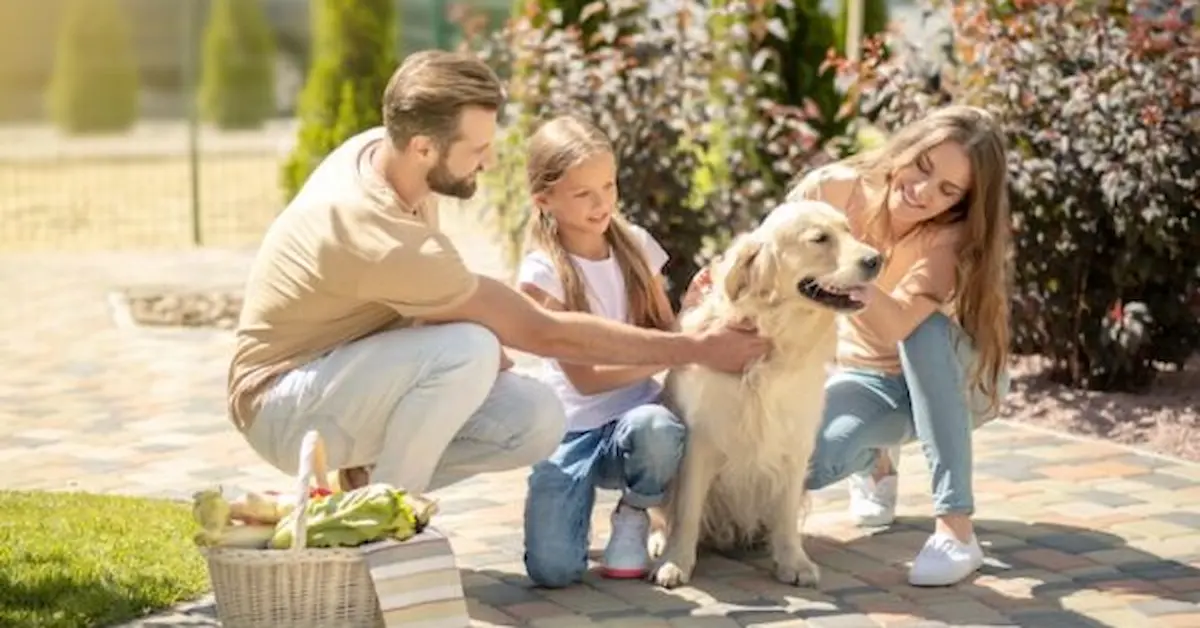
Large Dog Breeds That Are Gentle With Kids Many parents search for large dog breeds for families because they want a dog that can be loving, patient, and safe around children. A large dog can become a child’s best friend. It can join family walks, play in the yard, protect the home, and become part of daily life. But choosing a big dog for a family is not something to do quickly.
Size can be a good thing. Many large dogs are sturdy, calm, and less fragile than tiny dogs. Still, size also brings responsibility. A big dog can knock over a toddler by accident. A playful puppy can grow into a strong adult faster than many families expect. So, the real question is not just, “Which large dogs are good with kids?”
The better question is this: Which large dog fits your children, your home, your time, your budget, and your ability to train it well? This guide explains large dog breeds that are often gentle with kids. It also covers safety, training, grooming, exercise, and the mistakes parents should avoid before bringing a big dog home.
Quick Answer: Best Large Dog Breeds That Are Gentle With Kids
Some of the best large dog breeds for families with kids include Golden Retrievers, Labrador Retrievers, Newfoundlands, Bernese Mountain Dogs, Collies, Standard Poodles, and Great Danes. These dogs are often known for being friendly, patient, loyal, and steady around children. However, no breed is automatically safe.
Even a gentle dog needs training, socialization, daily exercise, and adult supervision around kids. A good family dog is created by both nature and care. Breed matters, but the home environment matters just as much.
Are Large Dogs Good With Kids?
Yes, many large dogs can be wonderful with children. Some big dogs are calmer than smaller, more nervous breeds. They may be less reactive, more patient, and better able to handle normal family activity. That is one reason many parents prefer large family dogs.
A well-raised large dog can enjoy children, tolerate noise, and stay relaxed in a busy home. Still, families need to be honest about the work involved. Large dogs need space. They need training. They need strong leash manners. They also need adults who can manage them safely.
A large dog does not have to be aggressive to cause a problem. A happy jump, a fast turn, or a rough game can knock a child down. Because of this, large dogs can be great with kids when the adults take the role seriously. The safest homes are the ones where the dog has rules, the kids have rules, and everyone respects the dog’s space.
What Makes a Large Dog Gentle With Children?

A gentle family dog usually has a mix of patience, confidence, and good training. Some dogs are naturally soft around children. Others need more structure. Either way, parents should look for more than a cute face or a popular breed name. Here are the traits that matter most.
Trait | Why It Matters |
|---|---|
Patience | Helps the dog stay calm around noise and movement |
Trainability | Makes manners easier to teach |
Stable temperament | Helps the dog behave in a predictable way |
Moderate energy | Reduces rough indoor behavior |
Social nature | Helps the dog enjoy family life |
Low reactivity | Helps around visitors, children, and busy homes |
Body awareness | Reduces jumping, bumping, and rough play |
It also helps to understand different types of dogs before choosing a family pet. A dog that is gentle with children should also be comfortable with normal family routines. That includes kids laughing, doors opening, toys on the floor, visitors coming over, and movement around the home.
But even the best breed needs boundaries. Children should never climb on a dog, pull its ears, grab its tail, or bother it while it eats. A gentle dog still has limits. So, choosing the right breed is only the first step. Teaching respect on both sides is what makes the relationship safe.
Best Large Dog Breeds That Are Gentle With Kids
The breeds below are often good choices for families. Many are known for being gentle, patient, and loving with children. Still, every dog is an individual. A breed can guide you, but it cannot promise behavior. Health, early training, breeder quality, rescue history, socialization, and daily care all shape the dog you bring home.
Golden Retriever
Golden Retrievers are one of the most trusted large dog breeds for families. For trusted breed information, you can also check the AKC Golden Retriever guide. They are friendly, patient, and usually gentle with children. Many Goldens enjoy family life because they like attention, games, walks, and time with people.
A Golden Retriever often fits well into a home where kids want a dog that can play but also settle indoors. They are usually eager to please, which makes training easier for many owners. That said, Goldens are not couch decorations. They need exercise every day. Walks, fetch, swimming, and training games help them stay calm at home.
A bored Golden can chew, jump, or become too excited around kids. Their coat also needs regular brushing. They shed, especially during seasonal changes, so families should be ready for hair around the home.
Best for: Active families, first-time owners, and homes that want a friendly, trainable large dog. Watch for: Shedding, jumping during puppyhood, and the need for daily activity.
Labrador Retriever

Labrador Retrievers are playful, social, and often excellent with children. Labs are one of the most popular family dogs for a reason. They are usually friendly, outgoing, and eager to be part of everything the family does. They enjoy games, walks, swimming, and outdoor time. Many Labs love children because kids are often ready to play.
However, young Labs can be very energetic. A puppy or teenage Lab may jump, mouth, or bump into kids during play. This does not usually come from bad intent. It comes from excitement. That is why early training matters. Teach calm greetings, loose leash walking, “leave it,” and “settle” as early as possible.
These simple habits make a big difference when the dog becomes strong. Labs also love food, so families should watch weight and avoid overfeeding. Best for: Active families, outdoor homes, and children who enjoy play. Watch for: High energy, jumping, chewing, and weight gain.
Newfoundland
The Newfoundland is often called a gentle giant. This breed is large, calm, and usually patient. Many Newfoundlands have a soft, steady nature that works well in family homes. They are often gentle around children and may enjoy simply being near the family. They do not usually have the same intense energy as some sporting breeds.
However, a Newfoundland is a very big dog. Food, grooming, vet care, beds, crates, and car space all cost more. They also drool and shed. Their thick coat needs brushing, especially during shedding seasons. Because of their size, training should start early. A Newfoundland puppy may look like a bear cub, but it grows fast. Polite leash manners and calm greetings are important.
Best for: Families with space, calm homes, and owners ready for giant dog care. Watch for: Drool, shedding, heat sensitivity, and size management.
Bernese Mountain Dog
Bernese Mountain Dogs are loyal, sweet, and often gentle with children. They usually bond closely with their family and enjoy being near people. Many Berners have a calm, affectionate nature that makes them feel like warm family companions. They are not usually as hyper as some large breeds, but they still need walks and outdoor time. They do best with families that can offer steady activity, not constant chaos.
Their thick coat sheds and needs brushing. They also do better in cooler weather than in hot climates. One important point is health. Bernese Mountain Dogs can have shorter lifespans than many other breeds. Families should choose a responsible breeder or a trusted rescue and plan for vet costs.
Best for: Families wanting a calm, loyal, affectionate large dog.
Watch for: Shedding, heat, health concerns, and shorter lifespan.
Great Dane

Great Danes are huge, but many are gentle and calm indoors. A well-trained Great Dane can be a loving family dog. They often enjoy lounging near their people and may be less energetic inside than many smaller breeds.
However, their size is a serious factor. Even a gentle Great Dane can knock over a child by accident. They need early training so they do not jump, pull, or lean too hard on people.
They also need space. A small home can work for some Danes if their needs are met, but families must have room for a large bed, food area, and safe movement. Great Danes are often better with older children than toddlers because of their height and strength.
Best for: Calm homes, older kids, and owners prepared for giant breed costs.
Watch for: Size, joint care, food cost, and short lifespan.
Boxer
Boxers are playful, loyal, and full of energy. Many Boxers love children. They can be silly, affectionate, and protective of their family. In an active home, a Boxer can become a fun and loving companion. Still, they are not always the easiest choice for families with very young kids. Boxers can be bouncy, especially when young.
They may jump, spin, or play too roughly if they are not trained. This breed needs daily exercise and clear rules. They do best with owners who enjoy training and can set boundaries without being harsh. Boxers have short coats and are easy to groom. However, they can be sensitive to heat because of their shorter muzzle.
Best for: Active families with older kids and owners who enjoy playful dogs.
Watch for: Jumping, rough play, heat sensitivity, and high excitement.
Standard Poodle
Standard Poodles are smart, athletic, and often great with families. They are large dogs, but many people forget that because they often think of Poodles as small show dogs. The Standard Poodle is a strong, active, trainable dog. This breed can suit families that want a large dog with less shedding.
Their curly coat drops less hair around the home, which can be helpful for some families. However, low shedding does not mean low care. Standard Poodles need brushing and professional grooming. They are also very smart. That is a good thing, but it means they need mental activity. Training games, puzzle toys, walks, and play help keep them balanced.
Best for: Families wanting a smart, trainable, lower-shedding large dog.
Watch for: Grooming cost, mental stimulation, and boredom.
Collie

Collies are gentle, loyal, and often very family-focused. They are known for being sensitive and aware of what is happening around them. Many Collies do well with children because they are watchful without being too rough. They are also trainable and usually responsive to kind guidance. Collies need exercise, but many are not as wild indoors as some high-drive breeds.
They can enjoy a steady routine with walks, play, and family time. Some Collies bark to alert their family. This can be managed with training, but it is worth knowing before bringing one home. Their coat depends on the type. Rough Collies need more brushing. Smooth Collies are easier to groom.
Best for: Families wanting a smart, gentle, loyal dog.
Watch for: Barking, coat care, and sensitivity.
Irish Setter
Irish Setters are cheerful, friendly, and full of life. They can be wonderful with children in active homes. They often enjoy games, walks, outdoor time, and family attention. However, they are energetic dogs. They may not be the best choice for a very quiet home or a family with toddlers who can be knocked over during play.
Irish Setters need exercise and patience. Without activity, they may become restless inside. They also have a beautiful coat that needs brushing. Families should be ready for grooming and outdoor time.
Best for: Active families, older kids, and homes that enjoy outdoor life.
Watch for: High energy, puppy-like behavior, and grooming needs.
Leonberger
Leonbergers are large, gentle, and affectionate. They are often calm with their families and can be patient around children. Many Leonbergers enjoy staying close to people and being part of daily home life. Still, this is a giant breed. Families need enough space, budget, and strength to manage a dog of this size.
Leonbergers need early socialization so they grow into confident adults. They also need regular grooming because their thick coat sheds. They can be wonderful family dogs in the right home. But they are not a casual choice.
Best for: Experienced families with space and time for grooming.
Watch for: Size, shedding, food cost, and training needs.
Great Pyrenees

Great Pyrenees dogs are calm, loyal, and protective. They were bred to guard livestock, so they often have an independent mind. With their family, they can be gentle and loving. However, they are not always easy for first-time owners. They may not obey quickly like a Labrador. They often think for themselves.
They may also bark, especially at night or when they hear outside sounds. This is part of their guardian instinct. A Great Pyrenees can be good with children in the right home, but it needs patient training, secure fencing, and owners who understand guardian breeds.
Best for: Families with space, secure yards, and experience with independent dogs.
Watch for: Barking, independence, roaming, and heavy shedding.
Saint Bernard
Saint Bernards are calm, loving, and often gentle with children. They are usually not high-energy dogs. Many enjoy slow walks, family time, and relaxing at home. Their size is the biggest challenge. Saint Bernards are very large, drool often, and need a lot of space. They also shed and need grooming.
Because they are so big, training must start early. A Saint Bernard that pulls or jumps can be hard to manage. They can be a lovely family dog for people who understand the work that comes with a giant breed.
Best for: Calm families with space and owners ready for drool and grooming.
Watch for: Drool, size, shedding, and higher care costs.
Gentle Large Dogs for Toddlers vs Older Kids
The age of your children matters. Toddlers are unpredictable. They run, scream, fall, grab, and move quickly. Even a gentle dog may feel confused or stressed by this. For toddlers, calmer breeds are often better. Newfoundlands, Bernese Mountain Dogs, Golden Retrievers, and Collies may be good choices when raised well.
Still, no toddler should be left alone with any dog. Older kids can usually handle more active breeds. They can learn rules, help with brushing, play fetch, and join basic training. Labradors, Boxers, Irish Setters, Standard Poodles, and Golden Retrievers may suit families with older kids who enjoy activity. The dog’s size matters, but the child’s age and behavior matter too.
Calm Large Dog Breeds for Family Homes

Some families want a large dog with a softer, quieter nature. Calmer large breeds may include:
- Newfoundland
- Bernese Mountain Dog
- Great Dane
- Saint Bernard
- Collie
- Great Pyrenees
These dogs can be relaxed indoors when their needs are met. However, calm does not mean no work. Every dog still needs walks, training, bathroom breaks, grooming, and attention. A calm dog with no structure can still become noisy, anxious, or difficult.
A simple daily routine often works best. Feed at regular times, walk daily, train in short sessions, and give the dog a quiet place to rest.
Large Dog Breeds Parents Should Think Twice About
Some large dogs are loving, but they may not be the easiest choice for homes with young children. This does not make them bad dogs. It means they need more experience, structure, and careful handling. Parents should think carefully before choosing a breed with:
- Strong guarding instincts
- Very high prey drive
- Extreme energy
- Heavy pulling strength
- Low tolerance for rough handling
- Strong independence
- Intense working drive
Some protection breeds, guardian breeds, and high-drive working dogs can be amazing in the right hands. But they may be too much for a first-time family with small kids. If you are new to large dogs, choose a breed known for patience, trainability, and stable family behavior.
Safety Rules for Kids and Large Dogs
A gentle dog still needs safety rules. Children should learn that dogs are living animals, not toys. Even the kindest dog can become stressed if a child pushes too far.
Teach kids these rules early:
- Do not climb on the dog.
- Do not pull ears, tail, lips, or fur.
- Do not bother the dog while it eats.
- Do not wake the dog suddenly.
- Do not grab toys from the dog’s mouth.
- Do not chase the dog into a corner.
- Do not hug the dog if it tries to move away.
- Always let the dog rest in peace.
- Always ask before petting.
Parents should also review trusted dog bite prevention tips before allowing close child-and-dog play. Parents should also watch body language. A stressed dog may lick its lips, yawn, turn away, show the whites of its eyes, freeze, tuck its tail, or try to leave. If you see these signs, stop the interaction and give the dog space.
Training Tips for Large Family Dogs

Training should start early because large puppies grow fast. A small puppy jumping on your child may seem cute. A 90-pound adult dog doing the same thing is not cute at all.
Focus on these commands first:
- Sit
- Stay
- Down
- Come
- Leave it
- Drop it
- Gentle
- Place
- Wait
- Loose leash walking
Calm greetings are very important. Teach the dog to sit before meeting children or visitors. Also, teach kids how to act around the dog. Children should not scream in the dog’s face, tease it with food, or run around while holding treats.
Use positive training. Reward calm behavior. Praise gentle play. Keep lessons short and clear. If you feel unsure, work with a qualified trainer. Getting help early is easier than fixing bad habits later.
Grooming, Exercise, and Space Needs
Large dogs need more planning than small dogs. Food costs more. Vet care can cost more. Beds, crates, collars, harnesses, medicine, and grooming tools are often more expensive. Exercise needs also vary by breed. Golden Retrievers, Labradors, Boxers, Irish Setters, and Standard Poodles need active daily routines.
Newfoundlands, Great Danes, Saint Bernards, and Bernese Mountain Dogs may be calmer, but they still need walks and movement. Grooming also depends on the coat. It also helps to understand basic general dog care before bringing a large breed home.
Golden Retrievers, Newfoundlands, Bernese Mountain Dogs, Collies, Great Pyrenees, and Saint Bernards shed and need brushing. Boxers and Great Danes have easier coats, but they still need nail trims, ear checks, baths, and dental care.
Before choosing a large dog, ask yourself:
- Do we have enough space?
- Can we afford food and vet care?
- Can we handle shedding or drool?
- Do we have time for walks?
- Can we train every week?
- Can we supervise the dog with kids?
- Can our car fit a large dog?
- Do we have a safe rest area for the dog?
Honest answers help you choose wisely.
Common Mistakes Parents Make
Many families make the same mistakes when choosing a large dog. The first mistake is choosing by looks. A dog may look beautiful in photos, but that does not mean it fits your family. The second mistake is trusting breed reputation too much. A gentle breed still needs training. A family-friendly label does not replace daily work.
Another mistake is letting children treat the dog too roughly because the dog “doesn’t mind.” A patient dog can still feel stressed. Parents also make mistakes, like:
- Skipping puppy socialization
- Ignoring leash training
- Allowing jumping
- Forgetting grooming costs
- Choosing too much energy
- Leaving kids alone with the dog
- Not giving the dog a quiet space
- Waiting too long to get training help
A safe family dog is not created by breed alone. It is created by good care, clear rules, and adult supervision.
Final Thoughts
The best large dog breeds for families are not chosen by size alone. Temperament, training, supervision, exercise, health, grooming, and daily routine all matter. Golden Retrievers, Labradors, Newfoundlands, Bernese Mountain Dogs, Collies, Standard Poodles, and Great Danes can be gentle with kids when raised well.
Still, every dog is an individual. Breed gives you a starting point, but your care shapes the dog’s behavior. Choose a breed that fits your real home. Think about your children’s ages, your schedule, your budget, your space, and your ability to train a big dog. When the match is right, a large dog can become one of the most trusted and loved members of the family.
FAQs About Large Dog Breeds That Are Gentle With Kids
What large dog breeds are best with kids?
Golden Retrievers, Labrador Retrievers, Newfoundlands, Bernese Mountain Dogs, Collies, and Standard Poodles are often good with kids. They are usually friendly, patient, and trainable when raised well.
Are large dogs safe around children?
Large dogs can be safe around children when they are trained, socialized, supervised, and treated with respect. Children also need to learn safe behavior around dogs.
What is the gentlest large dog breed?
Newfoundlands, Golden Retrievers, Bernese Mountain Dogs, and Saint Bernards are often known as gentle large breeds. Still, each dog’s personality and training matter.
Are big dogs better than small dogs for kids?
Sometimes. Big dogs can be sturdier and calmer than some small dogs. However, their size can knock over young children by accident. The best choice depends on the breed, training, and child’s age.
Which large dog is best for first-time family owners?
Golden Retrievers, Labrador Retrievers, and Standard Poodles are often good for first-time family owners because they are social and trainable. They still need exercise, grooming, and structure.
Should toddlers be left alone with large dogs?
No. Toddlers should never be left alone with any dog, even a gentle one. Adult supervision is always needed because both toddlers and dogs can act unpredictably.
