


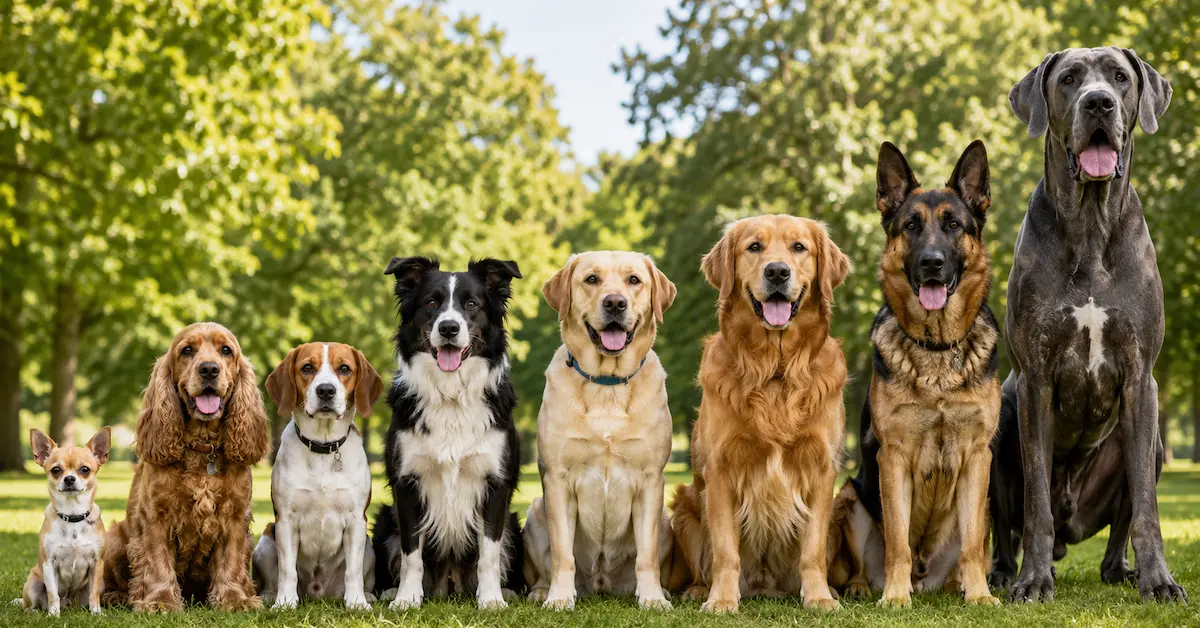
Introduction: The Incredible Diversity of Man’s Best Friend
Dogs are arguably the most diverse land mammals on the planet. From the pocket-sized Chihuahua that can comfortably ride in a tote bag to the massive English Mastiff that easily outweighs a grown adult, the sheer variety within a single species is nothing short of miraculous.
For thousands of years, humans have worked alongside these animals, selectively breeding them for specific tasks, environments, guard roles, and companionship styles. This deep evolutionary partnership has resulted in hundreds of distinct types of dogs, each boasting its own unique physical traits, cognitive strengths, coat textures, and behavioral tendencies.
If you have ever found yourself wondering how many types of dogs are there, you are not alone. It is a deceptively complex question that scientists, breeders, and casual pet enthusiasts debate regularly.
Depending on which international registry you ask, the official number of recognized types of dogs breeds fluctuates dramatically based on geographic standards and historical documentation.
However, looking past the dry paperwork of canine registries reveals a rich, vibrant tapestry of functional classifications, physical profiles, lifestyle adaptabilities, and ancestral lineages.
Understanding all types of dogs goes far beyond memorizing a simple list of names; it requires diving deep into their historical evolutionary roots, evaluating their functional capabilities in modern human settings, and recognizing how their sizes dictate their physical environments and daily maintenance needs.
Whether you are looking to bring a new furry family member into your urban home, researching a specific breed for a digital content project, or simply trying to expand your general canine knowledge, this comprehensive master guide breaks down different types of dogs by official breed classifications, physical sizes, performance traits, and genetic lineage.
By organizing this vast subject into clear, actionable sections, we aim to provide a simple guide for understanding types of dogs and discovering what makes each group useful for different homes and lifestyles.
The Big Question: How Many Types of Dogs Are There Globally?
To truly grasp the massive scope of the canine world, we must first address the foundational metrics of dog breeds registration and structural classification.
If you ask a casual pet lover on the street how many different types of dogs exist, they might list off twenty or thirty popular options like the Labrador Retriever, German Shepherd, French Bulldog, or Golden Retriever.
But the reality on the ground is vastly more expansive and genetically rich. Globally, the total count of distinct types of dogs breeds depends heavily on the governing canine organization, national kennel club, or international federation you choose to reference:
- The World Canine Organisation (FCI): As the largest international federation of kennel clubs based in Europe, the FCI currently recognizes over 360 distinct dog breeds, categorizing them into ten highly technical groups.
- The American Kennel Club (AKC): Based in the United States, the AKC takes a slightly more conservative approach to classification, officially recognizing around 200 breeds, split cleanly into specific performance groups.
- The Kennel Club (UK): The United Kingdom’s primary registry recognizes roughly 222 breeds, maintaining separate historical tracking files.
The discrepancy in these global numbers exists because new dog types are constantly being developed, refined, and evaluated for official recognition by geneticists and breed registries.
Landrace breeds (dogs that evolved naturally over centuries within specific geographic isolation without human intervention) and modern designer crossbreeds must pass rigorous multi-generational standards, health checks, and behavioral uniformity profiles before earning an official, permanent spot on a major registry’s list.
Therefore, when looking at all types of dogs, we must view the canine world as an evolving, breathing ecosystem rather than a static historical list.
The Official Framework: AKC Breed Groups Explained
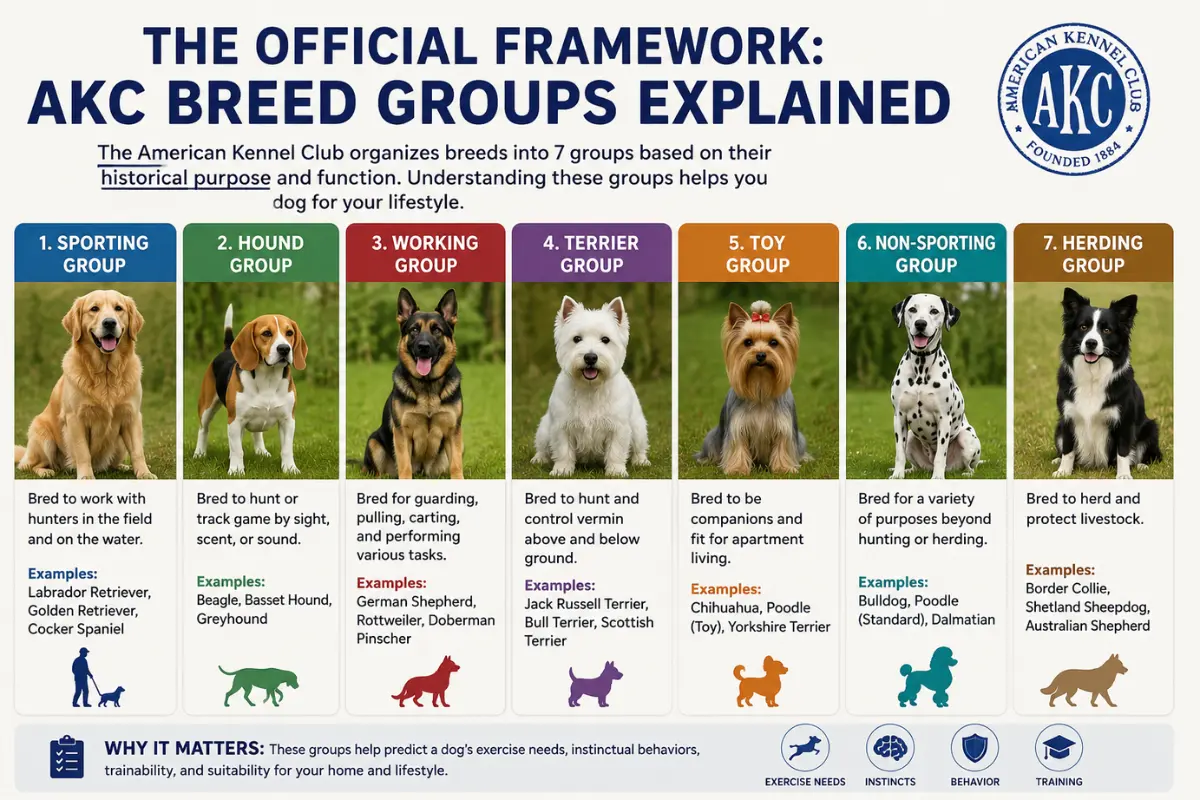
To make logical sense of hundreds of individual breeds, major kennel clubs utilize a standardized system of dog classification by size and historical operational function.
The American Kennel Club organizes its registered breeds into seven distinct AKC breed groups, supplemented by miscellaneous classes and foundational stock services.
Understanding these functional groupings is the easiest and most practical way for a prospective owner to predict a dog’s daily exercise requirements, innate prey drive, protective behaviors, and training needs.
1. The Herding Group
Instinct is a powerful thing, and no classification showcases it better than the Herding Group. Created as a standalone group in 1983, this classification consists of breeds that were specifically developed to control the movement of other animals, such as sheep, cattle, goats, and reindeer.
These dogs use a combination of strategic movement, body blocks, piercing eye contact, and sharp, commanding vocalizations to keep vast herds organized.
- Iconic Breeds: Border Collie, German Shepherd, Australian Shepherd, Pembroke Welsh Corgi, Shetland Sheepdog.
- Key Traits: Exceptionally high intelligence, intense work ethic, quick problem-solving skills, and a need for constant mental stimulation. Without a structured job to do, herding types can become highly anxious or attempt to herd small children, bicycles, and household cats.
2. The Hound Group
The Hound Group comprises some of the oldest ancestral types of dogs known to human history. These animals were bred exclusively for hunting wild game across vast distances, relying on either exceptional aerodynamic eyesight (Sighthounds) or an extraordinary, hyper-sensitive olfactory system (Scent hounds).
- Iconic Breeds: Beagle, Bloodhound, Greyhound, Whippet, Dachshund, Basset Hound, Afghan Hound.
- Key Traits: Scent hounds possess an incredibly independent streak and will follow an interesting trail blindly for miles, completely tuning out human commands. Sighthounds are built for explosive, aerodynamic speed and possess a fierce, instantaneous prey drive that triggers at the sight of any fast-moving object.
3. The Working Group
If you need a dog to pull a heavy sled across an arctic tundra, guard a sprawling estate from intruders, or rescue a struggling swimmer from rough ocean waters, you turn to the Working Group.
These large, robust, and highly muscular animals have historically served as invaluable assets to human survival, transportation, and physical labor forces.
- Iconic Breeds: Siberian Husky, Boxer, Rottweiler, Great Dane, Doberman Pinscher, Akita, Mastiff.
- Key Traits: Massive physical strength, natural protective instincts, extreme endurance, and fierce loyalty to the pack. Because of their sheer size and power, working dogs require meticulous socialization and firm, consistent boundaries from early puppyhood.
5. The Sporting Group
Commonly referred to as gundogs, the Sporting Group includes breeds that assist hunters in locating, flushing out, and retrieving feathered game from both dense land cover and water bodies. They are arguably the most popular family pets in the modern western world due to their balanced nature.
- Iconic Breeds: Labrador Retriever, Golden Retriever, Cocker Spaniel, German Shorthaired Pointer, Irish Setter.
- Key Traits: Exceptionally friendly dispositions, high trainability, high social intelligence, and an inherent desire to please their human companions. They possess high physical stamina and require regular outdoor activity to burn off excess energy.
6. The Non-Sporting Group
The Non-Sporting Group is essentially a catch-all category for breeds that do not cleanly fit into any of the other operational classifications. This group features a massive variance in physical appearance, coat textures, sizes, ear structures, and historical backgrounds.
- Iconic Breeds: French Bulldog, Poodle, Dalmatian, Bulldog, Shiba Inu, Chow Chow, Boston Terrier.
- Key Traits: Due to the diverse nature of this category, traits vary wildly. Poodles are hyper-intelligent and athletic, while Bulldogs are low-energy, brachycephalic companions content with a short daily walk and plenty of sleep.
7. The Toy Group
Don’t let their diminutive sizes fool you; the members of the Toy Group possess massive personalities packed into tiny frames. For centuries, these dogs were bred exclusively for one noble purpose: to serve as beloved, affectionate companions to royalty, nobility, and everyday families who lacked large acreage.
- Iconic Breeds: Chihuahua, Pomeranian, Pug, Shih Tzu, Yorkshire Terrier, Cavalier King Charles Spaniel.
- Key Traits: Intensely affectionate, fiercely loyal, highly vocal, and perfectly suited for apartment living or urban environments. They thrive on human contact and can easily develop separation anxiety if left alone for extended periods.
Key Considerations for Small Sizes
Exceptional Longevity: One of the greatest advantages of smaller types of dogs is their lifespan. It is incredibly common for healthy small dogs to live 14, 16, or even 18 years, vastly outliving their larger counterparts due to slower cellular growth rates.
The Vulnerability Factor: Their compact size comes with physical fragility. A fall from a high bed, an accidental step by an owner, or a rough play session with a large dog can lead to serious skeletal injuries.
Additionally, owners must watch out for behavioral issues like defensive vocalizations or “Small Dog Syndrome,” which often arise when small dogs feel overwhelmed by a world built for much larger creatures.
Medium-Sized Dogs (23 to 55 lbs)
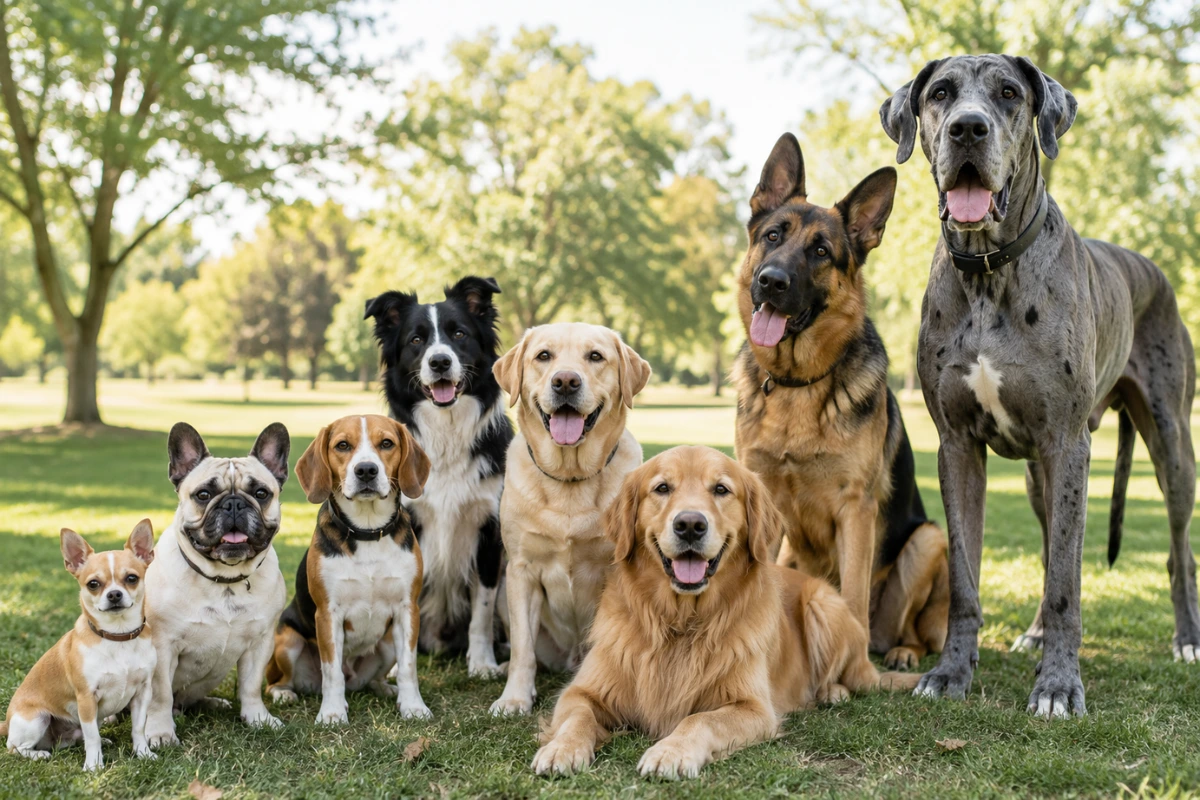
Spanning roughly between 23 and 55 pounds, medium-sized dogs represent the ultimate sweet spot for many families.
For many households, medium dogs represent the ultimate “Goldilocks” choice—not too small to feel delicate or fragile, yet not large enough to completely overwhelm a standard living room or vehicle.
This incredibly diverse tier features highly popular breeds such as the Pembroke Welsh Corgi, Australian Shepherd, Border Collie, English Springer Spaniel, and the ubiquitous mixed-breed shelter rescues.
Built for Adventure and Adaptability
Medium dogs offer a perfect blend of structural durability and manageable proportions. They are highly adaptable, possess robust physical stamina for outdoor adventures, and are sturdy enough to join their owners on intense hiking trips, camping adventures, and long morning beach runs.
Yet, they fit comfortably in the back seat of a standard sedan or a small travel crate without requiring a massive SUV or specialized cargo transport.
The Energy Paradox
While medium dogs are highly adaptable to various living spaces, they frequently surprise owners with their intense physical and cognitive demands. This size tier contains some of the most versatile working, herding, and hunting lines on earth.
A medium breed like an Australian Cattle Dog, Belgian Malinois, or a Border Collie possesses a deep, seemingly bottomless reservoir of stamina and an intense drive to work.
If left under-stimulated in a suburban home without a structured job, training routine, or canine sport, they can quickly redirect that intelligence into destructive behaviors, such as digging up gardens, barking incessantly, or chewing through valuable furniture.
Large Dog Breeds (56 to 99 lbs)
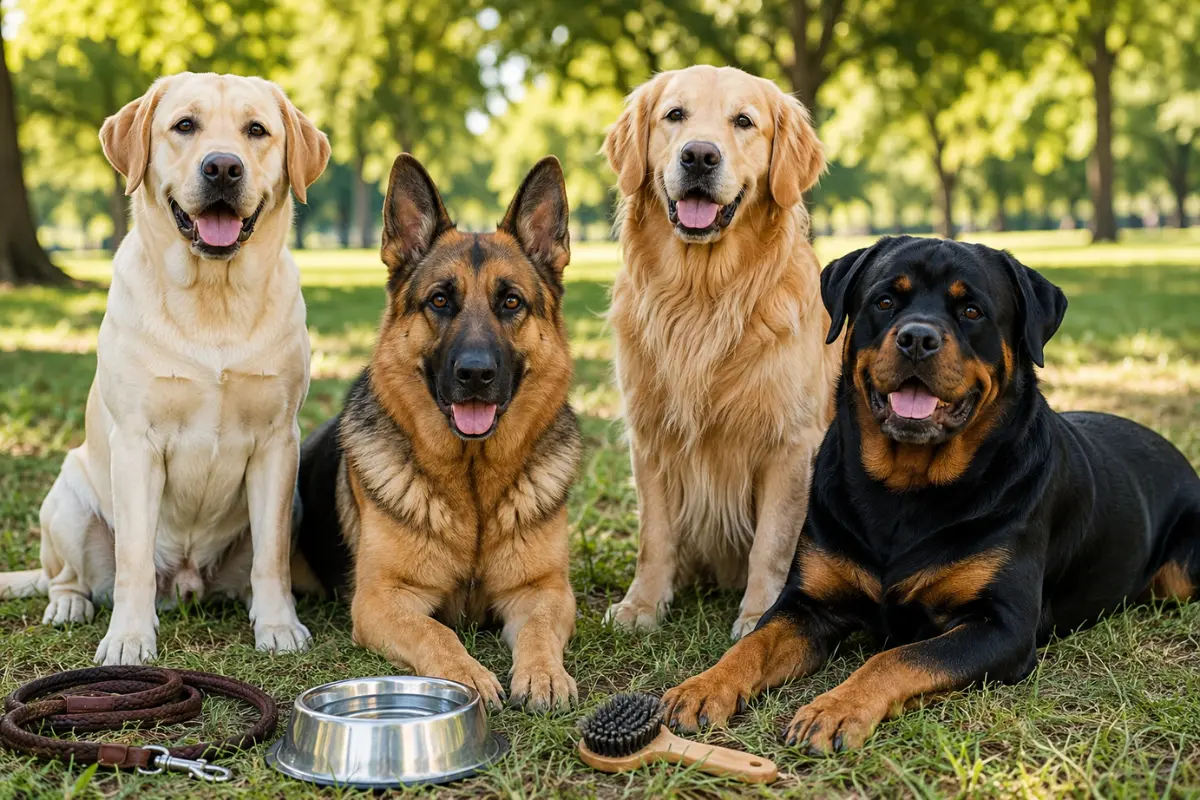
Large dogs offer an undeniable sense of physical presence, security, and majestic athletic capability. Encompassing dogs that weigh anywhere from 56 pounds to just under 100 pounds, this tier includes magnificent, high-performing animals like the Golden Retriever, German Shepherd, Labrador Retriever, Boxer, and Rottweiler.
These animals excel in formal working roles, military operations, police units, athletic agility competitions, and as dedicated outdoor companions.
Natural Protectors and Calm Housemates
Large dogs possess an undeniable physical presence that provides natural security and peace of mind to a household. They are naturally protective, generally calmer indoors compared to frantic small breeds, and serve as highly capable training partners.
Interestingly, many large breeds are significantly calmer inside the house than smaller, high-strung varieties, provided their exercise needs are met.
Once a large dog finishes a solid daily exercise session, they are often perfectly content to transform into a massive lounge companion, sleeping peacefully on their rug for hours at a time.
The True Cost of a Large Breed
Elevated Expenses: Everything costs more with a large dog. They consume massive amounts of high-protein food monthly, require expensive extra-large crates, specialized beds, heavy-duty toys, and large vehicles.
Furthermore, their veterinary prescriptions, surgeries, and preventative treatments are priced strictly by weight, making medical care significantly more expensive.
Training Responsibility: A 90-pound dog pulling frantically on a leash or jumping up to greet an elderly guest is a major liability and safety hazard. Meticulous leash training, polite manners, and early socialization are completely non-negotiable requirements when managing a large canine profile.
Shorter Lifespans: The major genetic trade-off for their grand scale is a significantly accelerated aging process. Large breeds typically live around 10 to 12 years, facing joint issues, arthritis, and cardiovascular hurdles much earlier than smaller sizes.
Giant Dog Breeds (100+ lbs)
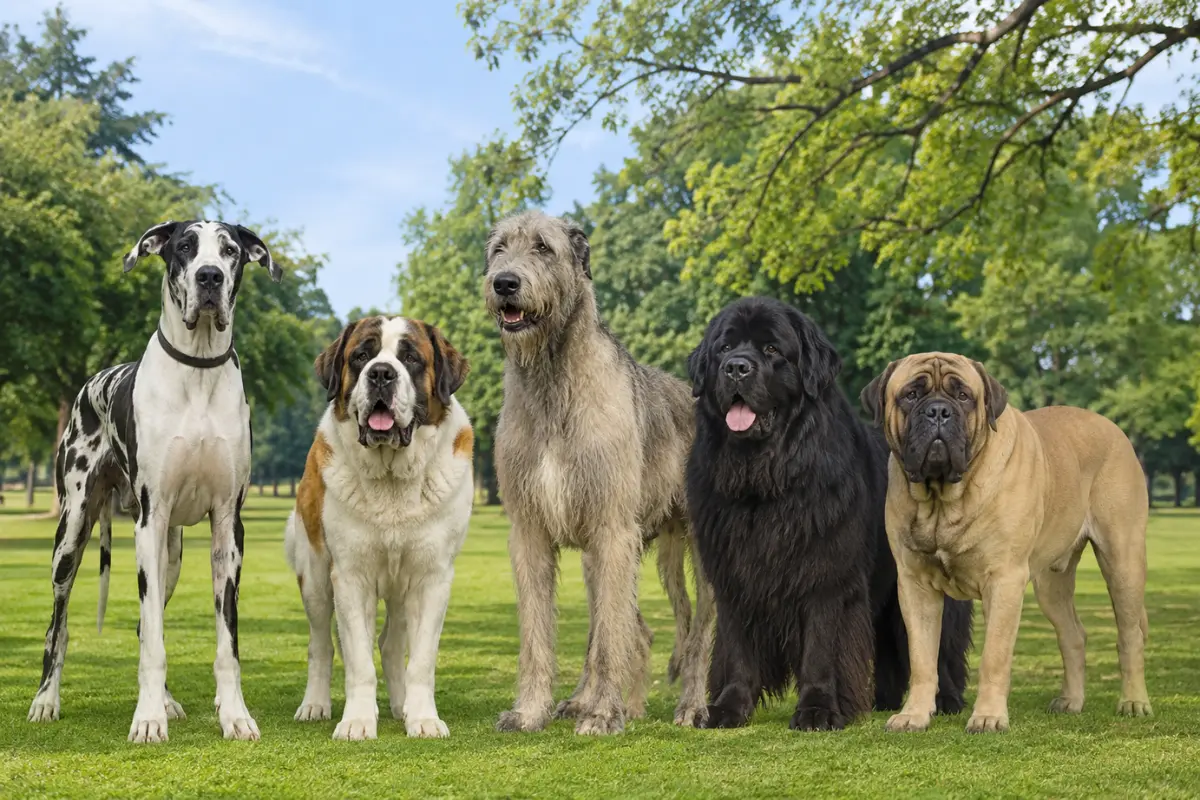
Giant dogs are those rare, magnificent animals that tip the scales at 100 pounds to well over 150 pounds. Breeds like the Irish Wolfhound, Great Dane, Newfoundland, Leonberger, and Saint Bernard turn heads wherever they go, offering unparalleled loyalty and a steady, predictable temperament.
- Pros: Incredibly laid-back indoor demeanor, low tendency for frantic or high-pitched barking, gentle with family members, and acts as a massive natural deterrent to home intruders.
- Cons: Shortest lifespans in the canine world (often only 7 to 9 years), massive drool production, high susceptibility to bloat (GDV), and incredibly high lifetime costs for specialty food and veterinary care.
Purebred vs Mixed Breed Dogs: The Great Genetic Debate
When looking at types of dogs and their breeds, the community splits into two major genetic philosophies: purebred vs mixed breed dogs.
Understanding the structural pros and cons of each genetic background is crucial for making an ethical, practical, and long-term choice for your home environment.
The Purebred Paradigm
A purebred dog is the product of generations of selective breeding within a closed gene pool, adhering strictly to a documented breed standard maintained by a national kennel club or registry.
The Power of Predictability: The main advantage of choosing a purebred puppy is predictability. You can accurately forecast their ultimate size, coat shedding type, exercise needs, prey drive, and temperament profile before they even grow up, making it easier to select a dog for specific tasks.
The Genetic Trade-Off: The narrow gene pools required to maintain purebred traits can unfortunately amplify inherited health conditions. Examples include hip dysplasia in German Shepherds, breathing complications in brachycephalic Bulldogs, or cardiac issues in Cavalier King Charles Spaniels.
The Mixed Breed Marvels
Mixed breed dogs, affectionately known as mutts, mongrels, or mixed-lineage rescues, are animals whose genetic heritage comprises two or more distinct breeds. This category also includes modern “designer crossbreeds” like Goldendoodles, Labradoodles, or Puggles.
The Magic of Hybrid Vigor: Mixed breeds enjoy a broader genetic diversity, which frequently protects them from passing down homozygous recessive genetic disorders. This phenomenon, known as hybrid vigor, often results in highly resilient, long-lived, structurally sound, and highly adaptable animals.
The Element of Surprise: The main challenge with an unknown mixed-breed puppy from a rescue shelter is unpredictability. If you adopt a rescue pup of mixed heritage, it can be incredibly difficult to accurately predict their final adult weight, coat shedding levels, or core behavioral instincts.
Comprehensive Matrix: Popular Types of Dogs Reference Table
To give you a structured visual asset for your research and quick reference, the following reference table maps out iconic types of dogs alongside their official classifications, average adult weights, and core temperament profiles.
| Breed Name | AKC Breed Group | Average Adult Weight | Primary Temperament Trait | Best Suited For |
| Labrador Retriever | Sporting Group | 55 – 80 lbs | Outgoing & Eager to Please | Active Families & Therapy Work |
| German Shepherd | Herding Group | 50 – 90 lbs | Confident & Intensely Loyal | Security, Working Roles, & Active Homes |
| French Bulldog | Non-Sporting Group | 16 – 28 lbs | Playful & Affectionate | Apartment Living & Casual Companion |
| Chihuahua | Toy Group | 2 – 6 lbs | Charming & Sassy | Small Spaces & Dedicated Single Owners |
| Siberian Husky | Working Group | 35 – 60 lbs | Outgoing & High-Energy | Cold Climates & Experienced Handlers |
| Boxer | Working Group | 50 – 80 lbs | Fun-Loving & Active | Large Households with Children |
| Shih Tzu | Toy Group | 9 – 16 lbs | Affectionate & Placid | Seniors & Low-Energy Apartments |
Smart Selection: How to Choose the Right Dog Type for Your Life
Bringing a dog into your life is a serious, long-term commitment that easily spans a decade or more of your life.
Far too many prospective owners fall into the trap of selecting a breed purely based on aesthetic appeal, social media videos, or pop-culture trends, leading to mismatched expectations and surrendered pets. To choose wisely from the myriad different types of dogs, evaluate these structural lifestyle metrics:
- Time and Schedule: High-energy working and herding breeds require hours of daily physical exercise and intense mental engagement. If you work long hours away from home, a lower-energy toy or non-sporting companion is much more appropriate.
- Financial Reality: Large and giant breeds cost significantly more to maintain throughout their lives. Factor in the cost of high-quality large-breed kibble, premium-priced flea/tick preventatives, heavy-duty crates, and professional grooming services for long-haired varieties.
- Living Environment: While size matters, a dog’s natural energy level is the true indicator of apartment suitability. A massive, low-energy Great Dane can comfortably sleep away the day in a compact apartment lounge, whereas a medium-sized Border Collie will quickly grow destructive without an expansive yard or structured daily work.
- Local Climate: Heavy, double-coated northern breeds (like Alaskan Malamutes, Siberian Huskies, or Samoyeds) struggle immensely in tropical or high-heat climates, while short-coated brachycephalic breeds (like Pugs and Bulldogs) are highly susceptible to heatstroke and require strictly air-conditioned environments.
Summary: Celebrating the World of Dogs
Ultimately, whether you find yourself drawn to the athletic elegance of a sporting hound, the rustic charm of an independent terrier, the compact loyalty of a toy companion, or the joyful chaos of a mixed-breed rescue dog, the sheer breadth of options within the canine kingdom ensures there is a perfect match for every human lifestyle.
By taking the time to study types of dogs, respect their historical breeding purposes, understand the nuances of size classifications, and accurately audit your own living constraints, you can forge a harmonious, joyful, and lifelong relationship with a companion who is perfectly customized to your world.
Advanced Breed Care & Lineage Insights: Strategic Multi-Tier Management
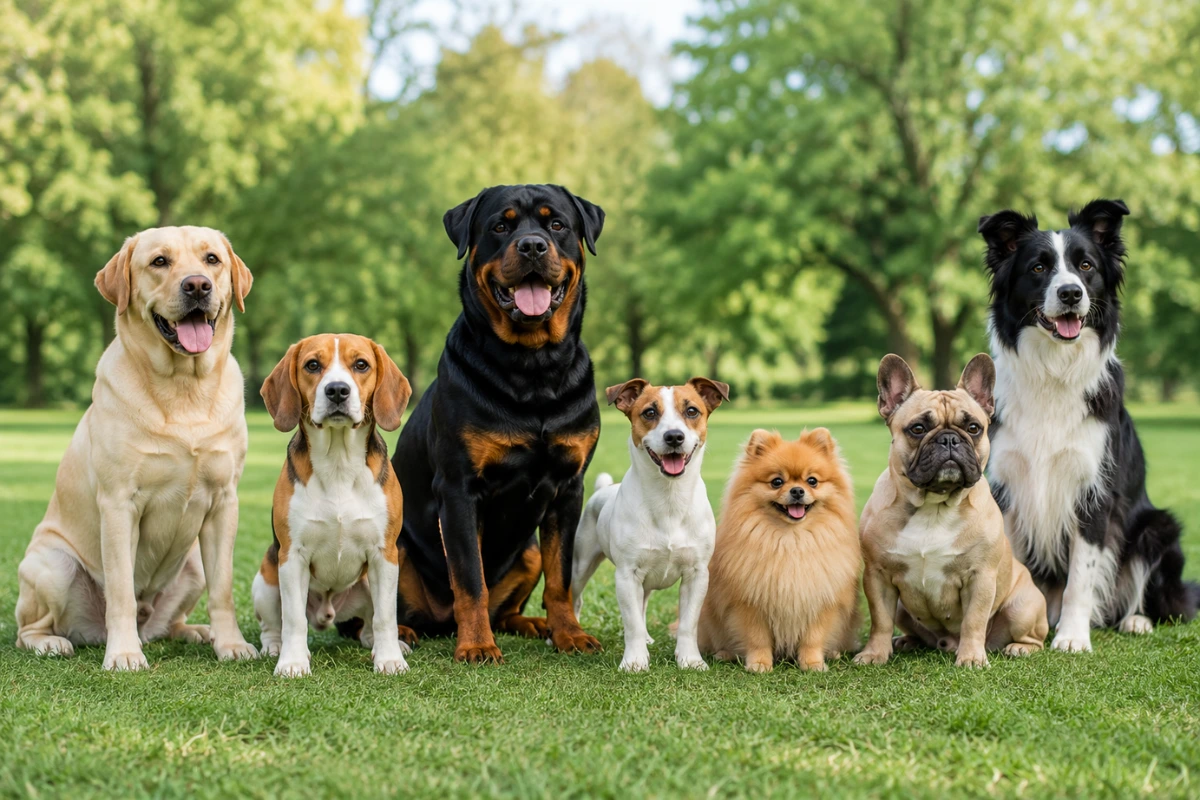
Navigating the comprehensive ecosystem of canine ownership requires an advanced operational blueprint that matches the physical, behavioral, and biological demands of specific dog classifications.
When expanding historical documentation into actionable, daily husbandry metrics, structural managers must approach health preservation, nutritional distribution, and interactive reinforcement strategies with precise execution.
Every size tier—from small toy frames to dense giant lines—possesses unique physical traits that dictate environmental modifications and spatial parameters within a modern home.
Biomechanical Realities and Advanced Structural Care Across Size Tiers
The mechanical forces acting upon a dog’s skeletal system vary completely across different size classifications, requiring distinct preventative and management routines.
In toy and small dog breeds, structural care focuses mostly on protecting delicate bone frames from high-impact trauma.
Conditions like patellar luxation—where the kneecap slips out of its natural anatomical groove—are common in smaller lines due to genetic misalignments in the hind legs. To prevent this, owners should use low-impact furniture ramps and avoid high vertical jumps.
Additionally, small dog profiles are uniquely vulnerable to tracheal collapse, meaning standard neck collars should be entirely replaced with body-distributing harnesses during loose-leash training walks.
In contrast, large and giant breed classifications present completely different biomechanical challenges. Large frames place intense, ongoing mechanical stress on long bones and weight-bearing joints, accelerating the development of osteoarthritis and hip or elbow dysplasia.
For these heavy groups, preventative care must begin early during their rapid puppyhood growth windows.
Owners must maintain strict physical condition scores, ensuring the animal’s body fat levels remain low to reduce unnecessary load on developing cartilage frameworks.
Senior large and giant dogs benefit immensely from environmental modifications, such as placing non-slip rubber mats across polished hardwood floors to prevent dangerous micro-slips that cause soft tissue or ligament injuries.
Orthopedic memory foam beds are also vital, as they help distribute their massive body weight evenly, preventing pressure sores and hygromas over time.
Nutritional Science: Precise Caloric and Mineral Balances for Specific Sizes
Formulating a modern nutritional program involves much more than simply adjusting raw portion volumes based on physical scale. Metabolic rates per unit of body surface area are inversely proportional to an animal’s total body mass.
Consequently, small and toy breed puppies possess incredibly fast metabolisms, meaning they require calorie-dense formulas packed with high fat and protein concentrations.
This rapid energy burning makes small puppies susceptible to sudden hypoglycemia (dangerous drops in blood sugar) if meals are spaced too far apart.
Therefore, small canine lines need structured, small-portion feedings throughout the day to sustain balanced metabolic energy levels.
On the other side of the spectrum, large and giant breed puppies require highly managed, low-density caloric intake to prevent rapid growth spurts that weaken skeletal frameworks.
If a giant breed puppy accumulates mass too quickly, their muscles outpace the load-bearing capacity of their soft bones, leading to permanent structural issues like osteochondrosis dissecans (OCD) or hypertrophic osteodystrophy (HOD).
The calcium-to-phosphorus ratio in large breed puppy formulas must be tightly controlled, ideally between 1.1:1 and 1.3:1, to ensure steady, healthy bone mineralization.
Furthermore, as large dogs mature, their diets should transition to include proactive joint health supplements like glucosamine hydrochloride, chondroitin sulfate, and marine-derived omega-3 fatty acids (EPA/DHA) to keep joint tissues well-lubricated and minimize cellular inflammation pathways over their lifespan.
Behavioral Modification and High-Distraction Impulse Management
Achieving reliable behavioral control over a canine requires understanding their historical breed purpose and using training methods that match their natural instincts.
Herding and working groups, for example, possess high cognitive problem-solving skills and a strong desire to perform structured tasks.
If left under-stimulated without active mental puzzles, tracking trails, or clear jobs, they quickly redirect that intense focus into unwanted behaviors like chasing cars, barking at windows, or chewing household items.
For these highly intelligent groups, training must utilize advanced impulse-control methods, such as the Premack Principle, which rewards a lower-probability behavior (like a steady, focused sit) with access to a high-probability environmental reward (like being released to explore or chase a ball).
For independent or high-prey-drive classifications like the Hound and Italian Terrier groups, traditional training methods must adapt to account for their natural instincts.
Scent hounds and terriers are driven by centuries of selective breeding to tune out human commands once their tracking senses are triggered.
Building a reliable emergency recall with these breeds requires high-value reward systems and progressive distraction training in controlled spaces before moving to open environments.
Handlers must establish clear boundaries without using harsh physical corrections, which can cause independent working lines to shut down or show defensive behaviors.
Instead, using positive reinforcement coupled with strict, non-negotiable situational rules ensures total safety and cooperation in public settings.
Emergency Medical Planning and Environmental Microclimate Safety
A complete canine management plan must include clear safety preparations tailored to the specific medical risks of your dog’s size group. For deep-chested large and giant dogs (such as Great Danes, German Shepherds, and Saint Bernards), the primary medical emergency.
To prepare for is Gastric Dilatation-Volvulus (GDV), commonly known as bloat. This life-threatening crisis occurs when the stomach fills with gas and twists on its own axis, blocking blood flow to vital organs.
Handlers must monitor for early signs like rapid unproductive retching, excessive foaming at the mouth, restlessness, and a tight, swollen abdomen. If these symptoms appear, emergency transport to a surgical center is required immediately, as survival windows drop within hours.
Preventative practices, such as using slow-feed bowls and avoiding strenuous exercise for an hour before and after meals, help minimize these risks. Additionally, environmental microclimates within your living spaces must be adjusted based on your dog’s coat type and ancestral origins.
Heavy, double-coated breeds designed for cold climates retain metabolic heat for long periods, making them highly prone to heat exhaustion during peak summer seasons. Homes housing these breeds require dedicated cooling zones, consistent ventilation, and shaded rest areas.
Conversely, short-coated brachycephalic lines require careful air-conditioning management, as their shortened airways prevent them from cooling themselves effectively through panting. By adjusting indoor spaces to match these biological needs, you protect your dog from heat stress and ensure long-term comfort.
Comparative Size & Logistics Overview
To provide a final, organized visual asset for quick research, this table outlines the practical space requirements, financial tiers, and average exercise windows across the four primary canine size classifications.
| Size Classification | Weight Range | Ideal Living Environment | Relative Lifespan Tier | Daily Exercise Target |
| Toy & Small Breeds | 1 – 22 lbs | Apartments / Compact Urban Spaces | High (12 – 18 Years) | 30 – 45 Minutes Low Impact |
| Medium Breeds | 23 – 55 lbs | Highly Adaptable / Suburban Homes | Moderate (11 – 14 Years) | 60 – 90 Minutes High Intensity |
| Large Breeds | 56 – 99 lbs | Spacious Layouts / Fenced Yards | Lower (10 – 12 Years) | 60 – 120 Minutes Structured Work |
| Giant Breeds | 100+ lbs | Open Layouts / Low-Rise Entryways | Lowest (7 – 9 Years) | 45 – 60 Minutes Controlled Walks |
FAQs About Types of Dogs
What are the main types of dogs?
Dogs are commonly grouped by breed group, size, coat type, temperament, and lifestyle. Official breed groups include Sporting, Hound, Working, Terrier, Toy, Non-Sporting, and Herding dogs.
How many types of dogs are there?
There is no single fixed number because dog breeds are recognized differently by global kennel clubs. However, most guides explain dog types through official groups, breed sizes, coat types, and working purposes.
What are the 7 main dog groups?
The 7 main dog groups are Sporting, Hound, Working, Terrier, Toy, Non-Sporting, and Herding. These groups are based on the jobs dogs were originally bred to do.
What type of dog is best for families?
Labrador Retrievers, Golden Retrievers, Cavalier King Charles Spaniels, and some sturdy mixed breeds are often good for families. The best choice depends on your space, children’s age, and daily routine.
What type of dog is best for apartments?
Good apartment dogs are usually calm indoors and not too noisy. French Bulldogs, Pugs, Shih Tzus, Cavalier King Charles Spaniels, and even Greyhounds can fit apartment life well.
What is the difference between dog types and dog breeds?
Dog types are broad groups based on size, job, coat, or temperament. Dog breeds are specific named dogs, such as Beagle, Poodle, German Shepherd, or Chihuahua.
