



The Cocker Spaniel is one of the most popular family dog breeds in the United States. People love this breed because it is affectionate, intelligent, playful, and deeply connected to its family. With its silky coat, long ears, and soft expression, the Cocker Spaniel easily stands out among companion dogs.
Originally bred as a hunting dog, the Cocker Spaniel now works mainly as a loyal household companion. Still, many of its sporting instincts remain strong today. These dogs enjoy walks, games, scent activities, and close interaction with people.
Facebook Links
DIT CIT course in multanHere’s the thing: the Cocker Spaniel is not just a pretty dog. This breed also needs regular grooming, emotional attention, exercise, and training to stay healthy and balanced. For the right owner, however, the reward is a loving companion that stays closely connected to the family for many years.
Cocker Spaniel Overview
| Trait | Details |
| Breed Group | Sporting Group |
| Height | 13.5–15.5 inches |
| Weight | 20–30 pounds |
| Lifespan | 10–14 years |
| Energy Level | Moderate to High |
| Coat Type | Silky, medium-length |
| Shedding Level | Moderate |
The Cocker Spaniel is a medium-sized sporting dog known for its balanced personality. It is active enough for outdoor fun but calm enough to enjoy relaxing at home with family members. This breed adapts well to many living situations, including apartments and suburban homes, as long as it receives enough exercise and companionship.
History and Origin of the Cocker Spaniel

Hunting Background
The Cocker Spaniel was originally bred to help hunters flush birds from bushes and wooded areas. The breed became especially skilled at hunting woodcock birds, which later inspired the name “Cocker.” Their compact body, quick movement, and strong sense of smell made them excellent hunting companions.
Even today, many Cocker Spaniels still enjoy:
- Fetch games
- Sniffing trails
- Retrieving toys
- Outdoor exploration
Why Are They Called Cocker Spaniels?
The name comes from the woodcock bird. Hunters often used these dogs during woodcock hunts, so the breed became known as the “Cocker Spaniel.” The word “Spaniel” likely traces back to Spain, where early spaniel-type dogs may have originated before spreading through Europe.
American vs English Cocker Spaniel
The American Cocker Spaniel is smaller, has a fuller coat, and is more common in the US. The English Cocker Spaniel is taller, more athletic, and closer to the original hunting type.
| Feature | American Cocker Spaniel | English Cocker Spaniel |
| Size | Smaller | Taller |
| Coat | Fuller and heavier | Lighter |
| Energy Level | Moderate | Higher |
| Appearance | Rounder head | Longer muzzle |
| Main Role | Companion dog | Sporting dog |
Both types are affectionate and intelligent companions.
Cocker Spaniel Appearance

The Cocker Spaniel has a graceful and elegant appearance. Its silky coat, feathered ears, and expressive eyes give the breed a soft and friendly look.
Size and Weight
Most adult Cocker Spaniels weigh between 20 and 30 pounds and stand around 13.5 to 15.5 inches tall. Their medium size makes them easier to handle than larger sporting breeds while still giving them enough strength for active play.
Coat Colors
This breed comes in many colors, including:
- Black
- Buff
- Chocolate
- Golden
- Red
- Cream
- Parti-color combinations
The wide range of coat colors adds to the breed’s popularity.
Eye Shape and Ears
Cocker Spaniels are known for their large dark eyes and long feathered ears. Their soft facial expression often gives them a sweet and gentle appearance. Their ears originally helped trap scent during hunts. Today, however, those long ears also increase the risk of ear infections if owners neglect cleaning.
Coat Texture
The coat is soft, silky, and medium in length. Feathering appears around the chest, ears, legs, and belly. Regular brushing is important because the coat tangles easily.
Cocker Spaniel Temperament
The Cocker Spaniel is affectionate, emotionally sensitive, and people-focused. Most form deep bonds with their family and enjoy staying involved in daily activities.
Personality Traits
Common personality traits include:
- Affectionate
- Loyal
- Playful
- Intelligent
- Social
- Curious
This breed responds best to calm and positive interaction.
Behavior Around Children
Cocker Spaniels usually do very well with children when properly socialized. Their gentle nature and playful energy make them excellent companions for many families. Still, children should always learn respectful handling.
Behavior Around Strangers
Most Cocker Spaniels are friendly or polite with strangers. Early socialization helps build confidence and calm behavior around unfamiliar people.
Interaction With Other Pets
This breed often gets along well with:
- Other dogs
- Cats
- Household pets
Proper introductions and early socialization improve long-term behavior.
Separation Anxiety
Cocker Spaniels strongly dislike long isolation. Some may develop:
- Barking
- Chewing
- Whining
- Anxiety-related behavior
Owners should teach independence gradually during puppyhood.
Are Cocker Spaniels Good Family Dogs?
Yes, Cocker Spaniels are widely considered excellent family dogs. Their affectionate nature, moderate size, and friendly personality help them fit naturally into many homes. They enjoy spending time with children, relaxing indoors, and joining family activities.
They also adapt well to different homes, including apartments, as long as owners provide enough exercise and attention. Still, this breed needs companionship. Families that spend time with their dog usually see the best behavior and emotional balance.
Male vs Female Cocker Spaniel
Both male and female Cocker Spaniels make excellent pets, but small personality differences sometimes appear.
| Trait | Male | Female |
| Size | Slightly larger | Slightly smaller |
| Personality | More openly affectionate | More independent |
| Energy | Playful longer | Mature faster |
| Attention Needs | Higher | Moderate |
The biggest factor is still training and socialization, not gender alone.
Cocker Spaniel Puppy Guide
First Month at Home
The first month helps shape the puppy’s confidence and routines.
Puppies need:
- Consistent schedules
- Calm introductions
- Positive socialization
- Gentle training
Most puppies adjust better when owners create stable feeding, sleep, and bathroom routines.
Potty Training
Cocker Spaniels usually learn potty training fairly quickly with consistency.
Owners should:
- Take puppies outside often
- Reward success immediately
- Avoid punishment after accidents
Patience matters during this stage.
Crate Training
Crate training helps with:
- House training
- Building independence
- Safe sleeping
- Preventing destructive behavior
The crate should feel calm and comfortable, never like punishment.
Teething and Chewing
Teething usually starts around 3 to 4 months of age. Safe chew toys help redirect chewing away from:
- Furniture
- Shoes
- Household items
Most puppies outgrow destructive chewing with proper guidance.
Training a Cocker Spaniel

Cocker Spaniels are intelligent and eager to please, which often makes training easier than many breeds.
Intelligence Level
This breed learns quickly and enjoys interactive training. They respond well to:
- Treat rewards
- Praise
- Repetition
- Positive reinforcement
Common Training Mistakes
Common owner mistakes include:
- Inconsistent rules
- Harsh punishment
- Lack of mental stimulation
- Poor socialization
Emotionally sensitive dogs respond better to calm guidance.
Socialization Tips
Puppies should experience:
- New people
- Sounds
- Places
- Friendly dogs
Early positive experiences help build confidence.
Barking Control
Barking usually increases because of:
- Boredom
- Anxiety
- Attention-seeking
Daily exercise and mental stimulation often reduce excessive barking.
Recall Training
Cocker Spaniels usually respond well to recall training when owners practice consistently using rewards and positive repetition.
Exercise and Mental Stimulation
Cocker Spaniels need both physical and mental activity every day. Without enough stimulation, boredom may lead to:
- Barking
- Chewing
- Restlessness
Daily Walk Needs
Most adult Cocker Spaniels need around 45 to 60 minutes of exercise daily.
They enjoy:
- Walks
- Fetch
- Hiking
- Outdoor play
Indoor Games
Good indoor games include:
- Hide-and-seek
- Hallway fetch
- Tug games
- Basic training practice
Puzzle Toys
Puzzle toys help reduce boredom while keeping the brain active. Popular options include:
- Treat puzzles
- Snuffle mats
- Interactive feeders
Scent Games
Because of their hunting background, Cocker Spaniels naturally enjoy sniff-based games and scent work.
Grooming Needs
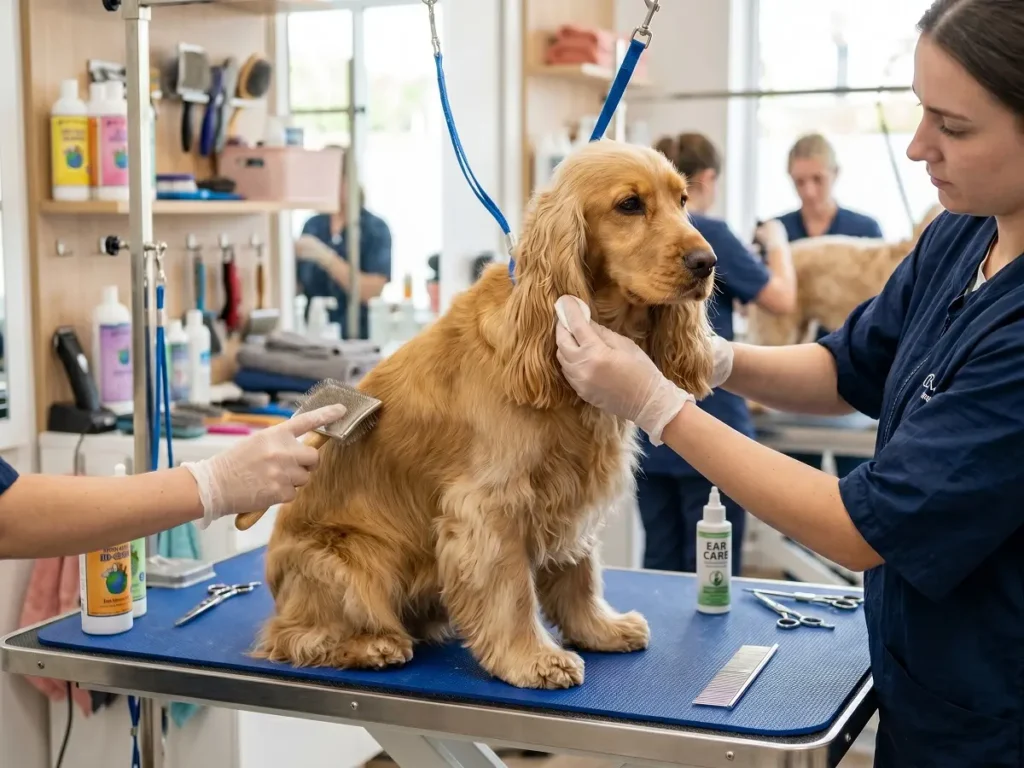
Grooming is one of the biggest responsibilities with this breed.
Brushing Routine
Most owners brush the coat several times each week to prevent:
- Mats
- Tangles
- Dirt buildup
Ear Cleaning
Ear cleaning is extremely important because floppy ears trap moisture easily. Weekly cleaning helps reduce infection risk.
Nail Trimming
Nails usually need trimming every 3 to 4 weeks. Long nails may cause discomfort and walking problems.
Bath Schedule
Most Cocker Spaniels need bathing every 4 to 6 weeks depending on activity level and coat condition.
Professional Grooming Cost
Professional grooming in the United States often costs between $50 and $120 per session. Many owners schedule grooming every 6 to 8 weeks.
Do Cocker Spaniels Shed?
Yes, Cocker Spaniels are moderate shedders. Their silky coat traps loose hair, which means brushing becomes very important for controlling shedding. Regular grooming helps reduce:
- Loose fur
- Matting
- Skin irritation
They are not considered hypoallergenic dogs.
Common Health Problems
Like many purebred dogs, Cocker Spaniels can face certain health conditions.
Ear Infections
Their long ears trap moisture and bacteria easily. Common signs include:
- Bad odor
- Scratching
- Redness
- Head shaking
Hip Dysplasia
Hip dysplasia affects joint movement and may cause:
- Limping
- Stiffness
- Reduced mobility
Healthy weight helps reduce pressure on joints.
Eye Diseases
This breed may develop:
- Cataracts
- Progressive retinal atrophy
- Glaucoma
Routine eye exams help catch problems early.
Skin Problems
Common skin issues include:
- Allergies
- Hot spots
- Dry skin
- Itching
Regular grooming helps improve skin health.
Obesity Risks
Cocker Spaniels gain weight easily if overfed. Daily exercise and portion control help maintain healthy weight.
Diet and Nutrition
Good nutrition supports coat health, energy, joints, and long-term wellness.
Best Food Type

A healthy diet should include:
- Quality protein
- Healthy fats
- Vitamins
- Balanced nutrients
Age-specific food is important for puppies, adults, and seniors.
Feeding Schedule
Most adult Cocker Spaniels do best with:
- Two meals daily
Puppies usually need three to four smaller meals.
Foods to Avoid
Never feed:
- Chocolate
- Grapes
- Raisins
- Onions
- Garlic
- Xylitol
Fatty table scraps should also stay limited.
Weight Management
Weight control is extremely important because obesity increases stress on joints and organs. Measured meals and regular exercise help maintain healthy body condition.
How Long Do Cocker Spaniels Live?
The average lifespan of a Cocker Spaniel is around 10 to 14 years. Several factors affect longevity, including:
- Genetics
- Diet
- Exercise
- Weight management
- Veterinary care
Dogs maintained at healthy weight often enjoy better long-term mobility and overall health.
Senior dogs usually benefit from:
- Softer bedding
- Joint support
- Senior diets
- Regular vet visits
Cocker Spaniel Pros and Cons
Pros
| Pros | Details |
| Affectionate | Forms strong family bonds |
| Good with families | Usually gentle with children |
| Intelligent | Learns quickly |
| Adaptable | Fits many living spaces |
| Beautiful appearance | Silky coat and expressive eyes |
Cons
| Cons | Details |
| High grooming needs | Requires regular coat care |
| Ear infections | Frequent ear maintenance needed |
| Separation anxiety | Dislikes long isolation |
| Emotional sensitivity | Harsh training affects confidence |
| Health costs | Some inherited health risks |
How Much Does a Cocker Spaniel Cost?
Owning a Cocker Spaniel involves both upfront and monthly expenses.
Puppy Price
Most puppies in the US cost between $800 and $3,000 depending on breeder quality and bloodline. Adoption usually costs less.
Grooming Costs
Professional grooming often costs:
- $50–$120 per session
Vet Bills
Routine veterinary care includes:
- Vaccinations
- Ear care
- Dental care
- Wellness exams
Unexpected medical treatment may increase long-term costs.
Monthly Ownership Cost
| Expense | Estimated Monthly Cost |
| Food | $30–$80 |
| Grooming | $20–$60 |
| Vet Care | $20–$70 |
| Insurance | $30–$60 |
| Toys and Supplies | $10–$40 |
Who Should Get a Cocker Spaniel?
This breed is often a great fit for:
- Families
- First-time owners
- Retired adults
- Remote workers
- People wanting emotional companionship
Owners willing to provide grooming, exercise, and attention usually enjoy the breed most.
FAQs
The Cocker Spaniel is loving, friendly, and loyal, but it is not the right dog for every person. This breed needs time, attention, grooming, and emotional connection to stay happy and healthy.
They are moderate barkers. Boredom, anxiety, and loneliness may increase barking.
Yes. They are intelligent and respond well to positive reinforcement.
Most are gentle and friendly when properly socialized.
Final Thoughts
The Cocker Spaniel remains one of the best companion dog breeds for people who want affection, loyalty, and emotional connection in a medium-sized dog.
This breed combines:
- Friendly personality
- Intelligence
- Family-friendly behavior
- Moderate activity level
- Strong companionship
Still, owners should prepare for regular grooming, ear care, exercise, and emotional attention. What this really means is that the Cocker Spaniel gives a lot of love, but it also needs time and care in return. For families and individuals willing to provide that commitment, the reward is often a deeply loyal and affectionate companion that stays closely connected to the home for many years.
