


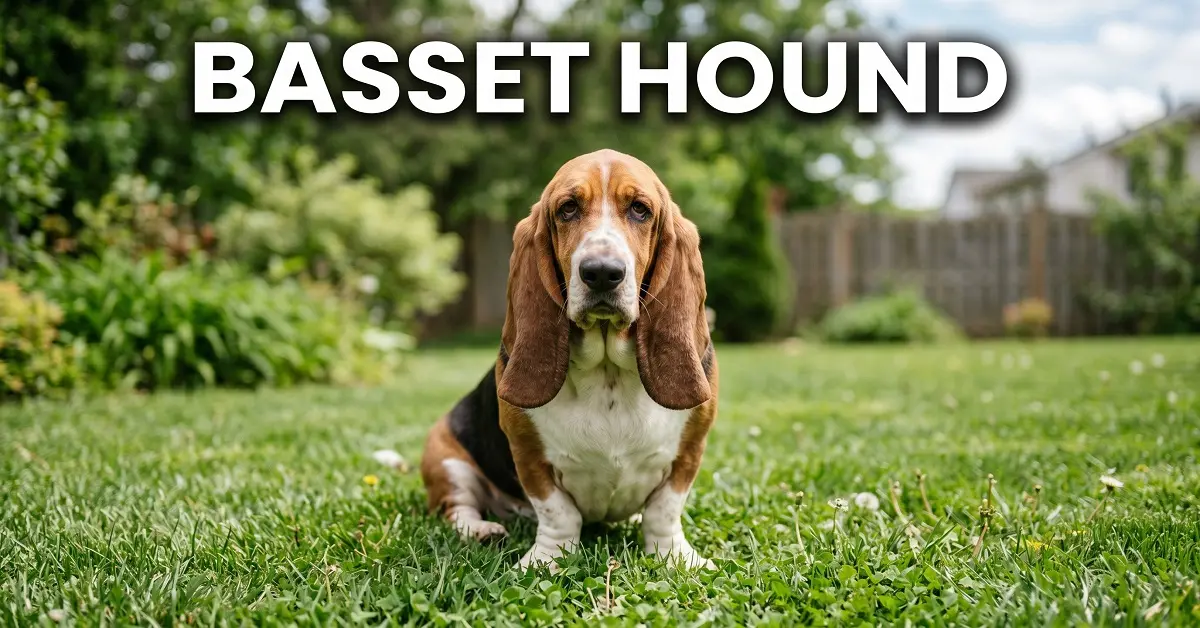
The Basset Hound is one of the most distinctive dog breeds on the planet, with short legs, impossibly long ears, a permanently sad face, and a nose that ranks second only to the Bloodhound. Originally bred in 16th-century France to track rabbits on foot, the Basset Hound today fills a very different role: devoted family companion.
But don’t mistake the sleepy look for simplicity. This is a complex, opinionated, deeply loyal dog that rewards patient owners and genuinely challenges impatient ones. Before you fall for those eyes, here’s everything you actually need to know.
Facebook Links
DIT CIT course in multanWhat Is a Basset Hound? Breed Overview and Quick Stats
The Basset Hound is a medium-to-heavy scent hound descended from the St. Hubert Hound of Belgium and France. The name comes straight from the French word bas, meaning “low” and one look at the dog explains exactly why.
Despite standing only 11–15 inches tall, these dogs weigh 40–65 pounds. That surprises almost every first-time owner. According to the AKC breed standard, the Basset Hound is heavier in bone, size considered, than any other breed of dog, and that density shows when you try to lift one.
| Trait | Detail |
| Height | 11–15 inches |
| Weight | 40–65 lbs (male) / 40–55 lbs (female) |
| Lifespan | 12–13 years |
| Energy Level | Low to moderate |
| Trainability | Challenging — independent thinker |
| Good with Kids | Excellent |
| Apartment Suitable | Possible with daily walks |
| Shedding | Moderate, year-round |
| Monthly Cost (US) | $125–$240 |
Key physical traits that define the breed:
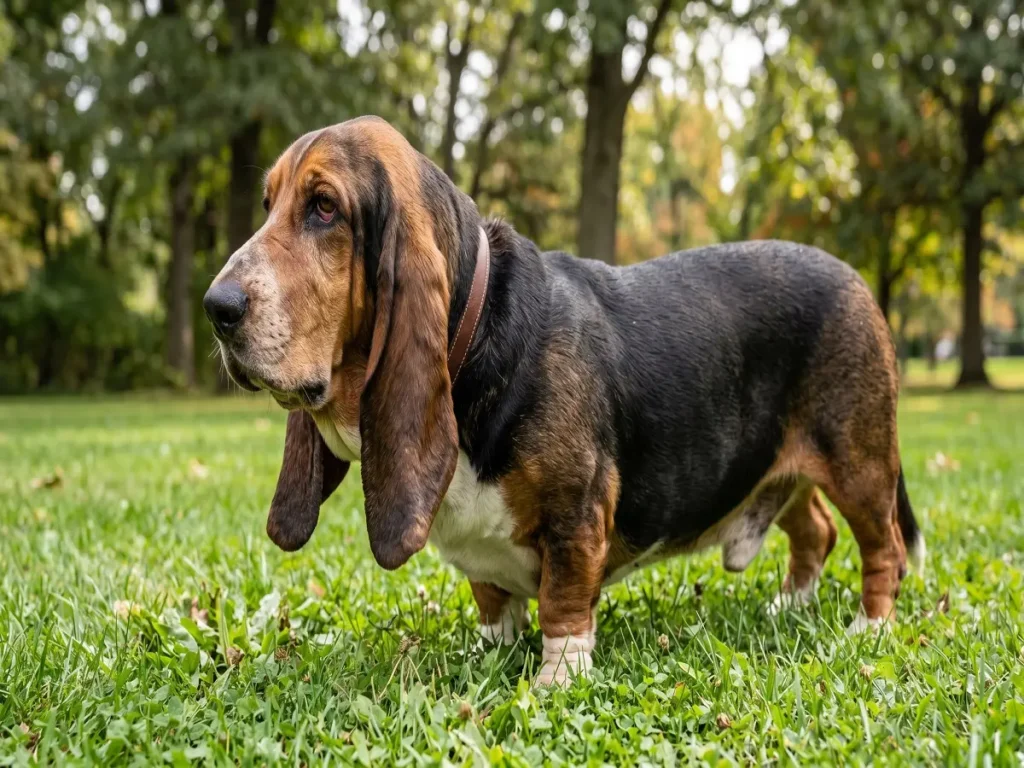
- Velvety ears that swing past the nose when the head drops
- Loose, wrinkled skin ,especially around the face and neck
- A deep, barrel-shaped chest sitting low to the ground
- Short, dense coat in tricolor, red-and-white, or lemon-and-white patterns
Every one of those features was engineered for a purpose. The long ears funnel ground scent upward toward the nose. The loose skin traps airborne scent particles. The short legs kept the dog slow enough for a hunter on foot to follow. Nothing about this dog is accidental.
History in 90 Seconds: Why It Matters for Owners Today
The Basset Hound’s history isn’t just trivia; it directly explains every behavioral challenge you’ll face as an owner. These dogs were bred for centuries to work alone, follow a scent trail independently, and make their own navigational decisions without waiting for human input.
The AKC formally recognized the breed in 1885, and by 1958, the Hush Puppies shoe brand had adopted the Basset as its mascot putting that iconic droopy face in front of millions of American households overnight.
So when your Basset hears its name, holds eye contact with you for a moment, and then slowly turns back to whatever it was sniffing that’s not defiance. That’s 500 years of selective breeding doing its job. Understanding that shifts everything about how you train and live with this dog.
Personality And Temperament
What Makes Them Wonderful
The Basset Hound’s temperament is one of its greatest strengths. According to the AKC breed standard, the Basset is mild in temperament, never sharp or timid, and extreme in its devotion and that description holds up in daily life. These dogs are genuinely gentle.
They’re rarely reactive, rarely aggressive, and they handle the noise and chaos of a busy family with impressive calm. They’re especially good with children. Patient, tolerant, and unbothered by unpredictable kid energy, a well-socialized Basset Hound builds some of the closest bonds you’ll see between a dog and a child.
They also get along well with other dogs pack animals by heritage, they often thrive with a canine companion at home. That second dog, as it turns out, also significantly reduces separation anxiety.
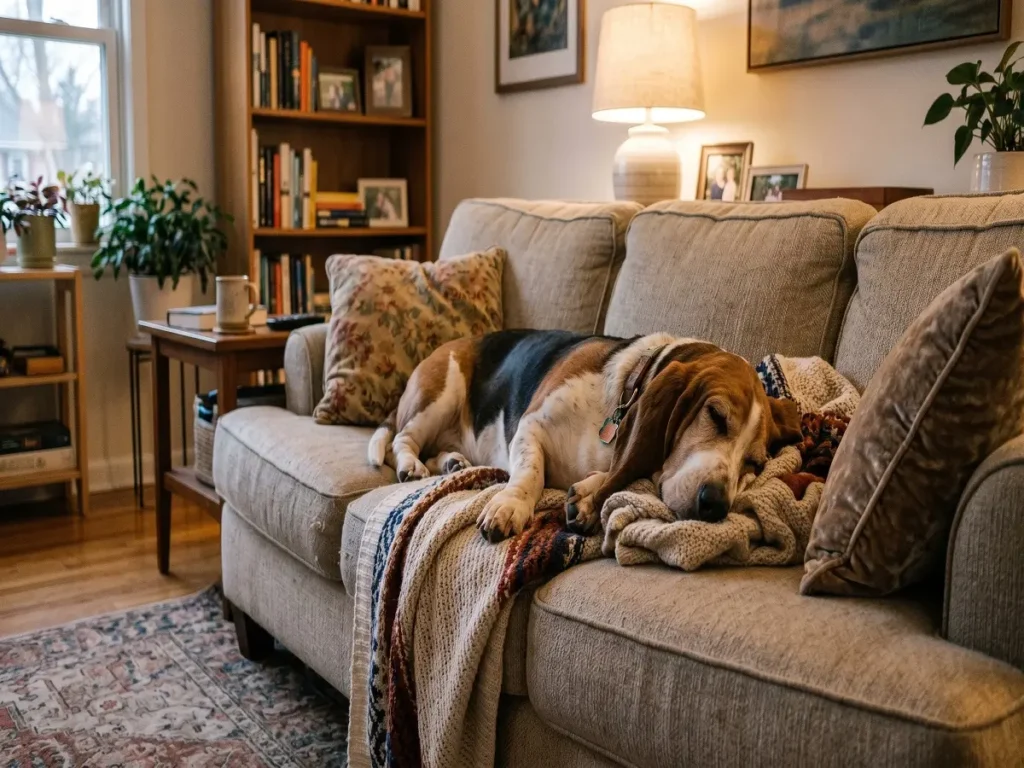
What this all adds up to indoors is a calm, warm, quietly funny companion. Adult Bassets sleep 12–14 hours a day, follow you from room to room just to stay close, and settle against whoever sits down in the evening with visible contentment.
What Catches Owners Off Guard
Here’s the honest part: most breed guides soften too much.
Stubbornness is real. The Basset Hound is an independent thinker, and that independence was bred in deliberately. They don’t look to you for direction the way a Labrador does. They assess each situation themselves and sometimes your request loses that assessment to a smell on the fence post.
This isn’t low intelligence. A dog that can track a scent trail hours old across miles of terrain is making real cognitive decisions. It’s just not the people-pleasing intelligence most owners expect.
Separation anxiety is common. Despite that independence outdoors, Basset Hounds are emotionally dependent on their people. Left alone for long hours regularly, they become vocal, anxious, and sometimes destructive. This breed needs consistent company and if you work full time away from home with no midday coverage, that’s a serious mismatch to think through before committing.
The noise is significant. Basset Hounds have a deep, resonant bay a hunting call designed to carry through dense forest and a mournful howl triggered by loneliness or boredom. In an apartment building with thin walls or noise restrictions, this is a genuine practical problem, not a minor quirk.
Training a Basset Hound: What Actually Works
Training this breed requires a specific mindset. According to certified trainers, the Basset Hound is sensitive by nature and does not respond well to boredom or overly repetitive tasks and punishment makes everything worse. Once a Basset shuts down in a training session, that session is over.
So here’s what actually works:
- Keep sessions 5–10 minutes max. Three short sessions a day beat one long one every time.
- Use high-value food rewards every time. Verbal praise alone won’t compete with an interesting smell. Small pieces of chicken or cheese will. Treats should stay under 10% of daily calories.
- Train indoors first. Build the behavior in a distraction-free room before testing it in a park full of competing scents.
- Use sniffing as a reward. After a successful response during a walk, give a minute of free-sniff time. For a scent hound, that’s genuinely reinforcing.
- Stay consistent across everyone in the home. If one person allows the sofa and another doesn’t, the dog learns that rules are unpredictable and stops taking them seriously.
Potty training takes longer than most breeds plan for two to four months, not two to three weeks. A strict schedule, an enzymatic cleaner for accidents, and crate training all speed the process significantly.
Exercise, Weight, and Feeding: The Three That Run Together
Exercise Quality Over Distance
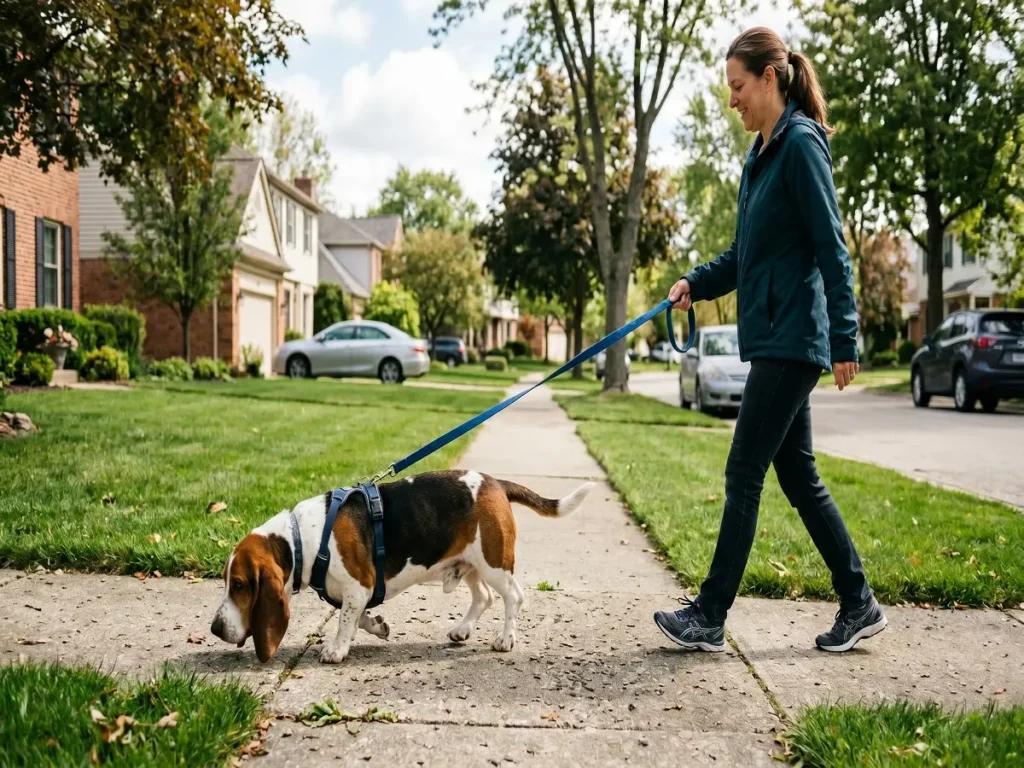
Daily exercise for a Basset Hound isn’t about distance. It’s about quality. Two 30-minute walks a day, slow-paced, with real sniffing stops, keep a Basset physically and mentally satisfied. The Basset Hound Club of America recommends at least one walk every day, and splitting the total into two sessions is better than one long one.
What to avoid: high-impact jumping, hard-surface running, and off-leash time in unsecured areas. A Basset that catches a scent will follow it through traffic, past fences, completely ignoring its name until something physically stops it. A securely fenced area is non-negotiable for any off-leash time.
Weight: The Most Important Health Job You Have
Obesity is the root cause or major contributor to nearly every other health problem this breed faces. All that extra weight sits directly on short legs carrying an already dense body — and even five extra pounds accelerates joint damage significantly.
The rules are straightforward: measure every meal (a kitchen scale beats a measuring cup for accuracy), feed twice daily on a fixed schedule, never free-feed, and count every treat as part of the daily calorie total.
Table scraps? Establish a no-scraps rule from day one. A Basset that has never received table scraps doesn’t beg at dinner. One that has received them even occasionally will beg at every meal, forever.
Healthy weight range: 40–65 lbs for males, 40–55 lbs for females. You should feel ribs without pressing hard. Viewed from above, there should be a visible waist. If the belly drags low and the dog tires quickly on short walks, it’s already overweight.
Feeding Basics
Feed a high-quality dry kibble with a named animal protein (chicken, beef, salmon) as the first ingredient. Add fish oil for coat and joint health. Switch to large-breed puppy formula until 12 months, adult formula until age 7, then senior formula with added joint support. Any food transition needs 7–10 days to avoid stomach upset.
Health Issues Every Owner Must Know
Ear Infections — #1 Most Common Problem
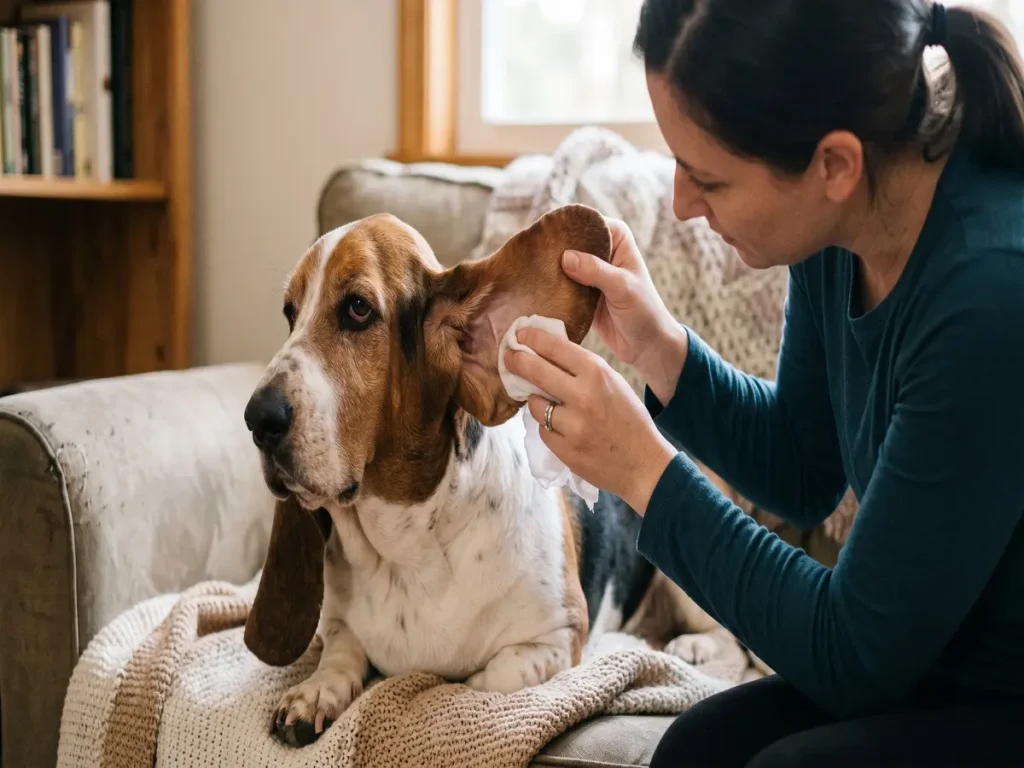
Long, heavy ears trap moisture, block airflow, and create ideal conditions for bacterial and yeast growth. Weekly ear cleaning with a vet-approved solution prevents most infections entirely.
Signs of infection: head shaking, persistent scratching at one ear, strong or sour smell, dark discharge, redness inside the ear flap. Caught early, infections resolve quickly with drops or medication. Left untreated, they become chronic and eventually cause permanent hearing damage.
Joint Problems
Hip and elbow dysplasia both occur in this breed abnormal joint development that leads to pain, inflammation, and arthritis over time. Keeping weight in the healthy range is the most impactful prevention within your control. For puppies, large-breed puppy food slows growth rate and reduces dysplasia risk.
Bloat (GDV) — The Emergency to Recognize Immediately
Gastric dilatation-volvulus is the most life-threatening condition in this breed. The deep chest creates the anatomical conditions for the stomach to fill with gas and twist, cutting off blood supply. It progresses from onset to fatal within hours without emergency surgery.
Warning signs: hard or visibly distended abdomen, repeated retching without producing anything, heavy drooling, pale gums, restlessness. If you see these signs — go to an emergency vet immediately. Do not wait.
Prevention: feed two smaller meals rather than one large one, use a slow feeder bowl, and avoid vigorous exercise within an hour of eating.
Skin and Eyes
Basset Hounds are prone to seborrhea, skin fold infections, and bacterial or yeast overgrowth especially in the loose skin around the face and neck. Cleaning skin folds two to three times a week with a damp cloth (dried thoroughly afterward) prevents most of these.
Annual eye checks matter from middle age onward, as this breed carries a higher-than-average risk for primary open-angle glaucoma. Average lifespan: 12–13 years. Weight management, ear care, and routine vet visits are the factors most within your control.
Basset Hound vs Beagle vs Bloodhound
| Factor | Basset Hound | Beagle | Bloodhound |
| Weight | 40–65 lbs | 20–30 lbs | 80–110 lbs |
| Energy Level | Low | Moderate–High | Moderate–High |
| Nose Ranking | 2nd | 3rd | 1st |
| Trainability | Challenging | Moderate | Challenging |
| Good with Kids | Excellent | Excellent | Good |
| Apartment Suitable | Possible | Difficult | No |
| Average Lifespan | 12–13 years | 12–15 years | 7–10 years |
| Drool Level | Moderate | Low | Heavy |
| Monthly Cost (US) | $125–$240 | $100–$200 | $160–$310 |
Choose a Basset Hound if you want a calm, family-friendly companion happy with moderate daily walks and a lot of couch time.
The Choose a Beagle if you lead a more active lifestyle and want a lighter, slightly more trainable hound with a longer average lifespan.
Choose a Bloodhound if you have extensive space, experience managing large breeds, and a serious interest in tracking or working dog activities.
The Real Cost of Owning a Basset Hound
In the US, puppies from reputable AKC-registered breeders typically run $800–$1,500 for a well-bred pet-quality dog. Adoption through a breed-specific rescue runs $200–$400 and often includes vaccinations, microchipping, and spay/neuter.
Monthly ongoing costs:
| Expense | Estimated Monthly Cost |
| High-quality dry food | $40–$70 |
| Treats and training rewards | $15–$30 |
| Flea, tick, heartworm prevention | $20–$40 |
| Grooming supplies and ear cleaner | $10–$20 |
| Pet insurance | $30–$60 |
| Total (without dog walker) | $115–$220 |
Pet insurance is strongly worth considering for this breed. Ear infections, joint issues, and bloat emergencies are all real costs that accumulate over a 12-year life. Insure the dog in the first few months, before any conditions appear pre-existing conditions get excluded from coverage.
Is a Basset Hound Right for You? An Honest Answer
The Basset Hound works well for patient owners who are home regularly, can commit to daily walks and weekly ear cleaning, and genuinely enjoy a dog that does things on its own terms. It’s more forgiving than most people expect in terms of temperament, rarely aggressive, rarely reactive — which makes it more manageable as a first dog than high-drive working breeds.
Who This Dog Suits Best
- Families with young children who want a gentle, steady companion
- People who work from home or have flexible schedules
- Owners who enjoy slow, exploratory walks rather than intense exercise
- Multi-dog households where a second dog can keep the Basset company
Who Should Think Carefully First
- People away from home 8+ hours a day with no midday coverage
- Those living in noise-sensitive apartments with strict regulations
- Anyone expecting a highly obedient dog that responds to commands quickly
- Owners unprepared for ongoing ear care, weight monitoring, and vet costs
The owners who love this breed most are the ones who prepared properly. They understood the independent instincts, built the daily routine before the dog arrived, and chose patience as a strategy rather than a hope.
For those owners, a Basset Hound delivers something genuinely rare: a dog that’s calm without being dull, affectionate without being needy, and endlessly entertaining without trying to be.
FAQs
Basset Hounds are not constant barkers, but they are very vocal. They are known for a deep, loud howl that can carry far. This comes from their hunting background. They were bred to alert people over long distances.
They can look lazy, but that’s only part of the story. Basset Hounds have low energy indoors, so they love lying around and relaxing.
Yes, they can live in apartments, but there are a few things to think about. Their size is medium, and they don’t need a lot of space to move around inside.
Yes, Basset Hounds can have a strong dog smell compared to many other breeds. This is due to their oily skin and long ears, which can trap dirt and moisture.
