


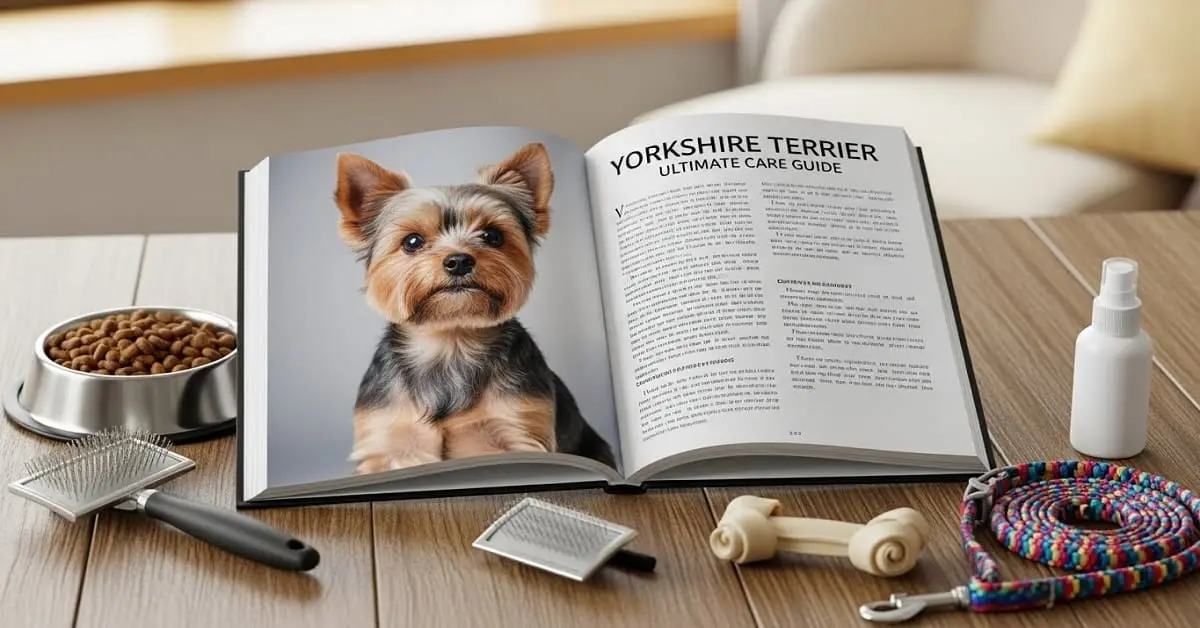
- Introduction:
- Is a Yorkshire Terrier Right for You? (Pros/Cons)
- History & Breed Origin of the Yorkshire Terrier:
- Size, Appearance & Coat:
- Temperament and Personality of the Yorkshire Terrier:
- Yorkie Puppy Care (Early Weeks by Age):
- Yorkshire Terrier Training Guide(Daily + Problem Behaviors):
- Grooming, Styling & Routine Plan:
- Yorkshire Terrier Health & Breed Care:
- Feeding, Nutrition & Blood Sugar Tips:
- Cost of Ownership for the Yorkshire Terrier in the USA:
- Living with a Yorkshire terrier (Daily Life & Behavior):
- FAQs?
Introduction:
I first met a Yorkshire Terrier while grooming one at a local show, and that Yorkie spirit stayed with me. This tiny dog is a spunky companion with an entertaining personality, known today as a popular lapdog.
Long before sofas and selfies, it was a rodent chaser working in textile mills. with Scottish weavers in England during the mid-1800s. Records from the nineteenth century tie the breed origin to the English county of Yorkshire. Shaping a proud British breed with strong terrier lineage.
Groups like the Yorkshire Terrier Club of America, The Kennel Club, and the Fédération Cynologique Internationale later set standards, noting it as a toy dog, terrier type. One of the smallest terriers and smallest dog breeds.
I still see that mill worker dog grit in today’s companion dog and lap companion. Ashift from historical role to modern role without losing heart. A full-grown Yorkie stands about 7–8 inches in height and reaches up to 7 pounds in weight (about 3.2 kg, 7 lb). Showing how small stature and small size define this toy breed.
Its physical characteristic shine includes long hair, a straight coat, classic blue and tan hair. A tan head, and a dark steel-grey body; there is no other colour accepted. Owners love the grooming style, often a fashionable haircut or fashionable trim, which highlights the coat color.
Living with one, I notice the energetic nature, energetic behavior, and feisty temperament. Make a playful dog and an energetic dog with a feisty personality. This British-origin star also influenced breed contribution, like the Silky Terrier. And cross-breeds such as the Yorkipoo, proving that beauty and bravery fit in a very small frame.
Is a Yorkshire Terrier Right for You? (Pros/Cons)
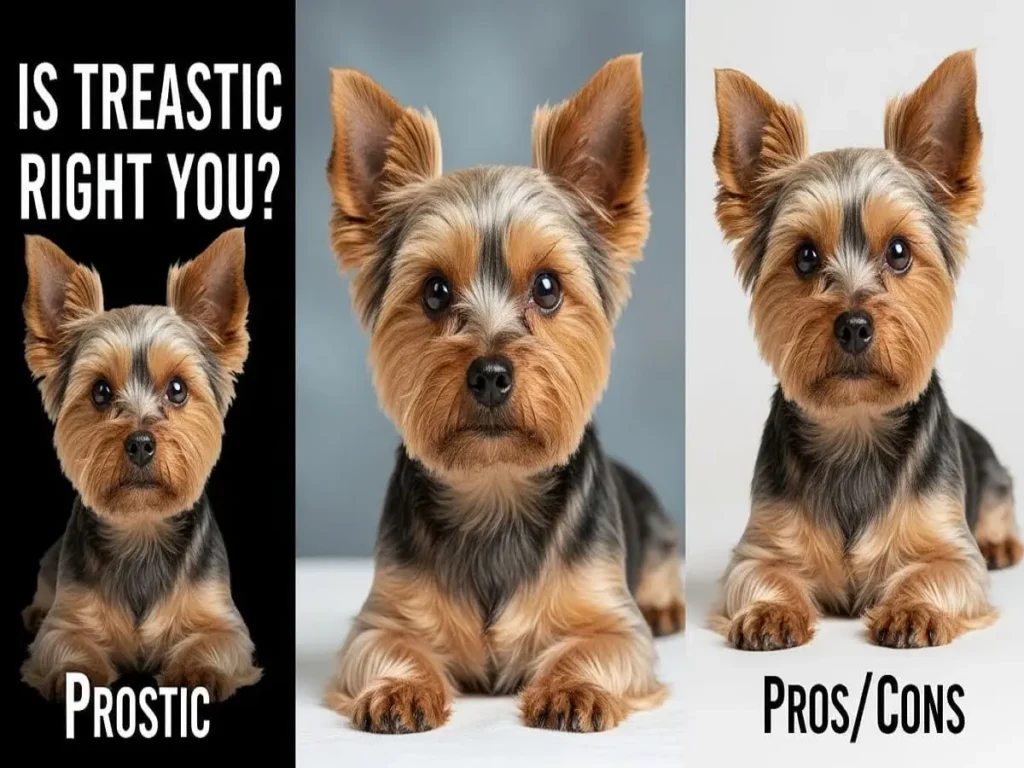
Yorkshire terriers may surprise you at first. Though small, they carry themselves with pride, walking a fine line between prim and pompous. I’ve handled many of them, and their intelligent eyes and tolerant dog nature stand out fast.
They are a loyal dog that wants to keep you company and stay happy to be by your side. Many people see them as an adorable option, especially Yorkie lovers who enjoy dogs that love to be pampered. Their hypoallergenic nature and low exercise requirements make them excellent for apartments, which I often recommend to city owners.
Living with them daily also shows the challenges. Their size can be a disadvantage, especially since they are fond of hiding under blankets and pillows. Some struggle because they don’t do well with other dogs and may develop a bad case of big dog syndrome.
I’ve seen how they don’t like sharing attention with anyone else, which can test patience. Add decently high grooming requirements. The need to contend with health problems, and it’s clear this breed isn’t for everyone but for the right home. The bond feels special and deeply personal.
Pros:
Smart comes to mind first when I think about why these dogs stand out. They are Loveable, amazing little dogs that truly stole my heart. I grew up with a Yorkie named Mille who ruled my house like a tiny queen.
She would boss our 165# St. Bernard, making him cower at her every demand; that’s just what yorkies do. Even with a little body, they carry a bold spirit and can have “big dog” attitudes. I’ve seen this with two of them around cats.
Where a big dog attitude leads to a playful fight, just like cats and dogs, lol. One cat, Raven, really dishes it out, but they still sleep, cuddle, and snuggle with the rest of our cats. Even if Raven is the bossiest with an attitude problem.
They also love to be lap dogs, love to cuddle, and snuggle close, often sleep with us at night, and snuggle up next to me. These are great little dogs with deeply lovable sides. They can be independent, yet stay close, making them ideal family pets and Good with Children.
Their long lives lasting 14–16 years old, and being Inexpensive to feed at about ~1 cup of food per day, make daily care easier. Watching them grow, relax, and bond shows why so many people fall for these companions. Why their charm lasts well beyond puppyhood.
Cons:
Living with this breed means accepting that they are Difficult to housetrain and can be extremely difficult to fully potty-train. From my experience, Gabby and Cindy relied on potty pads and hit them about 75%. We had to watch out for land mines, which are common in the area.
One can be a steady barker who reacts to any little noise. While another may only alert to intruders or outside things, both show how much they love to bark. Accidents happen too sometimes they pee or poops on the bed. Which led us to use a large exercise pen where one sleeps in at night.
These little quirks often come from their big dog attitudes. They can be stubborn and independent, which tests patience early on. Health and care are another side owners must face. They can have a lot of health issues, in fact alot of health issues.
Which is why I stay passionate about health testing to prevent problems and produce healthy. Pups who enjoy long, healthy lives for years to come. They also Require Regular Grooming, usually every 4–6 weeks, which adds time and cost.
History & Breed Origin of the Yorkshire Terrier:
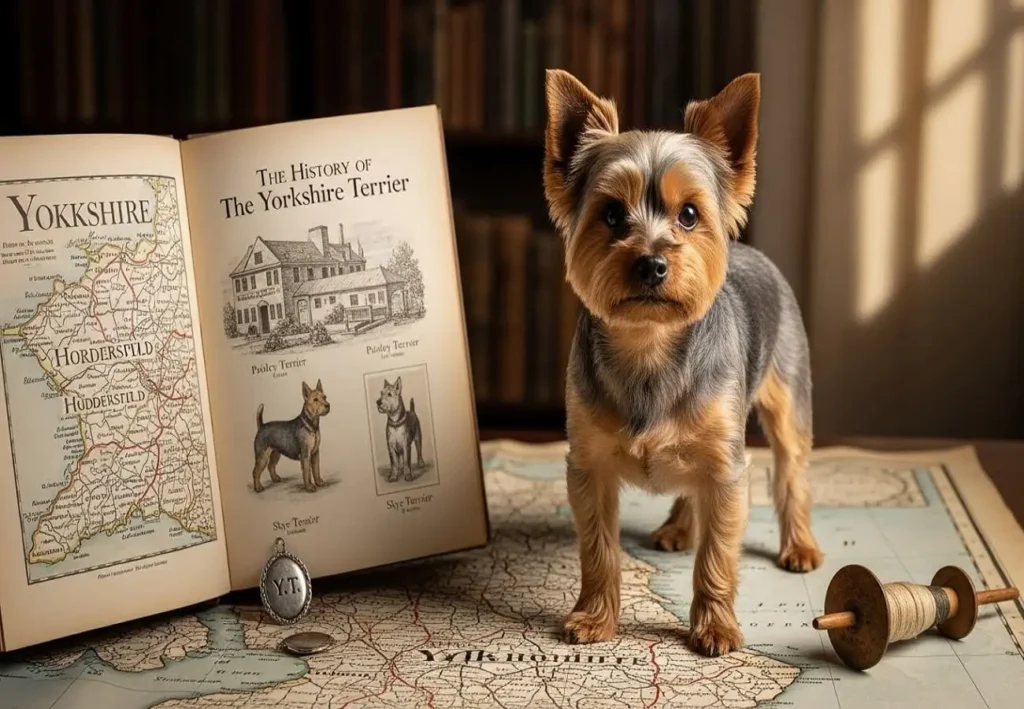
The story of the breed begins with Huddersfeld Ben, the foundation sire and first Yorkshire Terrier on record. Ben, born in 1865, came from the county of Yorkshire in northern England, which gave the breed name its identity.
This rugged region was shaped by hardworking coal miners and mill workers. Who relied on tough little dogs for vermin control in mines and textile mills. As a handler and historian of the Yorkie, I’ve always admired how purpose shaped personality in these early dogs.
From Workers to Companions:
The specific breeds behind them are not known, but experts point to the Skye Terrier, Maltese, black and tan Manchester Terrier, now-extinct Leeds Terrier, and Dandie Dinmont Terrier as main forebears. Once called Broken-Haired Scotch or Yorkshire Terriers, the name Yorkshire Terrier became official in 1870.
They were initially bigger dogs, valued for their reputation as good-looking. Reliable working dogs, before becoming companion pets for high society. Over time, they were bred smaller and smaller, growing popular all over England and later the United States.
Size, Appearance & Coat:
Adult Yorkshire Terriers have a fine, straight, silky coat that is highly valued by the American Kennel Club for its coat colour, quality, and texture. According to The Kennel Club (UK), the hair should be glossy, fine, and straight, usually grown out, very long.
parted down the middle of the back, but it must never impede movement. From the back of the neck to the base of the tail. The coat is usually dark grey to black in colour, with the hair on the tail being darker black.
Coat:
On the head, high chest, and legs, the hair is bright, rich tan, darker at the roots and lighter at the tips, with no black hairs intermingled. This hypoallergenic coat can even be used to determine content of metals in the dog organism, showing how unique the breed’s fur really is.
Not all Yorkies follow the standard perfectly. Coat colours deviate from the standard sometimes, and some dogs have woolly, cottony textured coats or extra fine coats. These atypical Yorkshire Terriers are still Yorkshire Terriers, but they are not recommended for intentional breeding, and care may be more difficult.
Coat colours vary, from silver-blue with light brown to black and creamy colour, and every long coat requires regular brushing. Knowing these details helps owners handle their Yorkies properly, maintaining the silky, fine, and glossy appearance that makes the breed so charming and visually appealing.
Appearance:
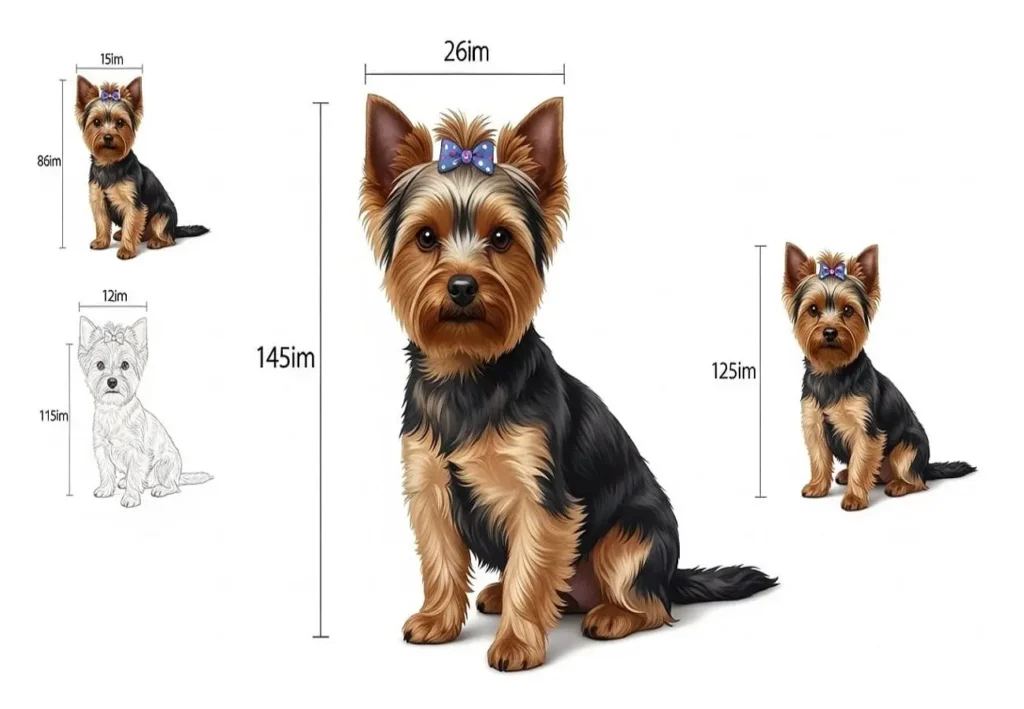
Breed Standard Weight for adult Yorkie is now a maximum weight of 7 pounds (3.17 kg), although the AKC previously listed a minimum weight of 4 pounds (1.81 kg). Most full-grown Yorkies fall between 4 and 7 lb. (1.81 kg to 3.17 kg), but pet Yorkies can range from 2.5 to over 8 pounds, and some can even be larger than expected.
A survey conducted in September 2017 with 2,146 respondents across the US, UK, Canada, and other countries showed that 67% of Yorkies weigh between 4 and 8 pounds, while a smaller 9% are 3.5 pounds and under. The survey also noted 21% of Yorkies were over 8 lb. (3.63 kg), showing that weight can vary a lot in this small breed.
There is no height standard for Yorkies, but an adult Yorkie usually reaches 6 to 9 inches (15.24 to 22.86 cm) from the floor to the withers (top of the shoulder blades). The survey also included questions about behavior, health, appearance, and personality, allowing site members to share comments and give details about adult Yorkies.
From personal experience, even within the 4–7 pound range, every Yorkie feels unique, and understanding both weight and height helps you plan for feeding, grooming, and care for your tiny companion.
| Category | Care Requirement | Recommended Frequency | Practical Advice & Key Information |
|---|---|---|---|
| Grooming | Brushing (long coat) | Daily | Use a pin brush or metal comb; detangle gently before bathing. For a low-maintenance ‘puppy cut’, brushing several times a week is sufficient. |
| Bathing | Every 3–4 weeks (or as needed) | Use a gentle, moisturizing, dog-specific shampoo. Dry the coat thoroughly after bathing to prevent issues. | |
| Trimming/Clipping | Every 6–8 weeks | Can be done by a professional groomer or at home to maintain a manageable coat length and prevent eye irritation. | |
| Eye Care | Daily | Clean around the eyes with a damp cloth to remove debris and reduce tear staining. | |
| Ear Care | Check weekly; clean 1-2 times per month | Inspect for redness or odor. Use a dog-specific ear cleaning solution with a cotton ball; avoid cotton swabs. | |
| Nail Trimming | Every 4–6 weeks | Nails grow quickly; trim regularly to a functional length. Ensure the dewclaws are also trimmed. | |
| Nutrition | Feeding Schedule | Puppies: 3–4 meals/day; Adults: 2–3 meals/day | Use a high-quality dog food appropriate for their age (puppy, adult, senior) and activity level. Yorkies have fast metabolisms and puppies are prone to hypoglycemia, so consistent meal times are crucial. |
| Water Access | Unlimited | Always ensure fresh, clean water is available. | |
| Exercise & | Physical Activity | 45–60 minutes total per day, split into sessions | A couple of brisk walks per day and some indoor playtime (e.g., fetch) are usually sufficient. Use a harness instead of a collar to protect their delicate trachea. |
| Mental | Mental Stimulation | Daily | Incorporate puzzle games, trick training, and varied social interactions to keep their intelligent minds engaged and prevent boredom. |
| Health & Wellness | Dental Care | Daily brushing (minimum 3x/week) | Yorkies are prone to dental issues. Use dog-specific toothpaste and toothbrushes. Supplement with dental chews and professional cleanings as recommended by a vet. |
| Veterinary Visits | 1–2 times per year (at least once annually) | Regular check-ups are essential for early detection of common issues like luxating patella, tracheal collapse, and dental disease. |
Temperament and Personality of the Yorkshire Terrier:
Yorkshire Terriers, or Yorkies, may be a miniature dog breed, but they carry a big personality that surprises many. Standing at just 20cm tall, these companion dogs have a diminutive size and delicate appearance, yet their energetic, feisty, and intelligent character shows they are far more than small lap dogs.
They have a sharp instinct for hunting, are a great family pet, and display unique traits that often seem contradictory. They are small but loud, intelligent yet stubborn, and dignified but industrious. Their highly active nature makes them perfectly suited to life in an apartment. Though their wilfulness can be tricky to handle without proper socialisation with other dogs and children.
Despite their size, Yorkies love to be at the heart of the action. These natural attention seekers are self-assured, playful, and full of stacks of personality, making them an extremely rewarding dog to own.
Their temperament is brave and bossy, yet they are typically affectionate with family, strangers, and others, although each individual dog may vary. Understanding their combination of confidence, courage, and affection is key to enjoying life with this gutsy toy breed.
Yorkie Puppy Care (Early Weeks by Age):

Yorkshire Terriers are intelligent, bold, and affectionate dogs with a strong terrier background and a spirited personality. Their toy-breed size means they need careful structured care during the first year.
Yorkie puppies usually weigh between 1 lb, 2 lb, and 3 lbs at eight weeks and keep growing until around 10 months to 12 months. Because of their rapid metabolic rate, they need frequent meals, close observation for hypoglycemia, and gentle handling to prevent accidental injury.
The first weeks at home are a critical transition period, so provide a warm, draft-free sleeping area, small meals, stable blood sugar, and positive crate-training routines. Introduce them slowly to new sounds, new people, and new surfaces, avoiding overwhelming them in the first week. Use slow and consistent routines to help them settle in and reduce separation-related behaviors.
Feeding and nutrition are essential since toy breeds burn calories quickly. Give 4 meals per day from 8–12 weeks, 3 meals per day from 3–6 months, and 2–3 small meals per day after 6 months using puppy formulas for small breeds.
Watch for early signs like wobbliness, lethargy, or fainting, and contact a veterinarian if needed. Training and socialization are vital because Yorkies are eager learners but can be stubborn. Focus on crate training, predictable routines, short reward-based sessions, exposure to children, friendly dogs, and new environments, and teach calm behavior before petting or picking up.
Toy breed safety is key: supervise interactions with children and larger dogs, use harnesses instead of collars, block access to high furniture, and monitor fatigue or low blood sugar. For boarding or daycare, choose safe facilities,
Separate small dogs from larger dogs, follow feeding instructions. Aand nd ensure staff are trained to handle stress behaviors and hypoglycemia, providing a quiet rest area, gentle handling, and routine updates to owners for a safe experience.
Yorkshire Terrier Training Guide(Daily + Problem Behaviors):
Yorkshire Terriers are smart but small dogs, so training requires patience, direction, and real know-how. Many dog parents start a training regimen without proper research. An understanding of training methods, which can put their dog on the wrong track.
Using Specialist Yorkshire Terrier Training helps your dog learn the right behaviours from the start. Focusing only on obedience training doesn’t always fix behaviour problems, especially in small, stubborn breeds.
Professional Yorkshire Terrier Training provides expertise to prevent compounded problems or situations where people think their dog is beyond help. Methods like treat training, clicker training, or other types using force or pain exist.
Bark Busters’ approach relies on communication, praise, and body language to emulate natural communication, so dogs understand and respond quickly. In-home training is essential because most behaviour problems appear at home, where dogs are most comfortable, less stressed, and able to concentrate.
Trainers teach owners how to train a dog’s brain, ensuring comprehension, cooperation, and understanding. Hands are only used to pet or praise, so no dog develops a fear of touch.Yorkies also need positive reinforcement to succeed. Using treats, pets, cuddles, playtime, and short reward-based sessions encourages them to repeat good behavior.
Even energetic breeds like Yorkies respond well to short fifteen-minute training sessions, repetition, and lots of breaks. Owners should puppy-proof their home with baby gates, remove breakables, and provide toys and bones to chew for safe puppy exploration.
Clicker training can mark good behavior with a handheld clicking device. This approach balances obedience and behaviour issues, making your dog happy, balanced, and a joy to live with.
Grooming, Styling & Routine Plan:

Grooming a Yorkshire Terrier is essential for both health and comfort, especially with their long silky coats. Proper Yorkie grooming requires dedication and the right techniques, whether you are learning how to groom for the first time or following expert Yorkie grooming tips from Kontota.
Styles:
Understanding the best Yorkie trim styles and how to cut a Yorkie’s hair ensures your pup is looking and feeling best. A well-groomed Yorkie enjoys better hygiene, fewer health issues, and avoids tangled fur or matted fur. Following a detailed Yorkie grooming guide step by step allows you to confidently handle and trim a Yorkie at home safely and efficiently.
Key steps include brushing and detangling using a metal comb or slicker brush, working in sections, and focusing on one area for a smooth and pain-free experience. Regular brushing prevents matting and helps distribute natural oils to keep fur healthy.
Routine Plan:
Proper bathing with high-quality dog-friendly shampoo, followed by conditioning with a leave-in conditioner, makes the coat silky and tangle-free. After towel-drying, use a low-heat blow dryer and brush again to remove any lingering tangles.
Always check for skin issues such as irritation, rashes, parasites, or other abnormalities to ensure comfortable grooming. When needed, consult a vet or professional to guide your grooming session and maintain your Yorkie’s coat perfectly.
Yorkshire Terrier Health & Breed Care:
Yorkshire Terriers are small dogs with a strong personality and a loyal heart. Originally bred in Yorkshire to hunt rats, these dogs are now popular for modern homes. Their compact size makes them ideal for apartments or smaller homes. And with consistent care and regular training, they can remain great companions for many years.
Their strong will benefits from early training to bring out their best traits, but owners should also be aware of common health issues. Many Yorkies face dental problems, joint health concerns, or tracheal collapse at some point.
Dental care is crucial because they are prone to issues from a young age, including plaque, tartar, and gum problems. Daily brushing, vet-approved dental sticks, supplements, and yearly dental checks help maintain oral hygiene.
Yorkies may also experience skin care issues, such as reddish-brown stains under the eyes, dry skin, or sensitive skin. Using moisturising shampoos, probiotics, and Omega oils can support their skin barrier. Stomach issues, like gastroenteritis, vomiting, and diarrhoea, can arise from sensitive stomachs, high-fat foods, or sudden diet changes.
Digestive supplements, small-breed diets, and vet-recommended digestive paste help prevent problems. Joint health issues may include luxating patellas, canine osteoarthritis, or cruciate ligament injuries, while respiratory health concerns include tracheal collapse, noisy breathing, or dry cough. Regular brushing, bathing every 4–6 weeks, trimming, and ear care are essential.
Feeding, Nutrition & Blood Sugar Tips:
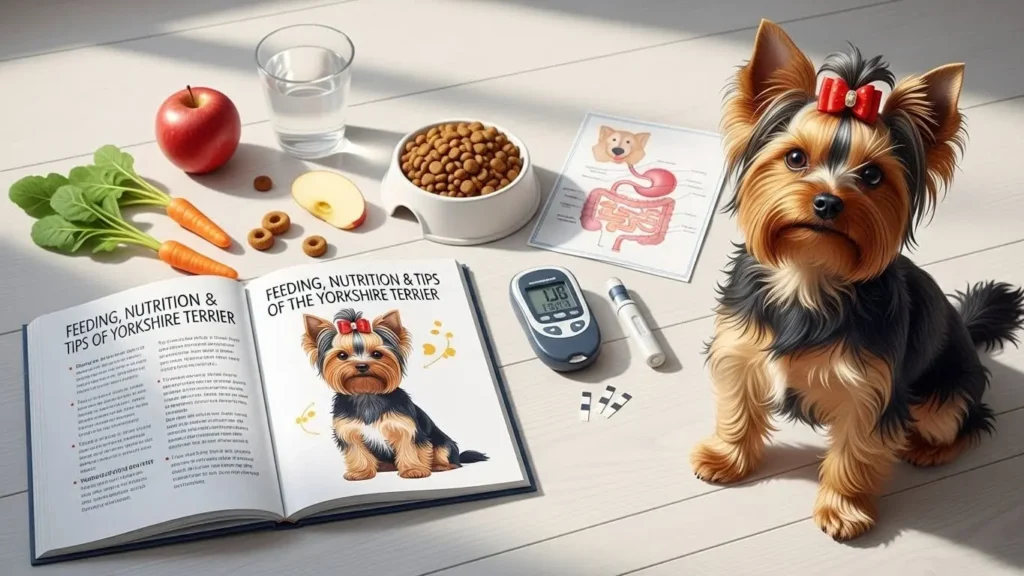
Feeding a Yorkshire Terrier the right way not only improves health but also perks up behavior. A Yorkie pup under one year may need about 400 daily calories for better growth, while adult and senior counterparts weighing 3 to 7 pounds require 15 calories per day if low activity, or around 200 calories if somewhat active.
The recommended daily amount is usually ½ to ¾ cups of high-quality dry food. Feed freely until your puppy is 3 months old, then shift to a strict diet. Include lean proteins like skinless chicken, turkey, lean beef, or fish, cooked thoroughly with bones removed to avoid choking hazards.
Cooked vegetables such as carrots, green beans, peas, and sweet potatoes, finely chopped or mashed, provide fiber and nutrients for easy digestion. Fruits in moderation like apples without seeds, blueberries, strawberries, or watermelon seedless, can be given as occasional treats. While dairy in small amounts, like plain low-fat yogurt or cottage cheese, adds probiotics and calcium.
Healthy fats from olive oil or fish oil support skin, coat, and overall health. Always consult a veterinarian for appropriate dosages and avoid toxic foods such as chocolate, grapes, raisins, onions, garlic, avocado, or xylitol, which can cause serious health issues.
Cost of Ownership for the Yorkshire Terrier
in the USA:
The cost of buying a dog can vary widely, from a couple of hundred pounds to a few thousand pounds, depending on the source of the dog. If you’re adopting from a rehoming centre, the vaccinations and up-to-date and neutered status may already be handled.
Buying from a breeder usually means paying for puppy vaccinations, puppy neutering, and parasite prevention on top of the initial expenses, which can range from £300 to £500, or even up to £2000 a year.
Considering the average dog lifespan of 13 years, this is a big expense to factor into life. Pet insurance can offer peace of mind against unexpected medical costs, though routine costs like dental care and parasite prevention remain with the owner.
For Yorkshire Terriers, the typical cost ranges between $600 to $2,500, depending on pedigree and breeder reputation. These small dogs are bold with a long silky coat requiring regular grooming, and they can be prone to dental issues and joint issues, needing regular veterinary care.
A cute, small dog with a big personality, a Yorkie is known for its big-town attitude. Latest Yorkshire terrier prices vary, so planning is crucial. Consider associated costs like supplies, medical expenses, and care for a pup.
Using a budgeting guide helps take care of Yorkshire terrier needs and ensures proper owner preparation for a healthy, happy companion.
Living with a Yorkshire terrier (Daily Life & Behavior):
Yorkies are highly adaptable and well-suited to apartment living or city living thanks to their small size and moderate exercise needs. They are energetic but don’t require extensive exercise, and 30–60 minutes of activity per day, split between short walks and indoor playtime like fetch or puzzle games, is usually enough.
Using a harness on walks helps protect their delicate windpipe. These dogs thrive on companionship, form strong bonds, and enjoy human interaction, so leaving them alone for long periods can lead to separation anxiety.
Enrichment toys, a dog walker, or daycare can help if you’re often away. Because of their tiny build and delicate build, Yorkies are easily injured by falls or rough handling. And are best suited for adult-only homes or families with older, respectful children.
Behaviour:
Despite their size, Yorkies are fearless and feisty, true terriers with a history of hunting rats in mills. They are brave, confident, and may challenge larger dogs, so supervision in multi-pet environments is vital.
Their vocal tendencies make them excellent watchdogs, alert and quick to bark at new sounds or strangers, which requires early training. They are intelligent, smart, but stubborn, so positive reinforcement using treats and praise. And play works best with consistent boundaries from all family members.
Their high prey drive means care around small pets like hamsters or rabbits. Grooming needs are significant, with a coat like human hair, requiring daily brushing, professional grooming, and dental care to prevent dental disease.
FAQs?
Yorkies can be loving with older, respectful children but their tiny, delicate build means supervision is essential. They may not tolerate rough play, so teaching kids to be gentle ensures a safe and happy relationship.
Yes, Yorkies are highly adaptable and ideal for apartment or city living. Their small size and moderate exercise needs mean short walks and indoor play keep them healthy and happy without needing large outdoor spaces.
A Yorkie’s diet depends on age, weight, and activity. Puppies under one year may need 400 calories daily, while adults require about 200 calories. Feeding high-quality small-breed food in measured portions supports healthy growth and energy.
Yorkshire Terriers generally live 12–15 years with proper care. Regular vet check-ups, balanced nutrition, and exercise help them stay healthy, energetic, and happy, making them loyal companions for over a decade.
Yorkies are intelligent but independent, so use positive reinforcement, treats, praise, and short training sessions. Consistency from all family members and avoiding coddling encourages obedience, while patience ensures long-lasting results.
