


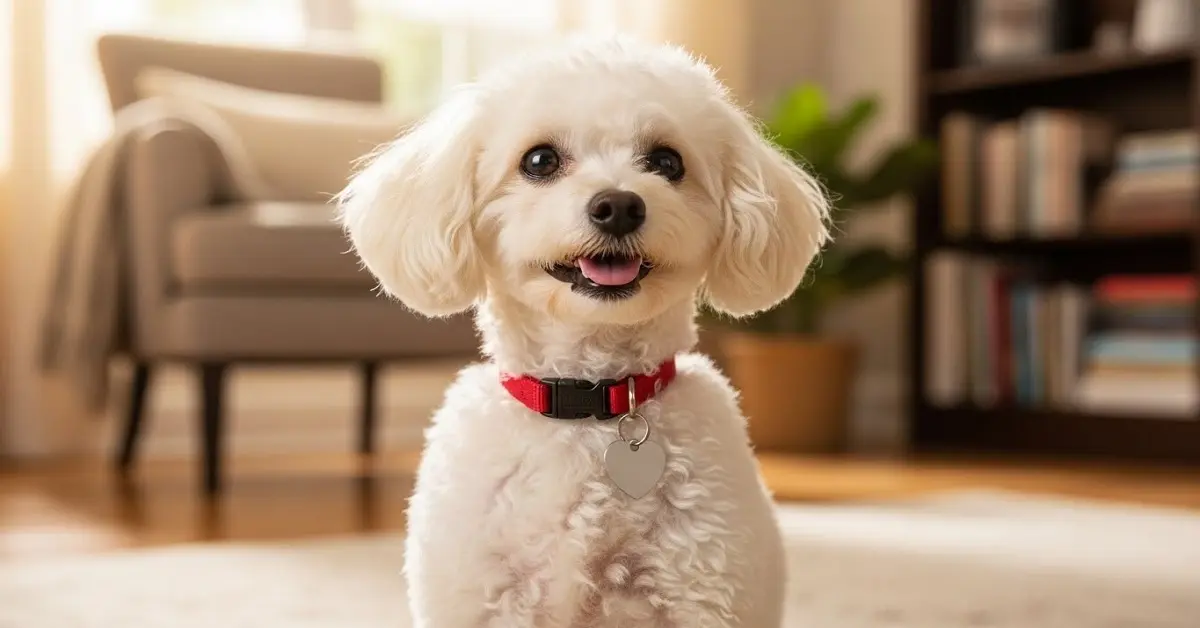
Introduction:
From my experience as a trainer, the Standard Toy Poodles I worked with demonstrated why they were first developed in Germany and used for duck hunting. This breed’s history explains how the Toy Poodle descended from a larger dog, according to The Poodle Club of America.
The description of the ideal breed, recognized by a parent club and accepted officially by national and international bodies, helps each dog serve as an ideal against which dogs are judged at shows, a system I often explain to new owners.
Known as Pudel in German (ˈpuːdl̩) and Caniche in French, the Poodle is a water dog called by many names and divided into four varieties based on size: Standard, Medium, Miniature, and Toy, though Medium is not universally recognised.
Living with a Toy Poodle myself showed me why this smartest of dog breeds feels so entertaining despite standing no more than 10 inches tall and weighing 4–6 pounds; a big, playful personality can fill up a room.
Often frequently associated with France, these active and intelligent companions have a distinctive, thick, curly coat in many colours and patterns, though only solid colours are recognized by major breed registries.
They are particularly adept at learning from humans, tend to live 10–18 years, with smaller varieties tending to live longer than larger ones, a fact that has been proven over time.
Origin & History:
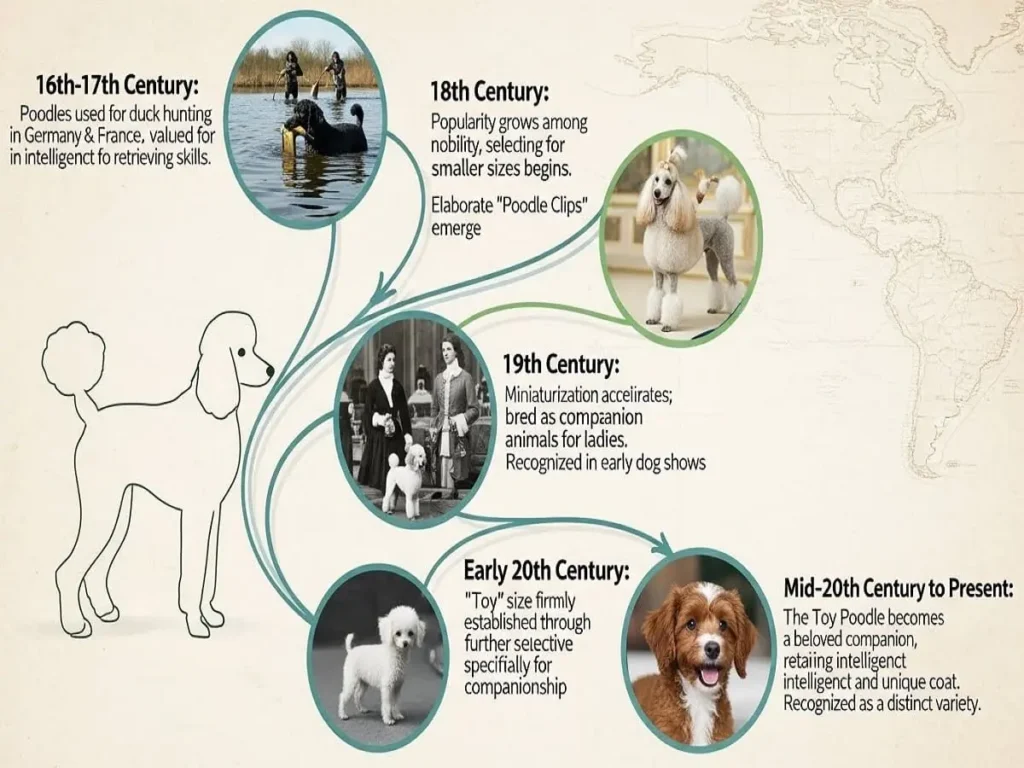
Origin, Country, Germany explains why the original Poodle was the Standard water retrieving dog, a true breed worker. From this base came smaller Poodles, the Toy and Miniature, created as versions for owners wanting less large dogs yet still enchanted by their personalities, enthusiasm, and kinds of work.
Major influencers were circuses, where highly intelligent, easy-to-train, friendly, comical dogs ran shows with great success, though the Standard was a bit too big. In 1907, both sizes were called one name until selective breeding made dogs popular under 28cms as Toys, and over 38cms as Miniatures
Though the national France is associated with sophistication, the breed likely originated across Germany, Russia, and deep antiquity. The name derives from the German word pudeln, meaning splash. In three sizes, more than 15 inches at the shoulder, measured to 10, each keeps the same proportion, length, body, height, and ground balance.
As a versatile dog, Mary Olund, Corresponding Secretary of the Club of America, saw them excelling in the show ring, every canine sport, and as home companions. Duxbury, My Ten Cents, Dime, MH51, MNH, SHU, was the first in history to earn a Master National Hunter title.
A 40-year breeder watched junior hunt titles, each puppy trained for human remains detection, modeling, film acting, therapy, and service. Even if a Toy cannot retrieve a duck in its mouth, all compete. Albrecht Dürer depicted them in sketches; Spanish artists of the 18th century, like Goya, painted them.
Louis XVI favored them among nobility and royalty, shaping culture. Across regions, owners develop dogs for a specific purpose: thinner Greyhound-type forms, thicker woolly texture, the Petit Barbet, white relatives like Bichon Frisé and Maltese, the largest called Canich.,
Grand, Mouton, Moufflon, Canis Aviarius Aquaricus, and in Germany, a heavier, muscular, athletic dog. Historians believe that sizes came together, first evolved in the same litter, performed working tasks, while the small ones stayed companions.
Appearance & Breed Standard:
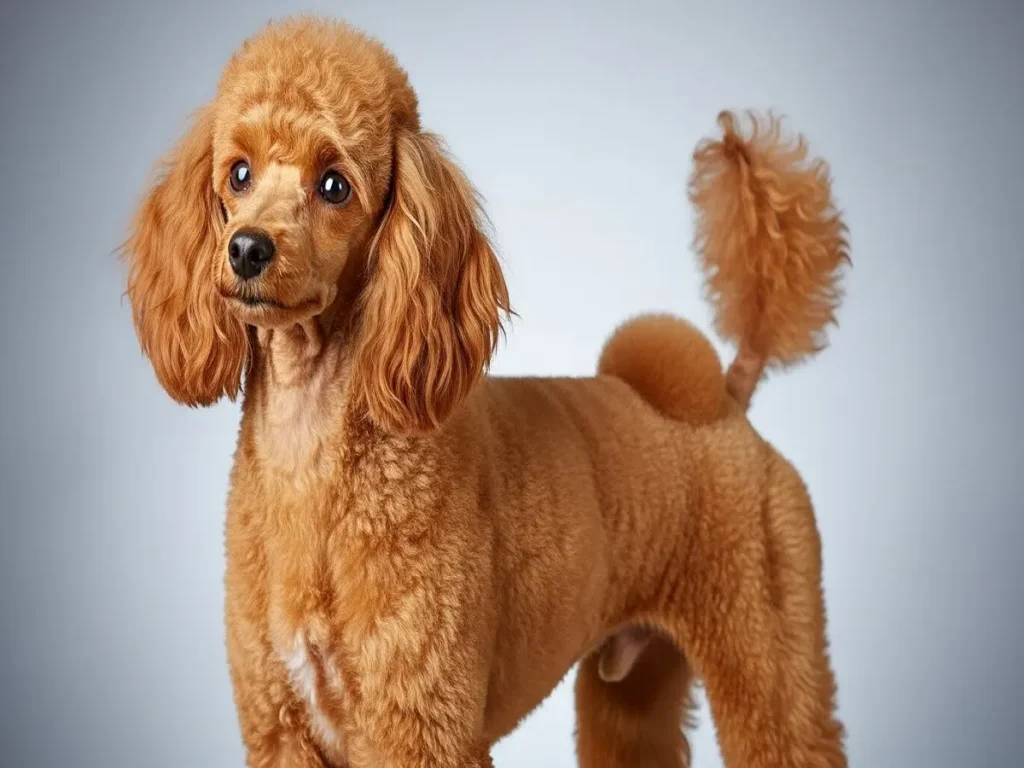
A standard guideline defines the ideal breed through characteristics, temperament, and appearance, including correct colour that ensures dogs are fit for function. Absolute soundness is essential, and breeders with judges stay careful to avoid obvious conditions or exaggerations that are detrimental to health, welfare, or soundness.
Over time, certain traits may potentially affect dogs across breeds adversely, so experts are requested to refer to Breed Watch information, related details, and current issues. A feature or quality is desirable only when present in the right measure; if a dog possesses an unacceptable trait, it must not be rewarded in the show ring.
A well-balanced, elegant-looking, proud carriage defines the Toy Poodle, petite, polished, the smallest variety among Poodle breeds, with others being Standard and Miniature. Toys are no less distinguished; in fact, the only difference across the three standards is size.
Ears:
With Toy Poodles, the ears are a detail I always check first when assessing type. They are long and feathered, designed to hang down smoothly to eye level, giving the dog a soft but alert look. From hands-on grooming experience, this structure frames the face beautifully while supporting the classic expression expected in well-bred companions.
Eyes:
A Toy Poodle’s eyes shape the dog’s expression more than any other feature. They are dark, oval, and set far apart, which gives the face an intelligent and gentle look.
From years of observing show dogs up close, I’ve learned that correct eye placement adds balance to the head and helps the breed appear alert without looking sharp or harsh.
Muzzle and Nose Detail:
At the end of a long muzzle, the nose completes the expression and is always black or brown. From hands-on evaluation, I’ve found this clean finish gives balance to the face and supports the alert look expected in the breed.
Coat Growth and Care:
Toy Poodles have a curly coat that can grow quite long, so regular trips to a groomer are important. Experienced pet parents who know how to wield clippers on their own understand that this care must be consistent to keep the dog comfortable and well presented.
Color and Tail Features:
Toy Poodles show wide-ranging colors, including apricot, black, blue, brown, cream, red, silver, white, and gray, giving each dog a unique and striking look. From my experience with shows, coat colors can highlight the dog’s elegance and personality while staying true to breed standards.
The tail is high-set and carried so it stands up, accentuating the perky pup. It is often clipped to show a fluffy plume at the end, completing the classic Toy Poodle silhouette and adding charm to movement and posture.
Temperament & Personality:
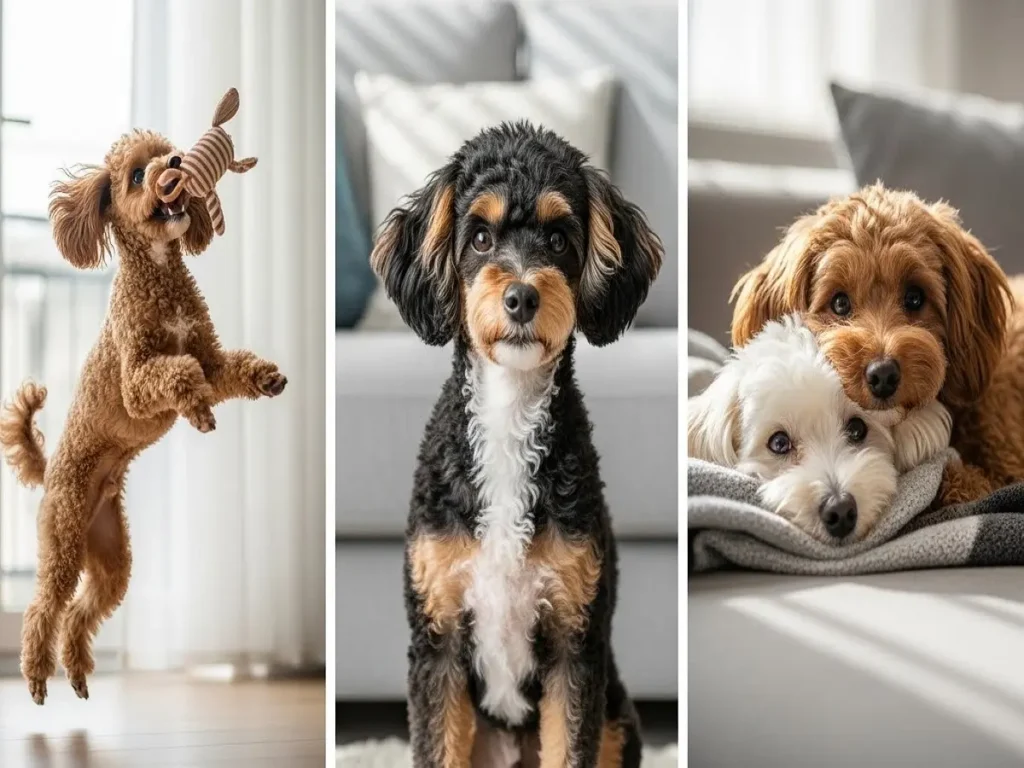
The Toy Poodle is a tiny dog with a mighty personality, full of active, self-confident, and spritely energy. These little companions thrive on human companionship and have teddy bear looks that make them a favourite pet.
Beyond their charm, they are intelligent dog breeds, with brains that can challenge even Einstein. They learn commands and tricks effortlessly, showing a natural entertainer side, able to roll, dance on hind legs, and perform complex moves to garner applause and attention from adoring fans.
These people pleasers are loyal to the bone, making owners happy and always around humans, following like shadows. Their affectionate, cheerful, and upbeat nature can brighten any room. They enjoy a cuddle on a comfy lap or charming their way onto the bed, yet remain playful pooches, taking entertainment seriously.
Daily exercise and mental stimulation keep their minds sharp. Without toys or puzzles, they can get bored and destructive, sometimes showing bossy boots behavior if charge is unclear. Adorable yet unsuspecting, they are a super alert watchdog, reacting to kingdom threats, like the postman delivering mail, often with barks but never bites.
They may be reserved with strangers, but their warm, loving, nature and sensitive souls shine once comfortable. Left alone, they can develop separation anxiety, causing stress, chewing, slippers, or excessive barking.
Through socialisation and consistent training, they become confident, well-mannered companions. These brainy, beautiful, smart dogs rank highly for quickly learning, enjoying family activities, shadowing around the house.
Being involved in every moment, being gentle and friendly, and getting along with other pets. Their small, delicate build requires supervision during playtime with children, and they are always attentive, making a good first impression.
Temperament of toy poodle:
The Poodle is a lively and sociable dog that thrives on human interaction. Known for being affectionate and intelligent, this breed quickly bonds with its family and enjoys being at the center of activity.
Their amusing personality shines through in playful antics, showing a natural ability to entertain anyone around them. With a wonderful temperament, they easily become a fun and engaging companion for both children and adults.
Beyond just being a joyful pet, the Poodle’s alertness and cleverness make it an ideal partner for games, learning tricks, or simply sharing quiet moments. Their affectionate nature ensures they offer comfort and warmth, while their lively energy keeps life exciting.
A fun companion, they adapt well to various households, spreading joy with their amusing and sociable behavior. In every interaction, the intelligent dog demonstrates why it is cherished as a wonderful friend for life.
Care & Daily Needs:
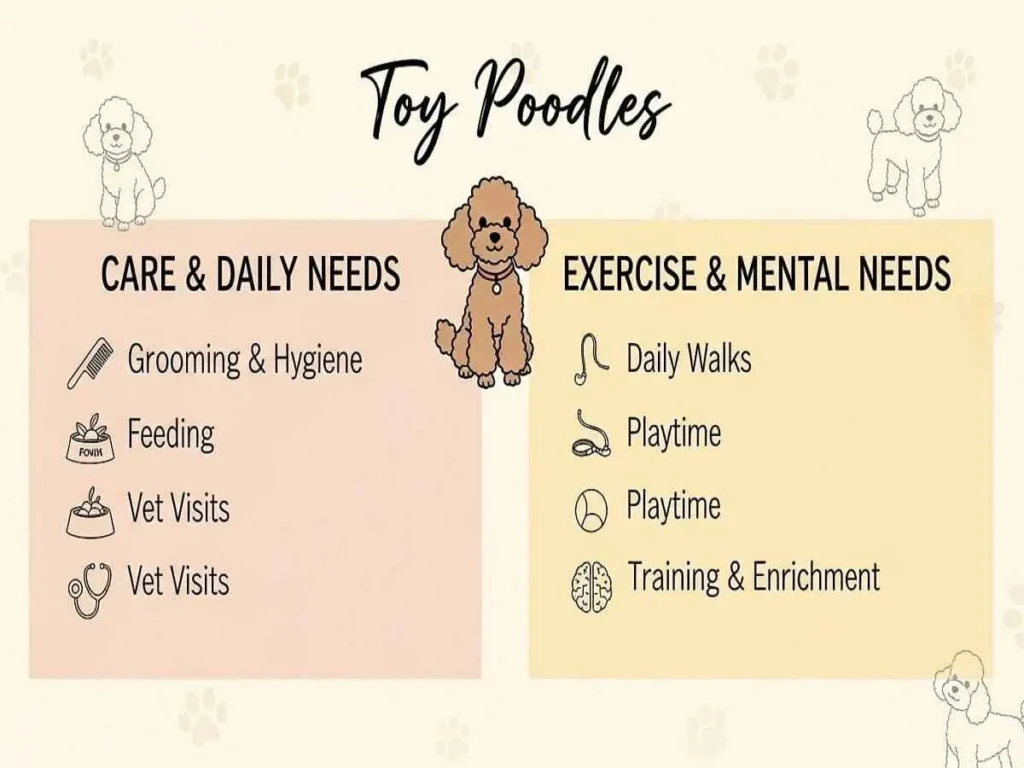
Grooming & Hygiene:
Brushing a curly, low-shedding coat daily is essential to prevent matting. Bathing every 2-4 weeks with a gentle dog shampoo keeps them completely dry and clean. Professional Grooming with trims every 4-8 weeks maintains appearance and health.
Ears must be cleaned weekly to prevent infections, keeping water out during baths. Teeth require brushing several times a week to avoid dental problems, and nails need trimming every 3-4 weeks. Eyes should be wiped daily to remove tear stains and buildup.
Exercise & Mental Needs:
Physical activity is key, including daily walks, indoor play, or fetch, but rough play must be avoided due to fragility. Mental stimulation is vital for these highly intelligent dogs; use puzzle toys, training, and tricks to keep their minds sharp.
Supervision ensures they stay safe from household hazards and accidents like a toddler might cause.
Diet & Health:
Provide high-quality dog food in small portions and ensure fresh water is always available. A harness is preferred instead of a collar to protect the delicate trachea. Regular Vet Care, including checkups, vaccinations, and parasite prevention, is crucial to keep your dog healthy and active.
Health Deep Dive:
Preventive Care From Experience:
Working closely with Toy Poodles, I’ve seen how Preventive, Care, Ongoing, at-home, care, and routine, professional help reduce risk from health issues, genetic, Dental, Disease, Patellar, eye problems, Eye, Problems, and Endocrine, Metabolic, Issues. Routine, Veterinary, Visits, Annual, wellness, exams, support early detection of potential problems.
Daily Dental, Hygiene, Brush, teeth at least three times a week, using dog-specific toothpaste, soft, and professional dental cleanings, helps crowded mouths, teeth, plaque, tartar, gum disease, and overall health.
Weight, Management, Obesity, worsen, joint, problems, heart, disease; Feed, high-quality, measured, diet, avoid, giving, people, food, excessive, treats. Balanced Exercise, daily, walks, short, play, sessions, avoid high-impact activities, stress, and delicate joints.
Grooming, Regular, brushing, professional, grooming, 4–6, weeks, prevent painful matting, allow skin inspection. Parasite, Prevention, Administer, year-round, preventative, medication, heartworms, fleas, ticks, recommended, vet. Spay, Neuter, Spaying, neutering, decrease, likelihood, certain, types, cancers, prevent, unwanted, pregnancies.
Vet Check Essentials:
At each Vet, Check, Checklist, preparing, annual, visit, consider, Physical, Exam, full, body, check, including, listening, heart, lungs, palpating, joints, abdomen, inspecting, coat. Weight, check, assess, condition, recommend, diet, changes, necessary.
Dental, Assessment, thorough, oral, exam, broken, teeth. Vaccinations, Ensure, core, non-core, rabies, distemper, parvovirus, up, date, based, dog’s, lifestyle, local, risks. Parasite, Screening, Bring, fresh, stool, sample, fecal, intestinal, worms. Lab, Work, Routine, screening, include, blood, work, CBC, chemistry, panel, organ, function, urinalysis, especially, older, dogs.
Specialized, Screening, Discuss, breed-specific, tests, CAER, eye, patellar, luxation, evaluation, potentially, DNA, genetic, conditions, prcd-PRA, von, Willebrand’s, disease. Behavioral, Questions, Be, prepared, discuss, changes, appetite, water, consumption, energy, levels, behavior, early, signs, underlying, illness.
Choosing a Toy Poodle Puppy:
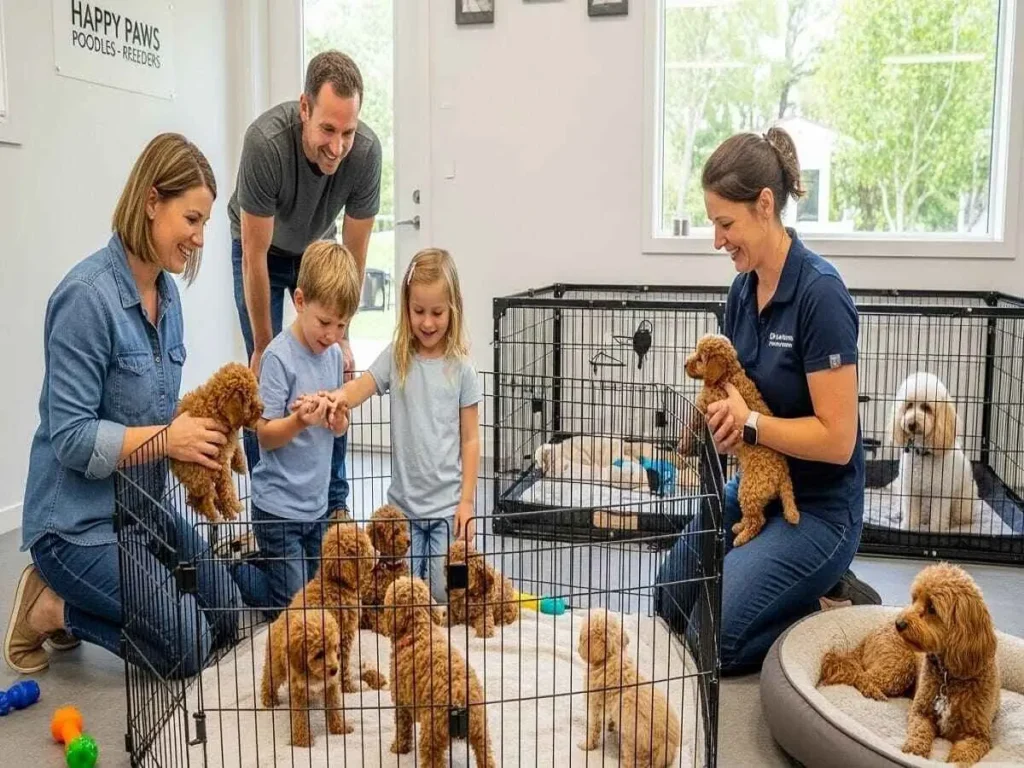
Visit the Breeder’s Facilities:
When you Visit Breeder’s Facilities, focus on the shortlisted potential breeders and schedule visits to their facilities to allow you to see firsthand care where dogs interact with puppies. Pay close attention to cleanliness, living conditions, and whether dogs appear healthy and well-adjusted.
During the visit, ask the breeder about health testing done on the parents of the puppies. Responsible breeders conduct genetic testing to minimize potential health issues in litters. From my experience, seeing this environment tells you more than any message online.
Research Reputable Breeders & Meet the Parents:
Before looking for a toy poodle puppy, Research Reputable Breeders to find a reputable breeder who prioritizes health and well-being. Good breeders provide proper care, socialization, ensure pups are raised in a clean environment.
Start researching online, asking for recommendations from trusted sources like local veterinarians and dog clubs. Take time to read reviews and testimonials from previous customers, noting positive feedback and happy customers who vouch for credibility.
Meet the Parents by meeting parents of the interested toy poodle puppy to give insights into your future pet temperament-wise. Observing how they interact with people helps determine friendly dispositions or behavioral concerns.
Additionally, ask the breeder about parent’s health history, genetic conditions common to the breed. Responsible breeders stay transparent about potential health risks and provide necessary information for an informed decision.
Life With Toy Poodles in an Apartment:
Living with toy poodles in an apartment inside a chateau turns a home into something cozy, chaotic, and sometimes quiet on strange afternoons that feel suspiciously calm. Living with three fur babies and endless poo-poos from tiny poodles means daily poo-poo cleanup.
Careful language choices; the word dog, the wrong tone, a baby treated as disposable or lesser, even pets or animals, never fit these souls in my house.
That connotation matters when googling pros, cons, or apartment dogs, asking the question if it’s a good idea or a mistake, and searching for an honest answer about companions this energetic, emotionally intense, little geniuses with strong opinions and a firm schedule.
As a freelance worker with time at home, the real version is learning to coexist without losing your mind. The ideal breed for apartment living, their compact size, adaptability, and moderate exercise needs balance social requirements, mental requirements, and grooming requirements.
They thrive in indoor spaces with a committed owner, consistent attention, and a structured routine built on coexistence, curiosity, responsibility, and care. This lifestyle depends on routine, environment, intelligence, companionship, behavior, adaptability, energy, affection.
toy poodle comfort comes first when traveling, because smart planning reduces stress and supports real preparedness. I start with a carrier that fits under the airplane seat for flights, checking seat space, airline rules, and regulations early. For road journeys, securing them safely in the car or any vehicle improves safety during transport, movement, and changing conditions.
Chaos, comfort, independence, attachment, daily life, experience, perspective, context, narrative, storytelling, humor, emotion, practicality, responsibility, ownership, living space, routine management, balance, attention needs, stimulation, and real commitment.
Travel with a toy poodle:
Before leaving, I focus on preparing documentation like a health certificate and passport, then packing essentials and supplies: food, water, hydration, feeding plans, pads, and familiar items. On car trips, making frequent stops allows rest breaks, supports emotional needs, eases anxiety.
Helps with keeping them calm through routine and comfort. Understanding travel needs, organizing travel documents, using a pet carrier, and respecting how sensitive they are to change have always made trips smoother for me.
Training & Socialization:
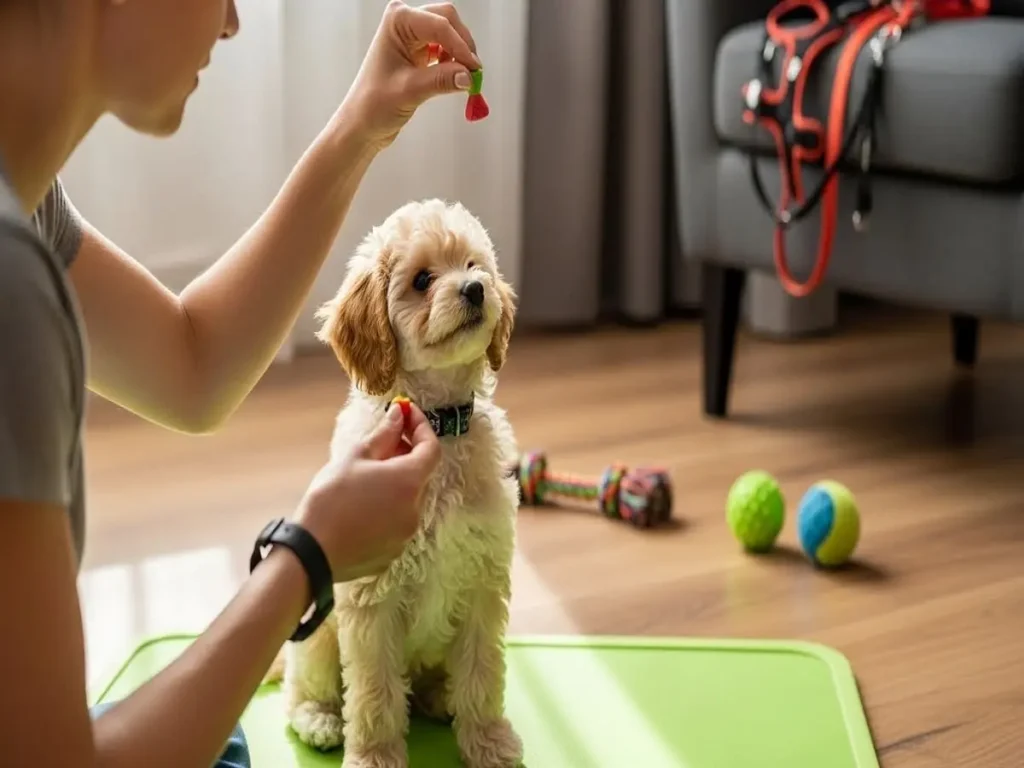
Positive reinforcement:
training a Toy Poodle is joyful and rewarding because their eagerness to please responds best to the gold standard of marking good behaviour with rewards like praise, affection, treats, and continued interaction.
Which teaches them how to behave, supports a strong relationship, builds a positive bond, uses double rewards for excellent responses such as a pat or treat, and strengthens motivation, learning, and engagement.
Find their favourite motivator:
Finding a favourite motivator means discovering what drives your pup by understanding their hierarchy of high-value rewards to keep motivated, whether that is a nibble of roast chicken, a squeaky toy, playtime, close interaction, personal preference, inner drive, deeper engagement, and better focus for a Toy Poodle.
Train at the right time:
Choosing the right time respects how dogs manage energy and desire to learn, since being tired, full, hot, or bothered makes mental enrichment through training tiring, so you notice when they lose focus, show fatigue, stop sessions, build awareness, and improve timing.
Stay consistent:
Real progress comes from consistency, the key to training, setting clear expectations, using the same verbal cues, non-verbal cues, steady repetition, strong clarity, daily routine, long-term reliability, and calm communication.
Be playful and engaging:
Being playful and engaging matters because dogs are sensitive souls who read your mood, so relaxed sessions, fun, positive energy, a contagious attitude, emotional awareness, and warm interaction improve results.
Watch their body language:
Reading body language helps when a pup shows signs of stress or tiredness, so taking a break before the saturation point avoids being counterproductive, lets you not persevere, come back later to training, and grow awareness through observation.
Training your Toy Poodle puppy:
Toy Poodle puppies show zest, curiosity, and sass, so house training and basic obedience are top priorities at an early stage, supported by a regular toilet routine, positive crate training, safe sleep, downtime, early socialisation.
Controlled exposure to people, dogs, and new environments, while respecting how sensitive they are to tone and treatment, using gentle methods, force-free guidance, and building trust and confidence.
Training your adult Toy Poodle:
An adult Toy Poodle past puppyhood still needs training, since ongoing mental stimulation is essential to keep the mind sharp and behaviour balanced, through polite greetings at the door, fun tricks, new games, adapting to life changes like moving house.
Offering mobility support such as a ramp with age, trusting neuroplasticity where brains adapt, creating lifelong learners, keeping light training, staying engaged, and celebrating progress.
Training Tips:
Start early and stay consistent with basic commands like sit, stay, and come, using the same words and signals, applying positive reinforcement to reward behaviors with treats, praise, and play, because this intelligent breed is eager-to-please, benefits from fun sessions, short sessions, 5-10 mins to prevent boredom, and stay focused.
Use crate training for a safe space and house-training, manage bite inhibition, redirect nipping to chew toys, and add mental stimulation with puzzle toys, new tricks, games, and their high intelligence.
Socialization Essentials:
During the critical window of 8-16 weeks, lifelong impressions form through positive introduction to sights, sounds, people, and friendly dogs, using positive exposure at parks once vaccinated, letting friends visit, handling paws, ears, and mouth gently.
Build confidence with gradual exposure to textures, environments, city walks, and noises, making it an ongoing process across life stages for a well-rounded, confident companion.
Costs & Budgeting of toy poodle:
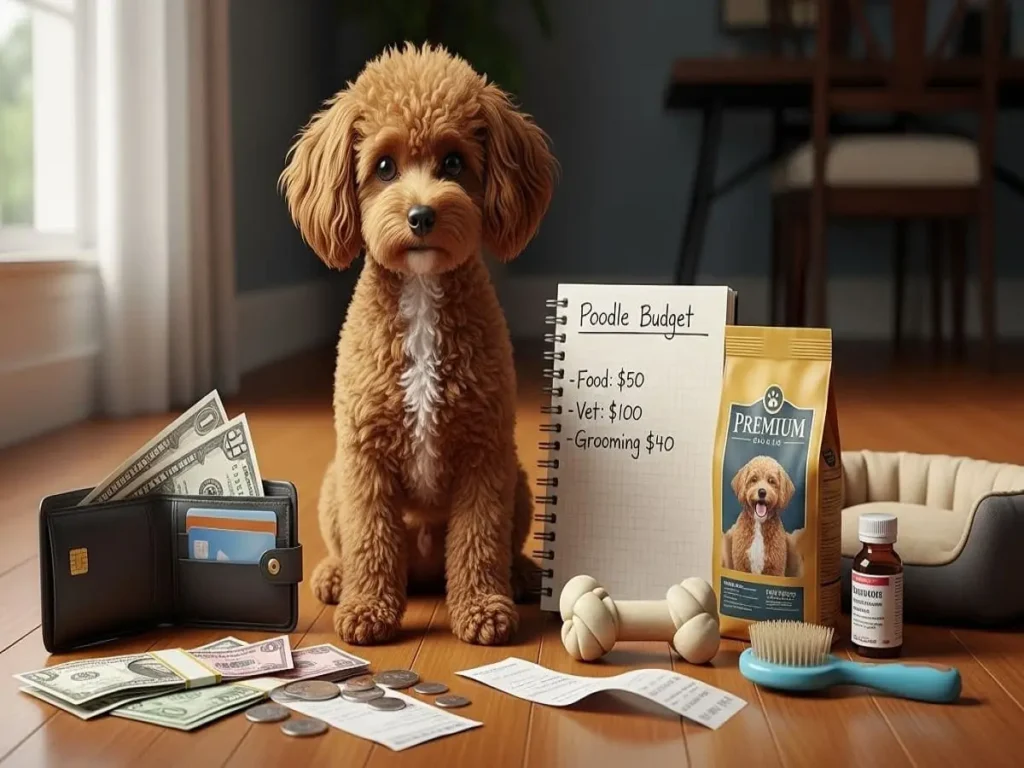
Typical Price Range:
Toy Poodle, prices, range, $1000, $3000, location, reputation, breeder, dog lineage, rare coat color, distinctive breeding traits, increase cost, potential owners, variations, budget, demand, prominence, higher cost, price range, $1,000, $3,000 shape early expectations when planning ownership.
Added Costs:
Toy Poodles often come with higher price tags due to distinctive qualities, a line of champions, additional costs, strong breeder investment, preserving features, and top-notch care.
Finding a Toy Poodle:
Careful research, choosing a trusted breeder, comparing costs, aligning budget with choices, checking temperament, health, Toy Poodle history, proper health guarantees, initial training, and vaccinations matters.
How Much Does a Miniature Poodle Cost?
Miniature Poodles are an adorable option with strong adaptability, balanced sizes, weigh 10 to 15 pounds, ideal family pets, gentle therapy dogs, and a trainable nature.
Typical Price Range:
Miniature Poodles cost $800 to $2500, are more affordable than Toy Poodles, and reflect coat color, lineage, breeding practices, versatility, demanding appeal, and value.
Benefits of Family Pets:
Miniature Poodles are celebrated breeds for adaptability, intelligence, therapeutic roles, loving families, compact sizes, manageable care, active families, and children.
Lifestyle Considerations:
A thoughtful lifestyle evaluation step before introducing a Poodle ensures the right choice, covering training time, exercise, socialization, and the decision-making process.
How Much Does a Standard Poodle Cost?
Standard Poodles, the largest Poodle type, show versatility, athleticism, and agility, excel in canine sports, suit active lifestyles, have bigger sizes, inspire love, show protective instincts, and strong loyalties.
Typical Price Range:
Standard Poodle prices range from $600 to $2000, remain affordable, yet long-term expenses, maintenance, grooming needs, and bigger sizes add up.
Unique Traits and Additional Costs:
Standard Poodles with unique traits or champion lineage bring a higher cost, plus grooming, training, health care, food, and supplies.
Overall Appeal:
Standard Poodles suit active individuals and families, offering easy trainability, intelligence, varied activities, loyal companions, and an active lifestyle.
Additional Costs of Owning a Poodle:
Poodle ownership includes higher-than-normal price tags, so prospective owners plan additional costs for a healthier life and happier life.
Grooming:
Hypoallergenic coats need regular grooming, professional grooming at $50 to $100 per session, based on size, reputation, and groomer.
Veterinary Care:
Routine vet care, vaccinations, preventative treatments, overall health, Poodles, annual cost, health issues, eye problems, hip dysplasia, and medical costs are ongoing.
Food and Supplies:
feeding a Poodle has a moderate monthly cost of $30 to $70, shaped by size, dietary requirements, toys, quality food, supplies, and budget.
Training and Socialization:
Socialization and training for a Poodle include private sessions, group classes, costing $50 to $200, depending on type and expertise.
Health Insurance:
pet insurance helps manage costs, with monthly premiums of $20 to $50, offering peace of mind for medical requirements.
Budgeting Tips:
Smart budgeting supports prospective owners in balancing healthcare, grooming, training, management, and a well-rounded approach to owning a Poodle.
Initial Costs (First Year):
initial costs, first year, purchase price, $800, $3000, reputable breeder, lineage, location, vet care, vaccinations, microchipping, spay, neuter, supplies, crate, bowls, bed, leash, collar, toys, training, group classes come first.
Ongoing Costs (Annual):
ongoing costs, annual, include grooming, $600, $1200, professional, DIY, food, treats, health insurance, vet checkups, illness, dental, toys, replacements.
Budgeting Tips:
Prioritize grooming, protect poodle coats, keep consistent grooming, consider DIY, insurance, plan for unexpected vet bills, shop smart, choose high-quality food and supplies, expect the first year to be higher, then stabilize routine costs.
FAQs?
What Makes Toy Poodles Such Great Companions?
Why Should You Consider a Toy Poodle as Your Pet?
How Much Exercise Does a Toy Poodle Need?
Where to Find Reputable Toy Poodle Breeders?
When Should You Start Training Your Toy Poodle?
Conclusion:
Starting with the concern of the overbreeding problem, my experience has taught me how serious overbreeding can be for puppies of such a small size. A Toy Poodle should only be purchased from reputable breeders, not careless breeders driven by quick profit or a narrow profit motive.
True quality comes from a strong breeder reputation, real welfare, daily care, and responsibility toward their charges, ensuring animal welfare, dog welfare, solid puppy health, ethical breeding practices, and long-term responsible ownership built on responsible breeding and ethical breeding.
Looking beneath the curly fur of a tiny Toy Poodle, you quickly notice an intelligent, people-oriented dog, sometimes described simply as people-oriented because this dog thrives on connection. From what I’ve seen, it loves to move around, stays active, and has clear activity needs.
Enjoying a lot of interaction to use its smart little head. This smart nature reflects strong intelligence, a need for mental stimulation, and sharp thinking ability, which is exactly why this breed bonds so deeply with humans.
