


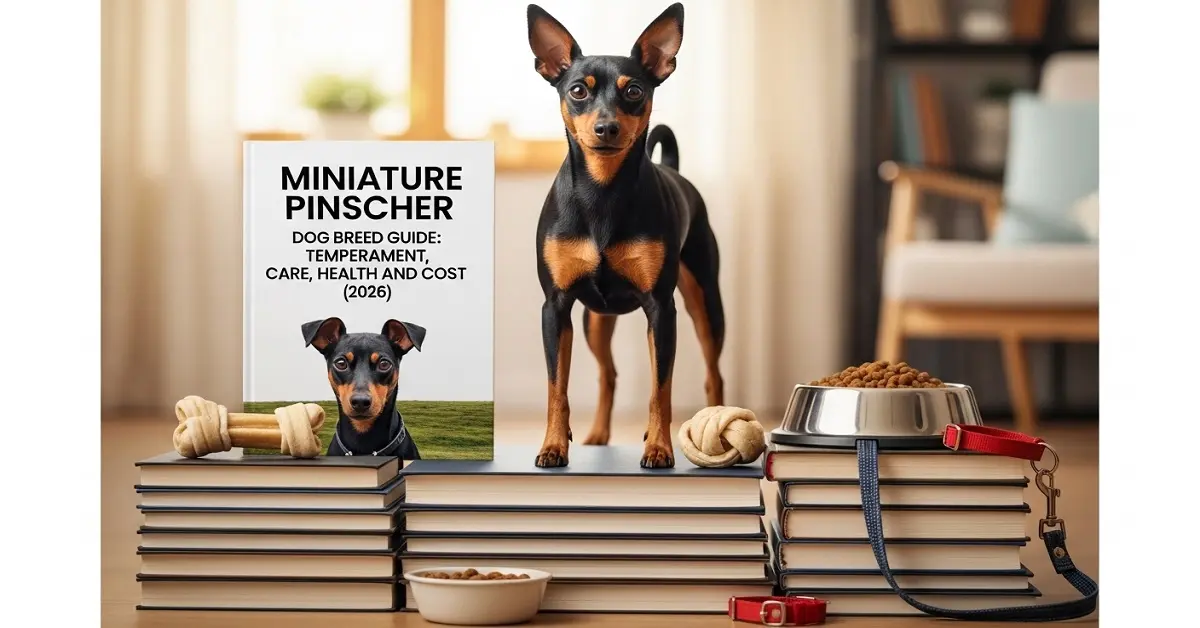
What Is a Miniature Pinscher?
The Miniature Pinscher Dog Breed Guide is a small, energetic toy breed known for its bold personality and sleek, athletic appearance. Despite standing only about 10–12.5 inches (25–32 cm) tall.
This little dog carries itself with remarkable confidence. With a smooth, short coat and a proud, high-stepping gait, the Miniature Pinscher often looks like it’s strutting with purpose.
Originally developed in Germany, the breed was created to hunt vermin in homes and stables. Over time, it transitioned from working ratter to beloved companion, admired for its alertness, intelligence, and lively spirit.
Nicknames:
The Miniature Pinscher is affectionately known by several names:
- Min Pin – The most common short form.
- King of Toys – A title reflecting its commanding personality within the toy group.
Myth: “Mini Doberman”
One of the biggest misconceptions is that the Miniature Pinscher is simply a smaller version of the Doberman Pinscher.
This is not true.
The Miniature Pinscher is an older and separate breed with its own lineage. While both breeds share some visual similarities, such as sleek coats and black-and-tan coloring.
The Min Pin was not bred down from the Doberman. In fact, the Miniature Pinscher’s ancestry likely includes the German Pinscher, Dachshund, and Italian Greyhound.
So while they may look related at first glance, the Miniature Pinscher is not a “mini Doberman” but a distinct breed with its own proud history.
Why Are They Called the “King of Toys”?
The nickname “King of Toys” perfectly captures the Min Pin’s personality. Here’s why:
- Fearless attitude – They often act like a much larger dog.
- Strong presence – Their confident posture and animated movement make them stand out.
- High energy – They are active, playful, and always alert.
- Independent streak – They think for themselves and aren’t timid.
Even in a room full of dogs, a Miniature Pinscher tends to take center
History and Origins of the Miniature Pinscher:
D🇪 German Roots (Zwergpinscher):
The Miniature Pinscher originated in Germany, where it is known as the Zwergpinscher—“Zweig” meaning dwarf and “pinscher” referring to a terrier-type dog. The breed developed independently in the German countryside and is considered a distinct breed, not a downsized version of another dog.
Its likely ancestors include the German Pinscher, Dachshund, and Italian Greyhound. The goal was to create a small, agile, fearless dog with sharp instincts and quick reflexes.
Original Farm and Rating Purpose:
Before becoming a companion dog, the Miniature Pinscher had a practical job. It worked on farms and in homes as a skilled ratter.
- Protected grain stores from rodents
- Patrolled barns and stables
- Alerted owners to movement or intruders
Their compact size allowed them to slip into tight spaces, while their bold nature made them fearless hunters despite their small frame.
Development Timeline:
The breed gradually transitioned from working dog to show dog in the late 19th century. As dog shows became popular in Europe, breeders began refining the Miniature Pinscher’s sleek appearance and distinctive high-stepping gait.
By the early 1900s, the breed gained recognition in German dog clubs and began appearing in organized exhibitions.
🇺🇸 Arrival in the United States:
The Miniature Pinscher arrived in the United States in the early 20th century, brought by European immigrants and dog enthusiasts.
In America, the breed quickly gained attention for its confident personality and elegant stance. It became especially popular during the 1920s and 1930s as toy breeds rose in demand.
AKC Recognition:
Since then, the breed has been a consistent member of the Toy Group and remains admired for its lively temperament and unmistakable presence.
Timeline Graphic Idea (Short & Unique Concept):
Title: From Farm Hunter to Toy Royalty
Simple Horizontal Timeline Layout:
- 1700s–1800s → German farms: Rodent hunter (Zwergpinscher)
- Late 1800s → Breed refinement in Germany
- Early 1900s → European dog show appearances
- 1920s → Arrival & rising popularity in the U.S.
- 1925 → Official AKC recognition
- Design Idea:
Use small icons above each date (barn 🏚️, paw 🐾, trophy 🏆, ship 🚢, ribbon 🎖️) with a bold red-and-black color theme inspired by the breed’s common coat colors. Keep it clean, five points only, with short captions under each milestone.
In Summary:
The Miniature Pinscher began as a determined German farm ratter and evolved into a confident toy companion admired worldwide. Though small in size, its history is rich with purpose, refinement, and enduring popularity.
Miniature Pinscher Appearance & Breed Standards:
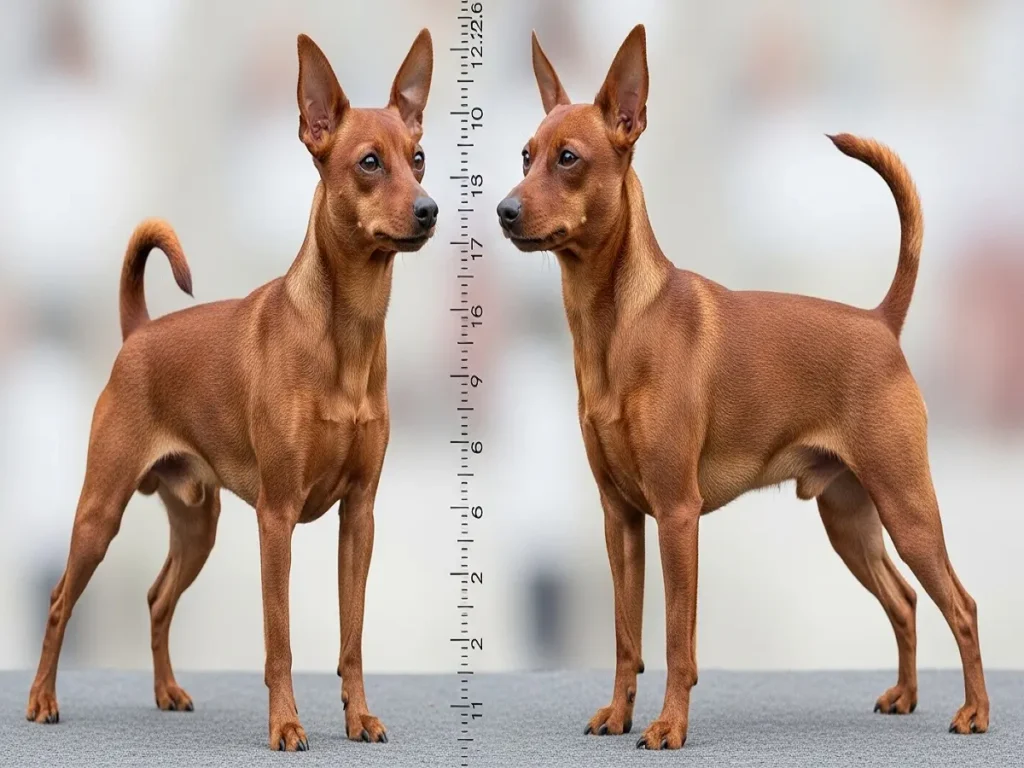
Size and Weight:
The Miniature Pinscher is compact but athletic.
- Height: Typically 10–12.5 inches (25–32 cm) at the shoulder
- Weight: Usually 8–12 pounds (3.5–5.5 kg)
They reach near full height by about 10–12 months, though muscle tone and maturity continue developing into early adulthood. Even as puppies, they tend to carry themselves with surprising confidence.
Coat Type and Colors:
The Miniature Pinscher has a short, smooth, close-lying coat that gives the body a sleek outline. The coat is low-maintenance and naturally glossy.
Recognized coat colors include:
- Solid red
- Stag red (red with black-tipped hairs)
- Black with rust markings
- Chocolate with rust markings
Markings:
Rust markings appear in specific, well-defined areas—above the eyes, on the muzzle, chest, lower legs, and under the tail. Clear contrast and sharp definition are important in breed standards.
Ears and Tail (Docked vs. Natural):
Traditionally, Miniature Pinschers were shown with cropped ears and docked tails, creating a sharp, alert silhouette.
However, many dogs today have:
- Natural ears – Either upright or slightly folded
- Natural tails – Carried high with a gentle curve
Both natural and altered appearances exist, depending on local laws, personal preference, and show regulations.
The Famous “Hackney Gait”
One of the breed’s most distinctive traits is its Hackney gait—a high-stepping, animated movement similar to a Hackney horse.
When walking or trotting, the Miniature Pinscher lifts its front legs with a pronounced bend at the wrist, creating a proud, rhythmic stride. This lively motion, paired with an upright posture, gives the dog its signature “show-off” presence.
Miniature Pinscher Temperament & Personality:
The Miniature Pinscher (Min Pin) may be small in size, but it has a big, bold personality that sets it apart from many toy breeds. These dogs are lively, confident, and full of spirit—qualities that come from their history as ratters and alert companions.
Fearless Nature:
Miniature Pinschers are known for being brave and self-assured, often acting like a larger dog in a compact body. They’re energetic, alert, and unafraid to explore or take charge of their surroundings.
Independence:
Min Pins are smart thinkers who often like to do things their own way. This independence can make them a bit stubborn at times, but also adds to their unique charm and character.
Loyalty and Attachment:
These dogs form strong bonds with their families and enjoy spending time with their people. They’re affectionate and often follow their owners around, eager to be involved in daily activities.
Intelligence Level:
Miniature Pinschers are clever and quick learners, but their high energy and independent streak mean they benefit from consistent, positive training routines that keep them mentally stimulated.
Alert Watchdog Behavior:
Min Pins are naturally alert and often very vocal about new sights and sounds. Their tendency to bark at unfamiliar people or noises makes them excellent watchdogs, even though they are small.
Are Miniature Pinschers Good With Kids?
Miniature Pinschers can enjoy being around children, especially older kids who understand how to interact gently. Because of their small size and delicate bone structure, younger children can unintentionally play too roughly. Close supervision and teaching respectful handling helps make these interactions positive.
Do Miniature Pinschers Get Along With Other Pets?
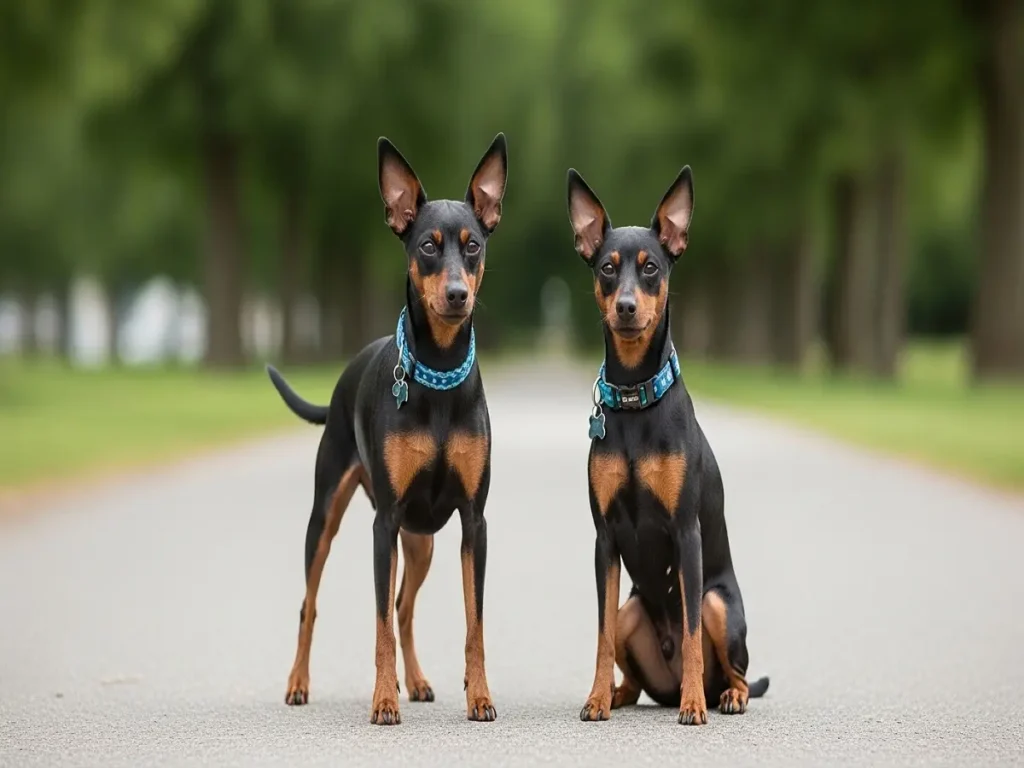
Min Pins often do well with other dogs and pets if they’re socialized early and consistently. However, their natural curiosity and spirited personality mean they might chase small animals due to their strong prey drive. Training and gradual introductions help encourage harmony in multi-pet homes.
Do They Bark a Lot?
Yes — Miniature Pinschers are quite vocal. They tend to bark to alert their owners of anything unusual, whether it’s a knock at the door or a sound outside. This makes them good watchdogs, but consistent training is helpful to manage excessive barking.
Living With a Miniature Pinscher:
Apartment vs. House Suitability:
Min Pins do very well in apartments if they get daily activity. Their small size makes them space-efficient, but their energy level means they still need walks and mental stimulation.
- Apartment: Good fit with routine exercise
- House with yard: Excellent, but fencing must be secure (they’re curious explorers)
Climate Tolerance (Cold Sensitivity):
Because of their short, thin coat, Miniature Pinschers are sensitive to cold weather.
- In chilly climates, they benefit from sweaters or jackets
- Avoid prolonged outdoor exposure in winter
- They handle moderate warmth better than cold
Travel Compatibility:
Their compact size makes them convenient travel companions. Many fit airline cabin size requirements.
They generally adjust well to trips if introduced gradually to carriers and car rides early.
Separation Anxiety Tendencies:
Min Pins bond closely with their owners. Some may develop separation anxiety if left alone too long.
- They prefer interactive homes
- Puzzle toys help during absences
- Gradual alone-time training reduces stress
Miniature Pinscher Training Guide:
Miniature Pinschers are intelligent but strong-willed. Training works best when it’s consistent, upbeat, and firm without being harsh.
Are Mini Pins Easy to Train?
They are quick learners, but not always eager followers. Their independence means they respond best to:
- Positive reinforcement
- Short, engaging sessions
- Clear boundaries
Patience and repetition are key.
Puppy Training Timeline (8–16 Weeks):
8–10 Weeks:
- Begin name recognition
- Introduce crate training
- Start gentle social exposure
10–12 Weeks:
- Teach sit, come, and leash walking
- Begin housebreaking schedule
- Introduce different sounds and surfaces
12–16 Weeks:
- Strengthen recall
- Practice calm greetings
- Expand social experiences (people, environments)
Consistency during this stage shapes lifelong behavior.
Housebreaking Tips (Step-by-Step):
- Set a schedule – Take puppy out after waking, eating, and playing.
- Use one potty spot – Familiar scent encourages routine.
- Reward immediately – Praise or treat within seconds.
- Supervise indoors – Prevent accidents before they happen.
- Avoid punishment – Redirect calmly instead.
Socialization Plan (Step-by-Step):
- Introduce one new person at a time.
- Allow exposure to different safe environments weekly.
- Pair new experiences with treats.
- Keep early interactions short and positive.
- Gradually increase complexity (busier areas, new dogs).
Early confidence reduces fear-based barking later.
Managing Barking & Stubbornness (Step-by-Step):
To Reduce Excessive Barking
- Identify triggers (noise, boredom, strangers).
- Teach a “quiet” command paired with a reward.
- Redirect attention with a task or toy.
- Reinforce calm behavior consistently.
To Handle Stubborn Behavior
- Keep commands simple and clear.
- Use rewards they truly value.
- End sessions before they lose focus.
- Stay consistent—never give in after saying “no.”
Exercise & Mental Stimulation Needs:
The Miniature Pinscher may be small, but its energy level is surprisingly high. Regular activity keeps this breed balanced, confident, and less prone to nuisance behaviors.
Daily Exercise Requirements:
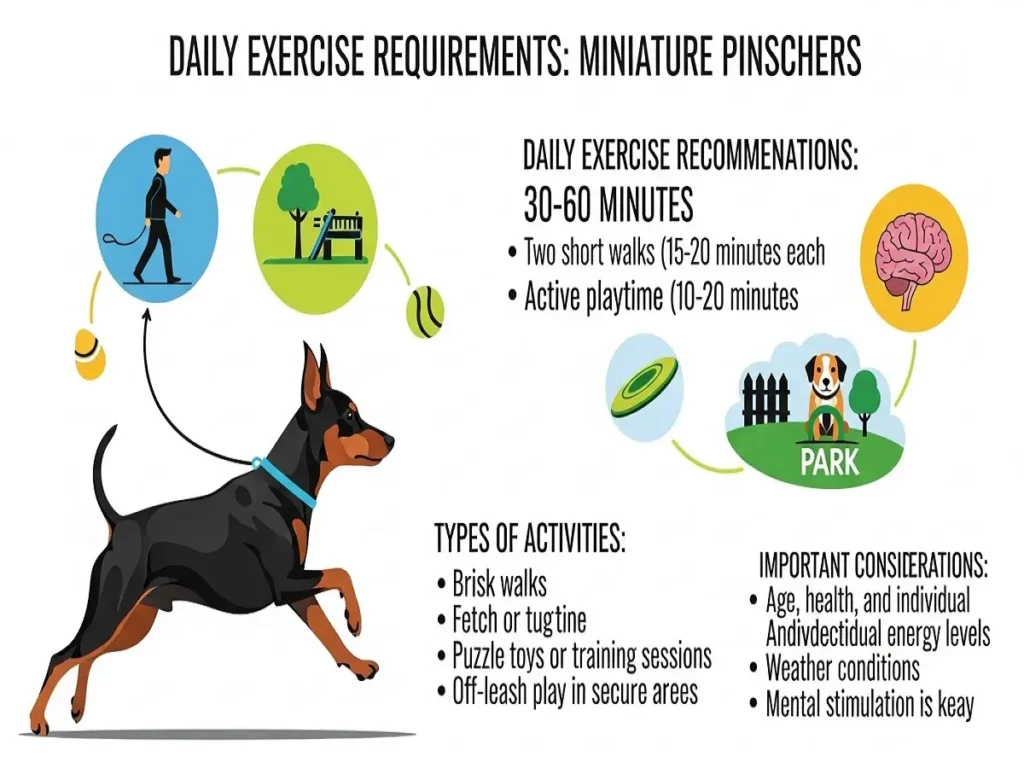
Mini Pins typically need 30–60 minutes of activity per day. This can be divided into two shorter sessions.
Ideal routine:
- One brisk walk (15–30 minutes)
- One active play session indoors or outdoors
- Short training drills for mental engagement
They are not couch potatoes. Without movement, they may become restless or vocal.
Play Ideas
Miniature Pinschers enjoy interactive, fast-paced games.
Simple play options:
- Fetch with lightweight toys
- Tug games with clear rules
- Hide-and-seek indoors
- “Find the treat” scent games
Rotating toys every few days keeps interest high.
Agility and Dog Sports:
Despite their toy size, Mini Pins excel in activities that require speed and coordination.
Suitable sports:
- Agility courses
- Rally obedience
- Trick training competitions
- Fast-paced obstacle games
Their natural confidence and quick reflexes make them enthusiastic participants.
Preventing Boredom (Step-by-Step Plan):
- Schedule activity daily – Consistency prevents pent-up energy.
- Mix physical and mental tasks – Walk + training combo works best.
- Use puzzle feeders – Turn mealtime into a challenge.
- Teach new tricks monthly – Keeps their sharp mind engaged.
- Provide supervised exploration – New environments reduce monotony.
A stimulated Miniature Pinscher is calmer, more responsive, and far less likely to bark excessively or develop destructive habits.
Grooming & Maintenance Guide:
The Miniature Pinscher is a low-maintenance breed thanks to its short, smooth coat. While grooming is simple, regular care keeps them healthy and polished.
Shedding Level:
Mini Pins are light to moderate shedders.
Their short coat sheds small amounts year-round rather than in heavy seasonal waves. Shedding is usually manageable with routine brushing.
Brushing Schedule:
- Brush once a week with a soft bristle brush or grooming mitt.
- Increase to twice weekly during seasonal changes.
- Wipe coat with a damp cloth for added shine.
Regular brushing removes loose hair and distributes natural oils.
Bathing Frequency:
- Bathe every 4–6 weeks, or when visibly dirty.
- Use a mild dog shampoo to protect skin oils.
- Avoid overbathing, which can dry out their skin.
Because of their thin coat, they dry quickly after baths.
Nail Trimming:
Miniature Pinschers have fast-growing nails.
- Trim every 3–4 weeks.
- If you hear nails clicking on hard floors, it’s time.
- Introduce nail handling early to reduce resistance.
Regular trimming prevents discomfort and posture issues.
Dental Care:
Small breeds are prone to dental buildup, so oral hygiene is essential.
- Provide dental chews approved for dogs.
- Schedule professional cleanings as advised by a vet.
Consistent dental care supports long-term health.
Miniature Pinscher Health Issues & Lifespan:
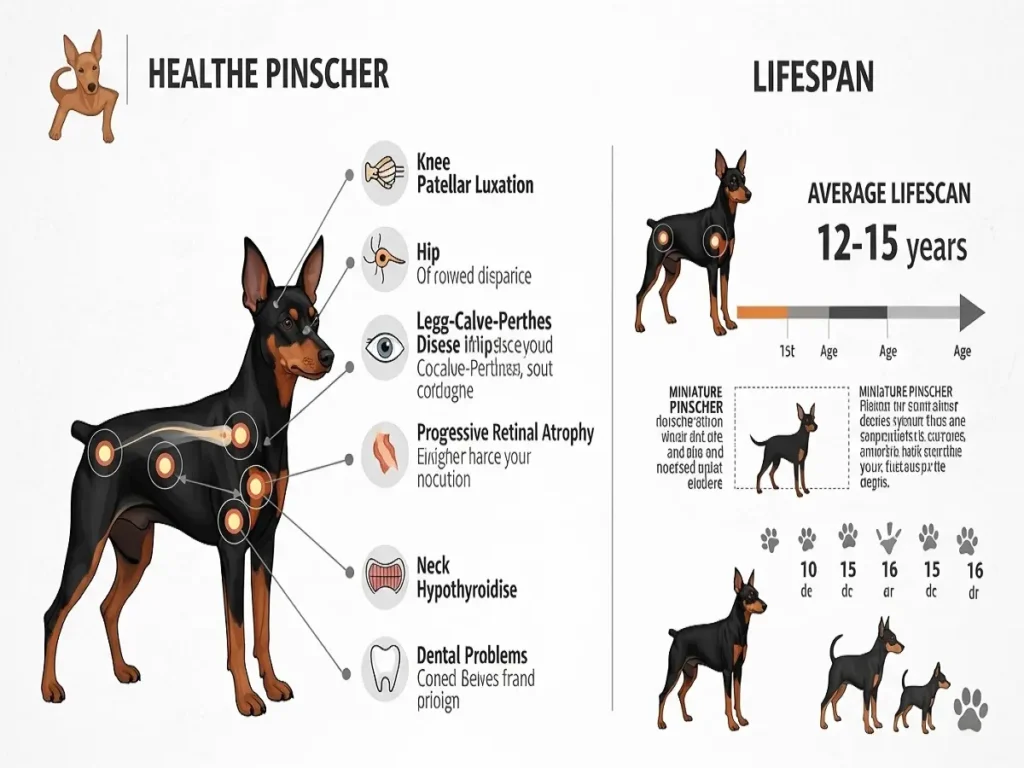
The Miniature Pinscher is generally a hardy toy breed with a long life expectancy. With proper care, many live 12–16 years, and some reach their late teens.
Common Health Concerns:
While often healthy, the breed can be predisposed to certain inherited conditions.
Patellar Luxation:
A condition where the kneecap slips out of place.
Signs may include skipping steps, limping, or temporary hind-leg lifting. Mild cases may require monitoring; severe cases can need surgery.
Legg-Calvé-Perthes Disease:
A hip joint disorder affecting blood supply to the femur head.
It typically appears in young dogs and may cause lameness or discomfort in one rear leg.
Progressive Retinal Atrophy (PRA):
A gradual degeneration of the retina that can lead to vision loss over time. Early stages may involve difficulty seeing in low light.
Epilepsy:
Some Mini Pins may experience seizure disorders. Many cases can be managed successfully with veterinary supervision and medication.
Recommended Health Screenings:
Responsible breeders and proactive owners often consider:
- Patella (knee) evaluation
- Hip assessment when needed
- Eye examination by a veterinary ophthalmologist
- General wellness bloodwork
Regular vet visits help detect concerns early, even before visible symptoms appear.
Preventive Care Schedule:
Puppy Stage
- Core vaccinations
- Parasite prevention
- Initial health screening
Adult Years (1–7 years)
- Annual veterinary exam
- Dental evaluations
- Weight and joint monitoring
- Routine blood panels as advised
Mature Years (8+ years)
- Twice-yearly wellness checks
- Vision monitoring
- Arthritis screening
- Organ function testing
Consistency is key to extending quality of life.
Senior Miniature Pinscher Care:
As Mini Pins age, their needs shift.
- Provide softer bedding to protect joints
- Adjust exercise to low-impact walks
- Monitor vision and hearing changes
- Maintain dental hygiene
- Watch weight carefully to reduce joint strain
Mental stimulation remains important in senior years to maintain cognitive health.
What food to feed a Miniature Pinscher?
The Miniature Pinscher has a fast metabolism but a small stomach. Proper portion control and quality nutrition help maintain steady energy without unwanted weight gain.
Puppy vs. Adult Diet:
🍼 Puppy (Up to 12 Months)
- Choose small-breed puppy formula for proper calorie density
- Feed 3–4 small meals per day
- Focus on balanced protein and healthy fats for growth
Puppies burn energy quickly, so consistent meal timing supports stable development.
Adult (1 Year and Older):
- Transition to small-breed adult formula
- Feed 2 measured meals daily
Adults need maintenance calories—not growth calories—to avoid excess weight.
Portion Guidance:
Because Mini Pins weigh between 8 and 12 pounds, they typically need:
- About ½ to 1 cup of high-quality dry food daily, split into two meals
- Exact amount depends on age, activity level, and metabolism
Always measure portions rather than free-feeding to prevent overeating.
Obesity Risk:
Miniature Pinschers can gain weight quickly if overfed.
Watch for:
- Loss of visible waistline
- Reduced energy
- Difficulty feeling ribs
Even small weight gain adds strain to joints and knees. Controlled treats and daily activity reduce risk.
Supplements:
Most healthy Mini Pins on balanced diets don’t require extra supplements. However, a veterinarian may recommend:
- Omega-3 fatty acids for coat and skin
- Joint support supplements if patella concerns arise
- Dental chews for oral health
Avoid adding supplements without professional guidance.
How Much Does a Miniature Pinscher Cost?
The total cost of owning a Miniature Pinscher goes beyond the purchase price. Initial setup, medical care, and ongoing expenses all contribute to the long-term investment.
Puppy Price Range in the USA:
In the United States, a Miniature Pinscher puppy from a reputable breeder typically costs:
- $800 – $2,500
Price depends on:
- Breeder reputation
- Bloodline quality
- Location
- Health testing and registration
Show-quality puppies or champion lines may cost more.
Adoption Fees
Adopting from a rescue or shelter is usually more affordable.
- $100 – $500 on average
Adoption fees often include:
- Vaccinations
- Spay/neuter
- Basic health check
Rescue organizations sometimes specialize in toy breeds, including Mini Pins.
First-Year Expenses:
The first year is typically the most expensive due to setup and medical needs.
Estimated first-year costs:
- Initial supplies (crate, bed, bowls, leash): $200–$500
- Vaccinations & vet visits: $300–$800
- Spay/neuter (if not included): $200–$500
- Food & treats: $250–$500
- Training classes: $100–$300
Estimated first-year total: $1,200 – $3,000+
Lifetime Cost Estimate:
Over a 12–16 year lifespan, overall ownership costs can reach:
- $12,000 – $20,000+
This includes:
- Food
- Routine veterinary care
- Dental cleanings
- Grooming supplies
- Emergency medical expenses
Unexpected health issues can increase total costs.
How to Find a Reputable Miniature Pinscher Breeder?
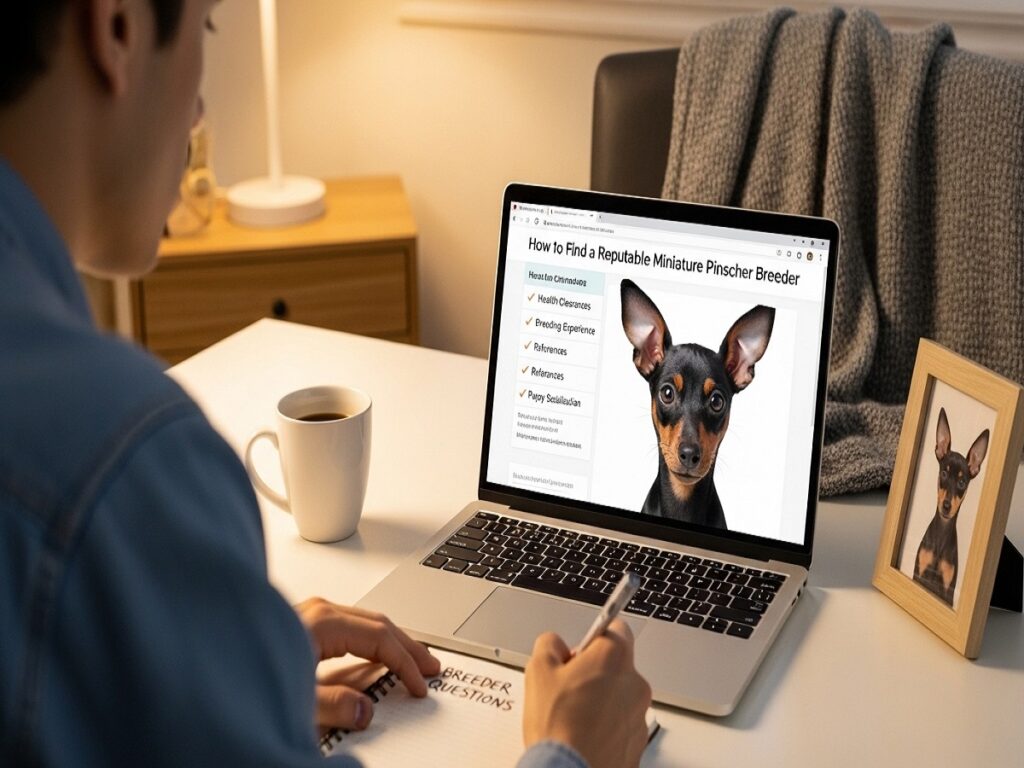
Finding a responsible breeder is one of the most important steps when bringing home a Miniature Pinscher. Ethical breeders focus on health, temperament, and proper socialization—not just profit.
Red Flags to Watch For:
Be cautious if a breeder:
- Refuses to show where puppies are raised
- Has multiple unrelated breeds for sale
- Cannot provide health records
- Offers to ship immediately with no screening questions
- Avoids contracts or health guarantees
A trustworthy breeder will be transparent and willing to answer detailed questions.
Questions to Ask:
Before committing, ask:
- Can I meet the puppy’s parents?
- What health testing has been done on the breeding dogs?
- How are puppies socialized before going home?
- What vaccinations and deworming have been completed?
- Do you offer a written health guarantee?
A good breeder will also ask you questions to ensure the puppy is going to a suitable home.
Health Certifications to Request:
Responsible Miniature Pinscher breeders often screen for:
- Patellar luxation evaluation
- Eye examination (for retinal conditions)
- Genetic testing when available
Ask for official documentation or proof of testing—not just verbal confirmation.
Avoiding Puppy Mills:
Puppy mills prioritize high-volume breeding with minimal care. To avoid supporting them:
- Avoid purchasing from pet stores that cannot identify the breeder
- Research breeder reviews and references
- Visit in person if possible
- Look for breeders involved in breed clubs or dog shows
Ethical breeders typically raise puppies in home environments and limit the number of litters per year.
Miniature Pinscher Rescue & Adoption in the USA:
Adopting a Miniature Pinscher can be a rewarding way to give a deserving dog a loving home, and several dedicated resources in the United States help make this possible.
Breed-Specific Rescues:
Several organizations focus specifically on rescuing Miniature Pinschers and placing them into permanent homes:
- Internet Miniature Pinscher Service, Inc. (IMPS): One of the largest breed-specific rescue groups in the U.S.
- State-Level Miniature Pinscher Rescues: There are many local rescue listings on national rescue platforms, such as Massachusetts, California, New York, New Jersey, Arizona, Maryland, Georgia, Pennsylvania, Colorado, and North Carolina rescue groups specifically posting Min Pins available for adoption.
- Online shelters and networks: Websites like Chewy’s adoption search list adoptable Miniature Pinschers from multiple partner shelters and rescues nationwide.
How Adoption Works:
Adopting a Miniature Pinscher typically involves a few standard steps:
- Browse available dogs: Visit rescue websites or shelter listings to find Miniature Pinschers looking for homes.
- Submit an application: Most rescues require an adoption application asking about your experience, lifestyle, home environment, and pet care plans.
- Screening process: Rescues may conduct phone interviews, reference checks, and sometimes a home visit to ensure a good fit for the dog.
- Meet the dog: Visits help you interact with the dog and learn about its personality and needs.
- Adoption fee: A fee (often between $100–$500) usually helps cover vaccinations, spaying/neutering, vet checks, and other care before adoption.
Each rescue has its own process, but all aim to match dogs with safe, committed homes forever.
Why Rescue Is a Great Option:
Adoption offers benefits for both dogs and people:
- Save a life: Rescues provide a second chance to dogs surrendered due to circumstances beyond their control.
- Typically lower cost: Adoption fees are often less than purchasing from a breeder and include initial veterinary care.
- Wide range of ages: You can find puppies, adults, or senior Mini Pins, meaning you can choose a life stage that fits your home and lifestyle.
- Support responsible care: Rescues usually foster and assess dogs before placement, helping ensure better transitions to their forever families.
Rescue dogs often show immense gratitude and can become deeply bonded, loving companions.
Pros and Cons of Owning a Miniature Pinscher:
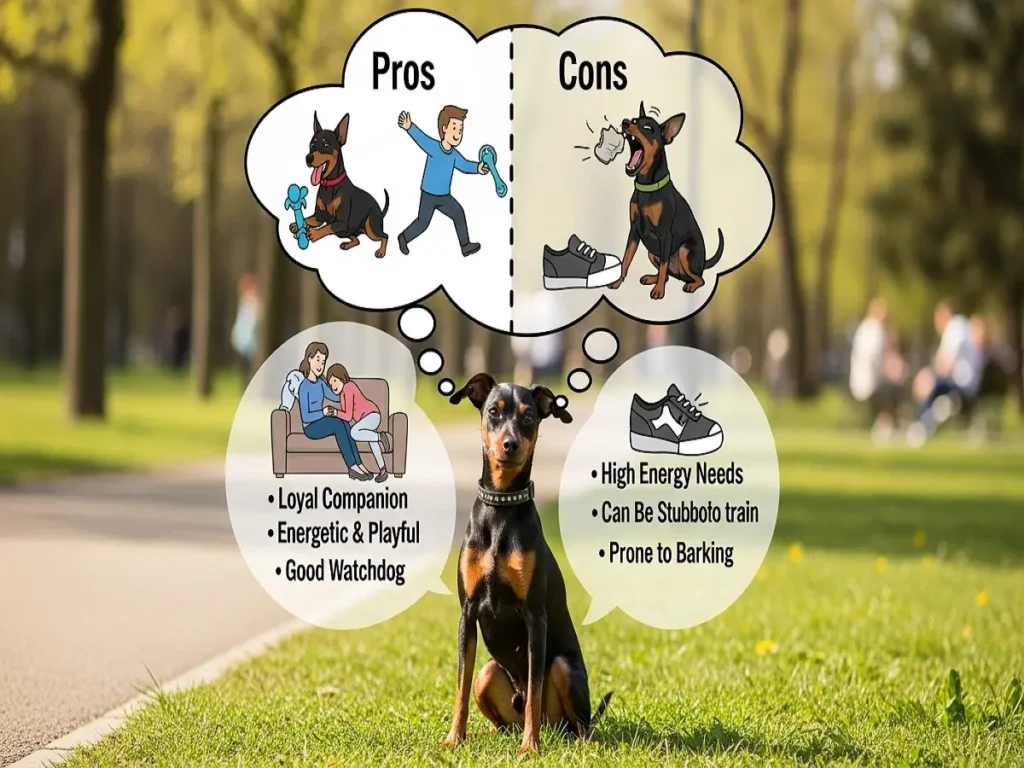
Pros:
Loyal Companion:
Mini Pins form strong attachments to their owners. They enjoy being involved in daily life and often stay close to their favorite person. Their devotion makes them deeply bonded companions.
Low Grooming Needs:
Their short, sleek coat requires minimal maintenance. Weekly brushing and occasional baths are usually enough to keep them clean and polished.
Excellent Watchdog:
Alert and observant, Miniature Pinschers are quick to notice unusual sounds or visitors. Their instinct to bark at unfamiliar activity makes them surprisingly effective watchdogs despite their small size.
Cons:
Stubborn Streak:
Mini Pins are intelligent but independent. They may test boundaries and require consistent, patient training. First-time owners sometimes underestimate their strong will.
High Energy:
This breed is active and thrives on daily exercise and mental stimulation. Without enough activity, they can become restless or develop unwanted behaviors.
Prone to Barking:
Because they are naturally alert, they may bark frequently at noises, strangers, or boredom triggers. Early training helps manage excessive vocalization.
Miniature Pinscher vs Similar Small Breeds:
Small, sleek, and confident breeds often get compared to the Miniature Pinscher especially when appearance overlaps. Here’s how the Min Pin differs from three commonly confused breeds.
Quick Breed Comparisons:
Miniature Pinscher vs Toy Manchester Terrier
- Miniature Pinscher: Bolder, more independent, with a signature high-stepping “Hackney” gait.
- Toy Manchester Terrier: Typically more reserved and slightly more eager to please in training.
Both share smooth coats and black-and-tan coloring, but the Manchester tends to have a more streamlined, less animated movement style.
Miniature Pinscher vs Chihuahua:
- Miniature Pinscher: Taller, more athletic build, strong watchdog instinct.
- Chihuahua: Smaller frame, often more lap-oriented, may bond intensely with one person.
Chihuahuas can be either smooth or long-coated, whereas Mini Pins are always short-coated and tend to be more consistently energetic.
Miniature Pinscher vs Doberman Pinscher:
- Miniature Pinscher: Toy breed, compact, developed separately in Germany.
- Doberman Pinscher: Large working breed originally bred for protection work.
Despite visual similarities in coloring, the Miniature Pinscher is not a scaled-down version of the Doberman. They were developed independently and serve different roles.
Comparison Table
| Feature | Miniature Pinscher | Toy Manchester Terrier | Chihuahua | Doberman Pinscher |
| Size | 10–12.5 in, 8–12 lbs | 10–12 in, 7–12 lbs | 5–8 in, 2–6 lbs | 24–28 in, 60–100 lbs |
| Energy Level | High | Moderate–High | Moderate | High |
| Temperament | Bold, independent | Alert, responsive | Loyal, sometimes protective | Confident, protective |
| Trainability | Intelligent but stubborn | Generally eager | Can be strong-willed | Highly trainable |
| Watchdog Ability | Excellent | Good | Good | Excellent guard dog |
| Grooming Needs | Low | Low | Low–Moderate | Low |
Is a Miniature Pinscher Right for You?
The Miniature Pinscher is bold, intelligent, and energetic. While small in size, this breed requires commitment, structure, and daily interaction. Before bringing one home, it’s important to evaluate whether your lifestyle matches their needs.
Lifestyle Checklist:
You may be a good match if:
- You enjoy daily walks and active play
- You can provide consistent training and clear rules
- You live in an apartment or house with secure space
- You don’t mind some alert barking
- You can offer companionship (they dislike long isolation)
- You appreciate a confident, spirited personality
You may want to reconsider if:
- You prefer a very quiet, low-energy dog
- You are away from home most of the day
- You’re uncomfortable setting firm boundaries
- You want a naturally submissive dog
Owner Suitability Guide
Best Suited For:
- Active singles or couples
- Families with older, respectful children
- Owners who enjoy training and structure
- People wanting a small but protective watchdog
May Be Challenging For:
- First-time owners without training experience
- Homes with very young children
- Owners seeking a relaxed lap dog
FAQs?
Most Miniature Pinschers live 12 to 16 years. With proper nutrition, regular veterinary care, and daily exercise, many enjoy long, active lives well into their teens.
No, Miniature Pinschers are not hypoallergenic. They do shed lightly throughout the year. While their short coat produces less loose hair than some breeds, they still release dander, which can trigger allergies
Mini Pins can tolerate short periods alone, but they are highly people-oriented. Long hours without interaction may lead to boredom, barking, or anxious behavior. Gradual independence training and enrichment toys help them adjust better.
Adults typically stand 10–12.5 inches tall at the shoulder and weigh 8–12 pounds. They are compact, muscular, and athletic despite their toy classification.
Miniature Pinschers are not naturally aggressive, but they are bold and protective. Without early socialization and consistent training, their strong personality can appear pushy or overly vocal. Proper guidance shapes a confident yet well-mannered companion.
Yes, they adapt well to apartment living due to their small size. However, they still need daily exercise and mental stimulation. Owners must also manage barking, as Mini Pins are alert and quick to sound the alarm.
Final Thought:
The Miniature Pinscher is proof that size does not define spirit. Small in body but bold in heart, this energetic companion brings confidence, loyalty, and lively personality into any home willing to understand its needs.
From its proud German roots to its modern role as a devoted family dog, the Min Pin stands out as independent, intelligent, and full of character.
Owning a Miniature Pinscher is not about having a quiet lap dog—it’s about sharing life with a spirited partner who thrives on activity, structure, and attention. With proper training, consistent care, and daily engagement, this “King of Toys” rewards its owner with unwavering devotion, watchful protection, and endless entertainment.
\
