



Introduction:
The Coton de Tulear Dog is a small yet charming companion breed known for its soft, cotton-like coat and affectionate personality. Originally from Madagascar, breeders developed this dog as a loyal household companion.
And today it continues to win hearts with its playful nature, intelligence, and strong bond with families. Despite its elegant appearance, the Coton de Tulear is a sturdy and adaptable breed that fits well into many lifestyles.
What makes the Coton de Tulear truly special is its people-oriented temperament. This breed thrives on human interaction, making it an excellent choice for families, seniors, and first-time dog owners.
Its low-shedding coat, cheerful attitude, and ability to adapt to apartment living set it apart from many other small dog breeds. Cotons display expressive behaviour and often develop unique ways to communicate with their owners.
In this complete guide, you will learn everything you need to know about the Coton de Tulear Dog, including its history, temperament, size, health needs, grooming requirements, training tips, and ownership considerations in the United States.
Whether you are considering bringing a Coton into your home or simply want to understand the breed better, this article provides reliable, easy-to-understand information to help you make an informed decision.
History of the Coton de Tulear Dog:
Royal Roots in Madagascar:
The history of the Coton de Tulear Dog begins on the island of Madagascar, where the breed was treasured as a companion to nobles and wealthy households. Rather than being a working dog, the Coton was valued for its companionship, charm, and affectionate nature.
Because of its close association with high society, the breed was carefully protected and remained relatively rare for many years. This exclusive upbringing helped shape the Coton’s people-focused temperament and strong emotional bond with humans.
Journey from Madagascar to Europe and the United States:
For centuries, the Coton de Tulear remained largely unknown outside Madagascar. It wasn’t until the late 20th century that the breed began to attract attention in Europe, where dog enthusiasts worked to preserve and standardize its characteristics.
From there, the breed slowly made its way to the United States. Recognition by major kennel organizations helped establish the Coton de Tulear as a distinct and respected companion breed. Today, it is still considered uncommon but is steadily growing in popularity among families and small-dog lovers in the U.S.
Meaning Behind the Name “Coton de Tulear”:
The name Coton de Tulear directly reflects the breed’s most recognizable feature. The word “Coton” means cotton, describing the dog’s soft, fluffy coat that feels similar to cotton fibers rather than traditional fur.
“Tulear” (now known as Toliara) refers to a port city in Madagascar associated with the breed’s origin. Together, the name highlights both the dog’s unique coat texture and its geographical roots, making it one of the few breeds whose name perfectly matches its appearance and history.
Why This History Matters Today:
Understanding the origins of the Coton de Tulear Dog helps explain why the breed behaves the way it does today. Its background as a companion dog,, not a hunter or guard explains its affectionate nature, adaptability to indoor living, and strong attachment to owners. This rich history also adds to the breed’s appeal, making it not just a pet but a dog with a unique cultural and historical identity.
Size, Breed Standards of the Coton de Tulear Dog:
Size: Height and Weight:
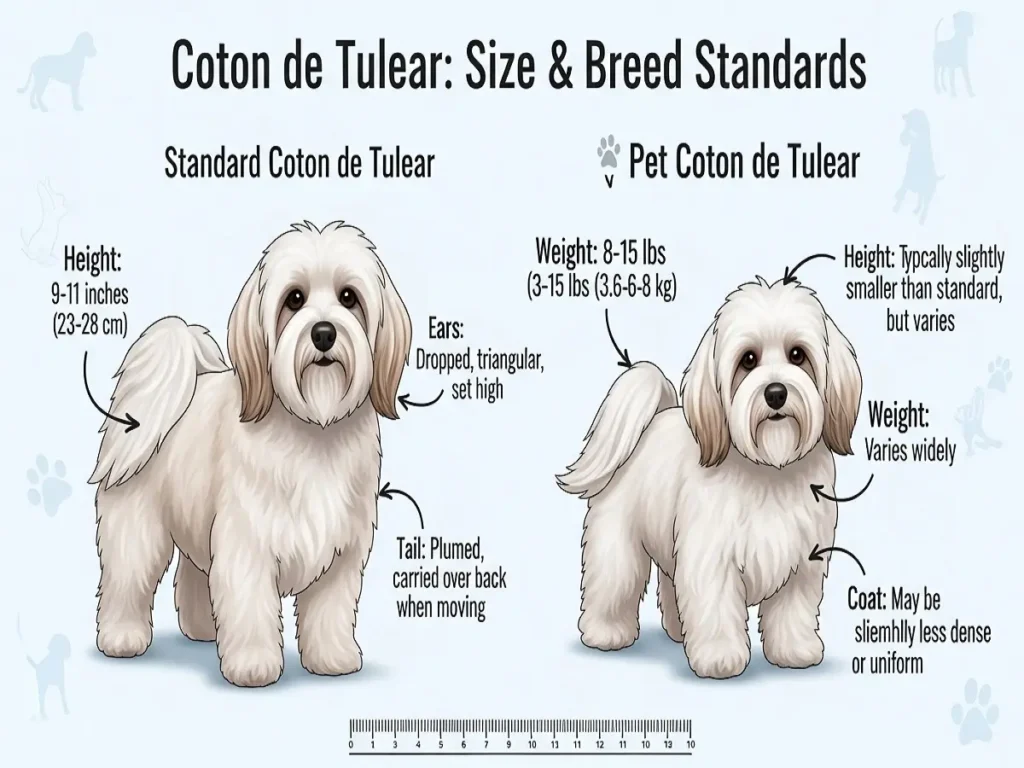
The Coton de Tulear Dog is classified as a small or toy-sized companion breed, making it suitable for both apartments and houses. Adult Cotons typically stand around 9 to 11 inches tall at the shoulder and weigh between 8 to 15 pounds.
Despite their small size, they are surprisingly sturdy and well-balanced, not fragile like some other toy breeds. Their compact build allows them to be playful and energetic without requiring excessive space.
Coat Type and Recognized Colors:
One of the most defining features of the Coton de Tulear is its coat. The breed has a long, soft, cotton-like coat that sets it apart from silky-coated dogs. Unlike fur that lies flat, the Coton’s coat has a light, fluffy texture that gives the dog a charming, plush appearance.
The most commonly accepted coat color is white, though some dogs may have light shading or markings, especially around the ears. The coat is considered low-shedding, but it does require regular grooming to prevent tangles and mats.
Official Breed Standards (AKC & RKC):
According to the American Kennel Club, the Coton de Tulear should present a cheerful expression, a well-proportioned body, and a natural, untrimmed coat that highlights its cottony texture. Movement should be smooth and lively, reflecting the breed’s playful nature.
The Royal Kennel Club emphasizes similar standards, focusing on balance, coat texture, and a friendly, alert demeanor. Both organizations agree that exaggeration is undesirable; the ideal Coton should look natural, healthy, and elegant rather than over-styled.
What Makes the Coton de Tulear Unique:
What truly distinguishes the Coton de Tulear from other small companion dogs is the texture of its coat combined with its personality. While many toy breeds have silky or curly coats, the Coton’s cotton-like coat is rare and immediately recognizable.
Additionally, Cotons are known for being exceptionally people-focused, often described as “clownish” due to their expressive and playful behavior. Their adaptability, low shedding, and emotional intelligence make them stand out in the companion dog category.
Comparison Table: Coton de Tulear vs Similar Small Breeds
| Feature | Coton de Tulear | Maltese | Bichon Frise | Havanese |
| Average Weight | 8–15 lbs | 4–7 lbs | 12–18 lbs | 7–13 lbs |
| Height | 9–11 inches | 7–9 inches | 9–11 inches | 8–11 inches |
| Coat Type | Cotton-like, long | Silky, straight | Curly, dense | Silky with waves |
| Shedding | Low | Low | Very low | Low |
| Grooming Needs | High | High | High | Moderate–High |
| Temperament | Affectionate, playful | Gentle, loyal | Cheerful, social | Friendly, adaptable |
| Best For | Families & companions | Lap-dog lovers | Active families | Versatile households |
Why Size and Appearance Matter for Owners:
Understanding the size, coat, and breed standards of the Coton de Tulear Dog helps potential owners set realistic expectations. While the breed is small and adaptable, its grooming needs and social nature require time and commitment. In return, owners get a visually stunning, emotionally connected companion that fits comfortably into modern lifestyles.
Behavior and Temperament of the Coton de Tulear:
Friendly, Happy, and People-Oriented Nature:

The Coton de Tulear Dog is widely known for its cheerful and affectionate temperament. This breed thrives on human companionship and enjoys being involved in everyday family activities. Cotons are naturally friendly.
And tend to greet familiar faces with enthusiasm, making them excellent companion dogs rather than watchdogs. Their happy disposition and emotional sensitivity allow them to form deep bonds with their owners.
Good with Children and Other Pets:
Thanks to their gentle and patient nature, Cotons generally do very well in homes with children. They are playful without being overly rough, which makes them a safe choice for families when interactions are supervised and respectful.
The breed is also known to coexist peacefully with other pets, including dogs and even cats, especially when introduced properly. Their non-aggressive behavior makes them adaptable to multi-pet households.
Intelligence and Willingness to Learn:
The Coton de Tulear is an intelligent breed that responds well to positive reinforcement. They enjoy learning new commands and tricks, especially when training sessions are kept fun and engaging.
Because they are eager to please, Cotons tend to pick up basic obedience quickly. However, consistency is key, as their sensitive nature does not respond well to harsh training methods.
Non-Aggressive and Ideal for Family Life:
Aggression is not a common trait in the Coton de Tulear Dog. Instead, the breed is known for being calm, affectionate, and socially aware. This makes Cotons well-suited for first-time dog owners, seniors, and families looking for a loving household pet. While they may bark at unfamiliar sounds, they are not naturally territorial or defensive.
Separation Anxiety: A Breed-Specific Consideration:
Because Coton de Tulear are deeply attached to their owners, they can be prone to separation anxiety if left alone for long periods. Signs may include excessive barking, whining, or restlessness.
Early training, gradual alone-time exposure, and providing mental stimulation can help reduce anxiety. This breed does best in homes where someone is often present or where routines are predictable.
Energy Levels and Playtime Needs:
Although small in size, the Coton de Tulear has moderate energy levels and enjoys daily play sessions. Short walks, interactive games, and indoor playtime are usually sufficient to keep them physically satisfied.
They are not high-energy dogs, but without regular activity, they may become bored. Mental stimulation through puzzle toys and training exercises is just as important as physical movement.
Importance of Early Socialization:
Early and consistent socialization plays a crucial role in shaping a confident Coton de Tulear. Exposure to different people, environments, sounds, and other animals at a young age helps prevent shyness and anxiety later in life. Well-socialized Cotons are more adaptable, calm, and comfortable in new situations, making them easier companions in both urban and suburban settings.
Temperament Summary: Is the Coton Right for You?
The Coton de Tulear Dog combines affection, intelligence, and adaptability in a way few breeds do. Their friendly personality and low aggression make them excellent family companions, while their emotional sensitivity requires attentive ownership.
When given proper socialization, training, and companionship, the Coton de Tulear becomes a loyal, joyful, and well-balanced member of the family.
Health of the Coton de Tulear Dog:
The Coton de Tulear Dog is generally a healthy and long-lived breed, but like all purebred dogs, it can be prone to certain inherited and lifestyle-related health conditions. Understanding these risks and how to prevent.
Them helps owners provide better care and avoid unexpected medical expenses. This section combines breed-specific knowledge with veterinary guidance commonly referenced by sources such as PetMD, while adding practical USA-focused insights.
Common Health Conditions in the Coton de Tulear:

Dental Issues:
Dental disease is one of the most common health concerns in small dog breeds, including the Coton de Tulear. If left untreated, this may lead to gum disease, tooth loss, and secondary infections that can affect internal organs. Regular brushing and professional cleanings are essential for long-term oral health.
Patellar Luxation (Kneecap Dislocation):
Patellar luxation occurs when the kneecap slips out of its normal position. This condition ranges from mild to severe and may cause limping or discomfort. While some Cotons live comfortably with mild cases, severe forms may require surgical correction.
Progressive Retinal Atrophy (PRA):
Progressive Retinal Atrophy is a genetic eye disorder that leads to gradual vision loss and, eventually, blindness. Responsible breeders screen for this condition, which makes early detection and ethical breeding practices extremely important. Regular eye examinations can help identify issues early and allow owners to prepare for long-term care needs.
Allergies and Skin Conditions:
Cotons can be sensitive to environmental allergens, certain foods, or grooming products. Symptoms may include itching, redness, or recurring ear infections.
A balanced diet, proper grooming, and veterinary guidance can help manage allergies effectively. Skin health is closely linked to coat care, making grooming an important part of overall wellness.
Preventative Care for a Healthy Life:
Preventative healthcare plays a major role in keeping a Coton de Tulear healthy and comfortable throughout its life.
Vaccinations:
Core vaccinations protect against common and potentially life-threatening diseases. Your veterinarian may also recommend non-core vaccines based on lifestyle and geographic location within the United States.
Regular Veterinary Checkups:
Routine vet visits—typically once a year for adults and more often for puppies and seniors—help detect health issues early. These checkups often include weight monitoring, dental evaluations, and general physical exams.
Eye Examinations:
Because eye conditions like PRA can develop gradually, regular eye exams are especially important for this breed. Annual screenings help ensure early detection and better long-term outcomes.
Health Checklist with Estimated USA Costs (Average):
These are approximate costs and may vary by state and clinic.
| Health Service | Frequency | Estimated Cost (USA) |
| Routine Vet Exam | Annual | $50 – $100 |
| Core Vaccinations | Annual / As needed | $75 – $150 |
| Dental Cleaning | 1–2 years | $300 – $700 |
| Eye Exam | Annual | $50 – $120 |
| Patella Evaluation | As needed | $100 – $300 |
| Allergy Testing/Treatment | As needed | $200 – $600 |
Why Health Knowledge Matters for Owners:
Understanding the health profile of the Coton de Tulear Dog allows owners to plan ahead—both emotionally and financially. Preventative care not only extends lifespan but also improves quality of life. By choosing a responsible breeder.
Scheduling regular veterinary visits, and maintaining good grooming and dental routines, owners can significantly reduce health risks and enjoy many happy years with their Coton.
Grooming and coat hygiene of the coton de Tulear Dog:
Proper grooming is essential for keeping the Coton de Tulear Dog healthy, comfortable, and looking its best. Known for its soft, cotton-like coat, this breed requires consistent care to prevent tangles, maintain healthy skin, and avoid common hygiene-related issues.
While the coat is low-shedding, it requires high-maintenance grooming, making it a key responsibility for owners. Practical grooming guidance is often highlighted by resources such as The Spruce Pets, but daily routines and long-term planning are equally important.

Daily Brushing to Prevent Mats:
The Coton de Tulear’s coat tangles easily due to its texture. Daily brushing is strongly recommended to prevent mats and knots, especially behind the ears, under the legs, and around the collar area.
Using a soft slicker brush or pin brush helps remove loose hair and debris while keeping the coat fluffy and comfortable. Regular brushing also improves blood circulation and allows owners to spot skin issues early.
Bathing Frequency and Coat Hygiene:
Bathing should be done every 3–4 weeks, or more frequently if the dog gets dirty. A gentle, dog-specific shampoo is essential to avoid skin irritation. After bathing, thorough drying is critical, as moisture trapped in the coat can lead to matting or skin problems. Light conditioning can help maintain the coat’s softness and reduce breakage.
Professional Grooming: Costs and Schedule:
While many owners handle basic grooming at home, professional grooming is often recommended every 6–8 weeks. Groomers can trim areas around the eyes, paws, and sanitary regions while keeping the coat neat and manageable.
Average grooming cost in the USA:
- $60–$100 per session (varies by location and coat condition)
Regular professional grooming reduces long-term coat damage and makes daily maintenance easier.
Ear Cleaning and Nail Care:
Coton de Tulear dogs are prone to ear buildup due to hair growth inside the ear canal. Weekly ear checks and gentle cleaning help prevent infections. Nails should be trimmed every 3–4 weeks, as overgrown nails can cause discomfort and affect posture. If nails click on hard floors, it’s usually time for a trim.
Tooth Brushing and Oral Hygiene:
Dental care is often overlooked, but is especially important for this breed. Brushing teeth at least 3–4 times per week helps prevent plaque buildup and gum disease. Using a dog-safe toothbrush and toothpaste significantly reduces the risk of costly dental procedures later in life. Dental chews can be helpful, but should not replace brushing.
Grooming Checklist for Owners:
- Daily brushing
- Monthly bathing
- Professional grooming every 6–8 weeks
- Weekly ear checks
- Nail trimming every 3–4 weeks
- Regular tooth brushing
Why Grooming Matters for the Coton de Tulear:
Grooming is more than just appearance it directly affects the health and comfort of the Coton de Tulear Dog. Consistent coat care prevents painful matting, reduces skin issues, and strengthens the bond between dog and owner. With a structured grooming routine, this breed’s beautiful coat and cheerful personality can truly shine.
Training and Socialization of the Coton de Tulear Dog:
Training and socialization play a vital role in shaping a well-behaved Coton de Tulear Dog. While this breed is naturally intelligent and eager to please, its sensitive and people-oriented personality requires a thoughtful and positive training approach.
Although organizations like the American Kennel Club and The Spruce Pets provide general guidance, a structured, step-by-step plan helps owners achieve far better results.
Step-by-Step Training Schedule (Beginner Friendly):

Weeks 8–12 (Puppy Stage)
- Focus on name recognition and basic commands such as sit and come
- Introduce leash walking indoors
- Reward calm behavior with treats and praise
- Keep sessions short (5–10 minutes)
Months 3–6 (Learning Phase):
- Practice stay, down, and polite greeting behaviors
- Begin controlled exposure to new people and environments
- Reinforce commands with consistency
- Introduce basic impulse control games
6 Months and Older (Reinforcement Phase):
- Strengthen obedience in distracting environments
- Teach fun tricks to maintain engagement
- Maintain training as part of daily routine
This gradual approach builds confidence and prevents training burnout.
House Training Advice:
House training a Coton de Tulear requires patience and routine. Due to their small size, puppies may need more frequent bathroom breaks. Praise and reward immediately after successful outdoor bathroom trips to reinforce good habits. Accidents should be cleaned thoroughly without punishment, as anxiety can be caused by harsh reactions.
Crate Training Tips:
Crate training is an effective tool for both house training and emotional security. Providing toys or treats inside the crate helps create positive associations and supports independence when the owner is away.
Preventing Excessive Barking:
Coton de Tulear dogs may bark to seek attention or alert owners to new sounds. Teaching a quiet command early and rewarding calm behavior can reduce unnecessary barking. Mental stimulation through training games and puzzle toys also helps prevent boredom-related vocalization.
Managing Separation Anxiety:
Because strong emotional bonds are formed by the Coton de Tulear, separation anxiety can develop if independence is not taught early. Gradual alone-time training, predictable routines, and avoiding dramatic departures help reduce stress. Leaving interactive toys or calming music can also make alone time more manageable.
Importance of Early Socialization:
Early socialization helps the Coton de Tulear grow into a confident and adaptable adult. Introducing puppies to different people, environments, sounds, and animals reduces fear-based behaviors later in life. Well-socialized Cotons are calmer, friendlier, and easier to manage in public settings.
Why Training and Socialization Matter:
Proper training and socialization ensure that the Coton de Tulear Dog develops into a balanced companion. A well-trained Coton is not only easier to live with but also happier and more secure. With positive reinforcement, consistency, and early exposure, this breed excels as a loyal, well-mannered family dog.
Buying & Adoption of the Coton de Tulear Dog (USA Guide):
Buying or adopting a Coton de Tulear Dog is a long-term commitment, and making the right choice at the start can save years of stress, expense, and disappointment. This section covers the most important USA-specific guidance that many top breed pages overlook—helping you find a healthy, ethically bred dog or a trustworthy rescue.

How to Choose a Responsible Coton de Tulear Breeder:
A responsible breeder focuses on health, temperament, and breed preservation, not quick profit. Ethical breeders usually have limited litters, raise puppies in a home environment, and are transparent about health testing.
Signs of a good breeder:
- Allows you to meet at least one parent dog
- Provides written health records
- Asks questions about your lifestyle (they care where puppies go)
- Offers a contract and health guarantee
- Is affiliated with recognized breed clubs or registries such as the American Kennel Club
Avoid breeders who always have puppies available or refuse to answer questions.
Important Questions to Ask a Breeder:
Before committing, ask clear and specific questions to protect yourself and the puppy:
- What health tests have the parents completed?
- Can I see veterinary records and test results?
- How are puppies socialized before going home?
- What support do you offer after adoption?
- Do you take the dog back if circumstances change?
Honest breeders welcome these questions and provide clear answers.
Health Tests to Request Before Buying:
Health testing is critical for reducing inherited problems in the Coton de Tulear Dog.
Key health tests to request:
- Eye examinations (for inherited eye disorders such as PRA)
- Patellar evaluation (kneecap stability)
- Dental health assessment
- General genetic screening where available
A breeder who avoids testing or claims it is “unnecessary” should be considered a red flag.
Average Coton de Tulear Puppy Price in the USA:
Prices vary by region, breeder reputation, and health testing standards.
Average price range (USA):
- Midwest & Southern states: $1,500 – $2,500
- East & West Coast: $2,500 – $4,000
Lower prices often indicate poor breeding practices or scams. Quality breeding involves high costs, including health testing and proper care.
Adoption & Rescue Options:
Adoption is an excellent alternative for those open to adult dogs or mixed backgrounds. While Cotons are rare in shelters, breed-specific rescues and small-dog rescues occasionally have them available.
Benefits of adoption:
- Lower cost
- Adult temperament is already known
- Helping a dog in need
Many rescue organizations also provide medical care and behavioral evaluations before adoption.
How to Avoid Puppy Scams:
Online puppy scams are common, especially for rare breeds like the Coton de Tulear.
- Stock photos used repeatedly
- Prices far below average
- Pressure to “act fast.”
Always verify the breeder, request live video proof, and avoid wire transfers or gift cards.
Buying vs Adoption: Which Is Right for You?
Buying from a responsible breeder offers predictability in health and temperament, while adoption provides the chance to give a dog a second home. Both options can lead to a rewarding experience when done ethically and thoughtfully.
Why This Section Matters:
Choosing the right source for your Coton de Tulear Dog directly impacts the dog’s health, behavior, and overall quality of life. Taking time to research breeders, understand pricing, request proper health testing, and avoid scams ensures a positive start and a lifelong bond built on trust and care.
FAQs?
Coton de Tulear dogs are considered allergy-friendly because very little shedding occurs and less dander is produced compared to many other breeds. However, no dog is completely hypoallergenic, so people with allergies should spend time with the breed first. How often do Coton de Tulear dogs shed?
A high-quality, small-breed dog food with balanced protein, healthy fats, and essential vitamins works best. Portion control is important to prevent weight gain, and fresh water should always be available.
Yes, the Coton de Tulear adapts very well to apartment living. Their small size, moderate energy level, and quiet nature make them suitable for smaller spaces when given daily play and walks.
In the United States, a Coton de Tulear puppy typically costs between $1,500 and $4,000, depending on breeder quality, health testing, location, and lineage. Adoption costs are usually much lower.
Conclusion: Is the Coton de Tulear Dog Right for You?
Recap of the Coton de Tulear’s Unique Traits:
The Coton de Tulear Dog stands out as a loving companion with a soft, cotton-like coat, friendly temperament, and strong attachment to its family. Its low-shedding coat, adaptability to indoor living, and intelligent nature make it a popular choice among small dog breeds in the United States.
Is the Ideal Owner for This Breed?
This breed suits families, seniors, remote workers, and first-time dog owners who can provide regular companionship and grooming care. The Coton de Tulear thrives in homes that treat it as a true family member rather than leaving it alone for long periods.
Next Steps for Future Owners:
If you are considering adding a Coton de Tulear to your home, the next step is preparation. Research ethical breeders or reputable rescues, understand grooming and health responsibilities, and plan for long-term care. Proper preparation leads to a smoother transition and a happier dog.
Download Your Free Puppy Checklist:
To get started, download our Coton de Tulear Puppy Preparation Checklist, which covers grooming tools, training basics, health planning, and home setup essentials. This checklist helps new owners save time and reduce stress.
Stay Connected for Expert Dog Care Tips:
For ongoing guidance, subscribe to our newsletter and receive expert-backed dog care tips, training advice, and breed-specific resources delivered directly to your inbox. Join our growing community of responsible dog owners and give your Coton de Tulear the best possible start.
