


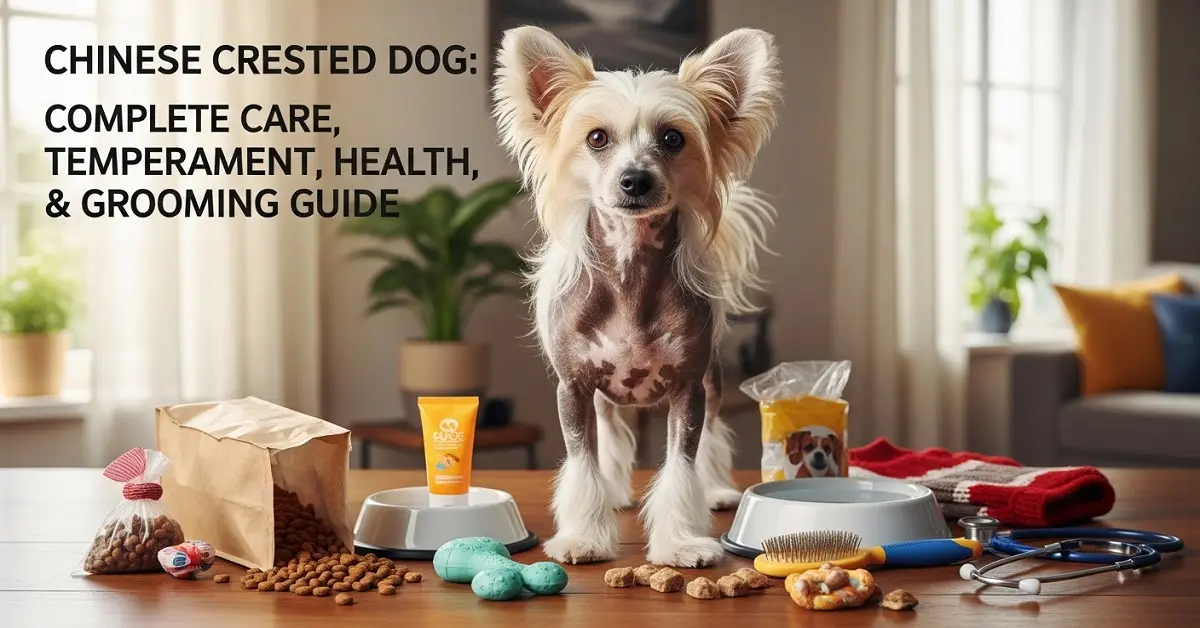
Introduction to the Chinese Crested Dog:
The Chinese Crested dog is one of the most distinctive and eye-catching toy dog breeds in the world, instantly recognizable for its mostly hairless body, graceful build, and playful personality. Despite its name, the breed’s exact origins are debated, but today it is widely cherished as a loving companion rather than a working dog.
Chinese Cresteds come in two varieties: the nearly hairless type with soft hair on the head, feet, and tail, and the Powderpuff, which has a full, silky coat. Both varieties share the same affectionate temperament, intelligence, and strong attachment to their owners.
Known for being alert yet gentle, this breed thrives on human companionship and does especially well in apartments and smaller living spaces.
With a reputation for being loyal, expressive, and surprisingly athletic, the Chinese Crested is an ideal choice for owners seeking a small dog with a big personality. Its low-shedding coat, unique appearance, and engaging nature make it a standout choice among toy breeds and a favorite for families, singles, and seniors alike.
Hero Section / Overview:
The Chinese Crested Dog is a small toy breed best known for its unusual appearance, affectionate nature, and close bond with humans. Unlike most dogs, this breed often has little to no body hair, making it instantly recognizable and truly one of a kind. Beyond looks, Chinese Cresteds are intelligent, lively, and deeply devoted companions that thrive on attention and companionship.
One of the most unique aspects of the Chinese Crested is that it comes in two distinct varieties within the same breed:
- Hairless Chinese Crested – Has smooth, soft skin with tufts of hair on the head (crest), feet (socks), and tail (plume). This variety is especially popular for its striking appearance and minimal shedding.
- Powderpuff Chinese Crested – Covered in a fine, silky double coat that gives a soft, flowing look. Powderpuff requires more grooming but shares the same temperament and personality as their hairless siblings.
Despite their delicate appearance, Chinese Cresteds are alert, playful, and surprisingly agile. They adapt well to apartment living, enjoy learning new tricks, and form strong emotional bonds with their owners, often preferring to stay close rather than roam independently.
Quick Pros & Cons of the Chinese Crested Dog:
Pros:
- Very affectionate and people-oriented
- Low-shedding and often suitable for allergy-sensitive homes
- Excellent apartment and indoor companion
- Intelligent and eager to learn
- Unique, eye-catching appearance
Cons:
- Sensitive skin (especially hairless variety)
- Can be prone to dental issues
- Does not tolerate cold weather well
- Requires regular grooming or skin care
Appearance & Traits of the Chinese Crested Dog:

The Chinese Crested is a small but striking dog whose appearance sets it apart from nearly every other breed. Elegant, fine-boned, and alert, this toy breed combines a delicate look with surprising athleticism. Its unique coat types, expressive face, and light, graceful movement make it instantly recognizable.
Overall Appearance:
Chinese Cresteds have a slender body, long legs, and a slightly arched neck that gives them a refined, almost deer-like silhouette. Their almond-shaped eyes are dark and expressive, often showing curiosity and affection. The ears are large and upright, adding to the breed’s alert and lively expression.
Despite their graceful build, they are sturdy enough for daily play and light exercise.
Hairless Gene Explained (Simple & Clear):
| Aspect | Details |
|---|---|
| Overall Appearance | Small, elegant, fine-boned dog with a graceful and alert posture |
| Body Structure | Slim build, long legs, slightly arched neck, balanced proportions |
| Head & Expression | Refined head, almond-shaped dark eyes, intelligent and alert expression |
| Ears | Large, upright ears (may droop slightly in Powderpuff puppies) |
| Coat Types | Two varieties: Hairless and Powderpuff |
| Hairless Variety | Smooth, soft skin with hair on head (crest), feet (socks), and tail (plume) |
| Powderpuff Variety | Full, long, silky double coat with a soft, flowing appearance |
| Hairless Gene | Dominant but incomplete gene; both varieties appear in the same litter |
| Size (Height) | 11–13 inches (28–33 cm) |
| Weight | 8–12 pounds (3.5–5.5 kg) |
| Coat / Skin Colors | White, black, cream, chocolate, slate, spotted and mixed patterns |
| Movement | Light, smooth, and agile with elegant gait |
| Shedding Level | Very low (Hairless almost none; Powderpuff light shedding) |
| Distinctive Features | Unique hairless skin, expressive eyes, plume tail, refined silhouette |
One of the most fascinating traits of the Chinese Crested is its hairless gene. This gene is dominant but incomplete, meaning:
- Hairless Chinese Cresteds always carry one hairless gene and one coated gene
- Two hairless genes together are not viable, which is why Powderpuff puppies are always born in the same litter as hairless ones
This natural genetic trait explains why both coat types exist within the same breed and why Powderpuffs are just as purebred as hairless Cresteds.
Hairless vs Powderpuff Varieties:
Hairless Chinese Crested:
- Smooth, soft skin across most of the body
- Hair appears only on the head (crest), feet (socks), and tail (plume)
- Minimal shedding
- Requires regular skin care to protect from sun, dryness, and irritation
Powderpuff Chinese Crested:
- Covered in a long, fine, silky double coat
- Softer and fluffier appearance
- Sheds lightly but consistently
Both varieties share identical temperament, size, and personality—the difference is purely cosmetic and care-related.
Size, Weight & Proportions:
Chinese Cresteds fall firmly into the toy breed category:
- Height: 11–13 inches (28–33 cm)
- Weight: 8–12 pounds (3.5–5.5 kg)
- Build: Lightweight, fine-boned, and balanced
Their compact size makes them ideal for apartments, travel, and indoor living, while still being energetic enough for play and short walks.
Coat Colors & Variations:
Chinese Cresteds come in a wide range of colors and patterns, including:
- White
- Black
- Chocolate
- Cream
- Slate
- Spotted or mottled combinations
Skin pigmentation in hairless types can change with sun exposure, giving them a unique, ever-evolving appearance over time.
Key Appearance Traits at a Glance:
- Unique hairless or silky-coated varieties
- Elegant, fine-boned structure
- Expressive eyes and upright ears
- Wide range of coat and skin colors
- Compact size with graceful movement
Breed History & Origins of the Chinese Crested Dog:
The history of the Chinese Crested dog is as intriguing and unusual as its appearance. Despite the breed’s name, historians and canine experts agree that its story likely spans multiple continents, shaped by ancient trade routes, maritime travel, and human companionship rather than a single country of origin.
Ancient Roots: Mexico, Africa & Beyond:

Most researchers believe the Chinese Crested descended from early hairless dogs found in Africa or Central America, particularly Mexico. These early hairless dogs were valued for their warmth, companionship, and pest-control abilities. Over time, merchants and explorers carried them across continents.
Chinese traders are thought to have played a major role in refining the breed. By selectively breeding smaller hairless dogs during long sea voyages, traders developed a compact companion well-suited for life aboard ships.
This practice is widely believed to be the reason the breed eventually became associated with China and earned the name “Chinese Crested.” Rather than being native to one region, the Chinese Crested represents a global breed shaped by human travel and trade.
Life at Sea: Sailors’ Companion & Vermin Hunter:
One of the most fascinating chapters in the breed’s history is its connection to sailing ships and maritime life. Chinese Cresteds were commonly kept aboard vessels for two important reasons:
- Vermin control: Their agility and alertness made them effective at catching rats and mice that threatened food supplies.
- Companionship: Sailors valued them as loyal, affectionate companions during long and isolating voyages.
Because these dogs traveled extensively by sea, they quietly spread to ports across Asia, Africa, Europe, and the Americas long before formal breed standards existed.
From Working Dog to Companion Breed:
As global trade declined and lifestyles changed, the Chinese Crested transitioned from a shipboard utility dog to a beloved companion animal. Its affectionate nature, small size, and distinctive look caught the attention of dog enthusiasts in Europe and North America during the late 19th and early 20th centuries.
The breed gained further recognition through dog shows, where its elegance and uniqueness made it stand out among toy breeds.
Recognition by Kennel Clubs:
Formal recognition helped solidify the Chinese Crested’s place in modern canine history:
- Recognized by major kennel clubs in the mid-20th century
- Accepted into the Toy Group by leading international organizations
- Breed standards established for both Hairless and Powderpuff varieties
Today, the Chinese Crested is celebrated worldwide as a companion dog rather than a working breed, admired for its charm, intelligence, and unmistakable appearance.
A Living Piece of Global History:
What makes the Chinese Crested truly special is that it isn’t tied to one culture or country. Its journey—from ancient hairless dogs, to shipboard rat hunter, to modern companion—reflects centuries of human movement, trade, and affection.
This layered history gives the breed a depth that many modern dog breeds lack, making the Chinese Crested not just a pet, but a living symbol of shared global heritage.
Temperament & Behaviour of the Chinese Crested Dog:
The Chinese Crested is admired not only for its unique appearance but also for its loving, people-focused personality. This breed thrives on close human interaction and is best suited for owners who want an affectionate.
Emotionally connected companion. Below is a detailed breakdown of the key temperament and behavior traits that define the Chinese Crested.
Loyalty & Emotional Bonding:

Chinese Cresteds are exceptionally loyal dogs that tend to form a deep attachment to their owners. They often choose one favorite person but remain affectionate with the entire household.
This strong bond means they enjoy being involved in daily activities and prefer staying close rather than being left alone for long periods. Because of this loyalty, they can become anxious if ignored or isolated, making them ideal for homes where someone is around most of the day.
Intelligence & Trainability:
This breed is highly intelligent and quick to understand commands, routines, and emotional cues. Chinese Cresteds respond best to positive reinforcement methods such as praise, treats, and gentle guidance.
They enjoy learning:
- Basic obedience commands
- Trick training
- Interactive games and puzzle toys
Their sensitivity means harsh training methods should be avoided, as they may become shy or withdrawn.
Playfulness & Energy Level:
Despite their elegant appearance, Chinese Cresteds are surprisingly playful and energetic. They enjoy short bursts of activity, indoor games, and interactive playtime with their owners. Their moderate energy level makes them adaptable happy to play when invited, but also content relaxing on the couch.
This balanced nature makes them well-suited for both active individuals and quieter households.
Social Skills with Children:
When properly socialized, Chinese Cresteds are gentle and affectionate with children. They do best with calm, respectful kids who understand how to handle small dogs carefully. Because of their delicate build, supervision is recommended around very young children to prevent accidental injury.
In family settings, they often become loving lap dogs that enjoy attention and companionship.
Behavior with Other Dogs & Pets:
Chinese Cresteds are generally friendly and social with other dogs, especially when introduced early. They tend to enjoy canine companionship and can coexist peacefully with other pets, including cats.
Early socialization helps:
- Reduce shyness
- Prevent fear-based behavior
- Build confidence in new environments
They are alert but not aggressive, making them polite and adaptable in multi-pet households.
Temperament Traits at a Glance:
- Deeply loyal and people-oriented
- Intelligent and eager to learn
- Playful without being hyperactive
- Gentle with children when supervised
- Social and friendly with other pets
- Sensitive and emotionally aware
Grooming & Skin Care for the Chinese Crested Dog:
Grooming and skin care are among the most important aspects of caring for a Chinese Crested, and this is where many breed guides fall short. Whether you own a hairless or Powderpuff variety, a consistent routine helps maintain healthy skin, prevent irritation, and keep your dog comfortable year-round.
Grooming Preparation & Timing:

Before starting any grooming session, preparation is key. Chinese Cresteds respond best to calm, short, and regular grooming routines rather than long, infrequent sessions.
Best grooming schedule:
- Bathing: Every 1–2 weeks for hairless types; every 3–4 weeks for Powderpuffs
- Daily checks: Look for redness, dryness, or clogged pores
- Weekly routine: Nail trimming, ear cleaning, and skin inspection
Always groom in a warm, draft-free space, especially for hairless dogs that are sensitive to temperature changes.
Skin Care for Hairless Chinese Cresteds:
| Care Aspect | Details & Best Practices |
|---|
| Grooming Frequency | Hairless: light grooming weekly; Powderpuff: brushing every other day |
| Bathing Schedule | Hairless: every 1–2 weeks; Powderpuff: every 3–4 weeks |
| Skin Cleansing (Hairless) | Use mild, dog-safe shampoo to prevent dryness and irritation |
| Moisturizing | Apply fragrance-free, pet-approved moisturizer after bathing |
| Sun Protection | Dog-safe sunscreen on exposed skin before outdoor activity |
| Acne & Pore Care | Avoid oily products; keep skin clean to reduce clogged pores |
| Coat Brushing (Powderpuff) | Pin brush and metal comb to prevent tangles and mats |
| Grooming Tools | Soft rubber brush, pin brush, metal comb, nail clippers, microfiber towel |
| Nail Care | Trim nails every 2–3 weeks to support comfort and mobility |
| Ear Cleaning | Clean ears weekly with vet-approved ear solution |
| Seasonal Care – Summer | Limit sun exposure; increase sunscreen use; hydrate skin |
| Seasonal Care – Winter | Use sweaters; moisturize more often; protect from cold |
| Skin Monitoring | Regularly check for redness, dryness, or irritation |
| Professional Grooming | Optional every few months for trimming and deep care |
Hairless Chinese Cresteds require special skin care similar to human skincare routines.
Essential skin care steps:
- Gentle cleansing: Use mild, dog-safe shampoos to avoid stripping natural oils
- Moisturizing: Apply fragrance-free, pet-approved moisturizers to prevent dryness and cracking
- Sun protection: Use dog-safe sunscreen on exposed skin before outdoor activities
- Acne management: Avoid oily products that may clog pores and cause breakouts
Never use human skincare products unless approved by a veterinarian, as some ingredients can be harmful to dogs.
Grooming Tools You’ll Need:
Using the right tools makes grooming easier and safer:
Recommended grooming tools:
- Soft rubber grooming brush
- Hypoallergenic dog shampoo
- Pet-safe moisturizer
- Dog sunscreen
- Microfiber towel
- Nail clippers or grinder
- Soft ear-cleaning wipes
For Powderpuff Chinese Cresteds, add a pin brush and metal comb to prevent matting and tangles.
Seasonal Grooming & Skin Protection:
Seasonal changes significantly affect the Chinese Crested’s skin and coat.
Summer care tips:
- Apply sunscreen before outdoor exposure
- Limit time in direct sunlight
- Keep skin clean to prevent sweat-related irritation
Winter care tips:
- Use dog sweaters or jackets to retain warmth
- Increase moisturizing frequency
- Avoid harsh winds and cold surfaces
Year-round considerations:
- Monitor skin for allergies or environmental reactions
- Adjust grooming frequency based on climate and activity level
Powderpuff Grooming Differences:
While Powderpuffs do not need sunscreen, their coat requires regular brushing—ideally every other day to prevent tangles. Occasional trimming around the face, paws, and sanitary areas keeps them clean and comfortable.
Health, Genetics & Lifespan of the Chinese Crested Dog:
The Chinese Crested is generally a long-lived and resilient toy breed, but its unique genetics and physical traits require informed care. Understanding how their genetics work, which health issues they are prone to, and how to prevent problems early can significantly improve both quality of life and longevity.
Genetics:
The Chinese Crested’s signature look comes from a dominant but incomplete hairless gene. In simple terms:
- Hairless dogs carry one hairless gene and one coated gene
- A dog cannot survive with two hairless genes, which is why Powderpuff puppies naturally occur in the same litters
- Powderpuffs carry two coated genes and have a full coat
This genetic structure is normal for the breed and explains why both varieties are equally healthy and recognized within breed standards. However, the same gene that causes hairlessness is also linked to dental irregularities, which makes dental care especially important.
Common Health Conditions:

Chinese Cresteds are relatively healthy, but responsible owners should be aware of breed-specific concerns:
Dental Issues:
- Missing or weak teeth are common, especially in hairless types
- Daily brushing and early dental exams are essential
Eye Conditions:
- Progressive retinal atrophy (PRA)
- Dry eye and lens issues
- Regular eye exams help catch problems early
Joint & Mobility Issues:
- Patellar luxation (loose kneecaps)
- More common in small, lightweight breeds
Skin Sensitivity (Hairless Variety):
- Sunburn
- Dryness and irritation
- Acne-like breakouts
Preventative skin care and gentle grooming routines greatly reduce these risks.
Preventative Care & Daily Health Tips:
Proactive care plays a major role in keeping a Chinese Crested healthy:
- Schedule routine veterinary checkups
- Maintain consistent dental hygiene
- Protect skin from sun and harsh weather
- Feed a balanced diet suited for small breeds
- Keep nails trimmed to support joint health
Early intervention is key, as many issues are manageable when detected promptly.
Recommended Health Testing Practices:
Reputable breeders and veterinarians often recommend the following screenings:
- Eye examinations (annual)
- Patella evaluations
- Dental assessments starting at a young age
- Genetic testing when planning breeding
These tests help reduce the risk of inherited conditions and support responsible ownership.
Lifespan & Aging:
The Chinese Crested is known for its impressive longevity:
- Average lifespan: 13–18 years
- Many live well into their late teens with proper care
As they age, Cresteds may need:
- More frequent dental cleanings
- Joint support supplements
- Softer bedding and temperature regulation
With attentive care, they remain active, affectionate companions well into old age.
Health Snapshot:
- Long lifespan for a toy breed
- Genetic hairlessness linked to dental traits
- Manageable health concerns with preventative care
- Regular testing improves long-term outcomes
Training & Socialization of the Chinese Crested Dog:
Training and socialization are essential for bringing out the best in a Chinese Crested. This breed is intelligent, emotionally sensitive, and highly people-oriented, which means it learns quickly—but only when training is approached with patience, consistency, and positivity.
Critical Training Tips for Chinese Cresteds:
Chinese Cresteds respond best to gentle, reward-based training. Harsh corrections or raised voices can cause anxiety and slow progress.
Key training tips:
- Start training early, ideally during puppyhood
- Keep sessions short (5–10 minutes) to maintain focus
- Use treats, praise, and play as motivation
- Be consistent with commands and routines
- Avoid punishment-based methods
Because they are highly observant, Chinese Cresteds quickly pick up on patterns—both good and bad making consistency especially important.
Best Training Approaches for Sensitive Breeds:

As a sensitive toy breed, the Chinese Crested benefits from a calm and encouraging training environment.
Recommended approaches:
- Positive reinforcement over correction
- Clicker training for clarity and confidence
- Calm, confident leadership
- Gradual exposure to new situations
This breed thrives when it feels safe and understood, which builds trust and accelerates learning.
Socialization with Humans:
Early and ongoing socialization helps prevent shyness and fear-based behaviors.
Human socialization tips:
- Introduce your dog to different people, ages, and environments
- Reward calm behavior around strangers
- Expose them to household noises and daily routines
- Encourage gentle handling by visitors
Well-socialized Chinese Crested grow into confident, affectionate companions who are comfortable in social settings.
Socialization with Other Dogs & Pets:
Chinese Crested are generally friendly with other animals when properly introduced.
Pet socialization best practices:
- Start introductions in neutral environments
- Supervise interactions during early stages
- Pair new experiences with positive rewards
- Enroll in puppy socialization classes when possible
They typically coexist well with other dogs and even cats, especially if raised together or introduced gradually.
House Training & Common Challenges:
House training can take time with this breed due to its sensitive nature.
Helpful strategies include:
- Establishing a predictable potty schedule
- Using crate training as a safe space
- Offering praise immediately after successful potty breaks
Patience and routine are key—rushing the process can lead to setbacks.
Training & Socialization Summary:
- Highly intelligent but emotionally sensitive
- Learns best with positive reinforcement
- Early socialization prevents anxiety
- Friendly with people and other pets
- Thrives in calm, structured environments
Diet & Nutrition Guidance for the Chinese Crested Dog:
Proper nutrition plays a major role in the overall health, skin condition, and longevity of the Chinese Crested. Due to their delicate skin, small size, and tendency toward dental and allergy-related issues, this breed benefits from a carefully planned, high-quality diet.
Diet for Sensitive Skin:
Many Chinese Crested, especially the hairless variety, have sensitive skin, which can react quickly to poor-quality ingredients.
| Nutrition Aspect | Guidance & Best Practices |
|---|
| Diet Type | High-quality, nutrient-dense food formulated for small breeds |
| Sensitive Skin Support | Diets rich in omega-3 & omega-6 fatty acids to promote healthy skin |
| Protein Sources | Chicken, turkey, lamb, fish, or novel proteins if sensitivities exist |
| Carbohydrate Sources | Sweet potato, brown rice, oats, or pumpkin for digestion |
| Recommended Food Forms | Small-breed dry kibble, soft kibble, or vet-approved fresh food |
| Dental-Friendly Foods | Small kibble sizes to support chewing and reduce plaque buildup |
| Allergy Considerations | Avoid common triggers like beef, dairy, corn, wheat, and soy |
| Hypoallergenic Options | Limited-ingredient or hydrolyzed protein diets when needed |
| Feeding Schedule | Two measured meals per day to maintain energy and weight |
| Portion Control | Carefully measured servings to prevent obesity |
| Hydration | Constant access to fresh, clean water |
| Treat Guidelines | Healthy, low-calorie treats; avoid artificial additives |
| Supplements (If Needed) | Omega oils, probiotics, or joint support (vet-approved only) |
| Food Transition Tips | Gradual food changes over 7–10 days to avoid digestive upset |
Diet tips for healthy skin:
- Choose foods rich in omega-3 and omega-6 fatty acids
- Look for limited-ingredient formulas to reduce irritation
- Avoid artificial colors, flavors, and preservatives
- Ensure adequate vitamin E and zinc for skin repair
A balanced diet helps reduce dryness, redness, and breakouts while supporting a healthy skin barrier.
Recommended Foods for Chinese Crested:
Because of their small size and higher metabolism, Chinese Crested do best on nutrient-dense, easily digestible foods.
Best food options include:
- High-quality dry kibble formulated for small breeds
- Fresh or gently cooked dog food with vet approval
- Protein sources like chicken, turkey, lamb, or fish
- Complex carbohydrates such as sweet potatoes or brown rice
Soft or small-sized kibble is often preferred, especially for dogs prone to dental issues.
Allergy & Sensitivity Considerations:
Food sensitivities are not uncommon in this breed and may appear as skin irritation, itching, or digestive upset.
Common triggers to watch for:
- Beef or dairy
- Wheat, corn, or soy
- Artificial additives
If allergy symptoms appear, a veterinarian may recommend:
- An elimination diet
- Hypoallergenic or hydrolyzed protein foods
- Grain-free options (when appropriate and vet-approved)
Always introduce new foods gradually to avoid digestive stress.
Feeding Tips for Better Health:
- Feed measured portions to prevent weight gain
- Divide meals into two servings per day
- Provide constant access to fresh water
- Combine proper nutrition with regular dental care
Maintaining a healthy weight helps reduce joint stress and supports long-term mobility.
Nutrition Snapshot:
- Skin-focused, high-quality diet is essential
- Small-breed formulas work best
- Monitor for food allergies
- Omega fatty acids support skin and coat health
- Proper nutrition enhances lifespan and comfort
FAQs?
Chinese Cresteds are considered more allergy-friendly than many breeds because they shed very little. However, no dog is completely hypoallergenic. Allergies are usually triggered by dander and saliva, so individual reactions may vary.
Shedding is minimal in this breed. Hairless Chinese Cresteds barely shed at all, while Powderpuffs shed lightly year-round. Regular grooming helps manage loose hair and keeps skin or coat healthy and clean.
Owning a Chinese Crested in the USA can cost several thousand dollars annually. Expenses include quality food, grooming, skin care, veterinary visits, and dental care. Initial puppy costs vary depending on the breeder’s reputation and location.
Chinese Crested can be good with children when raised together or properly socialized. They do best with calm, respectful kids due to their small size and sensitivity. Supervision is recommended with younger children to prevent accidental injury.
Conclusion:
The Chinese Crested Dog is a truly unique companion that stands out for its distinctive appearance, affectionate nature, and adaptability to modern lifestyles. Whether hairless or Powderpuff, this breed offers loyalty, intelligence, and strong emotional bonds with its owners.
With proper grooming, balanced nutrition, gentle training, and preventive health care, Chinese Cresteds can enjoy a long, happy life. They are especially well-suited for apartment living, attentive owners, and families seeking a loving indoor companion.
For those willing to meet their specific care needs, the Chinese Crested can be a rewarding and deeply devoted lifelong friend.
