



Introduction: Cavalier King Charles Spaniel Dog at a Glance
The Cavalier King Charles Spaniel Dog is a small yet elegant companion dog known for its affectionate nature, expressive eyes, and gentle personality. Originally bred as a lapdog, this breed combines the charm of a toy dog with the athletic spirit of a spaniel.
Cavaliers are friendly, adaptable, and thrive on human companionship, making them a favorite choice for families and individuals alike. In the United States, the Cavalier King Charles Spaniel has gained immense popularity due to its loving temperament and versatility.
The breed adapts easily to modern lifestyles in apartments or larger homes and interacts well with children, seniors, and other pets. Their calm demeanor, combined with moderate exercise needs, makes them especially appealing to first-time dog owners and those seeking an emotionally responsive companion.
This breed suits people who can provide regular companionship and attention. They are ideal for families, retirees, remote workers, or anyone looking for a loyal, gentle, and people-oriented dog that enjoys both relaxation and playtime.
Breed History & Origin:
Breed History & Origin – Table:
| Aspect | Details |
|---|---|
| Breed Name | Cavalier King Charles Spaniel |
| Country of Origin | United Kingdom |
| Historical Period | 16th–17th Century |
| Royal Connection | Closely associated with British royalty, especially King Charles I and King Charles II, who favored small spaniel companions |
| Original Purpose | Companion and lap dog for nobility |
| Early Appearance | Longer muzzle and flatter skull, similar to dogs seen in royal paintings |
| Breed Split | Later breeding trends created the shorter-nosed King Charles Spaniel (English Toy Spaniel) |
| Cavalier Revival | Early 20th century breeders aimed to restore the older spaniel type |
| UK Recognition | Officially recognized by UK kennel clubs in the mid-1900s |
| USA Recognition | Recognized later in the United States and steadily grew in popularity |
| Modern Role | Family companion, therapy dog, and show dog |
The Cavalier King Charles Spaniel has deep roots in British royalty, dating back to the 17th century. The English court cherished small spaniel-type dogs, especially during the reigns of King Charles I and King Charles II.
Artists often featured these dogs in royal portraits, and nobles valued them for their affectionate nature and constant companionship both indoors and outdoors. Over time, the original toy spaniels changed in appearance due to selective breeding trends that favored shorter noses and more domed heads.
This change led breeders to develop what is now known as the King Charles Spaniel, also called the English Toy Spaniel., In the early 20th century, breeders sought to recreate the older, flatter-skulled spaniels seen in historic paintings. Their efforts resulted in a distinct breed the Cavalier King Charles Spaniel, which features a longer muzzle, a flatter skull, and a more athletic build compared to its close relative.
Kennel authorities in the United Kingdom formally recognized the breed in the mid-1900s after establishing an official breed standard. Its popularity soon crossed the Atlantic, and the Cavalier King Charles Spaniel gained recognition in the United States later in the 20th century.
Since then, it has steadily grown in popularity, becoming one of the most beloved companion dog breeds in the USA due to its royal heritage, gentle temperament, and adaptability to family life.
Physical Appearance & Breed Standards:
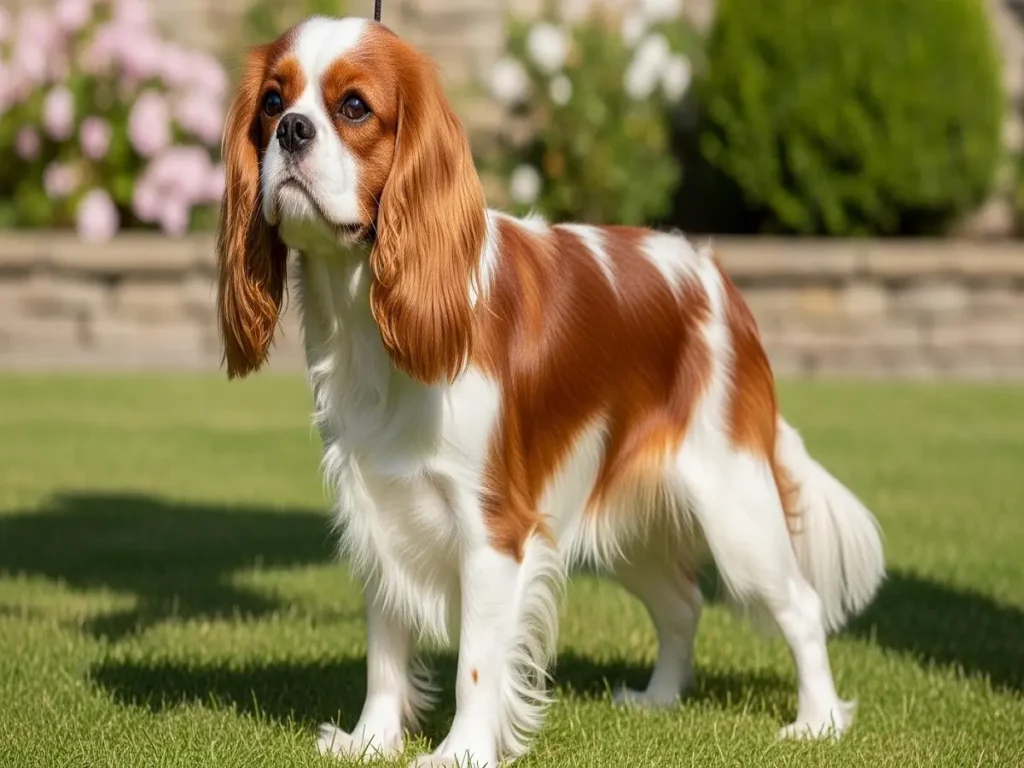
The Cavalier King Charles Spaniel is a small, well-balanced dog with an elegant yet sturdy build. Despite being classified as a toy breed, it retains the athletic proportions of a spaniel, giving it both grace and strength.
Size, Weight, and Height:
Adult Cavaliers typically stand 12 to 13 inches tall at the shoulder and weigh between 13 and 18 pounds. Their compact size makes them easy to handle, while their solid frame allows them to remain active without appearing fragile.
Coat Type and Texture:
The breed is known for its medium-length, silky coat that lies flat or slightly wavy against the body. Cavaliers have feathering on the ears, chest, legs, and tail, which adds to their refined appearance. The coat is naturally soft and does not have a harsh or coarse texture, contributing to the breed’s signature elegant look.
Official Color Varieties:
Cavalier King Charles Spaniels are recognized in four classic color patterns:
- Blenheim – chestnut markings on a white base, often with a distinct spot on the head
- Tricolor – black and white with tan points above the eyes, cheeks, and legs
- Ruby – solid, rich red coloring
- Black & Tan – jet black with well-defined tan markings
Breed standards accept all colors equally and emphasize clear, well-balanced markings rather than favoring any specific color.
AKC vs UK Kennel Club Standards (Brief Comparison):
Both the American Kennel Club (AKC) and the UK Kennel Club maintain very similar breed standards, emphasizing balance, elegance, and a gentle expression. Minor differences exist in wording and presentation, but both organizations prioritize:
- A slightly rounded (not domed) skull
- Large, dark, expressive eyes
- Long, well-feathered ears set high
- A natural, flowing movement
Overall, Cavaliers bred to either standard should look nearly identical, reflecting the breed’s shared heritage and consistent global identity.
Temperament & Personality Traits:

The Cavalier King Charles Spaniel is widely admired for its warm, people-focused personality. This breed was developed primarily as a companion, and that purpose is clearly reflected in its behavior and emotional nature.
Affection Level and Companionship:
Cavaliers are exceptionally affectionate and thrive on close human interaction. They enjoy being near their owners, whether relaxing on the couch or following them from room to room.
This strong desire for companionship makes them loyal and attentive pets, but it also means they prefer households where they are not left alone for long periods.
Behavior with Children and Other Pets:
Known for their gentle and patient demeanor, Cavaliers typically do very well with children. They are tolerant, playful without being overly rough, and quick to form bonds with family members.
Their friendly nature also extends to other animals, including dogs and cats, making them an excellent choice for multi-pet households when properly socialized.
Intelligence and Adaptability:
Cavalier King Charles Spaniels are intelligent and eager to please, which makes them responsive to training and household routines. They adapt easily to different living environments, from apartments to larger homes, as long as their social and exercise needs are met.
This adaptability contributes to their popularity among first-time dog owners and city dwellers.
Emotional Sensitivity and Therapy-Dog Potential:
One of the breed’s most notable traits is its emotional sensitivity. Cavaliers are highly attuned to human moods and often respond with comforting behavior. This natural empathy, combined with their calm disposition, makes them well suited for therapy work, emotional support roles, and companionship for seniors or individuals seeking a deeply bonded pet.
Size, Growth & Life Expectancy:
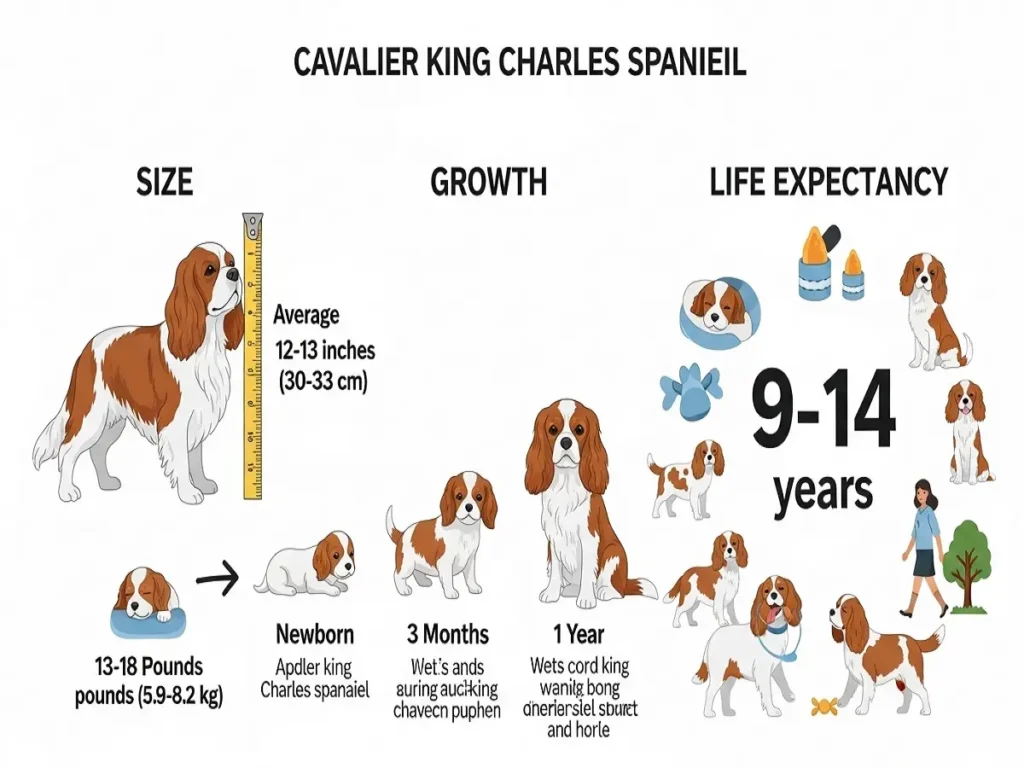
The Cavalier King Charles Spaniel follows a steady growth pattern and is known for a relatively long lifespan when provided with proper care. Understanding their growth stages and longevity helps owners support the breed’s health at every life phase.
Puppy Growth Stages:
Cavalier puppies grow rapidly during their first few months of life. In the early weeks, development focuses on bone growth and coordination, followed by gradual muscle development as they become more active.
Most Cavaliers reach the majority of their height by around 6 to 8 months of age, although they continue to fill out and mature mentally until about one year old.
Adult Size Expectations:
Once fully grown, adult Cavaliers maintain a compact yet balanced build. They typically stand 12 to 13 inches tall at the shoulder and weigh between 13 and 18 pounds. Females may be slightly smaller than males, but both share the same elegant proportions that define the breed.
Average Lifespan:
The average lifespan of a Cavalier King Charles Spaniel ranges from 12 to 15 years. With responsible breeding, regular veterinary care, and a healthy lifestyle, many individuals live well into their senior years while maintaining a good quality of life.
Factors That Affect Longevity:
Several factors influence how long a Cavalier lives. Genetics plays a significant role, especially given the breed’s predisposition to certain hereditary health conditions. Nutrition, weight management, and regular exercise also contribute to long-term health.
Routine veterinary checkups, early detection of health issues, proper dental care, and a low-stress, loving environment can all help extend a Cavalier’s lifespan and overall well-being.
Daily Care & Lifestyle Needs:
Daily Care & Lifestyle Needs:
| Care Aspect | Details |
|---|---|
| Breed | Cavalier King Charles Spaniel |
| Ideal Living Environment | Suitable for apartments and houses; prefers staying close to family rather than large outdoor space |
| Daily Exercise | 30–45 minutes of light to moderate activity (walks + playtime) |
| Typical Daily Routine | Morning walk → rest/companionship → light play or training → evening walk → family time |
| Mental Stimulation | Puzzle toys, basic training, scent games, interactive play |
| Social Needs | Highly social; thrives on human interaction |
| Alone-Time Tolerance | Low; does not tolerate long periods alone |
| Separation Anxiety Risk | High if left alone frequently or without gradual training |
| Best Household Type | Families, seniors, remote workers, or homes with frequent companionship |
| Lifestyle Suitability | Calm, affectionate, adaptable to modern indoor lifestyles |
The Cavalier King Charles Spaniel is a companion-oriented breed that thrives in a structured yet flexible daily routine. Meeting its physical, mental, and emotional needs is essential for maintaining a happy and well-balanced dog.
Ideal Living Environment (Apartment vs. House):
Cavaliers adapt well to a variety of living spaces, including apartments and smaller homes. Their moderate activity level means they do not require a large yard, as long as they receive regular walks and playtime. In houses with outdoor space.
They enjoy supervised time outside but should not be left unattended for long periods. Regardless of the home size, close proximity to family members is far more important to this breed than physical space.
Daily Routine Example:
A typical day for a Cavalier includes a short morning walk, followed by rest or quiet companionship during the day. Light play sessions or brief training activities help keep them engaged. In the evening, another walk.
Interactive playtime allows them to release energy before settling down with their family. Consistent feeding times, gentle exercise, and regular bonding moments create a routine that supports both physical health and emotional stability.
Mental Stimulation Requirements:
Although not overly demanding, the Cavaliers benefit from mental enrichment to prevent boredom. Puzzle toys, basic obedience training, scent games, and interactive play sessions help keep their minds active.
Mental stimulation is especially important for this intelligent breed, as it strengthens the bond with their owner and reduces unwanted behaviors.
Alone-Time Tolerance & Separation Anxiety:
Cavalier King Charles Spaniels are deeply attached to their owners and do not tolerate long periods of isolation well. Extended alone time can lead to separation anxiety, which may show up as whining, destructive behavior, or excessive clinginess.
This breed suits households where someone stays home often or where owners arrange pet sitters, dog walkers, or companionship from another pet.
Exercise Requirements:
The Cavalier King Charles Spaniel has moderate exercise needs that balance its playful spaniel instincts with its role as a companion dog. Regular, appropriate activity is important for maintaining a healthy weight, supporting heart health, and promoting positive behavior.
Daily Exercise Needs:
Cavaliers generally benefit from 30 to 45 minutes of daily exercise, which can be divided into short walks and light play sessions. A brisk walk, combined with gentle play, is usually enough to keep them physically fit and mentally satisfied. While they enjoy being active, they are not high-energy dogs and do not require intense or prolonged workouts.
Indoor vs. Outdoor Activity Ideas:
This breed is versatile when it comes to exercise options. Indoors, Cavaliers enjoy interactive games such as fetch with soft toys, hide-and-seek, or puzzle-based activities that engage their mind. Outdoors, they benefit from leash walks, supervised yard play, and casual exploration rather than strenuous running. Their adaptable nature makes them well suited for both urban and suburban lifestyles.
Over-Exercising Risks in Toy Breeds:
Because Cavaliers are a small, toy-sized breed, excessive exercise can place unnecessary strain on their joints and heart. Overexertion may lead to fatigue, joint discomfort, or stress-related issues, especially in puppies and senior dogs. It’s important to adjust activity levels based on age, health, and weather conditions, ensuring exercise remains gentle, enjoyable, and safe.
Training Guide (Stage-by-Stage):
Training the Cavalier King Charles Spaniel is usually a positive experience thanks to the breed’s eagerness to please and gentle temperament. Consistent, reward-based methods work best and help build confidence at every stage of life.
Puppy Training:

Housebreaking Tips:
Cavalier puppies respond well to routine and consistency. Establish regular potty breaks—especially after meals, naps, and playtime—and reward success immediately with praise or treats. Crate training can be helpful, as puppies naturally avoid soiling their sleeping area. Patience is key, as smaller breeds may take slightly longer to gain full bladder control.
Socialization Timeline:
Early socialization is essential between 8 and 16 weeks of age. During this period, puppies should be gently introduced to new people, sounds, environments, and friendly animals. Positive early experiences help prevent fearfulness and support the breed’s naturally friendly personality as they mature.
Adult Training:
Obedience & Leash Manners:
Adult Cavaliers are quick learners and enjoy structured training sessions. Basic commands such as sit, stay, and recall should be reinforced regularly. Leash training should focus on calm walking, using gentle guidance and rewards rather than force. Short, engaging sessions work better than long or repetitive drills.
Barking Control:
Cavaliers are not excessive barkers by nature, but they may vocalize out of excitement or attention-seeking. Teaching a “quiet” command, rewarding calm behavior, and ensuring they receive enough mental stimulation can help manage unnecessary barking.
Common Behavior Issues:
Separation Anxiety:
Due to their strong attachment to owners, Cavaliers can struggle with being alone. Gradual alone-time training, creating a comforting environment, and maintaining a predictable routine can help reduce anxiety. In more severe cases, professional training support may be beneficial.
Clinginess:
While affectionate behavior is normal, excessive dependence can develop if boundaries are not set. Encouraging independent play and rewarding calm, relaxed behavior helps balance closeness with confidence.
Leash Pulling:
Leash pulling often occurs out of excitement rather than defiance. Teaching loose-leash walking through consistent pacing, frequent stops, and positive reinforcement helps create calm and enjoyable walks.
Nutrition & Feeding Guide:
Proper nutrition plays a major role in the long-term health of the Cavalier King Charles Spaniel. A balanced diet tailored to the breed’s size, activity level, and health risks helps support heart function, joint health, and overall well-being.
Best Diet for Cavaliers:
Cavaliers do best on a high-quality dog food formulated for small or toy breeds. The diet should include lean animal protein as the primary ingredient, healthy fats for coat health, and easily digestible carbohydrates. Because the breed is prone to heart and weight-related issues, foods with controlled sodium levels and no unnecessary fillers are ideal.
Feeding Chart (Puppy, Adult, Senior):
- Puppies: Require more frequent meals to support growth, typically three to four small meals per day.
- Adults: Usually thrive on two measured meals daily to maintain energy and a healthy weight.
- Seniors: May need fewer calories and easily digestible formulas to support aging joints and a slower metabolism.
Adjust portions based on activity level, body condition, and veterinary guidance rather than relying solely on package instructions.
Portion Control & Obesity Prevention:
Cavalier King Charles Spaniels are prone to weight gain, which can worsen joint and heart conditions. Measuring food portions, limiting high-calorie treats, and avoiding frequent table scraps are essential. Maintaining a healthy weight helps reduce strain on the heart and joints and supports a longer lifespan.
Foods to Avoid:
Certain foods should never be part of a Cavalier’s diet, including chocolate, grapes, raisins, onions, garlic, and foods high in fat or salt. Highly processed human foods can also contribute to digestive upset and long-term health problems.
Supplements for Heart & Joint Health:
With veterinary approval, some Cavaliers may benefit from supplements such as omega-3 fatty acids to support heart and coat health, as well as glucosamine and chondroitin for joint support. Supplements should always complement, not replace, a balanced diet.
Grooming & Coat Care:
Regular grooming is essential to keep the Cavalier King Charles Spaniel healthy, comfortable, and looking its best. While their coat is naturally silky and manageable, consistent care helps prevent tangles and supports overall hygiene.
Brushing Schedule:

Cavaliers should be brushed two to three times per week to remove loose hair and prevent mats, especially around the ears, chest, and legs where feathering is more pronounced. Using a soft-bristle brush or a pin brush helps maintain the coat’s smooth texture without causing discomfort. More frequent brushing may be needed during shedding seasons.
Bathing Frequency:
Bathing is typically recommended every 4 to 6 weeks, or as needed if the dog becomes dirty. A gentle, dog-specific shampoo should be used to protect the skin’s natural oils. Overbathing can dry out the skin, so it’s best to bathe only when necessary while maintaining regular brushing in between.
Ear, Eye, and Dental Care:
Cavalier King Charles Spaniels have long, feathered ears that can trap moisture and debris, making weekly ear checks and cleaning important to reduce the risk of infections. Their large, expressive eyes should be gently wiped as needed to remove discharge. Dental care is equally important—brushing teeth several times a week helps prevent plaque buildup and supports long-term oral health.
Shedding & Seasonal Coat Management:
Cavaliers are moderate shedders and tend to shed more heavily during seasonal changes, particularly in spring and fall. Increasing brushing frequency during these periods helps control loose hair and keeps the coat healthy. Regular grooming also allows owners to spot skin issues or abnormalities early.
Health Issues (In-Depth & Owner-Focused):
The Cavalier King Charles Spaniel is known for its loving nature, but like many purebred dogs, it has a higher risk for certain inherited health conditions. Understanding these issues helps owners recognize problems early and take steps to protect their dog’s quality of life.
Common Genetic Health Problems:
Mitral Valve Disease (MVD):
Mitral Valve Disease is the most serious and common health concern in Cavaliers. It affects the heart’s ability to pump blood efficiently and often develops as the dog ages. While it may begin without obvious symptoms, early diagnosis allows for medical management that can significantly improve comfort and longevity.
Syringomyelia (SM):
Syringomyelia is a neurological condition caused by abnormal fluid buildup near the spinal cord. Cavaliers are particularly susceptible due to skull structure. This condition can cause discomfort or pain and may vary in severity from mild to more serious cases.
Eye Disorders:
Cavaliers are prone to several eye-related issues, including dry eye, cataracts, and retinal conditions. Without proper care, these problems can affect vision and overall comfort. Routine eye checks are especially important for this breed.
Hip Dysplasia & Patellar Luxation:
Although small in size, Cavaliers can develop joint problems. Hip dysplasia may lead to reduced mobility over time, while patellar luxation where the kneecap slips out of place—can cause intermittent limping or discomfort, particularly during activity.
Early Warning Signs to Watch For:
Owners play a key role in detecting health concerns early. Signs that should prompt a veterinary visit include persistent coughing, unusual fatigue, reduced tolerance for exercise, sensitivity around the neck or shoulders, unexplained scratching, limping, difficulty standing, or noticeable changes in vision or behavior. Subtle changes in appetite or activity level can also indicate underlying issues.
Preventive Care Tips:
Vet Screening Schedule:
Regular veterinary checkups are essential throughout a Cavalier’s life. Annual exams, routine heart evaluations, joint assessments, and eye checks help identify problems before they progress. As the dog ages, more frequent monitoring may be recommended.
Genetic Testing Before Buying:
Prospective owners should only work with responsible breeders who conduct health screenings for known genetic conditions common to Cavaliers. Asking for documented test results significantly reduces the risk of inherited health problems and supports healthier breeding practices.
Cost of Owning a Cavalier King Charles Spaniel in the USA:
Bringing a Cavalier King Charles Spaniel into your home is a rewarding experience, but it’s important to understand the financial commitment involved. Costs can vary widely depending on how you acquire the dog, its health needs, and the lifestyle you provide.
Puppy Price Range:
In the United States, the cost of a Cavalier King Charles Spaniel puppy from a reputable breeder can range significantly based on lineage, health clearances, and breeder reputation.
Well-bred puppies screened for common genetic conditions typically come with a higher purchase price. It’s important to budget appropriately, as very low prices can sometimes indicate unethical breeding practices or inadequate health testing.
Adoption vs. Breeder Cost:
Adopting a Cavalier through a rescue organization or shelter typically costs considerably less than buying from a breeder. Adoption fees often include initial vaccinations, microchipping, and spay/neuter surgery. While adoption is more affordable, purebred rescues may still require screening and can be limited in availability.
Purchasing from a responsible breeder generally involves higher upfront costs but comes with the benefit of documented health checks, pedigree information, and early socialization. When choosing between adoption and breeder purchase, consider both your budget and your priorities regarding health and background information.
Annual Vet Expenses:
Routine veterinary care is a consistent part of owning any dog. Annual wellness checks, vaccinations, parasite prevention, and dental cleanings should be factored into your budget.
Cavaliers have some breed-specific health risks, such as heart conditions and eye issues, so occasional specialist visits or diagnostic tests may add to yearly expenses. Setting aside funds for unexpected health concerns is also wise.
Grooming, Food, and Insurance Costs:
Cavaliers need regular grooming to maintain their silky coat, which owners can often manage at home with quality tools; however, professional grooming costs should be included in the annual budget.
High-quality dog food formulated for small breeds supports overall health but can be more expensive than generic brands. Many owners also choose pet insurance to help offset potential health care costs; premiums vary based on coverage level, age, and location.
Choosing a Puppy or Adoption Tips:
Bringing home a Cavalier King Charles Spaniel is a long-term commitment, so choosing the right source—whether a breeder or a rescue—is essential for the dog’s health and well-being.
How to Find a Responsible Breeder:
A responsible breeder prioritizes the health, temperament, and long-term welfare of their dogs. They are transparent about breeding practices, provide a clean and caring environment, and are knowledgeable about the breed’s strengths and challenges.
Good breeders are selective about buyers and often ask questions to ensure their puppies are placed in suitable homes. They should also provide documented health screenings for common genetic conditions affecting Cavaliers.
Red Flags to Avoid:
Certain warning signs may indicate unethical breeding practices. These include breeders who refuse to show health records, avoid questions, offer unusually low prices, or have multiple litters available at all times.
Puppies that appear fearful, unhealthy, or raised in poor conditions may face long-term physical or behavioral issues. Avoid sellers who pressure you into quick decisions or do not offer ongoing support after purchase.
Questions to Ask Breeders:
Before committing, ask breeders about the health history of the puppy’s parents, including heart and neurological screenings. Inquire about early socialization, vaccination schedules, and the puppy’s daily care routine.
You should also ask how the breeder supports owners after adoption and whether they require a return policy if you cannot keep the dog in the future.
Rescue and Adoption Options in the USA:
Adoption is a meaningful alternative for those open to welcoming a Cavalier in need of a home. Breed-specific rescue organizations and shelters across the USA often have Cavaliers or Cavalier mixes available.
Adoption fees are typically lower than breeder prices and often include medical care such as vaccinations and spaying or neutering. While availability may vary, adoption offers a chance to provide a loving home to a dog in need.
Is the Cavalier King Charles Spaniel Right for You?
The Cavalier King Charles Spaniel is a loving and adaptable companion, but like any breed, it is best suited to certain lifestyles and expectations. Understanding whether this breed matches your daily routine and long-term commitment is key to a successful relationship.
Best Owner Types:
Cavaliers are ideal for people who value companionship and can spend a good amount of time with their dog. They do especially well with families, seniors, remote workers, and individuals who enjoy a close bond with their pet. Owners who prefer a gentle, affectionate dog rather than a highly independent or high-energy breed often find the Cavalier to be an excellent match.
Pros and Cons:
One of the breed’s greatest strengths is its friendly and affectionate nature. Cavaliers are typically easygoing, social, and adaptable to various living environments. However, their strong attachment to people means they may struggle with long periods of solitude.
Additionally, potential owners should be aware of the breed’s higher risk for certain genetic health issues, which may require ongoing care and financial planning.
First-Time Owner Suitability:
Cavalier King Charles Spaniels are often a good choice for first-time dog owners due to their manageable size, trainable nature, and gentle temperament. They respond well to positive reinforcement and are generally forgiving of minor training mistakes.
That said, first-time owners should be prepared for regular grooming, consistent companionship, and proactive health care to ensure the dog thrives.
FAQs?
Yes, the Cavalier King Charles Spaniel adapts very well to apartment living. Their small size, calm nature, and moderate exercise needs make them suitable, as long as they receive daily walks, playtime, and close human companionship.
Cavaliers are not excessive barkers by nature. They bark mainly to alert or show excitement, but proper training, mental stimulation, and a routine keep barking minimal compared to many other small breeds.
Cavalier King Charles Spaniels typically live between 12 and 15 years. Lifespan depends on genetics, diet, regular veterinary care, exercise, and early detection of breed-specific health conditions, especially heart-related issues.
Cavaliers are moderate-maintenance dogs. They require regular grooming, routine exercise, and consistent companionship. Although their care remains manageable, owners must monitor their health regularly and provide ongoing grooming to keep them comfortable and healthy.
Yes, Cavaliers are prone to separation anxiety due to their strong attachment to owners. Long periods of isolation can lead to stress-related behaviors. Gradual alone-time training, companionship, and a predictable routine help reduce anxiety and promote emotional balance.
Final Thoughts & Expert Tips:
The Cavalier King Charles Spaniel is a devoted, gentle, and affectionate companion that thrives in a loving home. Potential owners must provide consistent companionship, regular grooming, and proactive health care. This breed suits people who value emotional connection and willingly include their dog in everyday life
To keep your Cavalier healthy and happy long-term, focus on balanced nutrition, appropriate exercise, and routine veterinary checkups. Early health screenings, weight management, and mental stimulation play a vital role in preventing common breed-related issues.
Most importantly, providing attention, structure, and affection will help your Cavalier enjoy a comfortable, fulfilling life as a cherished family member.
