


When I first started working with big dogs, I quickly learned how unique personalities can shape training and daily life, especially with breeds like the Cane Corso and the Rottweiler. Even though they feel like distant cousins, their roots go back to ancient Mastiffs, and that history still shows in their strong bodies and confident behavior.
Whenever people ask me how to decide between the two large working-class breeds, I often explain how their temperament and overall vibe differ once you see them up close. Their physical appearance alone tells a story. Every Corso I’ve handled carries a certain sharp alertness, while every Rottie has a calm steadiness that makes them unforgettable.
For years, I’ve been part of the “which is better” battle, but in truth, both breeds shine differently. Training an older Rottie taught me patience, while guiding a young Cane Corso reminded me of the power of early structure. These experiences always reinforce why choosing between a Rottweiler and a Corso is less about picking the “stronger” dog and more about understanding how their backgrounds shape who they are today.
Cane Corso vs Rottweiler: A Deep Dive Into Their Powerful Builds

When I first started comparing the Cane Corso and the Rottweiler during training sessions, I realized how both are truly large breeds, yet each carries a very different story. The Cane Corso almost went extinct before it was brought back by dedicated Italian breeders, a fact that always made me admire the resilience of the breed.
The Rottweiler, however, has a long history and steady history, and I still remember how often people asked me about them because they sit comfortably in the Top 20 Most Popular Dog Breeds. Working with these dogs over the years taught me how much heritage shapes a breed’s personality and structure. Even though both are large and share a common ancestor, their physical similarities fade quickly once you see them up close.
The physical characteristics of each breed feel worlds apart in real-life handling. The Corso often appears sharper and more athletic, while the Rottie carries a broader, more grounded presence. Every time I watched them move, especially side-by-side, I was reminded how two breeds can come from the same roots yet grow into completely different expressions of strength and purpose.
Best Dog Breeds For Families with kids
Cane Corso: Built Strong With a Sleek, Athletic Frame

When I first spent time with a Cane Corso, I immediately noticed how this muscular dog looks longer than it is tall, especially when watching a male standing confidently at 24-28 inches and showing how much power he puts into those 110 pounds. The female, usually around 23-27 inches and about 99 pounds, moves with the same purpose but with a slightly softer outline.
Their long legs and lean bodies give the breed an athletic look that always impressed me during training sessions. What stands out even more is the coat’s short hair, smooth and not prone to shedding, often appearing in four standard colors. The head is large, almost mastiff-like, paired with long ears that are sometimes traditionally docked.
I’ve always paid close attention to their prominent lower jowls, which make their expression so recognizable. Many dogs show common markings, like white patches on the upper chest or lighter coloring around the muzzle, and these small details often help me identify individual Corsos at a glance.
Rottweiler Build & Signature Markings:
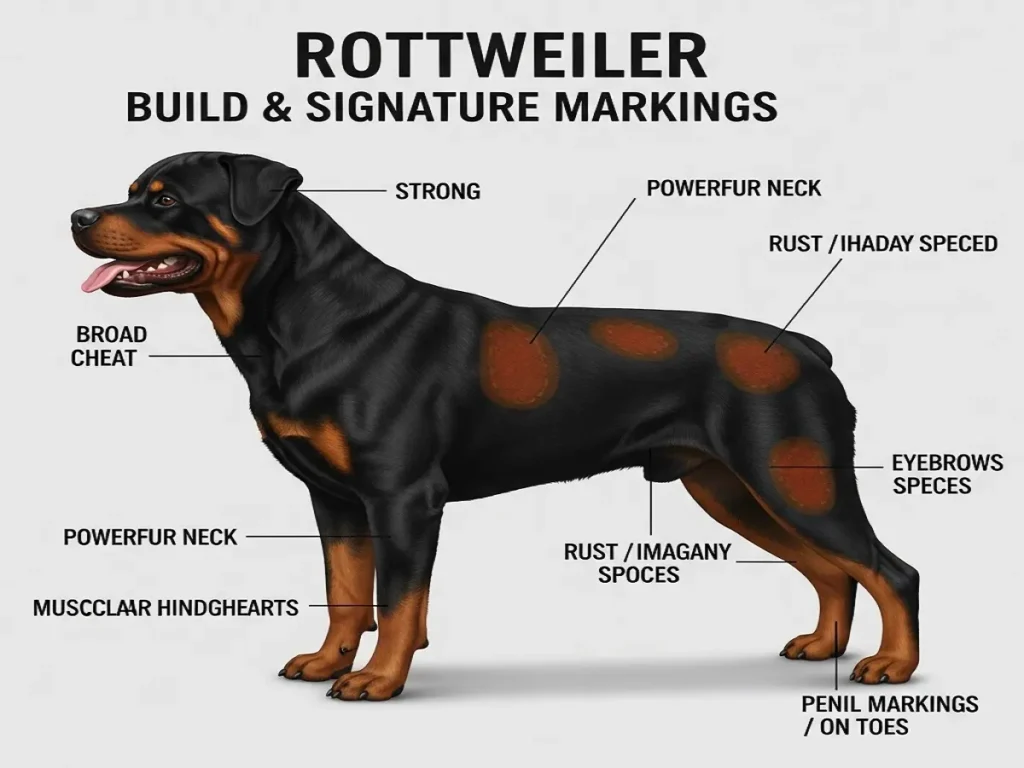
When I first started working closely with the Rottweiler, I noticed how this large dog carries incredible muscle and looks much stockier than many other breeds, with those unmistakably thick legs. Watching Male Rottweilers standing at 25.8 inches high and seeing how much they weigh, around 125 pounds on average, always reminded me of how powerful they are in motion.
The Female Rottweilers, usually 23.5 inches high and close to ninety-six pounds, move with a smoother flow but still show the same unmistakable strength. The breed features a large mastiff-like head, prominent lower jowls, and long, high-set ears that are not traditionally docked. Their long tail, however, is often docked for show, something I saw often during training events.
Their coats can vary between short coats and long coats, with moderate shedding depending on the climate. One detail that always stands out is how Rottweilers are always black with breed standard tan markings. When teaching owners about identifying Rottweiler markings, I’d point out the small but meaningful details: Spots or Eyebrow markings above each eye
A Mask around the nose and mouth, a Patch on the neck stopping at the chest, and a lighter Underbelly. Even the Leg markings or “Socks” help you recognize a Rottie from a distance. These markings aren’t just aesthetic; over the years, they’ve helped me quickly identify each dog in group training without needing a name tag.
Cane Corso vs Rottweiler: Inside Their True Temperament

From my experience working with both the Cane Corso and the Rottweiler, their physical appearance can grab attention, but it’s their distinct personalities and temperaments that truly define them. Both breeds show incredible loyalty and natural protectiveness, which makes them excellent family guardians.
I’ve noticed that success with either dog requires steady training and consistent training, as they respond best to clear guidance and routine. Watching them interact with their owners up close gives a real sense of how thoughtful and observant these unique dogs can be. Even though they share some core qualities, each breed has specific needs shaped by its temperament.
Getting up close and personal with them shows how differently they process commands and social cues. In my hands-on experience, the Corso often exhibits a more intense focus, while the Rottweiler balances strength with a calm confidence. Understanding these subtleties has always been key for me in building trust and forming a strong bond with each dog.
Cane Corso Price and Cost Breakdown
Cane Corso vs Rottweiler: Which Giant Breed Stands Bigger?

When observing dogs in the large breeds category, it’s easy to notice how the Cane Corso stands out with a 23.5–27 inches tall frame and a weight between 88–110 pounds. In my experience, seeing a Corso standing proudly gives a sense of their athletic build and powerful presence.
The Rottweiler, while similar, is slightly smaller, standing around 22–27 inches tall and weighing 80–135 pounds, but it still carries a strong and confident posture. Handling both breeds side by side helped me understand subtle differences in size and movement.
The Corso often feels leaner and slightly longer in the body, while the Rottweiler feels more compact but solid. Watching them interact, it’s clear that even small differences in standing height or weight can influence how they move, play, and respond to commands, adding a practical perspective to their overall physical presence.
Understanding Dog Training:

When you plan to train a dog, knowing the breed’s nature is key. Both the Cane Corso and Rottweiler are large, muscular dogs that are clever and intelligent, but each brings its own challenges. In my experience, while Rottweilers are slightly more switched on, Cane Corsos are equally bright yet can be stubborn at times.
This means patience is essential during training sessions, especially when teaching them control on a leash. Consistent, positive reinforcement works best, as both breeds respond well to structured guidance. These breeds can also be prone to aggression if they miss early socialization
It’s important to start training and social exposure early. You don’t want them pulling on the leash, which can strain shoulder joints, so focus on building good habits from the beginning. With consistent effort, understanding their bright, stubborn personalities, and respecting
Their muscular, powerful build, you can enjoy a well-behaved and balanced companion that thrives under your care. Dr MacMillan always emphasizes the need for structured guidance for these breeds, and I’ve seen firsthand how rewarding it can be when done right.
Exercise for need: cane corso vs rotweiler

Both Cane Corsos and Rottweilers are large, intelligent dogs that require plenty of exercise to stay healthy. From my experience, having a decent-sized garden or yard can make it easier for these breeds to run and burn off energy, as apartment living is not ideal for such active dogs. Their high intelligence means they enjoy mental stimulation along with physical activity, so incorporating both into daily routines works best.
According to Dr MacMillan, depending on age, health, and status, Cane Corsos need around 60–90 minutes of physical activity each day, while Rottweilers usually require 60–120 minutes. For a more active household, the Rottweiler may be the better choice, but either breed will thrive with consistent attention and outdoor time. Ensuring they have space and a structured routine helps these active dogs stay balanced and happy.
Cane Corso vs Rottweiler: Expert Grooming Tips for Each Breed
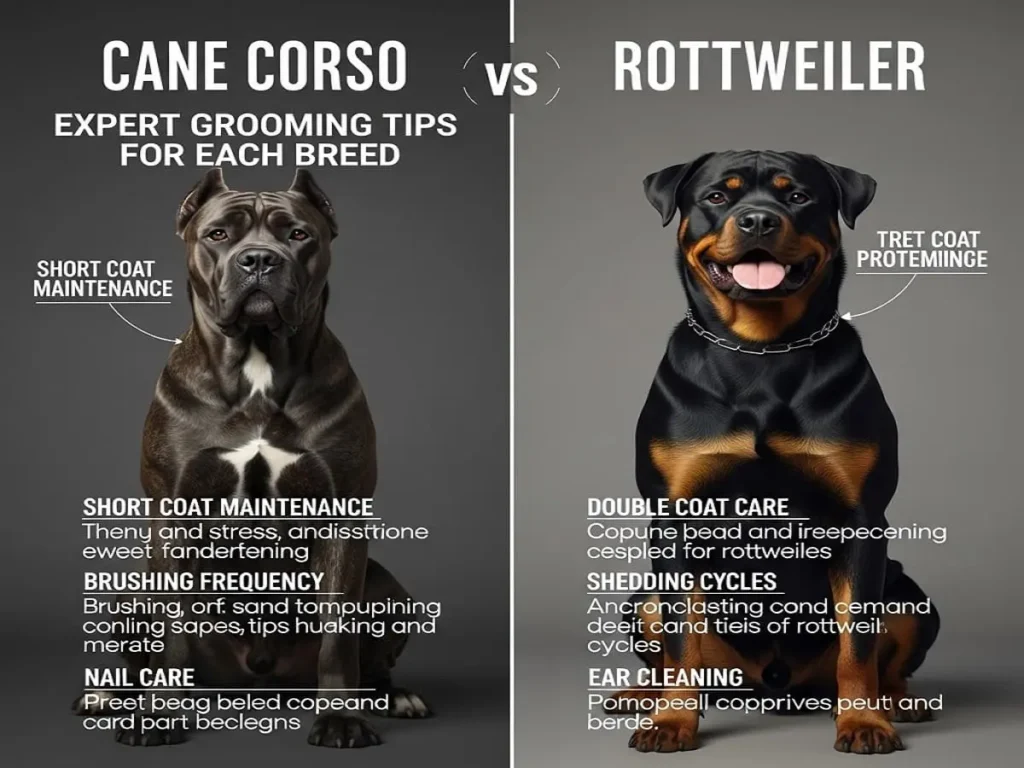
Both Cane Corsos and Rottweilers are short-haired dogs with light grooming needs, making them ideal for owners who want a low-maintenance canine companion. They do not require haircuts, but regular care is still important. Make sure to brush their coat, trim their nails, and clean their teeth consistently.
Using the right dog brushes and checking their coat now and then can keep them looking healthy and well-groomed.A common question is whether these breeds shed. Rottweilers may be prone to more shedding, but since their coats are not too dense, it usually isn’t a major problem unless you are particularly fastidious.
Dr MacMillan recommends brushing once or twice a week, and daily teeth care is recommended to prevent dental disease and keep their bay of health at its best. In my experience, following this routine ensures both breeds stay clean, comfortable, and happy.
Health Challenges for Cane Corsos and Rottweilers:

Both Cane Corsos and Rottweilers come with important health considerations that every owner should know. According to Dr. MacMillan, large breeds are prone to elbow dysplasia and hip dysplasia, which affect joints, mobility, and can cause pain while increasing the risk of obesity.
Other joint problems, such as joint abnormalities, early-onset arthritis, and osteoarthritis, a progressive disease that breaks down joint cartilage and causes inflammation, are also common. Eye problems, including conformational eye issues like entropion, where eyelids roll inward, can lead to excessive eye watering, discomfort, or eye ulcers.
These breeds are also at risk for serious conditions like gastric dilatation volvulus, especially as large, deep-chested dogs, where the stomach bloats and twists, creating a medical emergency. Skin problems are frequent in Cane Corsos, including allergies and demodectic mange, while Rottweilers may develop hotspots, also called acute moist dermatitis.
Additionally, cancer, including osteosarcoma, a tumor in bone, can affect both breeds. From my experience, being aware of these risks and monitoring your dog’s health closely ensures timely care and helps maintain a better quality of life for these remarkable breeds.
Is This Breed Right for Your Home?
Before bringing a dog into your household, it’s essential to consider your lifestyle and whether the breed is the right fit. These dogs do best with owners who are committed to short training sessions, can provide enough physical exercise, and have ample time to socialize them properly.
From my experience, dogs thrive when they have consistent attention and engagement, which helps prevent behavioral issues and keeps them happy. However, these breeds may not be suitable if your household includes young children, if you don’t have enough time to provide exercise and training, or if you’re not looking for an active breed.
Living in an apartment can also be challenging, as they need space to move and play. Ensuring these factors match your home environment is key to having a well-adjusted and balanced companion.
