


Introduction:
Working for years with large working dogs, I’ve learned that the Cane Corso, also called the Italian Mastiff, or Cane Corso. Stands out as a large breed with impressive power but also specific needs. Among purebred dogs, people admire this breed for its strength, vitality, and calm temperament. However, its large chest and heavy weight can lead to Cane Corso health issues common in big dogs.
Despite being strong dogs and sometimes called the biggest dogs. They are truly gentle pups and a large furry friend at heart. Their rising popularity in the United States, U.S., United Kingdom, U.K. And other worldwide locations has made breed health and canine health concerns. A major focus for responsible owners who want to avoid dog suffering through smart risk prevention.
Caring for family pets starts with learning key symptoms and treatment options. Regular vet planning also plays an important role in long-term health. Good dog owners respect each breed’s natural traits and genetic makeup. They also watch for common mastiff-type health risks. These risks often relate to chest shape, body weight, and overall wellness.
With proper care, these large dogs often enjoy a long and healthy life. They can compare well with many other purebred breeds. Owners who watch their puppies grow into healthy adults see the value of early care. Early attention helps reduce future health risks. It also supports a balanced and happy life.
English Mastiff Cane Corso Mix
Common Cane Corso Health Issues:
Hip & Elbow Dysplasia:
From my hands-on experience with Cane Corso Health Issues dogs, care often begins. When a veterinarian palpates the elbow joint or hip joint. And orders an X-ray of the afflicted joint to make the diagnosis.
In cases of elbow dysplasia or hip dysplasia, which are quite common according to 2023 testing statistics from the Orthopedic Foundation of America (OFA). Where over 37% of Corso’s tested showed hip issues and 21% suffered elbow problems, the focus is on smart treatment.
Practical Treatment options may include joint supplements, physical therapy, anti-inflammatory drugs, and weight control, based on the condition’s severity. In severe cases, veterinarians often perform surgery to treat joint problems. They use total hip replacement as the most successful option. They also perform surgery to treat elbow issues caused by abnormal joint development. These problems can cause pain, limit movement, and lead to arthritis.
Symptoms:
What owners usually notice first are everyday changes like Pain or discomfort during exercise, clear Lameness, a Stiff back or front legs.And is the classic Bunny hop like run linked to hip dysplasia? I’ve seen dogs show Stiffness getting up, trouble running,
Struggling to walk up the stairs or take long walks, and even Difficulty getting up from resting. An Abnormal gait and Lack of enjoyment in physical activities that were previously enjoyable. Are strong signals that something deeper is happening and should never be ignored.
Osteochondritis Dissecans (OCD):
In my work with large breeds and large dogs. I often see Symptoms appear before owners realize osteochondritis dissecans (OCD) is involved. This developmental joint disorder affects rapidly growing breeds, usually between six months and nine months old. When joint cartilage separates from the end of the bone.
In Cane Corso puppies, the shoulder is common, but the elbow, hip, knee, or ankle can also be affected. Dogs may show not bearing weight on the leg, limping, intermittent lameness, clear Pain, visible Swelling. And joints that feel Warm to the touch. I’ve also learned that Genetics and diets with too much protein, calcium, and energy can increase risk during fast growth.
Diagnosis & Treatment in Practice:
When concerns show up, a physical examination and medical history guide the diagnosis process, supported by imaging tests like X-rays. In some cases, an ultrasound or arthroscopic examination gives more detail.
From experience, Cane Corso Health Issues, early Conservative treatment options such as anti-inflammatory drugs, joint supplements, major exercise restrictions, and at-home range-of-motion exercises can protect the joint. Still, Surgery is usually required in serious cases or when conservative treatment doesn’t improve movement or comfort.
Cranial Cruciate Ligament (CCL) Tears:

In active Corsi, the likelihood of cranial cruciate ligament problems such as CCL tears is higher because of their size, energy levels, and genetic composition, similar to human ACL injuries. These CCL injuries affect the knee joint when the ligament rips, degrades, or ruptures entirely, sometimes gradually deteriorating over time, or happening abruptly when a dog is rushing and makes a quick turn.
From experience, once a tear or rupture happens, dogs are more prone to face the same issue in the other knee. Common Symptoms include Limping, barely putting any weight on the affected hind leg, walking on three legs, difficulty getting up, sitting on one side, audible clicking or popping in the joint, and a clearly swollen knee.
Diagnosis & Treatment in Practice:
For proper diagnosis, vets rely on a range of motion testing and X-rays, especially in large dogs like the Cane Corso Health Issues. In most cases, orthopedic surgery is needed to stabilize the knee, and recovery
After CCL surgery focuses on pain relief, anti-inflammatory medications, and structured rehabilitative therapy. I’ve seen how weight management is crucial, because dogs with these injuries almost always develop arthritis later in life, making long-term care just as important as the initial treatment.
Canine Bloat:

From my experience with large deep-chested dogs like Cane Corsos, Gastric dilatation volvulus (GDV) or canine bloat is a serious risk. This occurs when the stomach bloats and twists on itself, often after dogs eat excessively, drink excessively, or eat too quickly.
The stomach, inflated with gas, food, or liquid, can lead to ballooning and twisting, cutting off blood flow. An enlarged stomach may compress major blood vessels, impeding blood flow to the heart and causing shock. GDV can develop swiftly and is always a medical emergency.
Owners should watch for Symptoms like pain, intense discomfort that can strike suddenly, pacing, agitation, frequent dry-heaving, vomiting foam or vomiting mucus, a distended abdomen that is hard to the touch, whining, shallow breathing, collapsing, or other alarming symptoms.
Diagnosis & Immediate Care:
When GDV is suspected, vets assess whether the stomach is twisted using X-rays and other diagnostic tests. Sometimes a veterinarian may try a stomach tube, but if the stomach twisted, this might not work. In these cases, a large needle or catheter is used to puncture the skin and alleviate pressure in the stomach.
Prompt shock treatment is crucial, including intravenous fluids and emergency medications. Once stabilized, surgery is needed to reposition the stomach and prevent recurrence, making quick action essential for saving the dog’s life.
Dilated Cardiomyopathy:
From my experience, the primary cause of death in Corsi is dilated cardiomyopathy (DCM), a chronic, progressive cardiac disease where the heart muscle degenerates, becoming weaker and thinner. The heart’s capacity to pump blood efficiently deteriorates as the thin heart muscle walls stretch due to the heart’s enlargement and elevated pressure from blood congested inside.
This condition can also cause lung blood congestion, making breathing and circulation harder for affected dogs. Common Symptoms include Lethargy, Weakness, Weight loss, Collapse, Rapid breathing, Breathing difficulty, coughing, and Abdominal distension, often signaling that the disease is progressing.
Diagnosis & Treatment:
Proper Diagnosis involves detecting an irregular heartbeat or murmur (arrhythmias), running blood tests, urine tests, an electrocardiogram, and imaging such as chest X-rays or cardiac ultrasounds (echocardiogram). While there is no cure for DCM, medication therapy can slow disease progression and relieve symptoms.
Prescription medications are used to improve heart pump function, dilate peripheral blood vessels, reduce cardiac workload, eliminate lung congestion, and control heart rate or control cardiac arrhythmias. The prognosis is variable, but some dogs can live 6-12 months with careful management and monitoring.
Demodectic Mange:
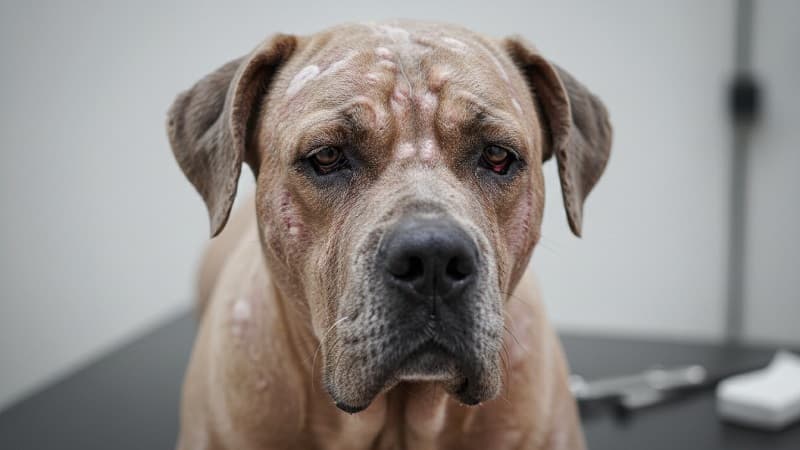
A common skin issue in Cane Corso dogs is demodectic mange, a skin disease caused by microscopic mites like Demodex canis or Demodex injai that live in the hair follicles. Normally, a dog’s body has a small number of mites which are harmless, but demodectic mange happens when they increase rapidly. Dogs may show localized areas of infection, or the entire body can be affected in generalized demodectic mange.
Common Symptoms:
Include Hair loss that usually begins on the face, Pustules, small skin bumps that contain pus or fluid, Itchy skin, Redness, welts, Crusty lesions, Secondary skin infections, and Thickening or darkening of the skin.
Diagnosis & Treatment:
To diagnose demodectic mange, a vet may take skin scrapings and examine them under a microscope. Localized mange can be treated with topical medication, while generalized mange often requires long-term oral medications or long-term topical medications.
In some cases, an injectable medication such as doramectin may be used, or a daily dose of Ivermectin (also used to prevent heartworms) until the infection clears up. Secondary skin infections may need treatment with antibiotics and shampoo therapy. From experience, consistent care and monitoring can prevent complications and support faster healing.
Epilepsy:
Idiopathic epilepsy is a neurological condition in Cane Corsi that causes recurring seizures due to aberrant electrical activity in the brain. It is fairly common and often has a hereditary component, though the exact cause is unknown. The age of onset can range from one year old to six years old.
Many dogs experience an aura stage before a seizure, appearing anxious, fearful, or confused. Cane Corso seizures usually last 30-90 seconds and can involve stiffening of the neck, body, and legs, falling over to the side, leg paddling, trembling, shaking, convulsing, excessive drooling, chewing motion, loss of bladder control, loss of bowel control, and vocalizing.
Diagnosis & Management:
To diagnose epilepsy, it’s important to eliminate other potential causes. A comprehensive physical examination, blood tests, urine tests, x-rays, and an assessment of the dog’s medical history form the main diagnostics. Additional tests like CT imaging, MRI imaging, bile acid testing, and cerebrospinal fluid (CSF) testing may be necessary.
Many dogs do well with a daily antiseizure medication or anticonvulsant medication combined with regular re-examinations. Some dogs may need multiple medications to reduce seizure frequency, though they can still have fits intermittently. In my experience, therapies like acupuncture can also help reduce frequency and improve quality of life when combined with proper medical care.
Hypothyroidism:

Cane Corsos can develop hypothyroidism, a chronic condition where the body cannot produce enough thyroid hormones, which slows down metabolism. This common endocrine disorder usually affects dogs in middle age, around 6 years old to 7 years old, and can lead to significant health complications if left untreated.
According to OFA 2023 testing statistics, over 7% of Corsi tested showed thyroid problems.Dogs with hypothyroidism often show unexplained weight gain, lethargy, decreased activity level, abnormal hair loss without itching, dry, dull, brittle coat, skin darkening, recurrent infections in ears and skin, intolerance to cold, and slow heart rate.
Veterinarians use blood tests to measure thyroid hormone levels and diagnose hypothyroidism, sometimes also assessing organ function based on symptoms. While the disorder cannot be cured, it can be efficiently controlled with oral thyroid replacement hormone for the rest of their lives, with yearly testing to ensure the medication is still working.
Multiple Eye Disorders:
All purebreds are genetically predisposed to ocular disorders, and the American College of Veterinary Ophthalmologists (ACV) reported that about 23% of Corsi had at least one eye abnormality. Most Cane Corso eye problems involve the eyelid rather than the eye itself, and they can affect both eyes either simultaneously or sometimes occur together.
Common issues include cataracts, where the lens hardens, loses clarity, and as the cataract progresses, the eye becomes increasingly cloudy, obstructing light to the back of the eye and causing vision loss.Surgical intervention is often necessary for treatment.
Other conditions include cherry eye, when the gland of the third eyelid that helps produce tears protrudes from its normal position, forming a red mass or pink mass in the corner of the eye.Entropion causes the eyelids to roll inward, so lashes rub the eyeball, leading to squinting, holding the eye shut, and excessive tearing, often needing surgical correction.
Ectropion, where the eyelids roll outward, usually the lower lids, creates droopy-looking eyes; mild cases may respond to medicated eye drops, while severe cases require surgery. Symptoms of many of these eye problems include eye sensitivity, squinty eyes, repeated blinking, bloodshot eyes, cloudy eyes, and yellow or green discharge, which should always prompt a veterinary evaluation.
Bone Cancer:
In my years working alongside vets, the diagnosis and treatment of Osteosarcoma (a severe bone cancer) always feels urgent because this aggressive disease can metastasize to the lungs quickly. Veterinarians need to detect the disease early to improve the prognosis. However, many dogs receive a diagnosis only after the disease spreads.
Proper diagnostics include X-rays, CT imaging, blood tests, urine tests, and a confirmed biopsy. The main treatment is often amputation of the affected limb, followed by chemotherapy to prolong life and enhance overall quality of life. In select cases, I’ve seen stereotactic radiation help control pain in other areas of the body, especially when surgery is not possible.
Symptoms:
From hands-on experience, the Symptoms usually begin subtly in larger dog breeds as this painful condition develops in the front leg, back leg, or even the jaw, facial bones, vertebrae, or ribs.
Owners often notice firm swelling that is painful to touch and hot, along with limping or clear lameness. As pain worsens, dogs may show lethargy, weakness, loss of appetite, a palpable mass, visible shaking or trembling, and persistent pain that doesn’t resolve with rest.
5 Essential Secrets to Prevent Cane Corso Health Issues

Smart Choices for a Healthy Start:
From my experience, starting with adopting can be deeply rewarding, even when a dog’s medical history is unknown. Giving an unwanted dog a chance means helping improve animal welfare and offering the life they deserve, whether it becomes a rescue dog or a planned adoption choice.
I’ve seen how early pet healthcare, timely vaccinations, and ongoing preventative care support long-term canine health, especially when guided by professional advice. When owners need to speak with a vet but can’t get to one, tools like PangoVet, an online service that lets you talk to a vet online, make a real difference by providing advice at an affordable price for any dog through online
vet consultation and digital veterinary service access. When choosing a puppy, finding a responsible breeder is crucial because strong foundations come from health checks, ethical practices, and regular preventative health care based on a vet’s advice.
Choose breeders who fully vaccinate parents and closely monitor their puppies. Veterinarians should check hips, elbows, and heart health through proper screenings.
Paying attention to common health concerns within the breed, ensuring breeder responsibility, and prioritizing ongoing health checks across all animals is how I’ve consistently seen better outcomes and lasting trust built between owners and their dogs.
Vet Visits That Make a Difference:
Regular trips to a local veterinarian are a smart habit I always tell owners to follow, especially when raising strong dogs like the Cane Corso. This simple tip, which applies to all dogs including large guardian breeds, is one of the best methods for spotting small issues early. In my experience, these visits play a big role in ensuring your dog stays healthy without surprises.
With Cane Corsos, consistency matters even more. I’ve seen how routine checkups help a dog stay healthy for many years, building trust between the vet and the dog over time. Whether you care for one Cane Corso or multiple Cane Corsos, this steady approach supports long-term health and gives owners confidence that they’re doing the right thing for their dogs.
Building a Powerful Cane Corso Starts With the Right Nutrition:
Feeding plays a major role in long-term dog health. Owners should start by choosing the right kibble. A well-balanced diet works best for large breeds like the Cane Corso. Proper food supports strong joints and muscles. It also helps maintain steady energy levels..
A balanced meal plan improves posture, coat condition, and digestion within weeks. Quality food always matters more than popular trends. For this reason, owners should follow official AAFCO guidelines when choosing meals.
These standards help ensure the diet truly fits the needs of a powerful working breed, not just marketing claims. When nutrition is handled with care and experience, feeding time becomes a simple, confident routine built on trust and knowledge.
Balanced Feeding for a Strong Dog:
With Cane Corso Health Issues, smart feeding matters more than people think. I’ve seen many owners give too many treats out of love, but that habit can quickly lead to obesity and an obese dog. Good nutrition starts with a clear diet plan that supports long-term health, not just short-term happiness.
From hands-on experience, keeping meals simple and consistent helps avoid weight problems before they begin.Most Vets strongly recommend following the 90/10 rule, and it works well in real life. That means 90% regular dog food every day and only 10% snacks.
This kind of portion control supports a healthy weight, reduces the risk of obesity, and keeps your dog active and strong. I’ve used this approach for years, and it makes feeding routines easier while protecting your Cane Corso’s overall health.
Fueling Strength Through Daily Activity for Your Cane Corso:
Cane Corsos need daily exercise to stay healthy. Owners should aim for at least one hour each day. Energy control matters as much as proper nutrition. Regular movement helps them use their high energy wisely
Large working dogs stay healthiest with daily physical activity. Owners should include running, fetch games, and Frisbee play. Agility training also builds strength and focus. Hiking and long walks help release extra energy. Try to fit these activities into a two-hour routine when time allows.
Some days focus more on structured exercises, other days on relaxed play, but variety keeps Corsos engaged and balanced. Just as vital, I’ve learned that feeding a healthy diet and limiting snack intake works only when paired with providing regular activity.
Build your dog’s routine with care because their strength and drive require daily physical and mental activity. Of all the dogs I’ve worked with, this breed responds fast. When exercise supports nutrition, making daily planning not just suggested, but a minimum standard.
FAQs?
Cane Corsos commonly face hip and elbow dysplasia, bloat, heart conditions, eye problems, and skin allergies. These issues often relate to genetics, fast growth, or improper diet and exercise during early life stages.
Regular vet check-ups help detect health problems early before they become serious. Routine exams monitor weight, joints, heart, and overall wellness, ensuring timely treatment. And helping your Cane Corso live a longer, healthier life.
You should be concerned if your Cane Corso shows sudden behavior changes. Loss of appetite, limping, breathing trouble, vomiting, or unusual tiredness. Early attention to these signs can prevent minor problems from becoming major health issues.
Licensed veterinarians, reputable dog health websites, breed clubs, and scientific pet care articles provide reliable information. Always cross-check sources. And avoid unverified advice from random forums or social media posts.
Prevent health issues by providing a balanced diet, controlled exercise, regular vet visits, proper training, and mental stimulation. Choosing a responsible breeder. And maintaining a healthy weight also greatly reduces the risk of long-term health problems.
Final Thought:
From my experience raising and advising owners, the important thing you must focus on first. How to prevent long-term Cane Corso Health Issues by giving your Cane Corso a healthy diet. Plenty of exercise at the appropriate time, and regularly taking them to the vet to pick up problems early.
However, many conditions we’ve discussed are hereditary with a genetic basis. You may not be able to do much to stop them, except to ensure. Your pooch receives adequate treatment once issues have arisen from their bloodline.
When getting a puppy, I always tell people to seek a reputable, caring breeder. Because a reputable breeder has their animals regularly tested for common breed health issues. And helps keep strong preventative veterinary care to lower the possibility.
Your pup will suffer from the seven issues we’ve seen today. If you’re adopting or adopted recently. of I wish you the very best luck raising your new puppy into a wonderful adult dog and a fantastic, affectionate, playful.
