


- Introduction:
- Physical Features of the Cane Corso Dogs : An Explanation of Power:
- Cane Corso Size and Construction Discussed:
- Cane Corso Type and Color: The Standard Variations
- Cane Corso Head and Eye Form: Conveying Acumen and Watchfulness
- Male vs. Female Cane Corso Dogs Differences:
- How to Identify a Healthy Cane Corso:
- Cane Corso Dogs Genetic Traits: Predispositions and Heritage
- Cane Corso Personality by Age: Developmental Stages
- Myths vs. Reality in Cane Corso Colors:
- FAQs:
- Conclusion:
Introduction:
The Cane Corso Dogs (Cane Corso Dogs Italian), a stunning and Old Italian breed of dog, commands instruction with its powerful physical stature and muscularly loyal personality. Used historically as estate guardians, war dogs, and large game hunters, this molossoid dog has a history filled.
With working utility and correct companionship Mindfulness of the unique nature of the Cane Corso Dogs is the top priority for any possible owner, guaranteeing they will be able to offer the special training and setting required by this strong, intelligent, and upkeep dog.
Physical Features of the Cane Corso Dogs : An Explanation of Power:
The general bodily conformation of the Cane Corso Dogs is one of healthy power and muscular beauty. Overall, the Cane Corso has a large yet balanced frame that blends power with athletic movement.
This breed shows a wide chest, powerful neck, and solid back.
You will notice a broad chest, thick neck, and sturdy back on a Cane Corso. The topline is level, giving an air of decorous strength. The breed’s coat is another defining Cane Corso Dog. It is short, dense, and lustrous, providing good protection in various climates.
Overall, the Cane Corso has a short coat that sits close to the body and feels slightly firm to the touch. Although it does not shed heavily all year, a seasonal shed often appears in spring. During this time, weekly brushing helps remove loose hair and keeps the coat shiny and healthy.
Read About Cane Corso Pitbull Mix
Cane Corso Size and Construction Discussed:
The dimensions and construction of the Cane Corso Dogs are integral aspects of its unique character. A large dog, classified under the Working Group, it requires a specific degree of physical force. You will often see males with bigger frames than female Cane Corsos. Female Cane Corsos stay lighter and smaller compared to males.
Height at Withers:
Male Cane Corso Dogs: Usually measure 24 to 28 inches (60–70 cm).
Female Cane Corso Dogs : Typically measures between 23 to 26 inches (58–66 cm).
Male Cane Corso Dogs : Typically weighs between 99 to 110 pounds (45–50 kg), although some may be heavier.
Female Cane Corso Dogs: Typically weigh between 88 to 99 pounds (40–45 kg).
The Cane Corso Dogs structure is sturdy and muscular, being built for hard work and explosive output of energy. Its gait must be a free, extended trot, with a flexible and strong movement. The large bone structure.
In the dog accommodates its strong musculature and presents it with a forceful impression. It is an authentic glum, a dog whose mass and strength are used effectively for protection and utility.
Read More Cane Corso Health and Care
Cane Corso Type and Color: The Standard Variations
The Cane Corso Dogs is classified as a molossoid or mastiff-type dog, a category encompassing large, strongly built dogs often used for guarding and protection. The breed’s type is sternly defined by international kennel clubs, emphasizing its functional, athletic build over mere bulk. The standard allows for a change of solid color and brindles to preserve the Cane Corso’s traditional, menacing look.
The colors of the coat are usually dark and rich:
Black: A dense, solid black is the most prevalent and traditional color.
Grey: Different shades that can include lead-grey, light grey, or slate-grey.
Fawn: Light fawn to stag red (a reddish-fawn that is dark).
Brindle: A stripe pattern over a base color, such as Black Brindle, Gray Brindle, and Chestnut Brindle (or Red Brindle).Small white markings are usually acceptable on the chest, toes, and on.
The nose bridge, but must be minimal. The nose color must harmonize with the coat; usually black in black and brindle dogs, and a corresponding gray in gray-coated Cane Corso Dogs .
Cane Corso Head and Eye Form: Conveying Acumen and Watchfulness
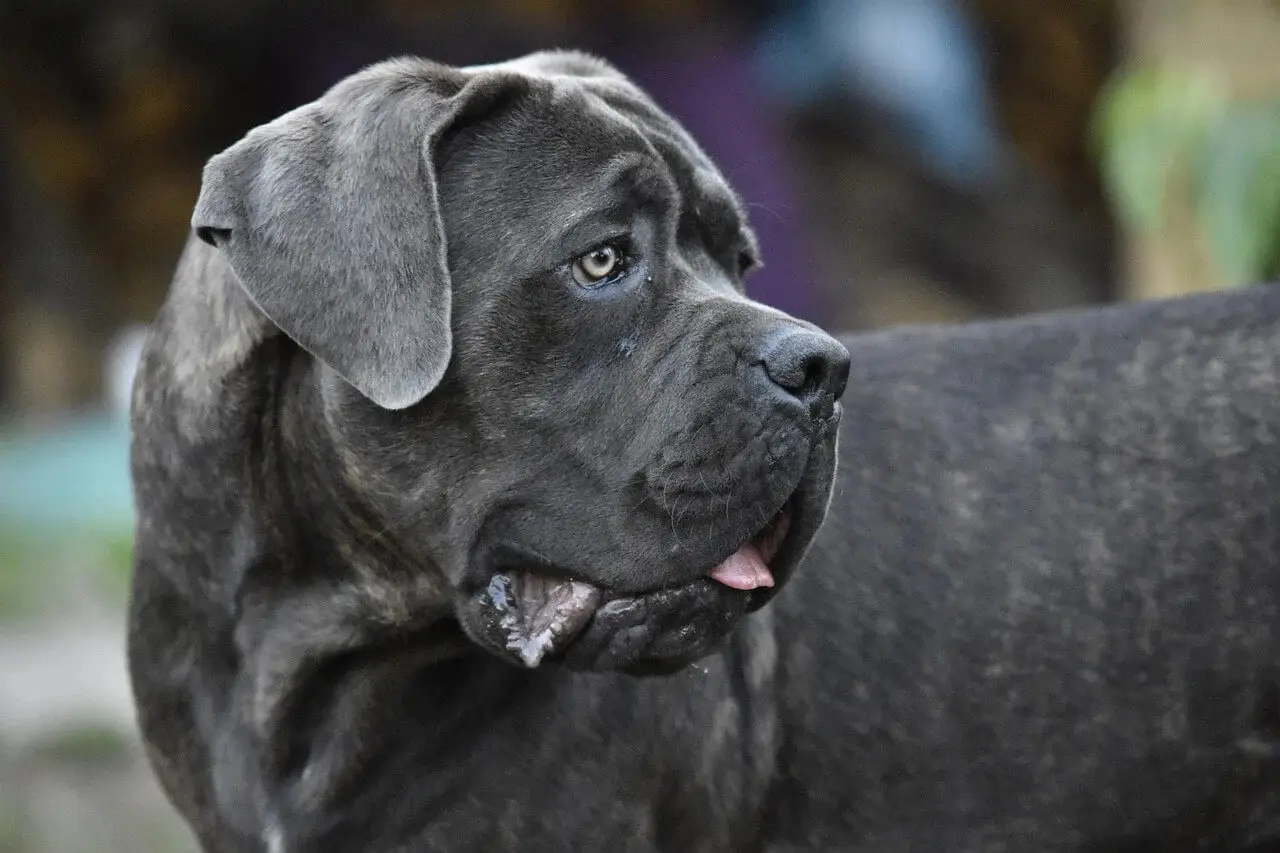
The Cane Corso Dog’s head is perhaps its most dramatic feature and essential component in breed determination. In general, its head appears broad and powerful, creating a sharp and watchful expression. Because of its build, the Cane Corso carries a bold and attentive facial structure.
Head: The skull is broad, with a well-defined stop (the hollow between the eyes). The muzzle is broad and deep, which provides the dog with its signature square outline. The jaws are strong, made for a firm, forceful grasp.
Eyes: The eyes are long in shape and set far apart, lending the Cane Corso Dogs a serious and intensely watchful look. In these color types, deep eye shades are preferred. For black and brindle coats, darker irises are more desirable. Lighter tones are permissible in gray- or fawn-coated Cane Corso.
As these are inclined to have lighter eyes. Genetic traits make this breed more likely to develop inward or outward rolling eyelids. As part of their makeup, Cane Corsos may experience eyelid conditions that affect eye comfort.
Read About Miniature Siberian Husky
Male vs. Female Cane Corso Dogs Differences:
Though sharing the underlying breed traits, the male and female Cane Corso display differences that affect their presence and, to a lesser degree, their personality.
These are general tendencies, and individual behavioral traits are highly dependent on socialization, training, and bloodlines. Both the male and femaleCane Corso Dogs need consistent, strong, and equitable leadership.

How to Identify a Healthy Cane Corso:
A healthy Cane Corso Dogs is a peak of good genes, nutritious feeding, and keen attention. Recognition of signs of sound health is critical: Shiny Coat and Skin: The coat must be shiny, thick, and hang flat. The skin must be smooth, dandruff-free, with no redness or lesions.
Which may point to diseases such as demodectic mange. Clear Eyes and Ears: Eyes must be bright, clear, and free of discharge or abnormal redness. The eyelids must lie properly against the eyeball (no evidence of entropies or ectropion). Ears, natural or cropped, must be clean.
Odor-free and free from abnormal wax, avoiding common problems such as my colic otitis. Gait and Sound Structure: A sound Cane Corso Dogs will have a strong, smooth, and deliberate gait without lameness or stiffness. Hip and elbow dysplasia, which is typical of larger breeds, should be tested for by conscientious breeders.
Healthy Musculature and Weight: The dog should have good musculature and be held at a healthy weight; the ribs should be easily felt, but not visible. Obese dogs are much more likely to develop joint issues.
Behavioral Signs: A healthy dog will usually be alert, interested, and exhibit a calm, consistent temperament. Lethargy or constant worrying can be indicators of health issues or a lack of mental stimulation.
Cane Corso Dogs Genetic Traits: Predispositions and Heritage
The Cane Corso’s genetic ancestry is based on the ancient Roman Canes Pagani, which was a war dog and was bred with regional Italian mastiff strains. It is due to this ancestral lineage that it has a strong body, dense bone structure, and natural guarding behavior.
But as with all large and giant breeds, the Cane Corso Dogs also has predispositions to certain health problems that responsible breeders actively test for. Genetic traits and health considerations include:
Musculoskeletal Problems: Genetic predispositions play a role in the occurrence of Hip Dysplasia and Elbow Dysplasia, which are conditions in which the joints fail to develop properly.
Problems: The distinctive head shape helps contribute to a genetic predisposition to eyelid irregularities including Entropion, Ectropion, and Nictitans Gland Prolapse (Cherry Eye).
Neurological Disorders: Idiopathic Epilepsy, a seizure condition without a known etiology, may occur in the Cane Corso genetically, typically at approximately three years of age.
Temperament Genetics: The Cane Corso Dogs aggressive loyalty and watchdog spirit are dominant genetic qualities. The inborn protective drive needs to be socialized early and constantly to make sure the dog learns to differentiate between an actual threat and a harmless passerby to avoid unjustified hostility.
Cane Corso Personality by Age: Developmental Stages
The Cane Corso Dogs personality development is a deep process, moving from playful puppy to committed guardian. To understand these phases is central to successful training and building a solid relationship.The Cane Corso is a very intelligent dog that responds well to structure and function.
If they do not receive regular training and mental challenges from an experienced owner, their natural confidence and assertive nature will transform into negative behaviors. The Cane Corso Dogs needs an owner who is a calm, confident, and consistent lead.
Myths vs. Reality in Cane Corso Colors:
The multiple coat colors of the Cane Corso Dogs are a common topic of speculation and myth, in many instances connected to temperament orhealth inaccurately. Before bringing home a Cane Corso, separate facts from myths and never choose a dog based on coat color for health or temperament.
There exists a common, though unsubstantiated, belief that some color variations, such as Blue Cane Corso (commonly known simply as Gray or Slate), are weaker or have more health problems than black or brindle animals. This myth arises because the recessive gene for diluting the black pigment.
Connected to a disorder known as Color Dilution Alopecia (CDA), which results in loss of hair and skin inflammation. The occurrence of the gray color itself does not condemn the Cane Corso to poor health.
FAQs:
The Cane Corso is a powerful Italian mastiff breed known for its guarding and hunting abilities. Historically, it served as a protector of farms and livestock. Its legacy symbolizes loyalty, strength, and ancient Roman heritage.
The Cane Corso dates back to ancient Rome, where it descended from Roman war dogs. These dogs were used in battles and later for guarding estates and herding livestock. Their presence has been recorded for over two thousand years.
Cane Corso holds cultural importance as a symbol of Italian courage and tradition. It represents the strong bond between humans and working dogs. Its enduring role in rural life showcases Italy’s deep connection to animal guardianship.
Italian breeders and rural farmers played vital roles in preserving the Cane Corso. In the 1970s, enthusiasts like Dr. Paolo Breber helped revive the breed from near extinction. Their dedication ensured the Cane Corso’s global recognition and survival.
The Cane Corso originated in southern Italy, particularly in the regions of Puglia and Campania. Bred by Italian farmers, it was valued for its strength, intelligence, and versatility. This regional heritage shaped its loyal and protective temperament.
Conclusion:
Many people mistakenly believe certain things about Fawn, Cane Corsos. For example, the term “formentino” refers to a light straw-colored coat paired with a blue-gray facial mask.. Some mistakenly feel the lighter shades are less traditional or functional as watch-guarding canes.
In fact, all colors occurred in working lines historically. A Cane Corso’s protective drive intensity and guarding capabilities are entirely a function of temperament genetics, appropriate training, and socialization, and have nothing to do with coat color. The stunning Cane Corso is a breed whose exceptional.
Features and unshakeable devotion to family are far beyond considerations of pigmentation. The Cane Corso Dogs is a remarkable canin a formidable athlete, a watchful protector, and a devoted family member. Its unique physical characteristics, from the enormous head and dense bone structure to its muscular and athletic build, are all marks of its ancient origins.
Because of its protective and confident nature, this breed needs an experienced owner. The reward is a loyal and noble canine companion. Having a Cane Corso Dogs is a commitment to leadership, regular training, and maintaining the good health and well-being of this powerful and loving dog
