


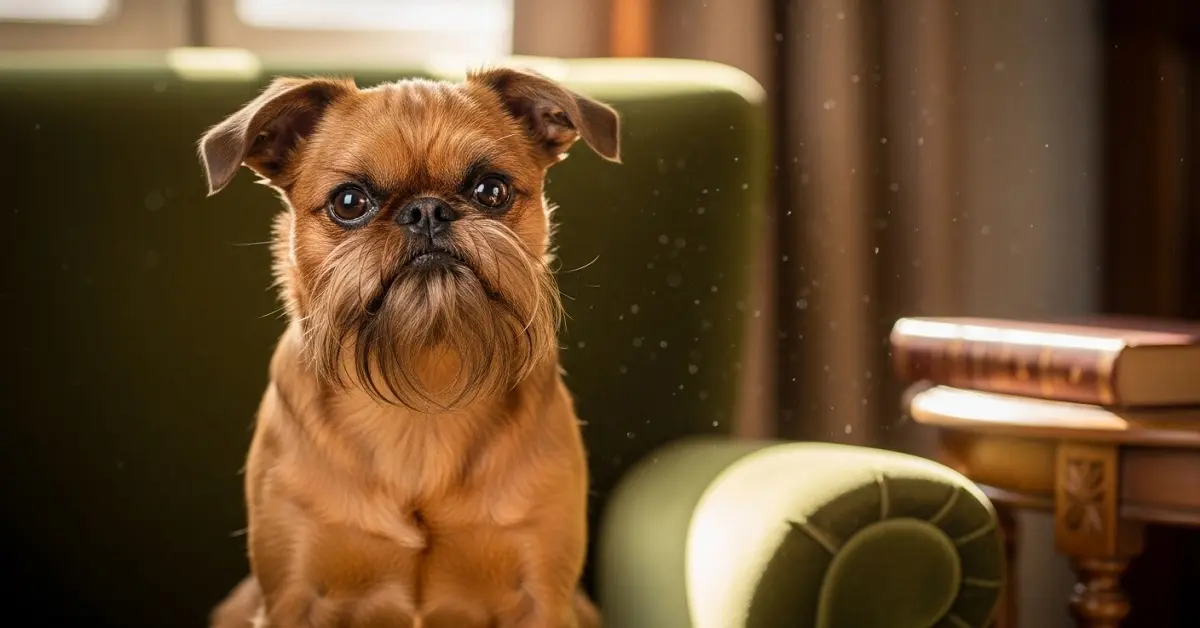
Parent breed clubs define the ideal dog standard for each recognized breed, including the Brussels Griffon Dog. Judges evaluate these standards at shows, and national and international bodies officially approve them.
The Brussels Griffon Dog is a small, intelligent, and affectionate toy breed originating from Belgium, famous for its human-like facial expressions, prominent eyes, and a confident personality blended with a comical charm.
In daily life, this Brussels griffon dog breed weighs 8–14 pounds or 6–14 pounds and stands 7–10 inches tall. They make active companions for apartment living and need moderate daily exercise and close companionship
These social dogs show a friendly temperament and make perfect apartment companions. Their near-human expressions, adorable looks, and larger-than-life personalities set them apart. Expressive, childlike faces, large wide-set eyes, stocky bodies, and a purposeful trot reflect their vermin-hunting heritage in Belgium and other unique physical traits.,
History & origins of the Brussels Griffon Dog:
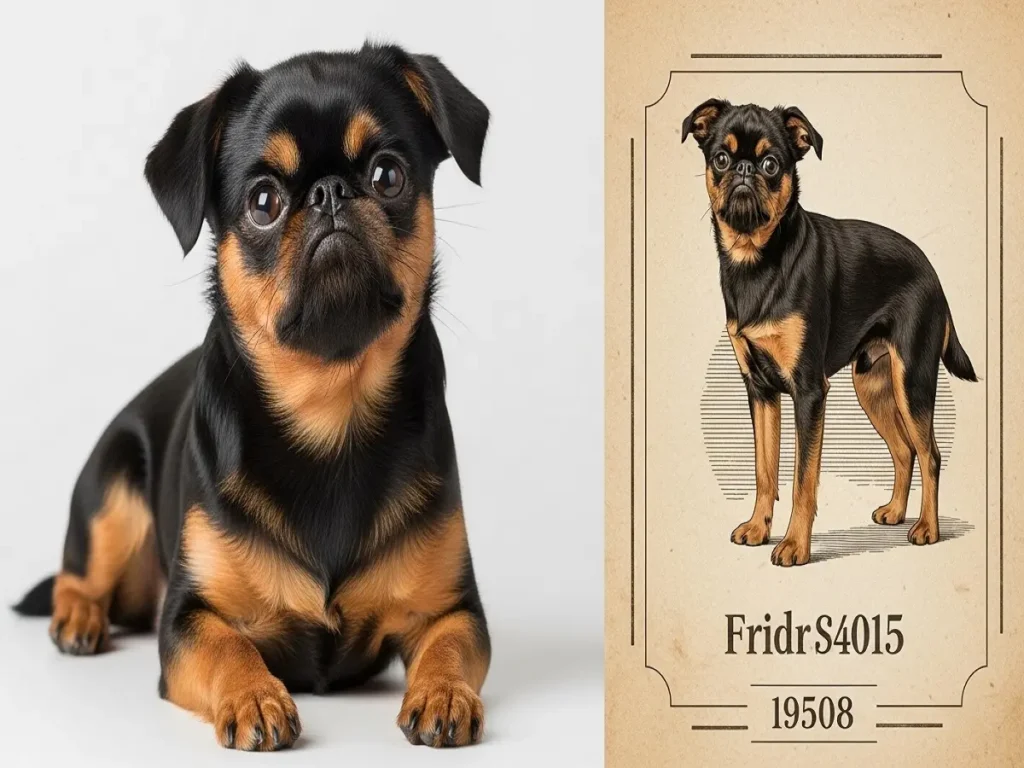
Art, Origins & Early Development:
Flemish art has long celebrated technical skill, precise everyday detail, and playful exaggeration. The Brussels Griffon fits this tradition perfectly and remains a favorite subject of painters, illustrators, and filmmakers.
Jan van Eyck first depicted a dog resembling the breed in The Arnolfini Portrait (1434). Europe did not officially recognize the breed until 1880. The dog in the painting likely descended from the Smuts, a rough-coated stable dog.
Artists also portrayed this ancestor in a life-sized bronze statue. It stood larger than the modern Griff at 15–18 pounds and had a pronounced muzzle.
Breeders carefully shaped this raw material in Brussels, Belgium, during the early 1800s. The dog evolved from a rat hunter into a refined companion of the wealthy. Coachmen kept small terrier-type dogs to control rats in stables. Hack drivers later crossed these Affenpinscher-like dogs, known as griffons d’ecurie or wire-coated stable dogs, to improve the breed.
Breed Creation, Recognition & Standards:
An Antiques Roadshow moment revealed how the BG, a not ancient breed with development known and actual dogs identified, was refined. Jeff Bazell, a longtime fancier and former president of the American Brussels Griffon Association (ABGA), the AKC parent club, discovered dog memorabilia in England from Lady Muriel Handley Spicer, among the most influential English breeders.
Her bronze lamps, first champions, paintings, sketches, books, and a steamer trunk of papers contained breeding records and handwritten copies from the Société Royale Saint-Hubert, the Belgian kennel club, documenting correspondence and outcross to the Pug—a diary of breed creation showing three crosses to Pugs and eight crosses to English Toy Spaniels, including specific dogs like black Pug Mep (1882).
DNA testing ended rumors of Yorkshire Terrier crosses from a farmer in Flanders whose early 1900s line became extinct in World War I. Popularity surged in the 1870s with Henrietta Maria, Queen of the Belgians and royal patronage; courtiers and kennel keepers refined the breed to a smaller body and human-like face, driving international interest in England and America.
By 1899, Griffs entered the AKC Stud Book, appeared at Westminster in the Miscellaneous Class, saw a first champion (1908), and were AKC recognized (1910). After the world wars population was decimated, U.S. enthusiasts and British enthusiasts led the restoration of this uncommon breed with a limited gene pool.
Post World War I, English Toy Spaniel crosses altered head shape, dome, heavier bone, and webbed feet (conjoined toes), later accepted by the AKC breed standard despite early 1900s prejudice, culliGriffonsng puppies, and depletion of breeding stock.
In the U.S., varieties include Brucellosis and Bra ancon; in Europe, Brucellosis, Bra ancon, and Bilge are distinct (rough-coated Brucellosis, smooth-coated Bra ancon, red rough, black and tan, Griffon Beige, Petit : Bra ancon), with interbreeding allowed by written request.
U.S. breeding practices evolved through the 1959 standard, the black Brabançon dispute detailed by Dawn Vick Hansen, imports around 1900, the Brussels Griffon Club of America (BGCA) recognized 1913, translations of allowable colors, the protest 1937.
The AKC trial board in New York, a scrapbook, overturned protest, fined $25, club dropped, formation of the American Brussels Griffon Association (1945), AKC member 1982, a unified breed standard, disqualification removed 1990, and return to show ring.
Today, the Toy Group Griff weighs six to twelve pounds, descends from ratters of the mid 1800s, reflects Pug cross, English Toy Spaniel (King Charles, Ruby), varied coat types and colors, occasional web footed, kink-tailed, or tailless pups, and an unmistakable human expression of an alert, active companion.
Appearance & variants (smooth vs rough coat) of the Brussels Griffon Dog:

The Smooth Coat, known as Petit Brabançon, features short, straight, tight, glossy hair lying close to the body, needing weekly brushing and tending to shed moderately. In Appearance, this dog looks robust, square-bodied, weighing 8–12 pounds, with large, intelligent eyes, a short nose, and a black muzzle.
Colours include four colours: red, beige, black, and reddish-brown mix, Black and Tan, plus solid Black. Smooth coat textures may appear sleek, tight, glossy, or fluffy, but should never stand away, unlike a Boston Terrier.
There is no undercoat, no ruff, and no pants, which is clearly outlined in the Illustrated Standard shared by the American Brussels Griffon Association during breed seminars and judges’ seminars, where hands-on examination is emphasized.
The Rough Coat or Griffon Bruxellois shows wiry, hard, dense, longer hair on the face with a characteristic beard and eyebrows, requiring brushing twice weekly, hand-stripping, never heavy clipping, every 4–8 weeks.
Interbreeding allows both coat types in the same litter, giving the Brussels Griffon two coats—rough and smooth—with a wide range of variation in texture and quality, from an extremely hard coat to a fluffy, softer coat on a spectrum seen in the ring by a judge.
A plush beard, proper furnishings, and a proper coat matter; per the Standard, harder and more wiry is better. A skilled owner, handler, or groomer avoids hirsutism, which is penalized, as is being out of condition or ungroomable, ruining a typical silhouette.
Genetic confusion may cause a few short beard hairs or sparse furnishings. Correct hand-stripping creates a neat jacket, deep, rich color, and acceptable colors like black, red, beige, or black and tan. An incorrect coat includes a soft coat or a Wheaton-like coat.
Stripping the outer coat reveals the silvery-white undercoat or grayish fluff. a ladder analogy applies: topcoat harder, undercoat less prolific, color improves. Exhibitors in the special group ring avoid enhancers, guided by breeder-judges focused on the correct rough coat
Brussels Griffon Dog Personality and Temperament:
The Brussels Griffon personality and temperament show big personalities in small packages, often seen in a scruffy dog standing on grass in a photo by Okssi68, iStock, Getty, Images, Plus, via credit lines.
This breed is known for childlike expressions and sharp intelligence that keep owners entertained. From experience, they are best suited to pet parents who prioritize companionship and are prepared to spend a lot of time together.
Often considered Velcro dogs, they don’t like being left alone for extended periods, and they flourish in settings where they are a central part of the family. With a medium energy level, they do fine with up to 30 minutes of moderate activity or neighbourhood walks per day, happy to get up or take a lounging role beside a loving parent.
Brussels Griffon Dog Behavior:
In daily behavior, the Brussels Griffon will typically do well in families with children, other dogs, or cats, though they can be sensitive, so supervision is recommended. Similarly, they may feel nervous around strangers or in new situations.
But early and consistent socialization can help them feel more confident and comfortable. In general, they are fun-loving, happy companions, but expect them to bark when someone knocks at the door.
Risks and prevention of the Brussels Griffon Dog:
Eye Injuries & Disease:
eye, injuries, and disease are common because of large, protruding eyes, which are endearing features but also vulnerable. Risks include being prone to corneal ulcers, scratches, cataracts, and progressive retinal atrophy (PRA), a genetic condition that leads to blindness.
Prevention means regularly checking for redness or discharge, keeping facial hair trimmed to prevent poking, and never letting them ride with their head out a car window, as debris can cause serious injury. From experience, simple daily checks save long-term trouble.
Respiratory, Joint, Dental & Emotional Risks:
Because they are a brachycephalic short-nosed breed with compressed airways, breathing is less efficient, making them susceptible to overheating, heat stroke, and brachycephalic airway syndrome, which causes snorting, snoring, and labored airflow.
Prevention includes avoiding strenuous exercise in hot or humid weather, keeping climate-controlled environments, ensuring access to shade and fresh water, and using a harness instead of a collar to avoid putting pressure on the delicate trachea.
Orthopaedic joint issues affect small, sturdy frames, with skeletal misalignments like patellar luxation, dislocated kneecap, hip dysplasia, and Legg-Calve-Perthes disease in young dogs; maintain healthy weight, reduce stress, use ramps, and prevent jumping to limit injuries.
Dental mouth health suffers due to a shorter jaw and crowded teeth, leading to rapid plaque buildup, early-onset periodontal disease, tooth loss, and systemic infections affecting the heart and kidneys.
Daily tooth brushing with dog-specific toothpaste plus regular professional cleanings by a veterinarian manage tartar that brushing misses. Finally, emotional social vulnerabilities come from a velcro nature that depends heavily on human companionship.
Separation anxiety can lead to destructive behaviors, excessive barking, or being snappy with small children if handled roughly. Gradual alone-time training from puppyhood, plus early socialization with different people and dogs, is critical to prevent shyness and fear-based aggression.
Training Guide of the Brussels Griffon Dog:
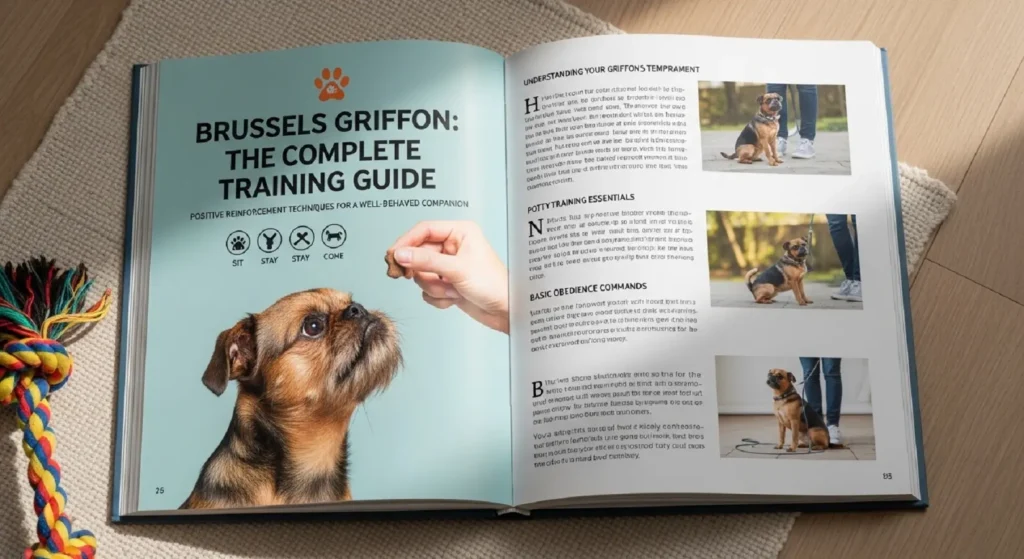
Positive Reinforcement First:
Training a Brussels Griffon requires patience and positive reinforcement because this smart, affectionate dog has a sensitive nature. A kind, consistent, reward-based approach works best when handled gently, helping them become enthusiastic learners and delightful companions.
This breed learns best through encouragement and praise; avoid harsh corrections or loud voices that may cause them to shut down or become anxious. Always reward good behaviour using dog treats, toys, and plenty of attention. Use small, tasty rewards to keep sessions short, as they are food-motivated, quick to learn, and work best when in the right mood, staying patient and calm if they seem easily distracted or hesitant.
Building Confidence and Manners:
Early socialisation is vital; without it, dogs may grow shy or reactive toward new people and unfamiliar situations. Gradual exposure to different environments, friendly strangers, and other pets will help create a confident, adaptable companion.
House training can be a challenge for small breeds, and Brussels Griffons are no exception maintain a regular feeding and toilet schedule, reward success immediately, and consider crate use to build routine, with extra patience during rainy or cold weather. Obedience and mental stimulation matter: basic commands like sit, stay, and come are essential.
Health risks and prevention by age of the Brussels griffons Dog :
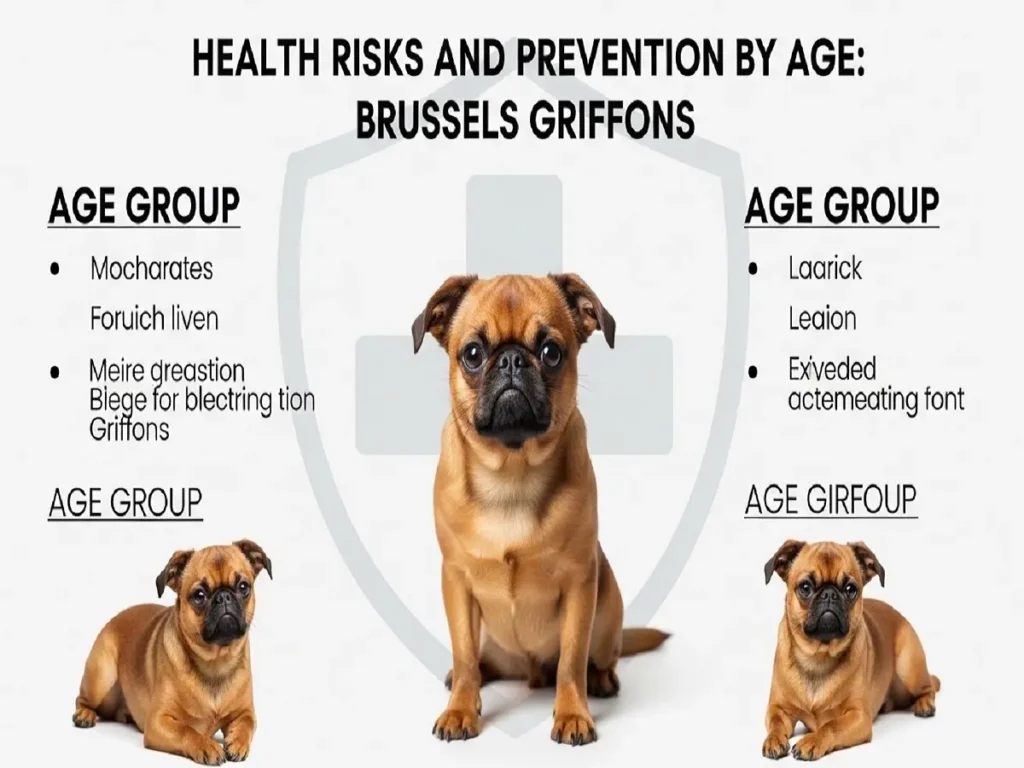
Adult (1–7 Years): Managing Daily Health
During adult 1–7 years, health risks become more lifestyle-related. Brachycephalic syndrome (BOAS) can cause difficulty breathing, snoring, and heat sensitivity. Dental disease often appears from tartar buildup and periodontal problems due to crowded teeth.
Allergies (atopy) may trigger itchy skin, especially on the belly, feet, and face, while eye injuries like corneal ulcers and scratches happen because of prominent eyes. Prevention focuses on weight management, strict portion control, and avoiding obesity, which worsens joint and breathing issues. Daily teeth brushing at least three times per week helps prevent premature tooth loss.
Environmental care means avoiding high humidity and heatstroke, using eye protection, stopping riding with heads out car windows, keeping grooming weekly with brushing and cleaning face folds and wrinkles to prevent infections, and considering spaying or neutering, recommended to prevent pyometra in females and other cancers.
Puppyhood (0–12 Months) & Senior (7+ Years): Early and Late Care
In puppyhood, 0–12 months, health risks include hypoglycemia from low blood sugar, common in toy breeds, plus Legg-Calve-Perthes disease, a painful degenerative hip joint issue typically appearing between 6–9 months.
Infections from parvo, distemper, and rabies, and patellar luxation, where the kneecap slips out of place, are concerns. Prevention means limited exercise, avoiding over-exercising or rough play, protecting delicate, developing joints, frequent feeding with small meals, strict vaccination vet checks, and early socialization to manage a sensitive nature.
As a senior (7+ years), health risks shift to mitral valve disease, causing heart degeneration and failure, cataracts with clouding of the eye lens and vision loss, arthritis secondary to hip dysplasia or patellar luxation, and epilepsy or seizures that may develop later or continue from earlier, requiring monitoring.
Prevention includes annual screenings, regular in-depth vet check-ups to catch murmurs and changes early, joint supplements like omega-3 fatty acids to support mobility, and strong oral hygiene with professional dental cleanings.
Nutrition and diet chart of the Brussels Griffon Dog:
Brussels Griffon Nutrition Needs Explained:
BrusselsGriffons are small, activetoybreeds that need high-quality, nutrient-densefood to keep energylevels steady without becoming overweight. Because of their smallsize and brachycephalic (short-nosed) nature, smart feeding helps manage weight and prevent hypoglycemia.
Protein and fat matter most: high-qualityanimalprotein like chicken, beef, lamb, or fish supports muscle health, while omega-3 and omega-6fats improve skin and coat. I’ve found smallkibblesize from toy or small breed formulas easier for small mouths, and it’s wise to avoidfillers due to digestive sensitivities.
Calories should be watched closely, since even one extra pound can harm health. A raw or fresh option about 80%meat, 10%organ, 10%bone, fed at 2–3% of idealbodyweight—can work when balanced carefully
| Life Stage | Frequency | Food Amount | Notes |
| Puppy (up to 9 mo) | 3-5 meals/day | 1/4 cup per meal | High frequency to prevent hypoglycemia. |
| Adult (1-10 years) | 2-3 meals/day | 1/2 cup total/day | Divide into 2-3 servings to prevent overeating. |
| Senior (10+ years) | 2 meals/day | Reduced calories | Adjusted for lower activity level. |
Practical Feeding Tips for Daily Health:
For weight control, keep your Griffon slim: you should feel, not see, the ribs, and the waist should show. Treats should stay under 10% of daily calorie intake to prevent obesity. Considering common dental issues, dry kibble can help reduce tartar buildup, and omega-3 fatty acid supplements may support joint health.
Hydration is essential—always offer fresh water, especially since flat faces increase heatstroke risk. In general, dogs are facultative carnivores; meat is their biological staple. While they can survive on mixed foods, there’s a big difference between surviving and thriving.
Like humans living on fast food, dogs fed poor diets won’t feel their best. Though modern dogs look different from wolves, their digestive systems remain close, not built for excess carbohydrates or artificial additives
Cost & ownership budgeting of the Brussels Griffon Dog:
Ongoing Annual Ownership Budgeting:
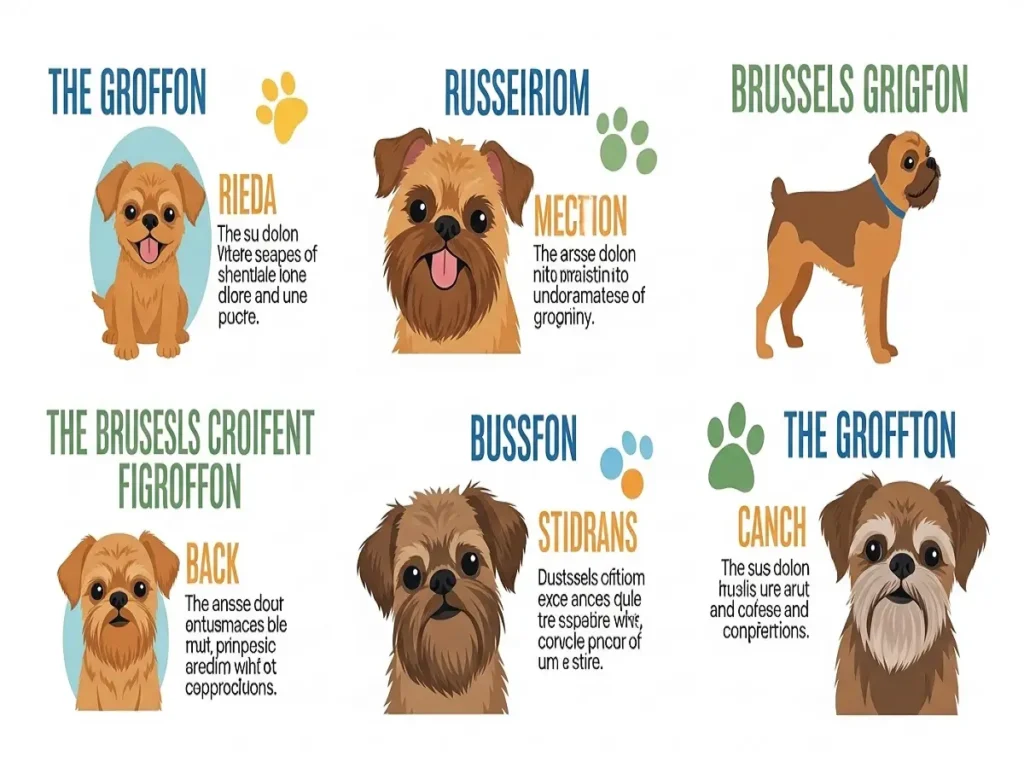
Ongoing annual ownership budgeting for a Brussels griffon focuses on food, high-quality dog nutrition suitable for age and activity level, plus grooming needs. Rough-coated Griffons need regular brushing and professional stripping or clipping every 6–8 weeks, while smooth coats only need weekly brushing.
Veterinary care includes routine checkups, vaccinations, and parasite prevention, estimated at $500–$1,000+ per year. Add training and socialization costs for this intelligent, stubborn breed, which I’ve found essential for long-term balance. Practical Feeding Tips for Daily Health
For weight control, keep your Griffon slim: you should feel, not see, the ribs, and the waist should show. Treats should stay under 10% of daily calorie intake to prevent obesity. Considering common dental issues, dry kibble can help reduce tartar buildup, and omega-3 fatty acid supplements may support joint health.
Hydration is essential—always offer fresh water, especially since flat faces increase heatstroke risk. In general, dogs are facultative carnivores; meat is their biological staple. While they can survive on mixed foods, there’s a big difference between surviving and thriving.
Like humans living on fast food, dogs fed poor diets won’t feel their best. Though modern dogs look different from wolves, their digestive systems remain close, not built for excess carbohydrates or artificial additives
Cost & ownership budgeting of the Brussels Griffon Dog:
Ongoing Annual Ownership Budgeting:
Ongoing annual ownership budgeting for a Brussels griffon focuses on food, high-quality dog nutrition suitable for age and activity level, plus grooming needs. Rough-coated Griffons need regular brushing and professional stripping or clipping every 6–8 weeks, while smooth coats only need weekly brushing.
Veterinary care includes routine checkups, vaccinations, and parasite prevention, estimated at $500–$1,000+ per year. Add training and socialization costs Practical Feeding Tips for Daily Health
For weight control, keep your Griffon slim: you should feel, not see, the ribs, and the waist should show. Treats should stay under 10% of daily calorie intake to prevent obesity. Considering common dental issues, dry kibble can help reduce tartar buildup, and omega-3 fatty acid supplements may support joint health.
Hydration is essential—always offer fresh water, especially since flat faces increase heatstroke risk. In general, dogs are facultative carnivores; meat is their biological staple. While they can survive on mixed foods, there’s a big difference between surviving and thriving.
Like humans living on fast food, dogs fed poor diets won’t feel their best. Though modern dogs look different from wolves, their digestive systems remain close, not built for excess carbohydrates or artificial additives
| Cost Category | Details | Estimated Cost (USD) |
| Food | High-quality dog nutrition suitable for age and activity level | $30–$60 per month |
| Grooming (Rough Coat) | Regular brushing + professional stripping or clipping every 6–8 weeks | $300–$800 per year |
| Grooming (Smooth Coat) | Weekly brushing, minimal professional grooming | Lower annual cost |
| Veterinary Care | Routine checkups, vaccinations, parasite prevention | $500–$1,000+ per year |
| Training & Socialisation | Group classes or private sessions for an intelligent, stubborn breed | $100–$200 (group) $50–$100 per private session |
| Pet Insurance | Helps manage emergency or long-term medical expenses | $25–$50 per month |
| Initial Purchase (Breeder) | Reputable breeder puppy with health checks | $2,500–$4,000+ |
| Adoption (Rescue) | Often includes spaying/neutering and microchipping | $200–$600 |
| First-Day Supplies | Crate, bed, leash, collar, ID tag, toys, supplies | Varies (adds up quickly) |
| Hidden / Unexpected Costs | Dental care, emergency vet visits, boarding, travel, and damaged items | Occasional but significant |
| Lifetime Cost Estimate | Based on a 12–15 year lifespan | High long-term responsibility |
Initial Costs & Long-Term Financial Reality:
Initial costs begin with the purchase or adoption. Buying a puppy from a reputable breeder usually carries a high price, generally $2,500–$4,000, sometimes over $6,000, depending on pedigree, breeder reputation, and location.
This often includes vaccines, a microchip, a health check by a vet, and a health guarantee; very cheap options may signal poor breeding or puppy mills, leading to medical problems later. Adopting from rescue groups is a cheaper option, with fees around $200–$600, often including spaying, neutering, and microchipping, though older dogs may need medical care later.
Expect extra first-day costs like a crate, bed, leash, collar, ID tag, toys, and supplies, which add up fast. Over a lifespan of 12–15 years, long-term costs include food ($30–$60 per month), routine vet care ($300–$700 per year), grooming ($300–$800 per year), training (group classes $100–$200, private sessions $50–$100), pet insurance ($25–$50 per month).
And hidden costs like dental care, emergency visits, boarding, travel, or replacing damaged items. Despite its small size, this loving, loyal, fun companion brings real responsibility planning with guidance from the American Veterinary Medical Association (AVMA) helps owners stay financially ready.
Comparison with other Brussels Griffon Dog :
Brussels Griffon vs. Affenpinscher:
The Brussels Griffon and Affenpinscher are often mistaken due to appearance, but clear differences exist. The Affenpinscher has a slightly longer muzzle, more uniform fur, and is taller, while the Brussels Griffon shows prominent pouty lips, a pronounced underbite, and weighs more on average.
In temperament, both are sassy and intelligent, yet the Affenpinscher is a playful goofball, sometimes called a mischievous monkey, whereas the Griffon is a demanding princess, highly sensitive, and deeply Velcro and dramatic despite small size.
From hands-on experience, grooming also separates them: the wire-haired Griffon requires intensive hand-stripping to maintain its look, while the Affenpinscher stays scruffy with lower-maintenance care.
Internal Variations, Size, and Origins:
Across many countries, the Brussels Griffon breed consists of three distinct types often bred together and sharing the same personality. Griffon Bruxellois is rough-coated, wiry, and red or reddish-brown; Griffon Belge is rough-coated, wiry, black or black tan; and Petit Brabançon (Small Brabant) is smooth-coated with short hair and no beard.
The key takeaway is coat type and color—all are energetic, intelligent, Velcro dogs that stay close to owners at all times. In size, toy breeds vary by gender: the Affenpinscher reaches 10–11 inches, the Brussels Griffon 7–8 inches, weighing 6–12 pounds versus 7–10.
Historically bred for different reasons, the Affenpinscher hunted rats and rodents, while the Brussels Griffon was developed for companionship exclusively, a crossbreed of toy spaniels, pugs, and Affenpinschers. Both were prized by royalty in the 1700s and 1800s, remain reliable companion animals, act as watchdogs, and live 12–15 years depending on care and health.
Comparison with Similar Breeds:
| Feature | Brussels Griffon | Affenpinscher | Pug |
| Coat | Rough (wiry) or Smooth (short) | Wiry (typically black/grey) | Smooth (short) |
| Size | 8-10 lbs, 9-11 inches | 7-10 lbs, 10-11 inches | 14-18 lbs, 10-13 inches |
| Personality | “Velcro”, sensitive, bossy, smart | Playful, courageous,, “monkey-like.” | Social, friendly, laid-back |
| Energy | High/Energetic | Moderate/High | Moderate/Low |
| Barking | High (good watchdog) | Moderate/High | Low/Moderate |
| Lifespan | 12-15 years | 12-14 years | 12+ years |
Puppy growth timeline of the Brussels Griffon Dog:
4 to 12 Weeks: Socialization and Weaning
During 4–12 weeks, socialization and weaning shape how puppies understand the world. The mother begins teaching basic behaviors, while a critical window opens for exposure to new sights, sounds, and people.
Puppy teeth, often razor-sharp, emerge, and breeders usually send them home between 8 and 12 weeks. At around 5 weeks, they are tiny, two-pound, yet sturdy creatures. From experience, early calm handling here builds confidence and reduces fear later.
Birth to Adulthood: Growth, Health, and Maturity
From birth to 4 weeks, the neonatal and transitional period defines early physical development. Milestones begin as senses open between 2–4 weeks, leading to mobility, walking, barking, and wagging tails.
The coat may appear darker, then becomes red or beige as it develops. Between 3–6 months, teething replaces milk teeth with adult teeth, and training using consistent, positive reinforcement helps manage stubbornness and intelligence. By 6–12 months, Brussels Griffons reach full height of 7–10 inches and weight of 8–12 pounds, with health checks for patella, hip issues, and Legg-Calve-Perthes disease appearing 6–9 months.
After 12+ months, they are fully grown, with rough-coated Griffons needing regular grooming, clipping, or stripping, while smooth-coated dogs need weekly brushing. Key considerations include brachycephalic, short-nosed care to avoid overheating, daily moderate exercise, and a lifespan of 12–15 years—knowledge that helps owners stay prepared and confident.
Owner stories/pros & cons of the Brussels Griffon Dog:
Owner Stories & Insights:
From real owner stories and shared insights, this breed is often called true velcro dogs. Owners frequently describe them as constant shadows, following you from room to room, loving to curl up for naps. They have a big dog attitude and, despite weighing 8–10 lbs, they often act much larger, sometimes trying to dominate bigger dogs.
Their mischievous and playful side can amuse anyone, with running circles, acting goofy, and displaying high energy during playtime. They are not ideal alone, don’t handle being left for long periods, and often require a companion or work-from-home setup.
Pros and Cons of Living with Them:
As excellent companions, they are deeply affectionate and loyal to their families. Being apartment suitable, their small size and active-indoors nature make them ideal for small spaces. They are intelligent and trainable, excel in agility and rally, enjoying tasks that stimulate their minds.
They are low-shedding, with a coat that requires care but does not shed excessively, especially the wirehaired type. On the downside, separation anxiety is common; they are highly sensitive and prone to stress when left alone, which can lead to destructive behavior.
Stubbornness and sensitivity mean they don’t respond to harsh training, staying stubborn and requiring positive reinforcement. They are not for small children due to their fragile size and sensitive nature, so recommended homes must fit them well.
Health concerns include being a brachycephalic flat-faced breed, prone to breathing issues, eye problems like cataracts, joint issues such as patella luxation, and excessive barking, as alert dogs bark a lot unless trained manage.
FAQs:
Yes, Brussels Griffons can be great family dogs for calm households. They bond deeply with owners but are better suited to families with older children, as their small size and sensitive nature don’t tolerate rough handling well.
Brussels Griffons are alert dogs and may bark frequently, especially when bored or left alone. With early training, mental stimulation, and positive reinforcement, excessive barking can be managed effectively in most home environments.
A Brussels Griffon Dog needs moderate daily exercise, usually 20–30 minutes of walks or indoor play. They enjoy activity but tire quickly, making them ideal for apartments as long as they stay mentally engaged.
They are intelligent but sensitive and sometimes stubborn. Brussels Griffons respond best to gentle, positive reinforcement training. Harsh methods can cause anxiety, while short, reward-based sessions help them learn faster and stay confident.
Common health concerns include breathing issues from their flat face, dental disease, eye problems like cataracts, and joint issues such as patella luxation. Regular vet care, weight control, and proper grooming reduce long-term risks.
Conclusion:
A Thoughtful Wrap-Up:
Whether you are bringing home a Brussels Griffon puppy or adopting an adult, this breed truly offers a lifetime of affection, charm, and character. With the right care, training, and attention to their unique needs.
Your Griff becomes a loyal, entertaining companion for many years. From my experience, their small body hides a big hearts, and their affectionate, intelligent, playful temperament makes everyday living feel rewarding.
Choosing What Fits Your Life:
In summary, this wonderful addition suits families ready to dedicate time, patience, and understanding to socialization. The rewards are immense if this delightful dog fits your life and lifestyle. If you’re looking for love, laughter, and personality, it can be a perfect match.
When you feel ready to elevate your dog-feeding experience, exploring the Houndsy Kibble Dispenser adds convenience, style, perfect portion control, and a sleek design, and turns feeding your pet into joy rather than a chore.
