



Introduction:
As someone who has spent time around this breed, I always explain it starting from allergy concerns. The Bichon Frise is a low-shedding, hypoallergenic dog breed, but it still carries allergens in the skin, saliva, and urine, so people with dog allergies should spend time with one first.
This small dog breed, pronounced BEE-shon Free-ZAY, is playful, affectionate, and part of the non-sporting group. It is good with children, friendly with other dogs, curious, and tends to enjoy meeting new friends, which explains its big personality despite standing under 1 foot tall with an average weight of 12–18 pounds.
From a breed knowledge perspective, Bichons are Barbichon-type dogs, closely related to the Bolognese, Havanese, and Maltese. The ideal dog description of this recognized breed is judged at shows and defined by a parent breed club, then officially accepted by national and international bodies.
In daily life, this small, affectionate dog is a playful companion animal that can thrive as a companion but will require significant grooming and socialization to maintain well-being. While generally healthy, the Bichon frise dog breed may be prone to hereditary health issues, including allergies and dental disease.
Breed overview:
The Bichon Frise is a small dog weighing 12–18 lbs, often featured in Photos on Chewy. Known for Characteristics like being cheerful and affectionate, this companion dog has a white coat, curly coat, and hypoallergenic coat. Originally originating in the Mediterranean, it was a popular noble pet and remains intelligent and highly trainable.
Lifestyle & Maintenance:
This Bicho Frise Dog Breed suits apartment living and is ideal for apartment living with moderate exercise of 20–40 minutes per day. While generally healthy with a 14–15 year lifespan, it needs high-maintenance grooming, including grooming every 30 days, and may be prone to separation anxiety.
| Feature | Details |
| Breed Name | Bichon Frise Dog |
| Breed Group | Non-Sporting Group |
| Origin | Mediterranean |
| Original Role | Companion dog |
| Size | Small |
| Weight | 12–18 lbs |
| Height | 9–11 inches |
| Coat Type | Curly, hypoallergenic |
| Coat Color | White |
| Shedding Level | Low |
| Temperament | Cheerful, affectionate, friendly |
| Trainability | High |
| Exercise Needs | Moderate (20–40 minutes/day) |
| Grooming Needs | High (every 30 days) |
| Lifespan | 14–15 years |
| Living Suitability | Apartment-friendly |
| Common Concerns | Separation anxiety |
History and Origin:

From Spain, the breed found early success when Spanish seamen introduced the early breed to Tenerife in the Canary Islands. Its bond with European nobility began in the 13th century, reaching royal courts in Italy and France.
During the 14th century, Italian sailors rediscovered the dogs on sea voyages and carried them back to continental Europe. Known as Bichon à Poil Frisé, the breed gained formal status through the Société Centrale Canine in 1933 and later the Federation Cynologique Internationale in October 1959.
From Royals to the People:
The Bichon Frise entered the canine kingdom as one of history’s great survivors, using charm and intelligence to endure world wars, revolutions, and the fall of empires, always able to adapt to new challenges. With an exact origin unknown, it emerged among colonies of small light-colored dogs.
Including milky white dogs like the Maltese from Malta the , Bolognese from Bologna, Italy, and the Bichon Tenerife of Tenerife, Canary Islands, off the coast of Spain. Visiting sailors often traded them at ports of call, and by the 16th century, French royals, King Henry III of France (1551–1589), famously carried them in a tray-like basket tied with ribbons.
After the French Revolution and aristocracy, they lived on the streets with the commoners, later working as playful breed and capable breed alongside organ grinders and circus performers, remaining loyal companions in the United States (1955) and the United Kingdom (1973).
Temperament & Personality (with real behavior examples):
From hands-on experience, this breed shows a Cheerful, Playful personality that feels bright and cheerful, much like a summer day. They are naturally high-spirited, and owners often notice the famous Bichon Blitz, when they suddenly race around the house in erratic circles. Their Affectionate nature and role as People Pleasers make them devoted companions who love being the center of attention and rarely show aggression.
What stands out most is how Intelligent and Witty they are. These dogs are smart and quick to learn tricks, as they were originally trained as circus performers. They are highly Social and Curious, living by the idea that there are no strangers, only friends they haven’t met yet.
Real Behavior Examples:
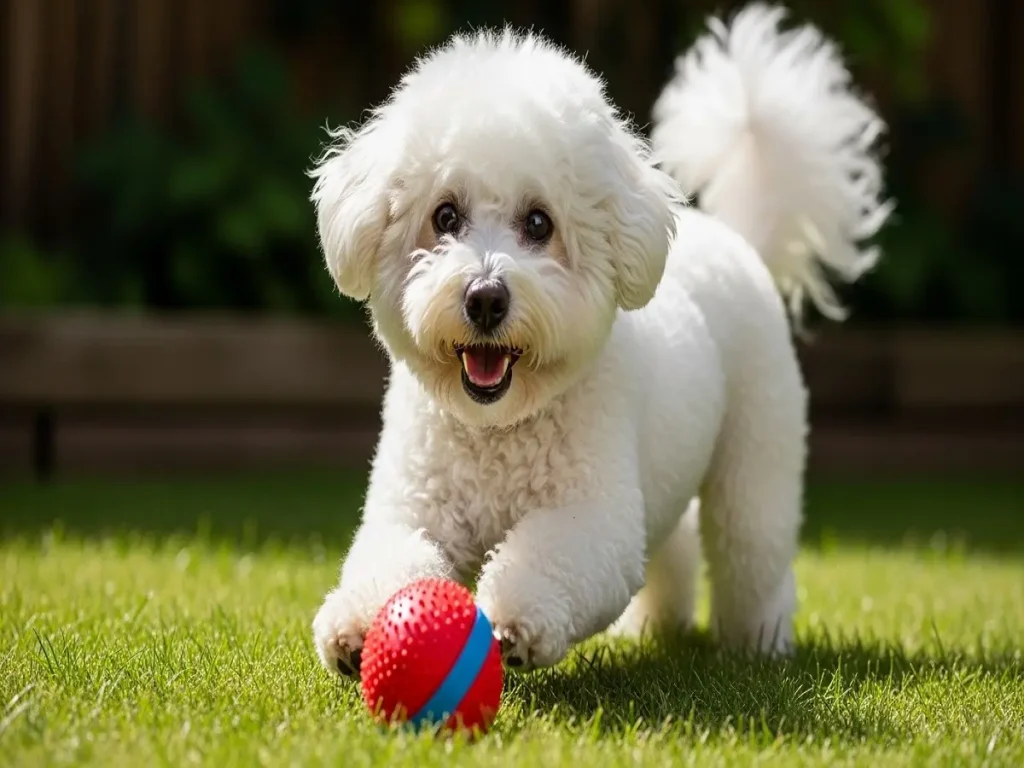
In daily life, this breed often earns the nickname Velcro Dog because a common behavior is following owner everywhere, sitting at their feet, and wanting to be in the same room. From experience, this closeness shows strong bonding. As a Performer, they love to perform tricks like dancing, rolling over, or offering a high-five to secure treats or attention.
They also act as a gentle Watchdog. While not aggressive, they stay alerts and may bark to inform owners about visitors or passing cars. At rest, the Snuggler side appears as they curl up on the owner’s lap, rest their head on the human’s leg, and enjoy calm closeness.
Bichon Frise Dog Behavior:
Bichon Frise Dog are energetic dogs that stay adaptable to different surroundings. They are good with small children, very social with humans, and friendly with other pets, which helps them fit into families as ideal lap dogs. With proper training and socialization from puppyhood, these friendly dogs enjoy meeting new people and meeting animals.
They are smart, social, and warm up quickly at home, where they stay gentle, playful, and loving dogs. They love to play and need attention and affection. When bored or lonely, they may show undesirable behaviors, including excessive
Key Health & Lifespan Insights:
From years of hands-on experience, this breed enjoys a Lifespan of 12–16 years, with many living 14–15 years when cared for properly. Adult Weight usually stays between 4–7 kg or 8–15 lbs.
However, owners should watch for Common Health Issues such as Allergies, dental disease, patellar luxation, bladder stones, and cataracts, which can appear over time.
Care Priorities for Longevity:
Meeting Key Care Needs makes a real difference. This includes high-maintenance grooming with daily brushing and professional grooming every 4–6 weeks. Along with coat care, consistent training and positive training help support both physical health and emotional balance, something I’ve seen greatly improve quality of life.
Vet-Guided Health Risks & Care:
In my experience, the Bichon Frise enjoys an average lifespan of 14–15 years, offering a long life, but owners should expect common health conditions and consider pet insurance early, even as a puppy. Issues like Diabetes Mellitus, diabetes in dogs, and Diabetes affect the pancreas.
Its ability to regulate blood sugar, leading to high blood sugar managed with daily insulin injections and a special diet under a veterinarian. Watch for increased thirst, increased urination, weight loss, and increased appetite, which require a physical examination, comprehensive blood panel, and urinalysis for proper management and long happy lives.
Eye and urinary problems are also common, including Corneal Dystrophy, an inherited condition seen as early as 2 years old, marked by an opaque area, light-blocking changes in the center of the cornea, the outermost clear surface, affecting vision. Though often no pain, advanced cases cause an eye ulcer, squinting, scratching, or rubbing eyes, needing an eye specialist for assessment.
Other Eye Conditions include Cataracts, an eye problem that is hereditary, seen in 6-month-old puppies, and treated with surgery by a veterinary eye specialist when changes in the eyes appear. Bladder Stones or Urolithiasis involve calcium oxalate, cystine, struvite, or calcium phosphate in the bladder, linked to urinary infections or diet-related causes, with signs like bloody urine, strong odor, straining to urinate, painful urination, or blocked urination, managed by being surgically removed or a special diet.
Dental Disease of Bichon Frise Dog:
Dental Disease is common in small dogs due to plaque and tartar buildup, causing bad breath, pain, tooth loss, and organ damage. It can be prevented by prevention, having teeth examined, cleaned once a year, and brushing teeth with a dog-friendly toothbrush and toothpaste to avoid gum infection and tooth root exposure.
A robust breed with specific predispositions like Allergies & Skin Problems, Atopy, environmental allergies, itchy skin, licking paws, ear infections, Patellar Luxation where the kneecap slips causing a skipping gait or hopping gait.
Liver Issues such as Portosystemic Shunt, a congenital condition where blood bypasses the liver needing close monitoring, plus Obesity, weight gain, Cardiac Issues, heart murmurs, and valve disease in later years.
Understanding genetic diseases, health conditions, genetic predispositions, insights from canine genetic researchers and veterinary practitioners, the rate of incidence, and impact helps owners stay at risk aware, notice unusual signs or symptoms, apply general health information for canines, plan medical needs, focus on at home care.
keep dogs looking best and feeling best, know what to watch for, and deliver the best possible care through a preventive health plan that addresses predictable risks and summarizes health concerns over the life.
Grooming & Coat Care:
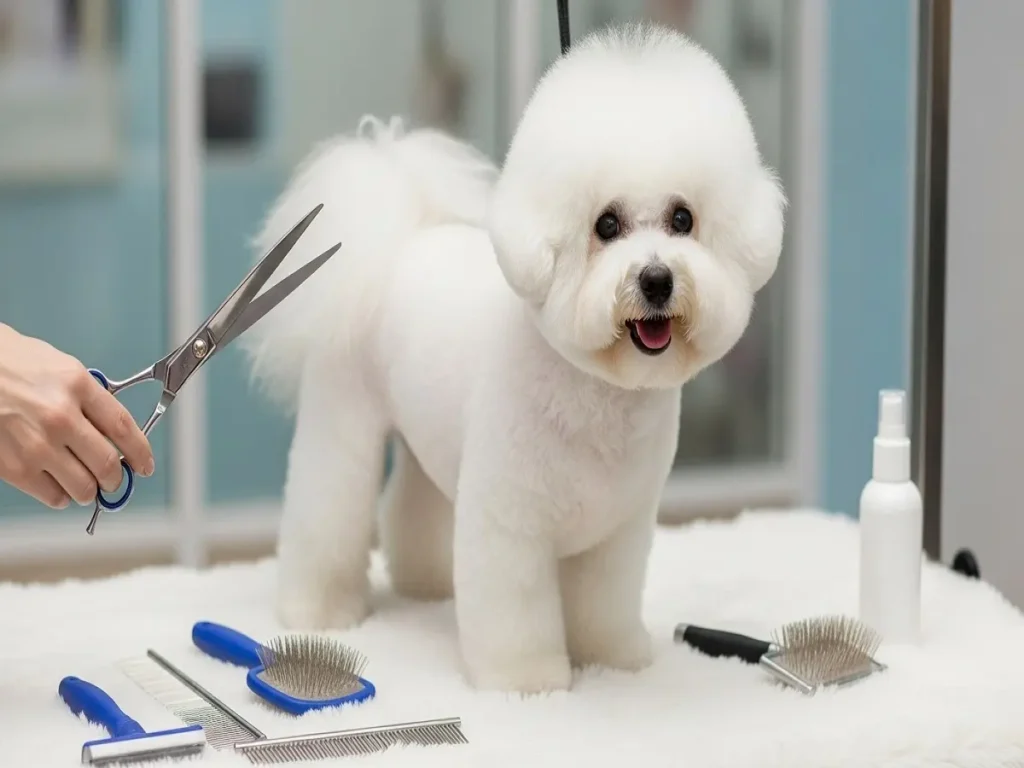
A Bichon Frise grooming guide often begins with a Bichon Frise being groomed on a grooming table, which illustrates the level of care this dog breed requires. Because of its long double coat and curly white hair, grooming takes a lot of upkeep. From experience, regular grooming helps keep the coat healthy and maintains the comfort and confidence of these dogs.
However, while Bichons are minimal shedders and great pets for some people with dog allergies, there is no 100% hypoallergenic dog. Therefore, it’s smart to spend time with the breed before bringing home a Bichon Frise puppy. This allows you to see how your allergies react and decide if this breed fits your lifestyle.
Skin & Coat Care:
For daily Skin care, I always recommend you bathe monthly or at least monthly using a good-quality dog shampoo and conditioner so the coat stay soft and the white coat looks clean. Always ask your vet how often bathe and follow their recommendations for the best products to keep skin healthy and fur healthy.
For Coat care, brush every day to protect the white coat and prevent matting. Plan monthly trips to a professional groomer to keep fur neat, trimmed, and set a budget for regular grooming sessions.
Eye & Detailed Care:
Good Eye care matters because dogs are predisposed to eye conditions like corneal dystrophy and cataracts, so visit the vet for a thorough physical exam every year. Report excessive tearing, squinting, or vision impairment to the veterinarian immediately.
In white dogs, manage tear staining with a dog-safe stain and clean ears once a month using a vet-recommended ear cleanser. Watch for excessive ear hair that can predispose to ear infections, scratching, smelly, or painful ears, and request an examination.
Support grooming with daily brushing to prevent painful mats, especially behind the ears, under the legs, and the belly, using a metal comb for hidden knots. Book professional grooming every 4-6 weeks for a puppy cut or a fluffy, rounded teddy bear look. Schedule bathing every 3-4 weeks with a quality dog shampoo since a white coat stains and traps dirt; always brush out mats first because water tightens tangles.
Gently clean around eyes with a warm, damp cloth or specialized cleaner to reduce mucus buildup and reddish-brown tear stains. Finish care by trimming monthly nails, ears clean weekly to limit wax buildup, and teeth daily or every other day to avoid dental issues.
Traning and guide:
In my experience, the Bichon Frise is easily trained when the owner or trainer stays consistent and proficient with daily training tasks. Although an intelligent breed, this dog has a history of problems with housetraining, so patience matters. Outdoors, they enjoy digging in the yard, which means they must be trained to avoid digging in dirt or around plants.
Because they are sensitive animals, training works best with gentle handling. Use training with verbal praise and physical praise, along with small treats, coupled with praise, when they act appropriately. If they misbehave, apply minor discipline calmly, as harsh methods can slow progress and reduce trust.
Step-by-Step Training Guide:
From hands-on work, the key is to establish a routine with a strict schedule for feeding and potty breaks to manage the tendency toward difficult house training. Always rely on Positive Reinforcement using high-value treats, verbal praise, and play to motivate them, because avoiding harsh corrections damages trust.
Early Socialisation helps a lot, so introduce early exposure to various people, pets, and environments to avoid fear-based behaviours. Next, teach basic commands such as sit, down, and stay in short 5-10 minute sessions.
Focus on Recall Training and teach recall early, since fast dogs and small dogs are hard to catch if they bolt. Build Impulse Control by teaching them to wait for food and wait at doors to manage high energy and reduce jumping and barking. Finally, add Advanced Tricks; as historically circus dogs, they enjoy learning tricks for validation.
Nutrition & Natural Needs:
At first glance, Bichon Frises look low-maintenance under all that fluff, but their bodies reveal sensitive skin, delicate digestion, and a tendency toward dental disease and tear staining. What goes into the bowl can be supported or worsened, which makes smart nutrition truly essential.
A balanced diet and a high-quality diet protect the signature coat, improve skin health, reduce risk of food-related flare-ups, support oral health, allow better digestion, and help manage weight, especially since they are prone to gaining extra kilos when overfed or under-exercised. Good food doesn’t just satisfy hunger; it keeps dogs playful, polished, and ageing gracefully.
From experience, proper nutrition meets universal needs in dogs regardless of breed, though size, age, activity levels, and health conditions affect nutrients in a healthy canine diet. Dogs are facultative carnivores, meaning meat is their biological staple, though scavenging and plant matter help them survive, but there’s a difference between surviving and thriving.
Just like fast food, burgers, chips, and fizzy drinks fail to support energy, glowing health, and a long, vibrant life, poor diets fail dogs. Though modern dogs differ from their wild ancestors, like wolves, their digestive systems never needed carbohydrates or artificial additives.
Still, clever marketing and convenience-led feeding influence dog owners with the best intentions. By understanding the natural diet dogs were designed to eat, owners can make choices that genuinely support health.
Costs & Buying Guide (USA Focus) of bichonfrise dog:
Initial Buying Costs & Price Factors:
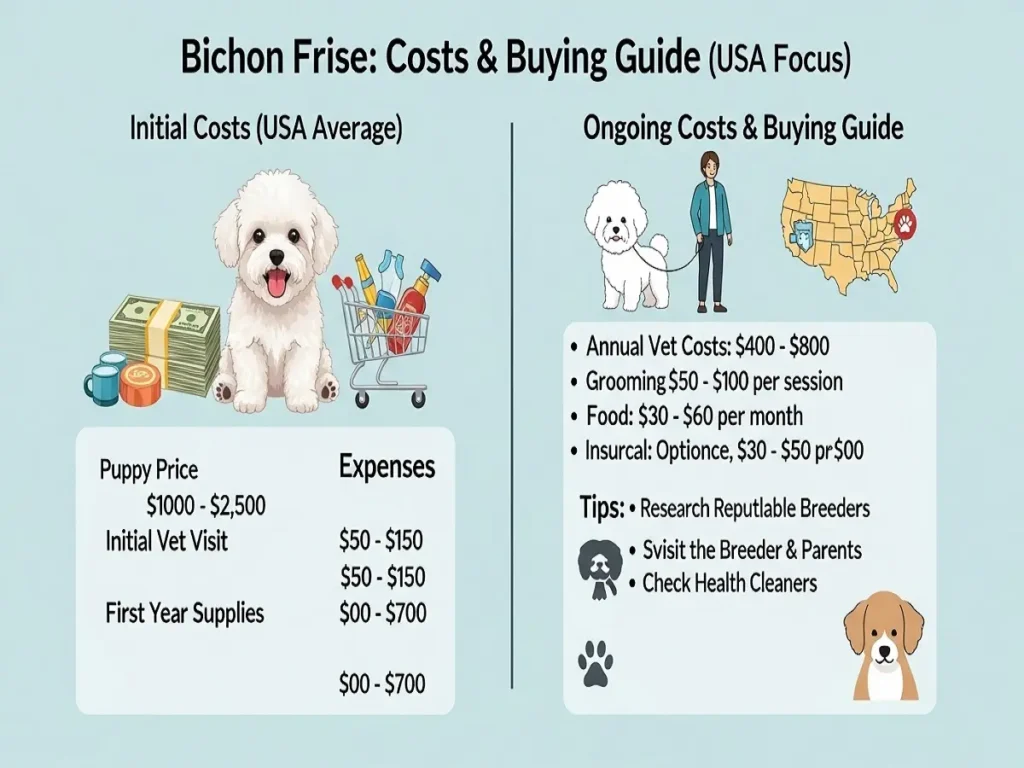
When planning for initial buying costs in the USA, many people underestimate the upfront costs of owning a Bichon Frise. From experience, the average puppy cost from an accredited breeder ranges between $1,000 and $3,500, depending on the dog’s pedigree.
Puppies from champion bloodlines or show puppies can even exceed $4,000. In addition, buyers should remember that high costs don’t stop at purchase, as ongoing maintenance and grooming quickly add up.
Alternatively, Adoption or Rescue options cost less, usually $50 to $600, with groups like the Bichon Rescue Brigade offering specialized resources. However, regional price differences matter. The Northeast and West Coast are usually more expensive, often $1,400 to $3,500, while the South and Midwest are more affordable, closer to $1,000 to $3,200.
One-Time Setup Expenses:
Before your dog arrives, plan for one-time setup expenses when preparing your home for a new puppy. From experience, most owners spend between $300 and $600 on essential supplies like a crate costing $60 to $250, plus bedding, a leash, a collar, and food bowls. These items help create a safe and comfortable start.
Next, budget for initial medical needs, including a new puppy exam priced around $65 to $70, core vaccines ranging from $75 to $100, and microchipping that usually costs $25 to $50. Also, Spay or Neuter costs vary by clinic, typically falling between $50 and $600.
Recurring Annual Costs & Ongoing Care:
From real ownership experience, recurring annual costs make up a large part of annual maintenance for a Bichon Frise. Most owners spend between $1,000 and $2,000 each year. The most critical recurring expense is professional grooming, needed every 4–6 weeks to prevent painful matting, which totals $300 to $1,200 per year. In addition, Food costs for high-quality small-breed dog food usually range from $300 to $500 per year.
At the same time, Veterinary Care adds up through routine exams and preventative medications for flea, tick, and heartworm, costing about $400 to $800 annually. Pet insurance is highly recommended because of breed-prone issues like allergies and dental disease, with premiums averaging $200 to $600 per year. Planning for these expenses makes long-term care far more manageable.
Buyer’s Guide & Key Considerations:
From experience, any solid Buyer’s Guide should focus on real-world considerations. This breed is often called a Velcro Dog because it craves human companionship. When left alone for long periods, many develop separation anxiety, which can lead to stress behaviors.
In addition, they are Hard to housebreak, meaning they are difficult to potty train and often take longer than other breeds, so patience and routine are essential. When buying from a breeder, always prioritize Health Screening and ask for AKC health certifications for the parents, especially covering hips, eyes, and patellas.
Although commonly labeled Hypoallergenic and non-shedding, these dogs still produce dander, so it’s wise to spend time with the breed first, particularly if you have severe allergies.
Best Practices for Adoption vs Breeders:
When exploring Best Practices for Adoption/Rescue, start with breed-specific rescues and trusted organizations like the Bichon Frise Club of America or Bichon FurKids rescues. These groups often place older dogs and seniors who may be already be housebroken.
A thorough process is normal with reputable rescues; they will interview you, check references, and may request a home visit. Always understand behavioral history, as many dogs come from owner surrenders, where separation anxiety is common in the breed, so confirm housetraining status and daily needs.
Whether adopting or buying a Bichon Frise, focus on careful vetting to avoid genetic health issues and meet high grooming and social needs. To ensure proper care, rescues should spay, neuter, and vaccinate dogs before adoption, offering spayed, neutered, vaccinated, and pre-screened dogs. If considering responsible breeders, confirm health clearances for hips, eyes, and patellas, and favor reputable rescues and ethical sources that prioritize lifelong welfare.
Best Practices for Buying from a Breeder:
When choosing a breeder, start by verifying health testing and work only with responsible breeders. Ask for OFA (Orthopedic Foundation for Animals) certifications covering patellas and hips, plus CERF eye exams for the parent dogs. Always visit in person to see the mother, the puppies, and their living conditions.
A clean environment and well-socialized dogs matter, so avoid puppy mills, especially sellers with many different breeds, those who will not let you see the home environment, or who say do not buy online without in-person verification.
Next, ask for documentation, including a health guarantee, AKC registration papers or equivalent registration, and complete vaccination records. Finally, do a temperament check and look for a cheerful puppy, a confident puppy, and a curious puppy rather than a timid puppy or a sickly puppy. From experience, temperament today predicts ease of training tomorrow.
Key Comparisons with Similar Breeds:
From experience comparing small companion dogs, the Maltese is generally smaller, standing 7–9 inches tall and weighing 5–7 pounds, with a silky coat and straight coat. In contrast, the Bichon has a curly coat, a cotton-like double coat, and looks more puffy. Maltese dogs can seem reserved and stubborn, while Bichons are more outgoing in daily life.
When looking beyond that, the Coton de Tulear shows a similar size and appearance, but has a longer coat, a cotton-like coat, and is slightly smaller, around 8–15 pounds. The Toy Poodle matches size, intelligence, and a hypoallergenic coat, yet brings higher energy, needs more mental stimulation, and has a refined build with a slender build compared to the sturdy, compact Bichon.
The Bolognese shares a very similar appearance and temperament, usually weighing 5.5–9 pounds, while the Havanese is a slightly sturdier breed at 7–13 pounds, offering a wider variety of coat colors instead of being almost exclusively white.
FAQs?
Bichon Frise dogs are considered hypoallergenic because they shed very little and produce less dander. While no dog is completely allergy-free, this breed is a great option for people with mild pet allergies
A Bichon Frise should be bathed every 3 to 4 weeks to keep its curly coat clean and healthy. Regular bathing helps prevent matting, skin issues, and odor, especially when combined with frequent brushing.
Yes, Bichon Frise dogs are excellent apartment pets due to their small size, low shedding, and moderate exercise needs. They adapt well to indoor living as long as they receive daily walks and mental stimulation.
To find reputable Bichon Frise breeders in the USA, look for health testing, transparent records, and AKC affiliation. For adoption, search breed-specific rescues and verified shelters that prioritize ethical placement and dog welfare.
Conclusion:
From real-life experience, the Bichon Frise is an excellent choice for a loving household and an active household that can provide time for grooming and daily companionship. These ideal personality dogs consistently bring joy, entertainment, and loyalty to their owners, making everyday life feel warmer and more connected.
As a delightful breed, they offer endless joy, love, and laughter in their owners’ lives. Their fluffy appearance, affectionate nature, and sociable personality turn them into wonderful companions for families and individuals alike.
With a cheerful disposition and playful antics, this small dog truly has a big heart, making it a perfect choice for anyone seeking a loyal and devoted furry friend who can brighten dullest days.
